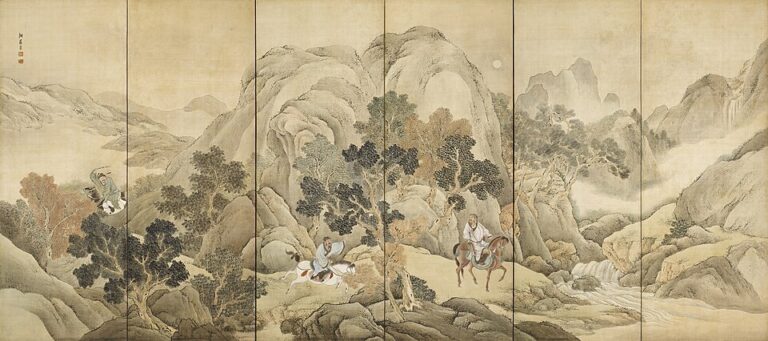
"All this he saw, for one moment breathless and intense, vivid on the morning sky; and still, as he looked, he lived; and still, as he lived, he wondered."

The Lost Seven #2

20120618-102700.jpg

Dopo un’attesa quasi sufficiente a farmene completamente dimenticare l’esistenza, esce il secondo volume di The Lost Seven, il manga che – in un’epoca in cui sembra andare di moda – prende la favola di Biancaneve e ne usa i nomi per un’avventura alla Final Fantasy: sette guerrieri erranti del clan Brai decidono di affrontare l’ignominia derivata dall’aver abbandonato le tradizioni del loro popolo, fuoriescono dalla tribù e si schierano con la giovane Biancaneve per sconfiggere Queen Rose, strega dello specchio che controlla i demoni. Poi ovviamente (?) Biancaneve muore, i guerrieri sconfiggono la malvagia strega ma vengono dispersi, il loro capo – creduto morto – è scagliato ai confini del mondo ed i prodi sei si danno alla vita sedentaria e tranquilla, e vissero tutti felici e contenti.
Beh.
Più o meno.
La storia riprende dieci anni dopo, con il ritorno di Tanrou, la scoperta della figlia della regina, Red Rose, e la promessa di aiutarla a riconquistare il suo castello dalle grinfie dell’imperatore demone, per redimersi. Dopo un numero in cui Tanrou e Hagun tentavano di rimettere insieme i sette, questo numero ci accompagna più a fondo nel mondo che Ko Ya-Sung crea per la sua avventura. Un mondo sicuramente non originale e molto simile ad altri esperimenti come quelli di Kaori Yuki, nato da fiabe e tradizioni occidentali, fiabesche e religiose, frullate dalla testa di un giapponese e guarnite con elementi tipici del seinen: la fanciulla che vuole combattere, il guerriero con un gigantesco spadone, il demone clown ed i mistici tatuaggi. Proprio da questi ultimi sembra voler prendere le mosse l’intreccio: sono loro, generati dall’uccisione della strega, a guidare le azioni di Tanrou contro i demoni, e da loro rinasce Queen Rose sotto forma di Prin-Rose, modellata dalle arti dell’unico a non riflettersi nello specchio Sephirot. Siete confusi a sufficienza, adesso?

architecture, engineering and construction

The Sustained Path

Every text this last few days has, in one way or another, been circling around the same question: what’s a path and what makes a path? Not a road already drawn and simply walked afterward, but a path in the sense that seems to keep

Read More »
Summertime

The Road is Made by Walking

Antonio Machado was a major Spanish poet and playwright, associated with the Generation of ’98, a group of writers who reflected on Spain’s identity and crisis at the turn of the 20th century. He was born in Seville in 1875 and died in 1939 in

Read More »
Summertime

Kathleen Jamie on Attention and Corridors

Kathleen Jamie is a Scottish poet and essayist, born in 1962, known for her prose and poetry about landscape, place, and everyday life. Findings is her essay collection of personal reflections, first published in 2005, and it moves through nature and cities, archaeology, hospitals, family

Read More »
Share on LinkedIn
Throw on Reddit
Roll on Tumblr
Mail it
No Comments

Post A Comment

This site uses Akismet to reduce spam. Learn how your comment data is processed.

RELATED POSTS

The Sustained Path

Every text this last few days has, in one way or another, been circling around the same question: what’s a path and what makes a path? Not a road already drawn and simply walked afterward, but a path in the sense that seems to keep

Read More

The Road is Made by Walking

Antonio Machado was a major Spanish poet and playwright, associated with the Generation of ’98, a group of writers who reflected on Spain’s identity and crisis at the turn of the 20th century. He was born in Seville in 1875 and died in 1939 in

Read More

Kathleen Jamie on Attention and Corridors

Kathleen Jamie is a Scottish poet and essayist, born in 1962, known for her prose and poetry about landscape, place, and everyday life. Findings is her essay collection of personal reflections, first published in 2005, and it moves through nature and cities, archaeology, hospitals, family

Read More