
Why an Italian standard should matter to you
I know: an article about a draft Italian standard is not exactly what you were hoping to find in your feed this week. Bear with me, because this one is about a question that sooner or later every country will have to answer: who gets to decide what a BIM Manager, a BIM Coordinator or a CDE Manager actually is?

In Italy, the answer to that question is written down in a technical standard. UNI 11337-7 defines these roles as professional profiles: tasks, knowledge, skills, a level in the European Qualifications Framework, and a third-party certification scheme under ISO/IEC 17024. Nice badges for LinkedIn are coming up, and hopefully not just that: since the latest public procurement code, Italian contracting authorities are required by law to appoint a CDE manager, at least one BIM manager and, for every project, an information flow coordinator, using the very same Italian titles defined by this standard. ISO 19650, for comparison, talks about functions and parties, not professions: it tells you what needs to be done, not who you need to hire to do it. There was a gap to fill, and the National norms should do that. We did it first in 2018.
That standard is now being revised.
The draft, project UNI1613830, goes from four profiles to six (adding a BIM/GIS Specialist and a BIM Tendering Specialist), and is open for public comment until 28 November 2026. I’ve read it, I’m sending my comments as we speak, and I’ve already written a much longer piece in Italian for my fellow countrymen, on LinkedIn. This is the shorter version for everyone else.
Before we start, though, I have a question for you. Where you work, are these roles formally defined? By a national standard, a professional body, a government guideline? Or is it the market, which in practice means job ads and software vendors?
Because I’ve seen what happens when nobody defines them. The BIM Coordinator becomes the clash monkey, the person who runs Navisworks on Friday afternoon and sends a PDF full of red and green boxes to people who will never open it, so you can pay them less. The BIM Manager becomes whoever knows Revit best. And the CDE Manager becomes the person who knows the password to the server.
Defining these roles properly is a good idea. Defining them badly, as I’m about to argue, may be worse than not defining them at all.
Credit where it’s due
Before I pick up the scalpel, let me be fair: some things in this draft are genuinely better than before.
First, openBIM is finally treated as professional content rather than a matter of faith. IFC, BCF, IDS, data dictionaries and linked data appear in the tasks, knowledge and skills of every profile. The BIM Coordinator must be able to write machine-readable checking rules, and the BIM Specialist must be able to apply checking specifications written by others and manage issues through interoperable protocols. After years of explaining that “delivering the IFC” does not mean exporting a file and hoping for the best, seeing it in a standard is a relief.

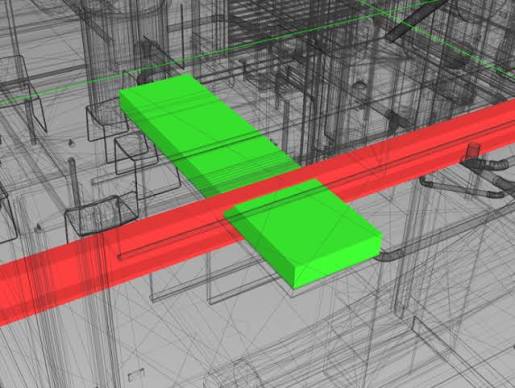
The second is that coordination keeps moving towards something that is not (only) clash detection. The BIM Coordinator is not Navisworks’ monkey, and the text makes the point clearly: informational inconsistencies as well as geometric clashes, traceable issues, corrective actions managed in a structured way. It’s the difference between someone who hunts for pipes running through beams and someone who governs an information process.
The third is that integration with GIS and with procurement procedures is acknowledged as a real problem, one that existing documents (chapter 10 of UNI 11337-12 or ISO/TR 23262: 2021) aren’t enough to solve. We can argue (and we will) about whether two more profiles were needed to acknowledge it, but the problem exists. Anyone working on infrastructure knows how hard it still is to make an information model talk to a cartographic base, and anyone working with public clients knows how often the information requirements are written, read and evaluated by different people who never talk to each other.

Finally, a tiny detail some colleagues will appreciate: teaching and taking part in standardisation committees now count as continuing professional development. It’s the acknowledgement, at least on paper, that you also learn by teaching (often more than anyone else in the room) and by writing rules together with others.
So far, the good news. Unfortunately, the same standard that demands this level of competence from everyone risks putting everyone on the same step.
Everybody’s level five
Unless I’ve badly misread something, section 5.1 of the draft makes, almost in passing, a choice that in my view weighs more than everything else: all six profiles are associated with level 5 of the Italian Qualifications Framework, which is the national version of the European Qualifications Framework (EQF).
If you don’t live in acronym land, the EQF has eight levels and is there to make qualifications comparable across countries and across paths, whether they were obtained at school, at university, in vocational training or on the job. Each level describes knowledge, skills and, above all, the degree of autonomy and responsibility expected. Simplifying a lot and skipping the first rungs:
- at level 4, you manage yourself within guidelines in contexts that are usually predictable, and you supervise the routine work of others;
- at level 5, you manage and supervise activities in contexts subject to unpredictable change, and you review your own performance and that of others;
- at level 6, you manage complex projects, take responsibility for decisions and guide the professional development of individuals and groups;
- at level 7, you manage and transform complex contexts that require new strategic approaches.
I’m sure that, reading these, you’ve already placed at least the BIM Manager, the CDE Manager and the BIM Coordinator somewhere, and I’m just as sure you didn’t put them all on the same level. Let’s see what the draft does, starting with the BIM Manager.
According to the draft itself, the BIM Manager works with top management to define the organisation’s digital processes, investments and training, which is exactly what a change manager normally does. They coordinate the BIM Coordinators, support their appointment and select the BIM Specialists. That’s a level 6 profile, if not a level 7. The BIM Coordinator governs the project from a digital standpoint and reports to the BIM Manager: a solid 6. The BIM Specialist works within procedures defined by others: that one, yes, is a credible 5.
The CDE Manager is an even stranger case, because it goes the other way. The guidelines published by the Italian Ministry of Infrastructure and Transports last February describe the CDE manager as an operational figure: configuring the environment, managing access and permissions, running upload, review and approval workflows, supporting deliveries and archiving, coordinating security and business continuity. The draft standard’s CDE Manager, instead, has “Data Science skills”, builds data lakes and data warehouses for predictive purposes, implements AI solutions and governs linked data, ontologies and notarisation. Long-term preservation and cloud qualification, the things a client actually needs, are nowhere to be seen. So for this profile level 5 might even be fine: the problem is that the standard describes a different person, and asks someone with three years of experience to be the organisation’s sysadmin, archivist and data scientist all at once. He and what army?

Speaking of experience, the requirements follow a logic all of their own. To be certified as a CDE Manager you need three years of general experience and one in the role. Must have been a very intense year. A BIM Coordinator needs five, when perhaps the parameter should be the number of projects followed. BIM Manager and BIM Coordinator have the same general requirement. And for the Specialists, since specific experience “can be included” in general experience, one year is enough. One.
A small but crucial side note, because many young professionals live this drama. These are requirements to access certification, which should be a badge of excellence, not of existence in the role. If you need five years of experience to be certified as a BIM Coordinator, you must have worked as one for five years. But if only certified people get to work as BIM Coordinators, how is anyone supposed to get those five years? Certification is, at most, the end of a path, not the entry gate. Even the Ministry’s guidelines point out that the Italian procurement code “does not require specific educational qualifications, licences or professional certifications”. Everything else is fluff from people trying to sell you certifications. Can we get that into our heads?
At this point someone might suggest raising the bar on education: a university degree for the BIM Manager, say. Well…

And I say this with a certain personal interest. I’ve never technically held the title of BIM Manager, but I think I could fill the role (if anyone disagrees, we can meet one evening, at our mutual convenience, in an alley I know). I’ve studied for it and I keep studying, yet I don’t have a degree, and I’m not the only one. I’ve always argued, and still do, that until there are university programmes specifically on digital information management, requiring a degree for a BIM Manager guarantees nothing, except excluding many of the people who built, and keep building, the discipline around this job.
The point, though, is that the two things (level and degree) have little to do with each other. The EQF measures learning outcomes, not the path: the draft itself says so in its introduction, when it talks about the portability of skills across formal, non-formal and informal learning. Level 6 or 7 doesn’t require a degree. It requires you to prove you can do level 6 or 7 things.
A secondary school diploma as the minimum entry requirement is therefore perfectly fine. What’s not fine is the implicit idea that a profile accessible with a diploma must sit at level 5. That flattens the tasks and responsibilities of the higher profiles to match the lowest requirement, instead of recognising them for what they are. And a staircase where everyone stands on the same step isn’t a staircase: it’s a landing. A landing where we all have to chip in to order a pizza, because none of us earns enough to afford one.

Copy, paste, guarantee
Here’s a fun exercise I recommend to anyone reading the draft: search for the sentence “Ensure information interoperability through the adoption and application of data models, information schemas and open formats throughout the entire life cycle of digital information management”. You’ll find it six times, once per profile. The CDE Manager guarantees interoperability throughout the life cycle. So does the BIM Manager. And so do the BIM Coordinator, the BIM Specialist, the BIM/GIS Specialist and the BIM Tendering Specialist.
Guarantors, all of us.
I understand the enthusiasm for openBIM, but we may have a problem of logic before one of substance. If a task is identical for six different figures, either it isn’t a task but a general principle, to be written once at the beginning, or it is indeed a task, and then you need to define a bit better who does what. The BIM Manager decides which formats and schemas to adopt. The BIM Coordinator checks they’re respected on the project. The BIM Specialist applies them in their own models. The BIM Tendering Specialist… dunno, checks they’re written in the tender documents? And the BIM/GIS Whatever cries because their standards don’t talk to each other. Five different jobs, for fuck’s sake. Describing them all with the same words means describing none of them.
The same goes for the note that accompanies almost every list of tasks, knowledge and skills, which I counted eighteen times: “Usable solutions are, for example: W3C Linked Data/Semantic Web Technology, Turtle/JSON-LD, SPARQL, SKOS/RDF/RDFS/OWL/SHACL, CityGML, IFC, BCF, IDS, IDM, Data Dictionary”. Lovely, but eighteen times for a non-binding example? Even the BIM Tendering Specialist, apparently, must get by with OWL ontologies and SPARQL queries. In one of the eighteen repetitions a mysterious “ggIDS” appears, proof that copy-paste eventually wears out the writer too, not just the reader.

Then there’s the verb. Between “guarantee” and “guarantor”, the concept appears twenty-five times. The CDE Manager must “guarantee the efficiency and effectiveness of the CDE”. The BIM Manager must “guarantee the performance offered by the organisation”. The BIM Coordinator is “guarantor of the functionality of information flows”. It sounds like emphatic wording, but technical standards end up in contracts, and there “guarantee” isn’t emphasis: it’s an obligation of result. If something goes wrong, there’s a name next to that.
Mind you, I don’t disagree. A manager should stand as guarantor of the processes they manage. But the standard should spell out what that means in practice. Asking the CDE Manager to guarantee the CDE, for example by validating the cybersecurity policies set by other parts of the organisation, gives professionals a stick to beat their IT department with. Asking the BIM Manager to guarantee the organisation’s performance, for example by taking part in decisions on which projects to bid for, puts them at the right tables instead of cleaning up questionable decisions made by others.
The Ministry’s guidelines, curiously, go the opposite way: specialist roles provide technical and operational support and don’t replace the decision-making functions of the project’s responsible officers. Whoever decides is accountable, whoever supports, supports. The draft standard instead showers guarantees on figures it places, remember, all at level 5, for outcomes that depend on software, suppliers, contractual counterparts and other people’s decisions.
When everyone guarantees everything, either nobody is really responsible for anything, or someone is responsible for things they don’t control, depending on who’s on the wrong side of the contract when things go wrong. The standard needs to choose a road or, better still, describe both.

Data chickenpox and the AI checkbox
Anyone who’s had chickenpox knows how it works: the virus sits there quietly for years, then one day it bursts out all at once, everywhere. Digital information management, at least in this standard, has had something similar with data analysis.
The incubation was already visible in the 2018 edition, which I helped draft with a fairly active role. In a standard describing professional profiles, we felt the need to define data analytics, data science and business intelligence. Different times. The CDE manager was asked to “use data analytics techniques”, the BIM manager to use “data science methods and tools” to measure the organisation’s digital maturity. Even the BIM specialist had to handle “large volumes of data”. Mild symptoms, back then. A bit of enthusiasm fever, understandable in years when everyone talked about big data without quite knowing what it was.
In 2026 the virus woke up, and this time it’s chickenpox the way adults get it. The CDE Manager has “Data Science skills” by definition, builds data lakes and data warehouses “for the purpose of predictive activities” and may “formulate predictive analyses on processes and products”. In their spare time. The stated perspective is the “semi-automation of decision-making processes at organisational level”. Guys, are we sure? At a time when everyone is worried about handing decisions over to algorithms, taking that for granted as the future of our profession seems anachronistic, to say the least.
The symptom that worries me most, though, is another. CDE Manager and BIM Manager must support “the dissemination of metrics for evaluating the performance of processes and human resources”. Of freakin’ human resources. In a standard that doesn’t spend a single line on relational skills, facilitation or change management, people enter the scene… as objects of measurement???

I’m calm. I’m calm now.
And if data chickenpox seemed serious, we also have AI scarlet fever. AI appears in all six profiles, which is something: in 2026, a digital standard that didn’t mention it would be born old (I’m talking to you, ISO 19650). The problem is how. Almost everywhere the formula is “use, where appropriate, artificial intelligence devices”. The BIM Coordinator and the BIM/GIS Specialist must “correctly use the support provided by language models”, if required (required by whom? to do what? where?). The BIM Tendering Specialist must do the same, but without “if required”: they just must, full stop.
Then you look at what they need to know. BIM Coordinator and BIM Tendering Specialist must know AI devices “in depth”. The BIM Manager, who should support the organisation in implementing “machine learning, deep learning, use of large language models”, only needs to know them, not necessarily in depth. And the CDE Manager, who must guarantee the efficiency of the CDE “also with the support of AI devices” and contribute to implementing AI in the organisation, has not a single line on AI among their knowledge requirements. Zero. They must implement it without knowing it. Brave.

What’s really missing, though, is something else. Nowhere does the standard say what using AI “correctly” means, nor does it point to anything that does. Not a line on the limits of these systems: errors, bias, hallucinations. Not a line on verifying outputs, on who checks what a language model produced before it ends up in an information requirement or a technical report, how, and with what responsibility. Not a line, unless I fell asleep halfway through, on the confidentiality of project data fed into these tools, or the intellectual property of what comes out. And not a line on the regulatory framework, which does exist: the EU AI Act has required, since February 2025, that organisations using these systems ensure a sufficient level of AI literacy among their staff.

So AI, in this draft, is a checkbox. A tool like any other, to be used “where appropriate” (whatever that means), requiring no judgement, awareness or responsibility, just the ability to press the right button. Exactly the approach that will lead us, as an industry, to discover the problems after we’ve created them. On the unprecedented nature of AI compared to BIM there’s an article from last week, and I won’t repeat myself.
Moreover, a standard that multiplies measuring tools without ever naming the professional judgement needed to read them isn’t describing a more evolved professional: it’s getting ready to replace them with a Power BI dashboard. Over my cold, dead body. And a standard that wants professionals able to work with AI should first ask them to doubt what AI produces. But to ask someone to doubt, you first have to admit that someone exists, with their own head, judgement and relationships.
Which brings us to the real point.
Isn’t something missing?
Let’s go back to the beginning, to section 0.2, where the standard describes its own method. Among other things, it states that for each profile “the expected personal capabilities have also been identified, where applicable”. Good. Let’s go and find them.
I couldn’t.
I expected a section, a table, a list. Instead there’s a formula repeated almost identically for every profile: the professional “must demonstrate relational attitudes allowing them to collaborate synergistically with the other professional figures in the field”. The BIM Manager gets a slightly better deal: they must demonstrate “attitudinal and relational qualities of a behavioural nature, with reference to authority and responsibility”, which perhaps means you can’t be a sociopath (which, in turn, would still rule out a few eminent figures in our industry). And then, in the task lists, a laconic “take care of interpersonal relationships”.
The end.
In fairness, the same promise was already in the 2018 edition, and wasn’t kept then either. But in 2018 at least the BIM Coordinator had to manage “multidisciplinary coordination meetings”, meaning: put an architect and an engineer around a table and make sure they don’t strangle each other with a network cable. Today the Coordinator must know how to run meetings, but only be able to “participate collaboratively” in them. So who runs them? The BIM Tendering Specialist, who is explicitly required to “be able to conduct meetings”. Though I imagine they’re not the same meetings.
There’s another absence that, having worked in training for years, strikes me in particular. The standard gives the BIM Manager the task of planning the organisation’s training and managing the impact of digitalisation on people, yet there isn’t a line on how to design learning for adults, how to tell whether it worked, or how to guide an organisation through a change that touches habits, roles and professional identities. They must “identify training needs”… and then? Anyone who has tried to introduce BIM into a practice or a technical office knows the hard part was never the software.
And the circle closes with non-formal learning, meaning structured training outside formal education, which for this standard is “not applicable”: no profile can use it to access certification. The standard manages to ignore training twice. It doesn’t recognise it for those who attend it, and doesn’t require it from those who should organise it.
The result is a portrait of a professional made only of technical knowledge and tools. They know everything about formats, schemas, ontologies and data lakes, lucky them, but nobody asks them to listen to a colleague, facilitate a table where disciplines don’t talk to each other, handle a conflict with a supplier, explain to the board why an investment makes sense, or support a team that’s afraid of change. And since assessment can only verify what the standard requires, none of these skills will ever be examined.
Yet anyone working in this industry knows that’s exactly where digital transformation projects fail or succeed. Not in the formats, but in people.
Certifying what?
We’ve come to the point where, I confess, I struggle most to stay calm: the bloody certification.
A bit of history first. The 2018 committee draft, which I have at hand, said in its introduction that, in line with the European Qualifications Framework, “binding requirements on education, training or experience should generally not be specified”. Assessment meant a CV review, a written test and an oral examination. Eight years, a certification scheme and a whole market later, the new draft removes that sentence and introduces binding entry thresholds for every profile. Nobody explains why.
Now let’s look at how a person actually gets certified. The written test has at least twenty general and ten specialist multiple-choice questions, two minutes each, 70% to pass: with the minimum, one hour to verify everything we’ve seen so far. The BIM Manager alone has twenty-two knowledge items, so the specialist questions can’t even cover one each. Then comes a case study of up to 120 minutes, assessed “according to specific grids” that the standard (again, maybe I missed them) doesn’t describe. Well, consultants to certification bodies have to eat too, I guess. Finally, an oral of at least thirty minutes with three questions. As for who examines, the rules mostly qualify people who are already inside the scheme: a system that, to qualify its judges, mostly trusts itself.

But the real problem isn’t how the exam works: it’s what it can verify. A certification can only attest what the standard requires, and we’ve seen what this one requires: technical knowledge, tools, formats. No relational skills, no change management, no critical judgement on data or AI. What gets stamped, complete with an official UNI mark, is exactly the part of the job that matters least.
And then there’s the market. Certification should be the end of a path, not the entry gate. Over the years, though, it has become a requirement in tenders, CVs and job interviews, a way to choose without having to evaluate. It has fed an industry of four-hour courses designed to pass the exam (often taught by the same people who’ll then examine you, impartiality requirements of ISO/IEC 17024 notwithstanding), instead of courses that train professionals who might one day get certified. And it has created the vicious circle we’ve already met: to get certified you need experience that, without certification, nobody lets you build. Experience that, I’m afraid to report, sometimes gets “adjusted” with a little help from employers who want you certified.

I doubt this is an Italian speciality: if certification has become a gatekeeper where you work too, I’d love to hear about it.
Yet the law here is clear, and even the Ministry’s guidelines say so: the procurement code “does not require specific educational qualifications, licences or professional certifications”. Competence is demonstrated through documented experience and training. For non-regulated professions in Italy, certification is and remains voluntary. It would help if the standard said so in black and white, instead of letting the market decide on its behalf.
But I don’t believe in fairy tales.
Your turn
We’ve reached the end, and if you’re still here you deserve at least one piece of good news: this standard isn’t a standard yet. It’s a draft, and until 28 November 2026 anyone can have their say.
If you work in Italy, the procedure is simple. On the UNI website, in the database of drafts under public enquiry, search for project UNI1613830, download the text and send your comment through the online form. You don’t need to sit on a committee or be a standards expert: you need to have read the text and have something to say. I’m sending mine, and they’ll be discussed at the table where they belong. The themes in this article are, in my view, the main ones, but they’re not the only ones, and your reading needn’t match mine. In fact, I hope it doesn’t. If you find something that doesn’t add up, write it down, with the clause reference and, ideally, a proposed change. That’s how standards get better, not through indignant posts on LinkedIn (says the witch-queen of indignant posts on LinkedIn).
If you work anywhere else, I have a few questions for you, and the comments are open.
Are these roles defined where you work? By a national standard, a professional body, government guidance, a certification scheme? Or by the market, job ads and software vendors?
If they are defined, does the definition match the job? Does it recognise the difference between someone who runs clash detection and someone who governs an information process? Does it say anything about people, or only about formats?
If they aren’t, what happens? Is your BIM Coordinator a coordinator, or a clash monkey? Is your BIM Manager a manager, or simply whoever knows Revit best? Are you still trying to explain to your boss what they’re paying you for?
And has certification become a gatekeeper? Or has your country managed to keep it what it should be: the end of a path, not the entry gate?
I genuinely want to know, because I suspect we’re all struggling with the same question, just in different languages. Who gets to decide what these professionals are, and what happens when the people deciding forget that they’re people.
See you after 28 November. I hope I’m wrong about at least half of what I wrote.






No Comments