"All this he saw, for one moment breathless and intense, vivid on the morning sky; and still, as he looked, he lived; and still, as he lived, he wondered."

The East Palace

The East Palace (동궁) is this new South Korean dark fantasy television series I’ve been watching on Netflix, and I must say it has some serious Constantine vibes. I’m not an expert on Korean drama, so I don’t know the authors nor the actors starring in it, but I love the concept as it’s a mixture of supernatural and non-supernatural investigation, featuring a man who can walk through the realm of spirits and a girl who can hear the dead. The setting is fictional, both the dynasty and the palace don’t exist, and yet the show positions itself in the same trace as Jadewind: royalty sucks, the Emperor’s an asshole, innocent suffer for no reason, except this time they come back as full-ass vengeful spirits.

The folklore is a mix between Korean folklore and some original sparks, and there’s an article over here explaining the difference between the several kinds of spirits. The gwi-shin are the closest to ghosts: humans who have died, often violently, and bear a grudge towards those who were responsible for their deaths. In the series, the horror aspects of their appearances are tied to the circumstances in which they died. They’re divided between common-gwi, those who are bound by duty and generally aren’t a threat, won-gwi, the ones bound by resentment, and ak-gwi, those bound by the evil they did in life.
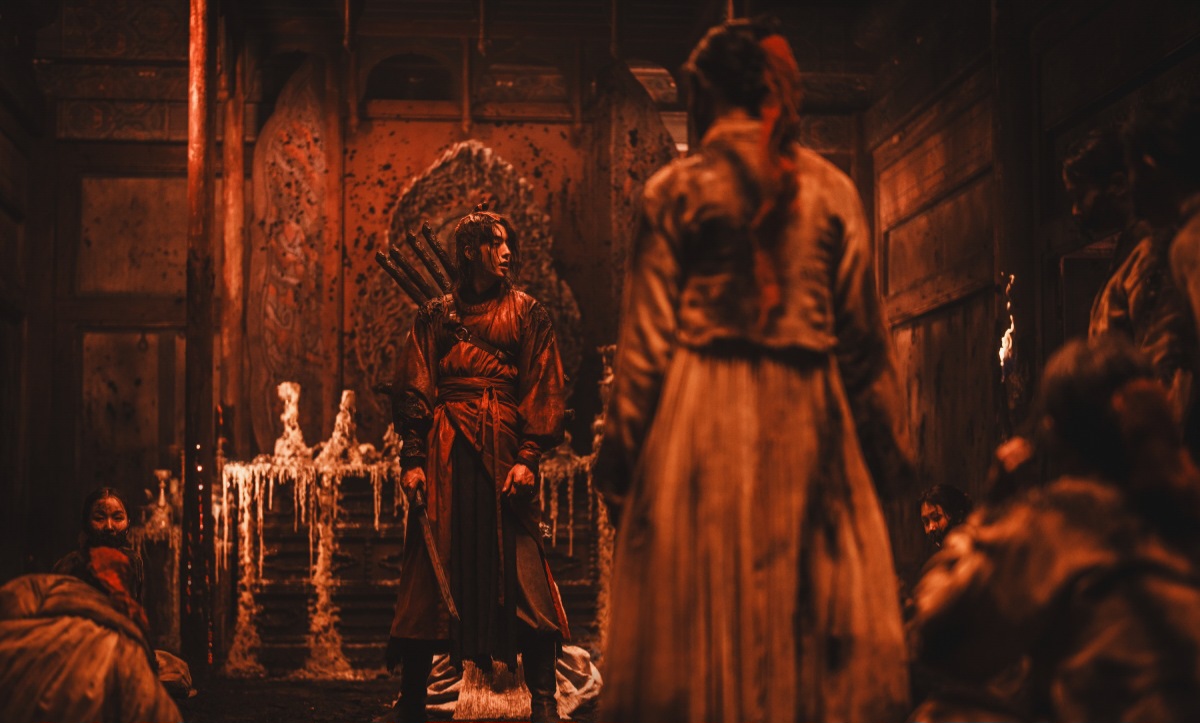
There’s also another kind of spirit, the gwi-mae, “here for the vibes” as the original Netflix article puts it: they’re spirits formed by the bad energy concentrated in one place, and they were never human to begin with. Trust me, it shows.

And then there’s the cute one, of course.

If you manage, give it a shot.
Summertime

Someone Has to Clean Up

Wisława Szymborska was a Polish poet, essayist, and translator, born in 1923 and awarded the Nobel Prize in Literature in 1996 for poetry marked by a sharp, ironic awareness of human life and history. Map: Collected and Last Poems is an English-language volume of Szymborska’s

Read More »
Summertime

Memoirs of Hadrian

Marguerite Yourcenar (1903–1987) was a Belgian-born French novelist, essayist, poet, and translator who became the first woman elected to the Académie française in 1980. No, I’m not kidding. Her full name was Marguerite Antoinette Jeanne Marie Ghislaine Cleenewerck de Crayencour; “Yourcenar” began as a pen

Read More »
Summertime

Fugitive Pieces

Anne Michaels is a Toronto‑based Canadian writer who first gained attention as a poet before becoming internationally recognised for her fiction. Her writing is poetic and meditative, blending philosophical reflection on history, trauma, and ethics, and she’s best known for her debut novel Fugitive Pieces

Read More »
Share on LinkedIn
Throw on Reddit
Roll on Tumblr
Mail it
No Comments

Post A Comment

This site uses Akismet to reduce spam. Learn how your comment data is processed.

RELATED POSTS

Memoirs of Hadrian

Marguerite Yourcenar (1903–1987) was a Belgian-born French novelist, essayist, poet, and translator who became the first woman elected to the Académie française in 1980. No, I’m not kidding. Her full name was Marguerite Antoinette Jeanne Marie Ghislaine Cleenewerck de Crayencour; “Yourcenar” began as a pen

Read More

Fugitive Pieces

Anne Michaels is a Toronto‑based Canadian writer who first gained attention as a poet before becoming internationally recognised for her fiction. Her writing is poetic and meditative, blending philosophical reflection on history, trauma, and ethics, and she’s best known for her debut novel Fugitive Pieces

Read More

Ways for an Empire to Become a Ruin

Born Konstantinos Petrou Kavafis in Alexandria in 1863, the poet known as C.P. Cavafy is regarded as the greatest modern Greek poet, though he spent much of his life in the cosmopolitan world of Alexandria. He wrote only about 200 poems, many of them published

Read More