"All this he saw, for one moment breathless and intense, vivid on the morning sky; and still, as he looked, he lived; and still, as he lived, he wondered."

Chris Sims e Hillary Louise Johnson – The Elements of Scrum

Settimana scorsa vi ho consigliato un’introduzione allo Scrum, ma se state cercando qualcosa che illustri il suo funzionamento in modo più vivace di una semplice guida, ho un altro consiglio per voi.

Chris Sims e Hillary Louise Johnson,
The Elements of Scrum
Dymaxicon
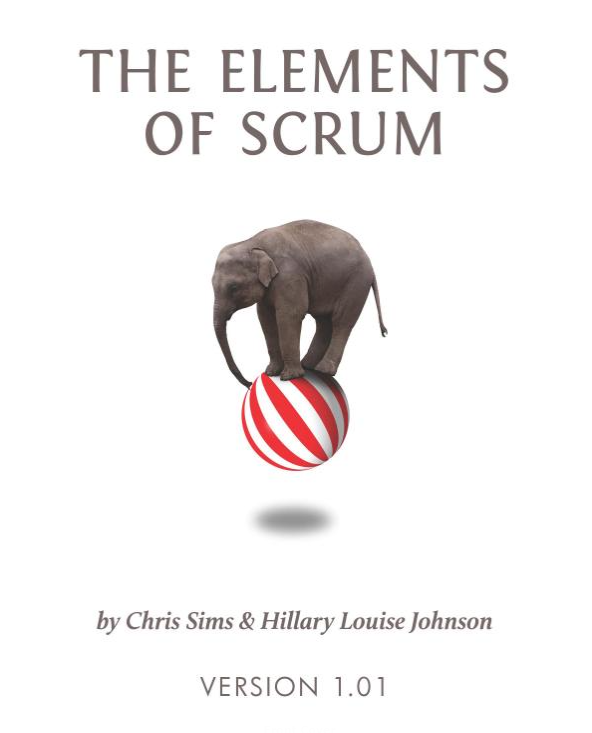
Si tratta di un libro leggermente più corposo ma persino più scorrevole del precedente, all’interno del quale Chris Sims sfrutta al massimo le capacità di storytelling della sua co-autrice e insieme ci guidano attraverso uno scenario di applicazione pratica dello Scrum, per illustrarci i principi, i metodi e le insidie che nasconde.

The Elements of Scrum opens with a blow-by-blow description of a week in the life of a scrum team, then briefly details the history and origins of scrum, comparing it to traditional methodologies and providing context for how scrum applies to the cultural history of the software industry.

Una risorsa fondamentale per il BIM Coordinator che voglia trovare modi diversi e migliori per gestire il lavoro.

Indice

A Week in the Life of a Scrum Team

Part I: Introduction to Agility

  • In the Beginning: The Waterfall Method;
  • Enter the Agilistas;
  • Agile Values & Principles;
  • The Business Case for Agility.

Part II: Scrum

  • A Brief History of Scrum;
  • Scrum Roles;
  • The Sprint;
  • Scrum Artifacts;
  • User Stories;
  • Estimating The Work With Story Sizes.

Part III: Supporting Practices

  • Ok… now what?
  • Release Planning;
  • User Personas;
  • Story Mapping;
  • Paper Proltotyping;
  • The Project Micro-Charter;
  • Refractoring;
  • Test-Driven Development;
  • Pair Programming.
books and literature

Leo Tolstoy’s The Cossacks

After War and Peace, every character ranks a score between 1 and Pierre. On a scale from 1 to Pierre, The Cossacks‘ main character ranks a solid 9, with his strife for happiness and his zero idea of how to achieve it. Leo Tolstoy’s The

Read More »
books and literature

Alexander Pushkin’s The Queen of Spades (and other stories)

This particular collection, in the charming Penguin’s clothbound classics, contains three sets of stories: The Tales of the Late Ivan Petrovich Belkin, a collection of short stories; the fairly lengthy novella Dubrovsky; and the titular Queen of Spades. Though I would have appreciated the title to better reflect the

Read More »
games, gamification and rpg

Engagement as the Architecture of Learning

A few weeks ago, I gave you my two cents (well, they’re more than two cents, by now) on the future of adult learning, and the first pillar of my theory was the necessity to involve game design. This week, back from Denmark and while

Read More »
Share on LinkedIn
Throw on Reddit
Roll on Tumblr
Mail it
1 Comment

Post A Comment

This site uses Akismet to reduce spam. Learn how your comment data is processed.

RELATED POSTS

Leo Tolstoy’s The Cossacks

After War and Peace, every character ranks a score between 1 and Pierre. On a scale from 1 to Pierre, The Cossacks‘ main character ranks a solid 9, with his strife for happiness and his zero idea of how to achieve it. Leo Tolstoy’s The

Read More

Alexander Pushkin’s The Queen of Spades (and other stories)

This particular collection, in the charming Penguin’s clothbound classics, contains three sets of stories: The Tales of the Late Ivan Petrovich Belkin, a collection of short stories; the fairly lengthy novella Dubrovsky; and the titular Queen of Spades. Though I would have appreciated the title to better reflect the

Read More

Engagement as the Architecture of Learning

A few weeks ago, I gave you my two cents (well, they’re more than two cents, by now) on the future of adult learning, and the first pillar of my theory was the necessity to involve game design. This week, back from Denmark and while

Read More