
Well, this was a fairly unusual read for me in this period, I’m more in my sci-fi era, but good things come from good friends who gift you books you wouldn’t have bought: they usually help you discover something cool you didn’t know.
What I discovered with this book is not so much the authors (or maybe I should say the autoresses, to quote Hercule Poirot): what I discovered was the British Library – Tales of the Weird Collection, and now I’m in danger of buying everything.
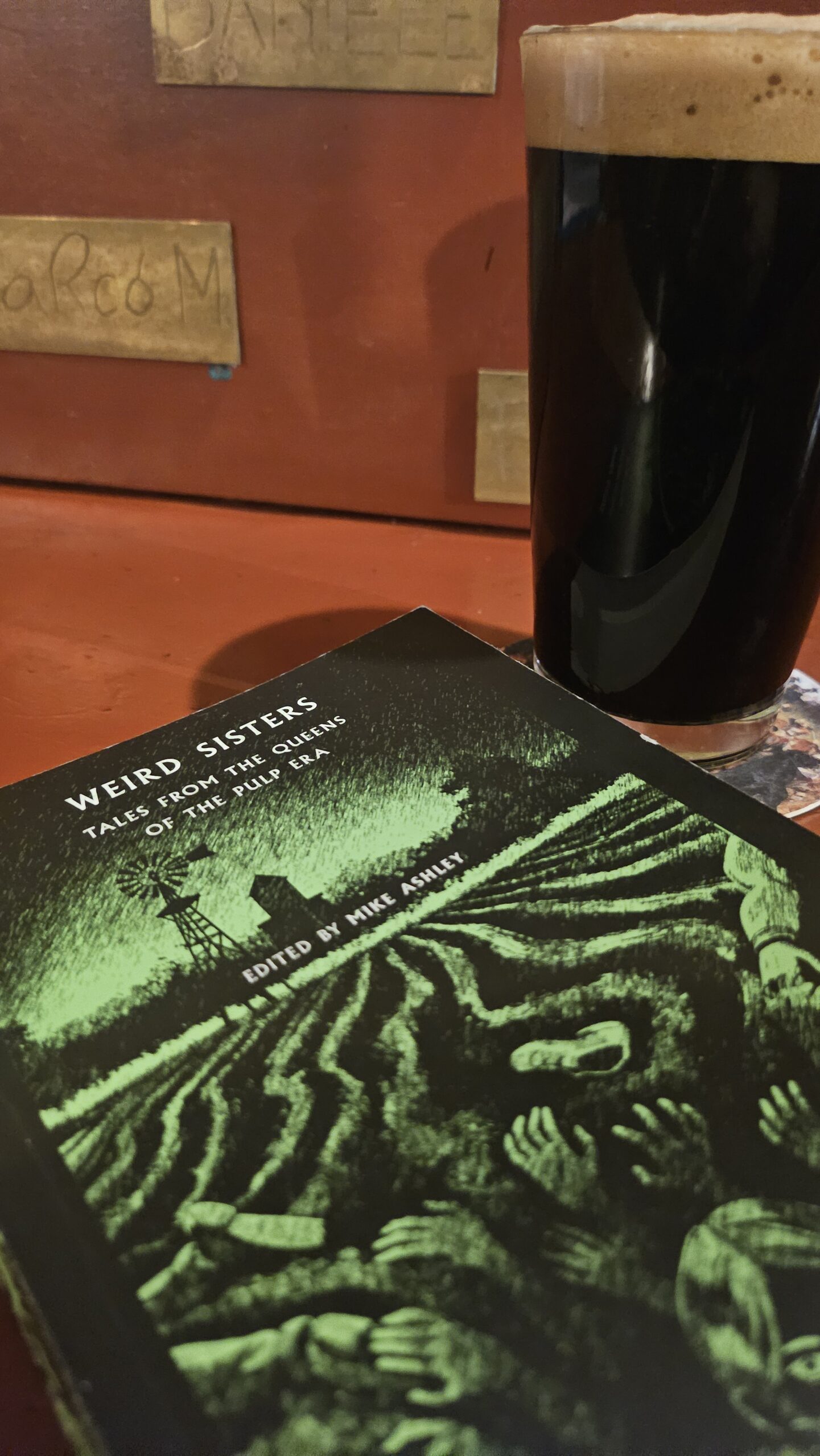
Anyway, back to the book, it’s a collection of stories from female writers who are defined “queens of the pulp era,” and span from the 1920s to the late 80s, a considerable range of time. Their common trait is a certain approach to horror and the supernatural, one that might very well be considered in the realm of the weird, and they all come from the pages of the well-known magazine Weird Tales. They are Greye La Spina (1880–1969); G.G. Pendarves, pen name of Gladys Gordon (1885–1938); Everil Worrell (1893–1969); Mary Elizabeth Counselman (1911–1995); C.L. Moore (1911–1987); Dorothy Quick (1896–1962); that Lucy Maud Montgomery (1874–1942) that’s more famous for Anne of Green Gables; Frances Garfield, pen name of Frances Marita Obrist (1908–2000); Allison V. Harding, a pen name associated with the couple Jean Milligan (1919–2004) and Lamont Buchanan; Margaret St. Clair (1911–1995); Evangeline Walton (1907–1996); Leah Bodine Drake (1904 – 1964); Dorothea Gibbons (1902–1989); Tanith Lee (1947–2015).
Being a collection of short stories, they’re dishomogeneous in tone and quality, as you might expect, and things didn’t start off very well with La Spina’s Rat Master, because it’s one of those horror stories that grab you and shake you and claim you should be scared by telling how scared you should be and shoving supposedly scary stuff under your nose, except I’m not eight years old anymore. Luckily, it was literally the only story of the collection with this attitude.
Talking about every story in the collection would be beside the point, and it would take me forever, but I can point out my favourites and why.
The Withered Heart by G.G. Pendarves and Foxy’s Hollow by L.B. Drake were very nice for their endings (particularly the plot twist in the latter), and I enjoyed the unusual setting of E. Walton‘s They That Have Wings. The main character of M. St.Clair‘s Brenda was absolutely adorable, right down to the final plot twist, and A.V. Hardin‘s The Underbody was chilly as fuck. But the first place goes to C.L. Moore‘s Daemon, I think: it’s more fantasy than horror, it has a devilish Captain and works marvellously around the idea of woodland spirits being unable to co-exist with people as long as they have a soul, stuffing Pan and his well-earned panic into the picture.

No Comments