
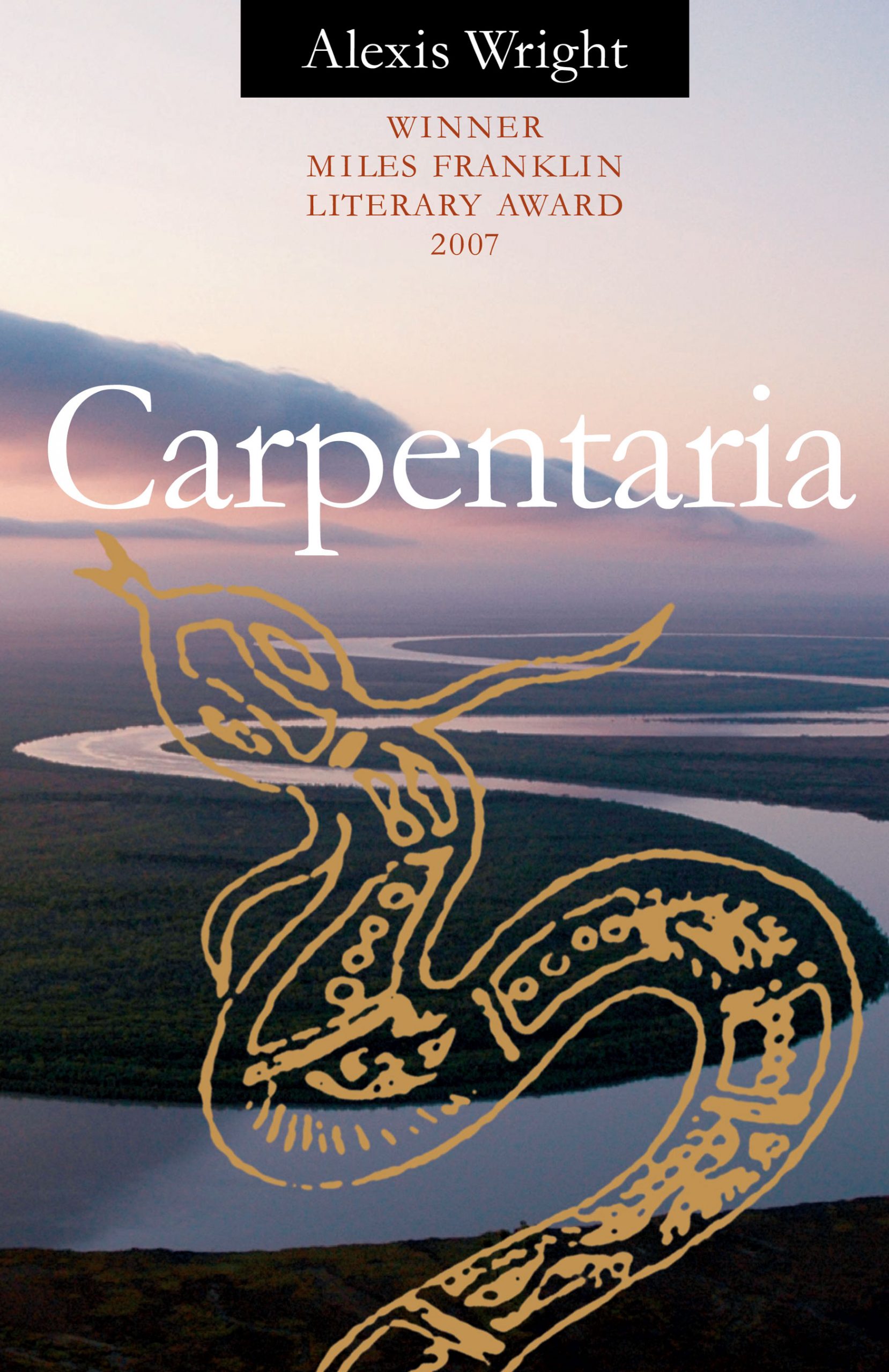
Alexis Wright‘s Carpentaria, an epic work set in a fictional town called Desperance, opens before there are any people in it at all: an ancestral serpent, “a creature larger than storm clouds,” descends from the stars and drags itself across the wet clay of the Gulf country, and the tunnels its body scours into the ground collapse into valleys, and the sea rushes in after it, and that is how the rivers of the book’s landscape come to exist. This is the first structural fact of the novel: the path came before the geography. The track the serpent left isn’t laid over an existing terrain the way a road is laid over land that was already there, waiting. The terrain is a record of the track having been travelled. Geography is the residue of a journey.

The novel follows Aboriginal and white residents through conflict over land, power, and a mining company, and is known for its large cast, mythic style, and political force; it blends realism with Aboriginal storytelling traditions and a strong critique of colonial and corporate power. At its center are figures such as the Phantom family, Mozzie Fishman, and Will Phantom, whose lives are tied to the community’s struggles.
Wright is Waanyi, the Aboriginal Australian people from the southern highlands of the Gulf, and she spends the rest of the novel showing what it means to live inside a landscape mostly through the eyes of Mozzie Fishman, a preacher who leads a convoy of battered cars on an ancient religious crusade along the spiritual road of the great ancestor, a journey that spans the entire continent and is older than time itself. Fishman’s convoy is maintaining the songline, singing the tribal songs, telling the stories, driving the route again, because the track’s continued existence depends on someone continuing to travel it. Stop singing it, stop driving it, and it doesn’t become an abandoned road. It stops being a road at all.
We tend to treat a path, once built, as a fixed physical artefact that persists on its own regardless of whether anyone uses it: a sidewalk is still a sidewalk whether or not a single person walks it this year. Wright’s novel describes a relationship to route that Western infrastructure thinking has almost no vocabulary for: a path that is dependent on continued use, that exists in the present tense only because someone keeps walking it, and that would not survive being merely preserved, mapped, or protected behind glass. You cannot conserve this kind of path by leaving it alone: you conserve it by walking it, which is a much more demanding and much less convenient idea of stewardship than the one usually built into heritage policy, which tends to assume the safest thing you can do to an old route is stop disturbing it.
There’s a second, harder thread running under the convoy plot: the same serpent whose ancient track the convoy is singing is, elsewhere in the book, disturbed by a mining operation cutting into the land above where it’s said to still live, and the disruption ripples out through the whole town in the register of catastrophe. Wright is not offering the songline as a charming alternative planning concept for architects to borrow a metaphor from: she’s describing a living legal and spiritual order that the mine’s engineers never had to consult and that persisted, and was violated. The track was real to the people driving it, whether or not it appeared on anyone else’s map, and the map’s failure to include it never made it any less real, or any less capable of being harmed.




No Comments