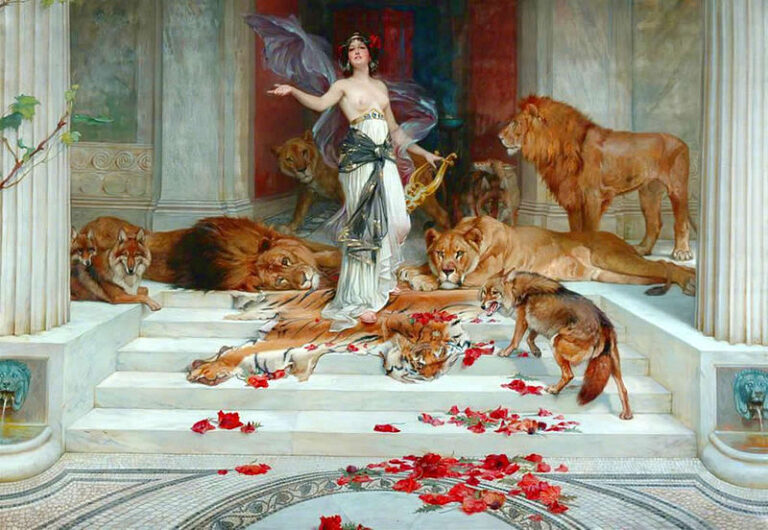
"All this he saw, for one moment breathless and intense, vivid on the morning sky; and still, as he looked, he lived; and still, as he lived, he wondered."

Ursula Moray Williams’ Winter Tale (1): A Carol for Gobbolino

Ursula Moray Williams is the author of over 70 children’s novels. Among them, one called Gobbolino, The Witch’s Cat is particularly well known and was published in 1942 with a charming set of illustrations drawn by Williams herself. There have been other editions, including a 70th-anniversary edition, with illustrations by Catherine Rayner.

Gobbolino is a little black kitten, who was born in a witch’s cave but has a couple of problems: instead of being completely black, he has a white paw; instead of having yellow eyes, he has big blue eyes; instead of wishing to be a witch’s cat, he wishes to be a house cat. His attempts are botched by envious cats or other misfortunes.

Ursula Moray Williams also wrote a short story called “A Carol for Gobbolino”, which was also included in the Story Teller magazine.

In this story, Gobbolino joins the children of the farmhouse for some carolling, but they are ambushed by some cats living in an abandoned building.
He saves the children and helps them run away and, eventually, he finds shelter in a church when people are reenacting the Nativity scene. The evil cats try and call him out as a witch’s cat, as they usually do, but people in the church finally pay no attention to them.


Summertime

Omeros in the Caribbeans

Derek Walcott was a Saint Lucian poet, playwright, and painter, and one of the major voices of Caribbean literature. He won the Nobel Prize in Literature in 1992, and his work often explores Caribbean history, identity, colonial inheritance, and the meeting of European and African

Read More »
books and literature

Ioanna Papadopoulou’s The Castaway and the Witch

I had a genuine “oh shit” moment when I read the author’s preface saying this was darker than “Winter Harvest” because – and I absolutely ADORED “Winter Harvest” – that was pitch-black dark. I thought “we’re all going to die”. This maybe has something to

Read More »
Summertime

The Path You Have to Sing

Alexis Wright‘s Carpentaria, an epic work set in a fictional town called Desperance, opens before there are any people in it at all: an ancestral serpent, “a creature larger than storm clouds,” descends from the stars and drags itself across the wet clay of the

Read More »
Share on LinkedIn
Throw on Reddit
Roll on Tumblr
Mail it
No Comments

Post A Comment

This site uses Akismet to reduce spam. Learn how your comment data is processed.

RELATED POSTS

Omeros in the Caribbeans

Derek Walcott was a Saint Lucian poet, playwright, and painter, and one of the major voices of Caribbean literature. He won the Nobel Prize in Literature in 1992, and his work often explores Caribbean history, identity, colonial inheritance, and the meeting of European and African

Read More

Ioanna Papadopoulou’s The Castaway and the Witch

I had a genuine “oh shit” moment when I read the author’s preface saying this was darker than “Winter Harvest” because – and I absolutely ADORED “Winter Harvest” – that was pitch-black dark. I thought “we’re all going to die”. This maybe has something to

Read More

The Path You Have to Sing

Alexis Wright‘s Carpentaria, an epic work set in a fictional town called Desperance, opens before there are any people in it at all: an ancestral serpent, “a creature larger than storm clouds,” descends from the stars and drags itself across the wet clay of the

Read More