
These last six days have been about materiality: one object, one specific made or found thing, and its exact physical fact being conflated with everything that’s accumulated on top of that fact through use, culture, or attention. A crate. A furrow. A toad in an invented garden.
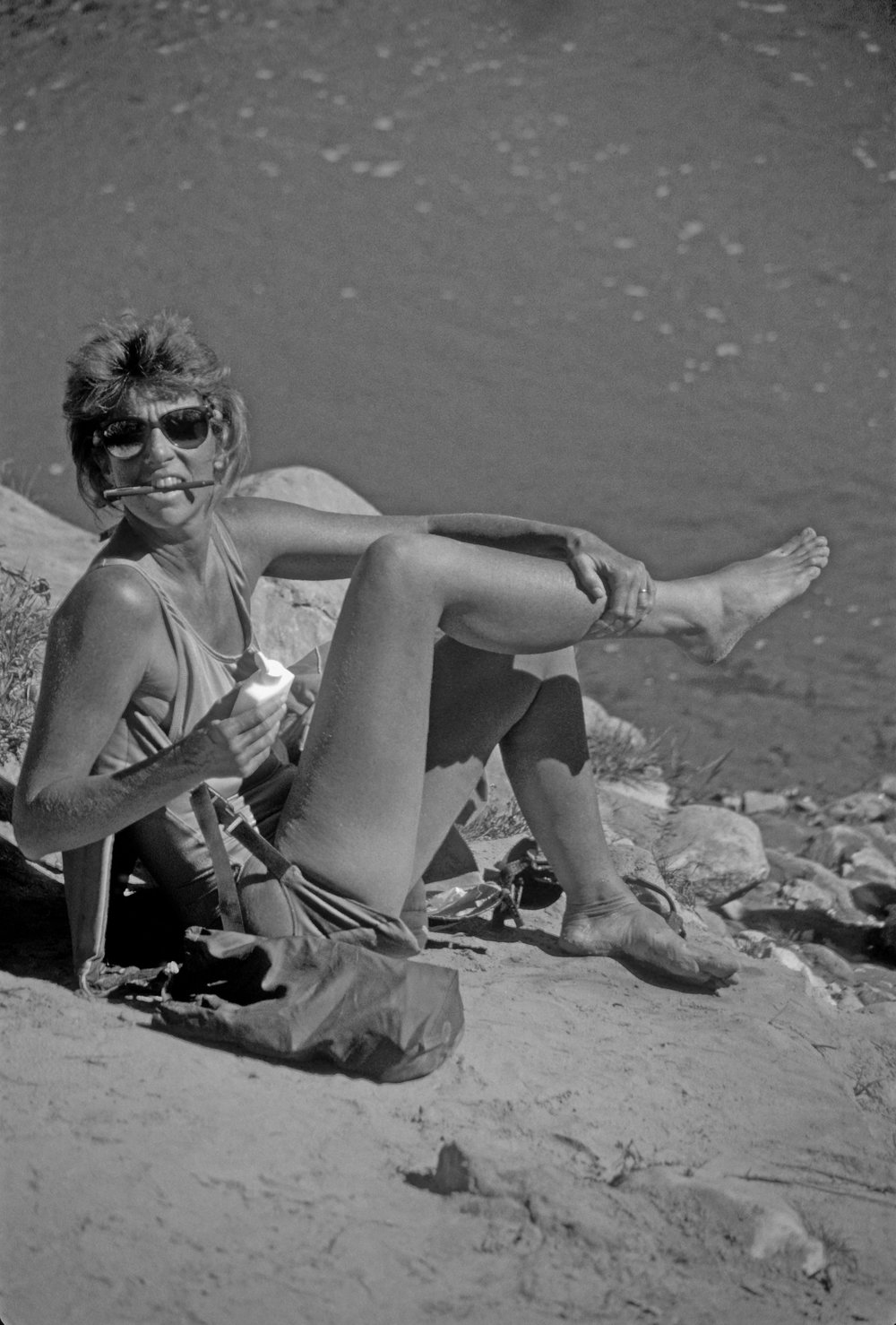
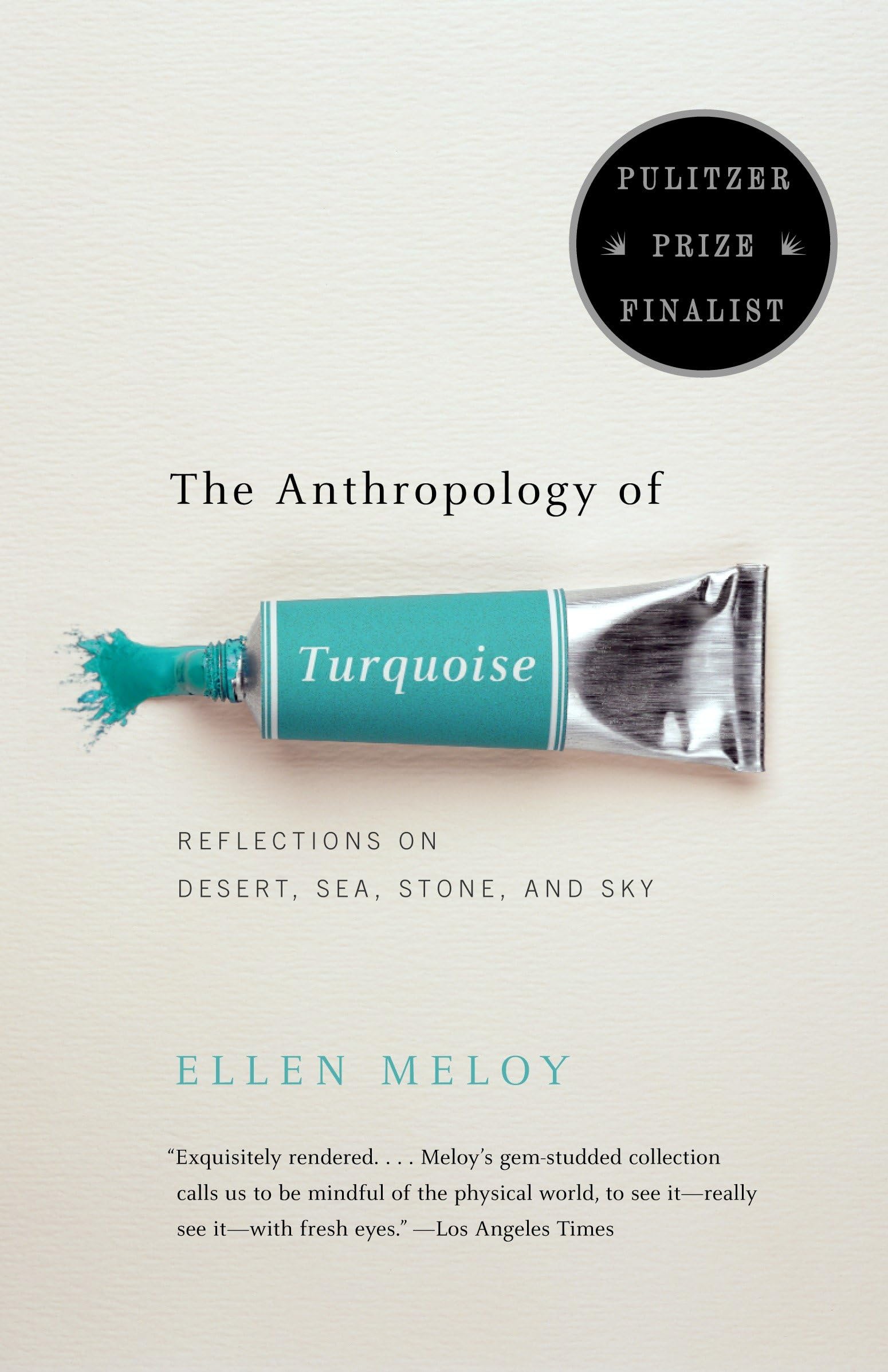
Ellen Meloy takes this attention and transforms it into an actual method rather than a byproduct of style, because her whole book is organised around a single material fact: turquoise, the stone and the colour, followed across geology, chemistry, and roughly four unrelated cultures that each independently decided to pick it up as something significant. The mineral itself is the same — a hydrated phosphate of copper and aluminium, a specific blue produced by specific trace elements, chemically identical whether it’s set into Persian court jewellery as a charm against harm or worn by a Navajo elder as a marker of status and home ground — and yet, depending entirely on who’s holding it, that identical chemistry comes to mean something else. Meloy’s real subject isn’t the stone.: it’s the fact that the stone’s meaning and the stone’s chemistry travel on completely separate tracks, and that neither one gives you the other for free. You have to actually go and find out what a specific culture did with a specific fact of matter, the way she does, restlessly, across deserts and coastlines and her own family’s difficult history, without ever letting the color stand in generically for “beauty” or “the exotic” the way a lazier book would.
This is a harder standard for a design discipline to meet than it sounds, because we specify materials constantly without necessarily doing either half of Meloy’s work. It’s easy to select a stone, a timber, a finish for the meaning we perceive in our cultural framework — the warmth it’s supposed to signal, the luxury it’s supposed to imply — without ever engaging with the fact that the same material might resonate in a completely different way to another culture. And it’s equally easy to specify a material purely for its technical performance without any account of what it will come to mean to the people who live with it, which is its own kind of hollowness, the inverse failure. Meloy’s whole book argues, patiently and at length, that you don’t get to skip either register. The stone is a specific chemical fact and a Persian talisman and a Navajo inheritance and a bulldozed hillside in a threatened desert, all at once, and a writer, or a builder, who only accounts for one of those layers has left the others as hollow places, waiting to be noticed by someone who actually knows what they’re looking at.



No Comments