
The Misconception
Confession time: I hate team building. I think team building sucks. When you’re a company, team building is the activity you do to wash your conscience and tell yourself people are the problem when something isn’t working. When you’re a team member, team building is the activity you’re coherced to undertake as proof you’re not a troublemaker. I’m sure there are many professionals out there who do valuable activities to identify and enhance strengths and opportunities within a team, but I rarely encountered one.

Anyway, if you’re familiar with stuff like team building, you probably heard of LEGO Serious Play. Maybe you’ve even experienced something that passed as LEGO Serious Play, where a guy calling himself a facilitator poured some bricks on a table and maybe asked you to participate in some collaborative building activity where a tower didn’t need to fall, an elephant was constructed while not looking, or ducks swarmed the place. If everything went right, you participated in a workshop where people built little structures, told stories about them, everyone got to participate equally, and at the end of the day your team felt more connected and creative. If everything went wrong, you felt you were pushed into something you weren’t comfortable with, and then bullied or psychoanalysed into giving meaning to a bunch of bricks.

Fun team building with bricks, they say. Maybe a bit outdated, they say. A good way to spend a pleasant evening, without anything concrete coming out of it. Better to play paintball or row a boat together.
Here’s the thing that pisses me off about this framing: it’s not wrong, exactly. Teams do feel more connected after a LEGO Serious Play session and it does involve unblocking the creative process. But describing it as team building is like describing the internet as “a way to send emails.” Technically true, on a very shallow level, but maybe not?
The reason this matters is simple: when you understand something as “fun team building”, you schedule it for a Friday afternoon, hire some facilitator who looks bright and who’s good at getting people to laugh and participate, you measure success by whether people had fun and felt heard. And then you’re not surprised when nothing changes strategically, because that’s not what you wanted in the first place.
Well that, dear, is not LEGO Serious Play.
The True Story
To understand what LEGO Serious Play actually is, you need to know where it came from, because unlike most workplace methodologies that emerge from consultancies trying to sell something, this one came from a very specific problem. The official story’s here, and it has been told many times in many versions: the most authoritative source is the article “How It All Began: The Origins Of LEGO® Serious Play®”, published in 2018 in the International Journal of Management and Applied Research, and it’s authored by Johan Roos and Bart Victor, the two professors officially credited by LEGO® as the people behind the idea of the methodology.
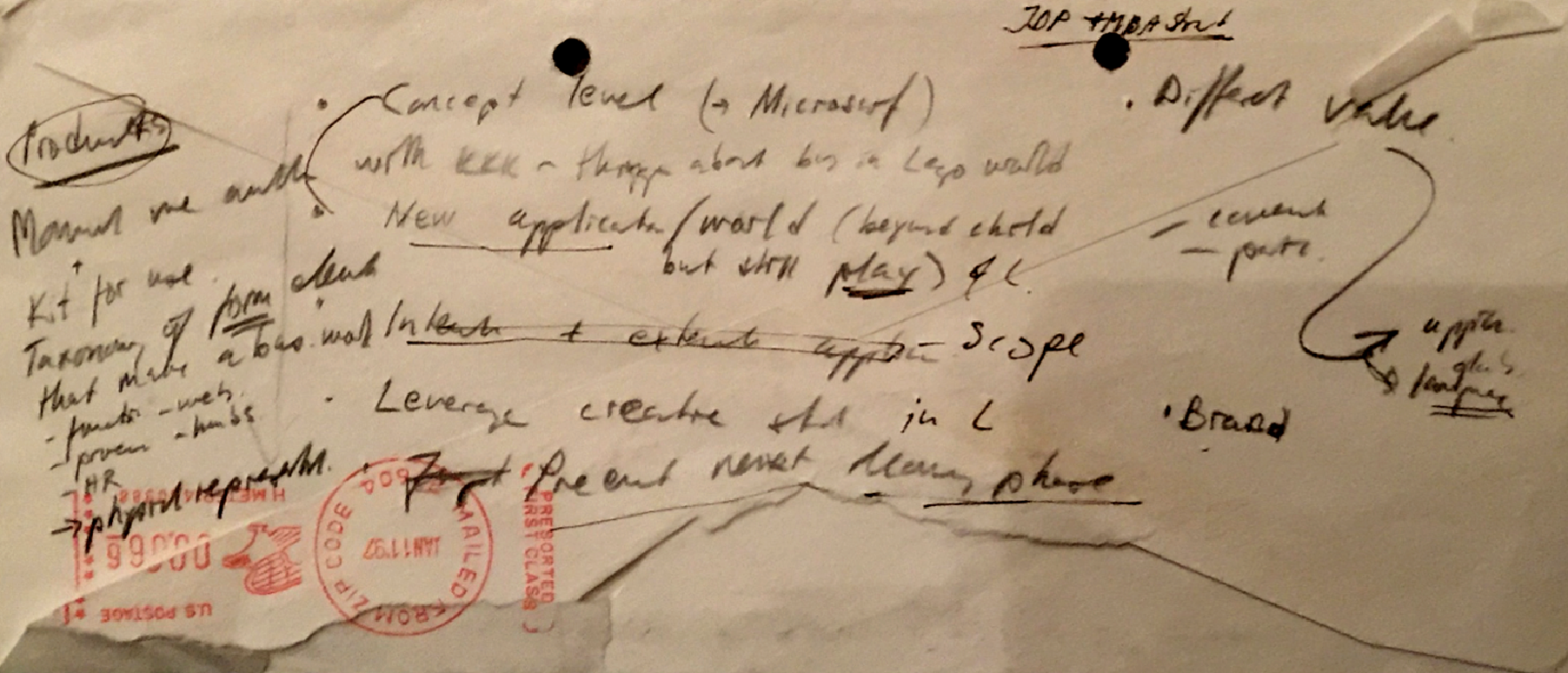
The context is a strategic crisis the LEGO company was facing in the 1990s. Not a people management crisis. Not an inclusion crisis. A crisis of strategy. The company was drowning in analysis. They had data. They had experience. They had smart people in the room. And yet they were trying to undertake too many roads at once. LEGO CEO Kjeld Kirk Kristiansen felt that something was broken in how strategy was happening, and he found two academics — Johan Roos and Bart Victor — who both were professors of strategy at the International Institute for Management Development (IMD) in Switzerland. Particularly, they were researching a similar problem LEGO was facing: how do organisations develop original strategies in complex, uncertain environments?
Their insight was radical: the problem wasn’t that executives needed more data or more thinking time; the problem was that traditional strategy-making didn’t engage the brain in the correct way, and we simply aren’t wired to tackle complexity without a little help from areas of the brain that aren’t usually working in a traditional environment.
If you imagine a typical strategy workshop, it involves frontal presentations, breakout discussions, analysis frameworks. Everything we employ is designed to work through our analytical mind, our logical reasoning, our ability to talk about the future in abstract terms. But Roos and Victor applied something that cognitive science had been saying for years: human beings have a richer capacity for thinking when their whole body is involved. When their hands are engaged in building something tangible, and then they can point at a three-dimensional thing and say “that’s our problem” or “that’s our future.”
So they designed a methodology that would do exactly that. They tested it with strategy-makers at companies like Tetra Pak, Hydro Aluminium, and TFL while working with LEGO’s own leadership team, and they documented that people generated strategies that were more original and more coherent when they engaged their hands and their spatial reasoning, alongside their analytical thinking. On top of that, they felt genuinely committed to the strategy they came up with, not just intellectually convinced of it.
LEGO officially launched LEGO Serious Play as a product in 2002, and then it became Open Source, and the rest is history, but the methodology was never designed to build team cohesion. It was designed to solve a strategy problem: how to bridge the gap between all the analysis and experience you’ve gathered and the imaginative leap required to create an original strategy.

The Intellectual Foundation
This solution — using physical, three-dimensional building to generate strategy — is grounded in cognitive science and organisational theory.
The methodology draws from:
- constructivism (Piaget, 1951): we learn through active construction and engagement with ideas;
- constructionism (Harel & Papert, 1991): the refined version that says we learn especially well when we construct something tangible, something you can show to others;
- Complex Adaptive Systems Theory (Holland, 1995): how systems with multiple interdependent parts behave when they’re trying to adapt to change;
- Autopoietic Corporate Epistemology (von Krogh & Roos, 1994-1995): how organisations create knowledge and how that knowledge becomes embedded in strategy and identity.
I’m mentioning these because they matter if we want to think as LEGO Serious Play for what it is: it isn’t a clever workshop design with bricks, but a methodology that emerged from research into how human beings and organisations actually think and create. The fact that it uses LEGO bricks is almost irrelevant: those bricks are the medium that allows a certain mindset to emerge, but they’re not the point. The point is what happens when you engage imagination, hands, bodies, and social collaboration in the service of strategic thinking.
Why I’m harassing you about it
I’ve been working on structured instructional design for a while now. One of the things that’s become clear to me is that we often misname what we’re doing, and that misnamed causes us to design wrong, teach wrong, and measure success wrong.
LEGO Serious Play suffers from the same problem: it’s been renamed in people’s minds from “a methodology for generating original strategies in complex organisations” to “a fun team-building activity.” And because it’s been renamed, it gets:
- used for the wrong purposes (team cohesion instead of strategy);
- facilitated by people with the wrong skills (workshop entertainers and people pleasers instead of strategic thinkers);
- evaluated by the wrong metrics (did people have fun instead of did we discover new strategic insights);
- dismissed when it doesn’t deliver on team-building metrics (because it was never meant to);
- underutilised by organisations that have actual strategic challenges (because they don’t recognise it as a strategic tool).
I think it’s one of the most interesting — and most misunderstood — methodologies in organisational development today. Let’s give the methodology back its actual name and actual purpose.
The Strategic Challenge, a.k.a. why the methodology exists at all
1.1. The Problem is Linear Thinking in a Non-Linear World
Most strategy work assumes that organisations operate like a machine: you identify the parts, analyse each part, optimise the relationships between them, and end up with a strategy.
This works fine if you’re designing a production line, though I’m not even sure about that.
The assumption underneath traditional strategy-making is what we call decomposition: the belief that complex things can be understood by breaking them into simpler parts, analysing those parts in isolation, and then reassembling your conclusions back into a coherent whole. It’s how engineering works. It’s how analysis works. It’s how most MBA programs teach you to think.
But organisations are systems: they’re messy, interconnected networks where changing one thing ripples through everything else in ways that aren’t always predictable or linear. Your design team’s behaviour affects your development roadmap, which affects hiring, which affects culture, which affects your ability to retain the people who understand your market. You can’t analyse the development workflow in isolation and expect that analysis to hold when you change three other variables.
This is the fundamental disconnect in traditional strategy: we use decomposition methods (break it down, analyse the parts, reassemble) to make decisions in complex systems that don’t behave according to decomposition logic. And most people in an organisation don’t even see the same system in the first place.
The Invisible System: Everyone’s Right, and Everyone’s Wrong
Imagine a typical strategy workshop with 15 people. You have the VP of Engineering who sees the system as a technical architecture problem, while the VP of Sales sees the system as a market segmentation and customer acquisition problem. You have the Operations lead, who sees it as a resource allocation and process efficiency problem, the CFO sees it as a financial modelling problem, and there are tools for that, while the Chief Product Officer sees it as a feature prioritisation problem.
They’re all right, they’re all looking at the same organisation, and they’re all describing completely different systems because they’re looking at different parts and different relationships.

In a traditional strategy meeting, this plays out predictably: everyone presents their analysis of their part of the system, and then you get a lot of nodding and some arguments about whose analysis is most important, the conversation stays abstract, and because it stays at the level of talk, everyone can maintain their own mental model of how the system works, no matter what anyone else says.
This is very comfortable for everybody, and very inefficient for the organisation.
Strategy often fails in execution because people agreed on words, but they didn’t actually develop a shared understanding of how the system works. They all think they are aligned because they had a discussion and they all agreed on the same strategy document. Then they try to implement it, and suddenly all those different mental models collide with each other, and the strategy falls apart, not because the strategy was bad, but because people were operating from incompatible understandings of the system.
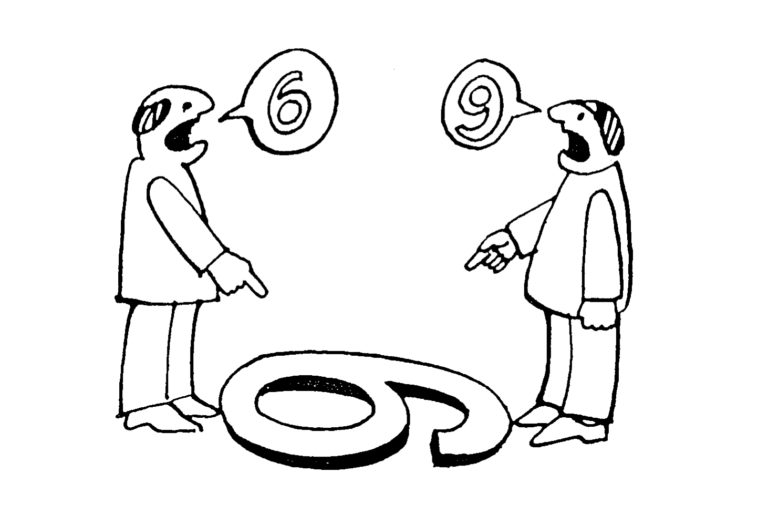
Not just a communication problem
You might think the solution is just better communication, more alignment meetings, clearer documentation (and maybe a little bit of fun team building), but that misses the crucial truth that the system is too complex for language alone to make visible.
I don’t mean language is bad, I love talking. I just mean that human beings have limited working memory. When I describe a system to you in words, you can hold maybe 5-7 variables in your head at once before you lose track. But real organisations have dozens or hundreds of variables, and more importantly, they have relationships between those variables — dependencies, feedback loops, time delays, nonlinear effects — that language struggles to capture.
Try this: ask five people in your organisation to draw (yeah, with pen and paper) how decisions flow from strategy to execution. Don’t let them talk to each other first. Just have them draw it. You’ll get five different diagrams. Not because they disagree on what’s written in the strategy document, but because the system model they’ve built in their heads is different.
This is where complexity science comes in. Complex systems have properties that emerge from the interaction of their parts, not from the parts themselves: you can’t understand a flock of birds by understanding one bird, you can’t understand an ecosystem by understanding one organism, and you can’t understand an organisation by analysing one function or one process.
Johan Roos, while developing what they eventually called LEGO Serious Play, was working directly from this insight when we say he was researching how organisations actually think about complex systems, and he found that traditional analysis and discussion don’t generate shared mental models of those complex systems. They just generate shared language that masks continued disagreement.
The LEGO Solution: making the Invisible Visible
Here’s where the bricks come in: the medium actually matters.
When you sit down with bricks and you’re asked to build your organisation’s decision-making system or how our customer journey actually works, or what happens when we try to scale, something shifts. Since you can’t be abstract anymore, you have to make choices. Is that a linear flow of decisions, or a feedback loop? If it’s a feedback loop, how do you represent that with bricks? How do you show where power actually sits in how things actually get decided? Do certain people or functions have to approve everything, creating a bottleneck? Do some decisions happen in parallel? Do some decisions actually circle back and restart earlier parts of the process?
When you’re building, you can’t hide behind words. You have to manifest your mental model in three dimensions, in a way that other people can see, touch, and can immediately recognise or question. When other people see your model, they immediately recognise whether it matches their mental model or not.
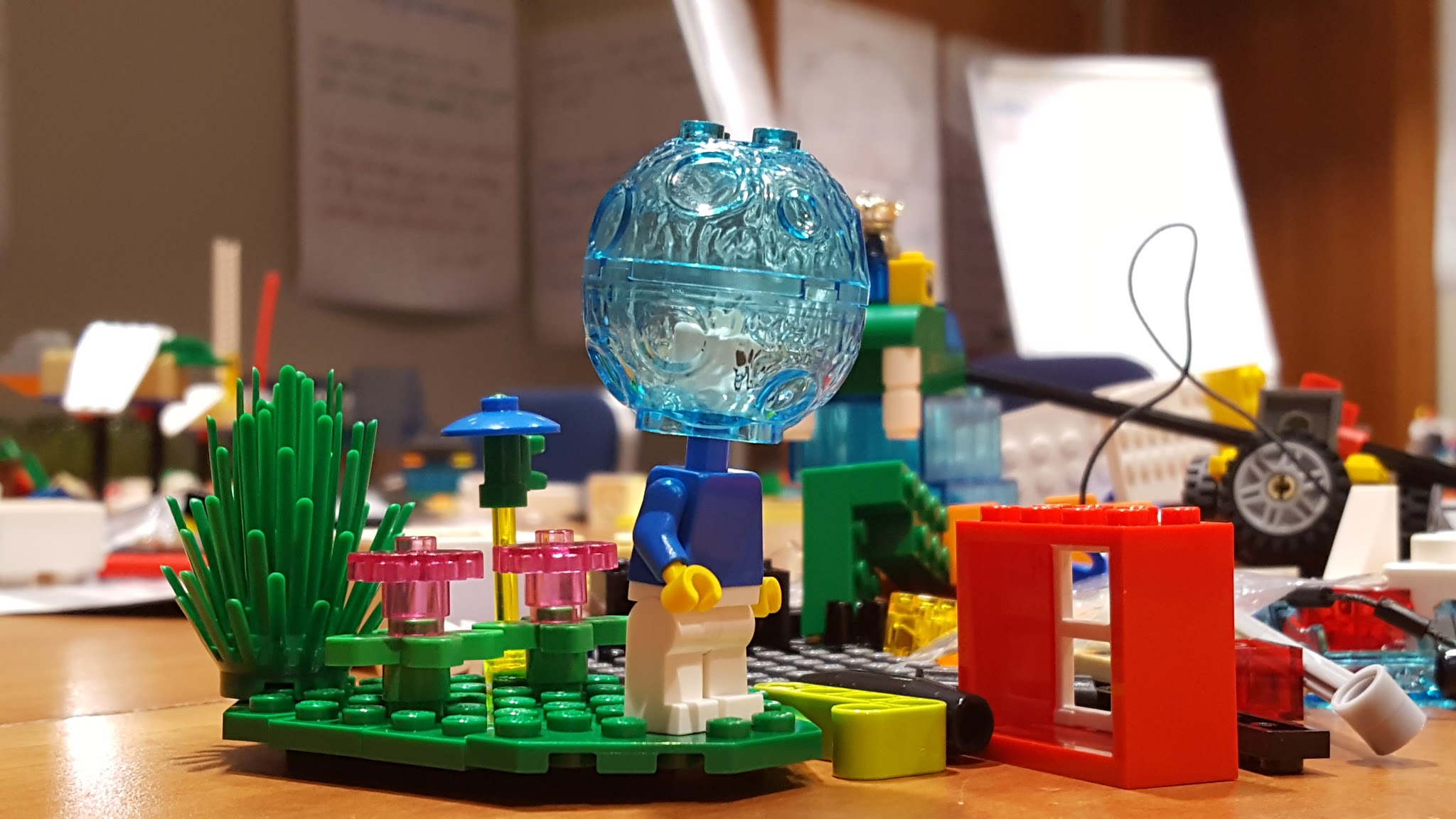
When these aren’t abstract arguments anymore, when they’re made visible, you can’t hide the fact that you’ve been operating from incompatible system models. Once you see the incompatibility, you can actually address it.
The Emergence of Shared Understanding
What happens in a good LEGO Serious Play session is that people don’t just present their models to each other and leave, but they actually modify their way of seeing the world, based on what they see others have built and presented.
The Sales VP sees the Engineering model and says: “Wait, this is missing the part where sales gets feedback from customers.” So they might add something or create a shared model together, tackling the shared picture. The Engineering VP might see that addition and say: “But when that feedback comes in, it doesn’t actually go to product planning: it goes directly to engineering because we’re closer to the customer.” So they understand how the system works from yet another point of view. And the CFO might point out the time delays: “It takes six weeks for that to actually get approved because of budget cycles.”
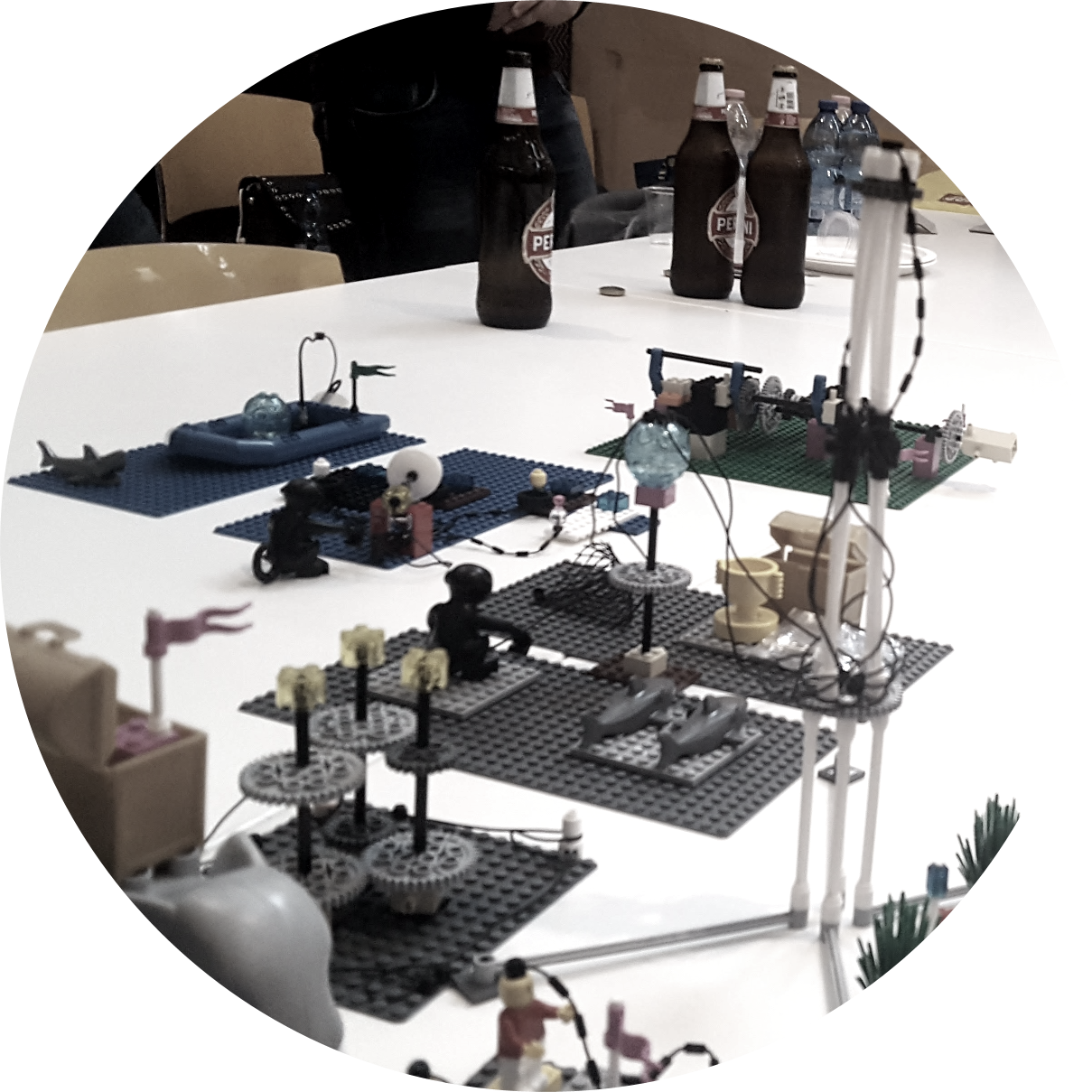
What emerges through this iterative building and discussion is rarely a compromise between competing models: the result is a more complete model, one that actually includes the feedback loops, the bottlenecks, the nonlinearities, the places where the organisation is fighting itself.
This is the systems thinking the original creators were after: not analysis that breaks the system into parts, but visualisation that shows the system as an integrated whole, with all its complexity, all its feedback loops, all the places where different functions see different things.
Once you can see the system together, you can imagine solutions together.
Because here’s the thing about complex systems: you can’t solve them by analysing them. You can only understand them by imagining how they might behave under different conditions. “If we change this variable, how does that ripple through everything else?” You can predict that from data, we have mathematical models and AI for that, but models need to be instructed and you can’t instruct on what you can’t imagine. Humans are much better at imagining systems they can see and touch and manipulate, than systems they can only talk about.
Multiple Perspectives, One Shared Reality
This is where LEGO Serious Play diverges most sharply from traditional strategy work: in a traditional strategy workshop, the goal is often consensus. Everyone agrees on the same goals, the same priorities, the same direction. But, as we have seen, consensus is often fake. People agree on words while maintaining different mental models of how the system works.
In a LEGO Serious Play process, the goal isn’t consensus but coherence: a shared understanding of the system we’re actually operating in, even if we disagree about what to do about it.
The Sales VP and the Engineering VP might still disagree about whether we should prioritise customer requests or long-term product architecture, but once they’ve both seen how the decision-making system actually works, they’re disagreeing from a shared understanding of reality. They’re not talking past each other. They’re not operating from incompatible mental models.
That’s the difference, and it’s huge.
A strategy that emerges from a shared understanding of the actual system — even if stakeholders disagree about priorities — tends to hold up in execution. People aren’t blindsided by how other functions behave: they anticipated it because they built it together and saw it in the model. They know why the decisions flow the way they do. And when things don’t go according to plan, they understand the system well enough to adapt strategically, not just operationally.
Why can’t you do this with PowerPoint?
This is also why you can’t just do this with a really good PowerPoint presentation, or a detailed system diagram, or a business process mapping tool. All of those things might represent systems, but they don’t create the same effect, because they’re not interactive and embodied in the same way. When you look at a system diagram on a screen, you’re receiving information. Your brain is processing it in a particular way because you’re reading.
When you build a system with your hands, your brain is engaging differently. You’re making decisions in real time. You’re discovering relationships as you build. You’re translating abstract ideas — “what does feedback actually look like?” — into concrete physical choices. And when you describe your building to someone else, you’re narrating a model, and this engages their brain differently too. They’re listening to someone explain something they built, and they can ask “What does that portion of the model mean?” in a way that feels more natural and direct.
And crucially: when you see someone else’s LEGO model, you see their mental model in a way you don’t when you see a PowerPoint slide. A slide is polished. It’s already been interpreted and designed. A LEGO Serious Play model is raw by design, it shows where someone struggled to represent something, what they thought was important to include and what they left out. It shows their actual thinking, not a communication design. This is why LEGO Serious Play works for systems thinking that PowerPoint doesn’t: it forces external representation of internal models, and it does it in a way that’s transparent and open to challenge.
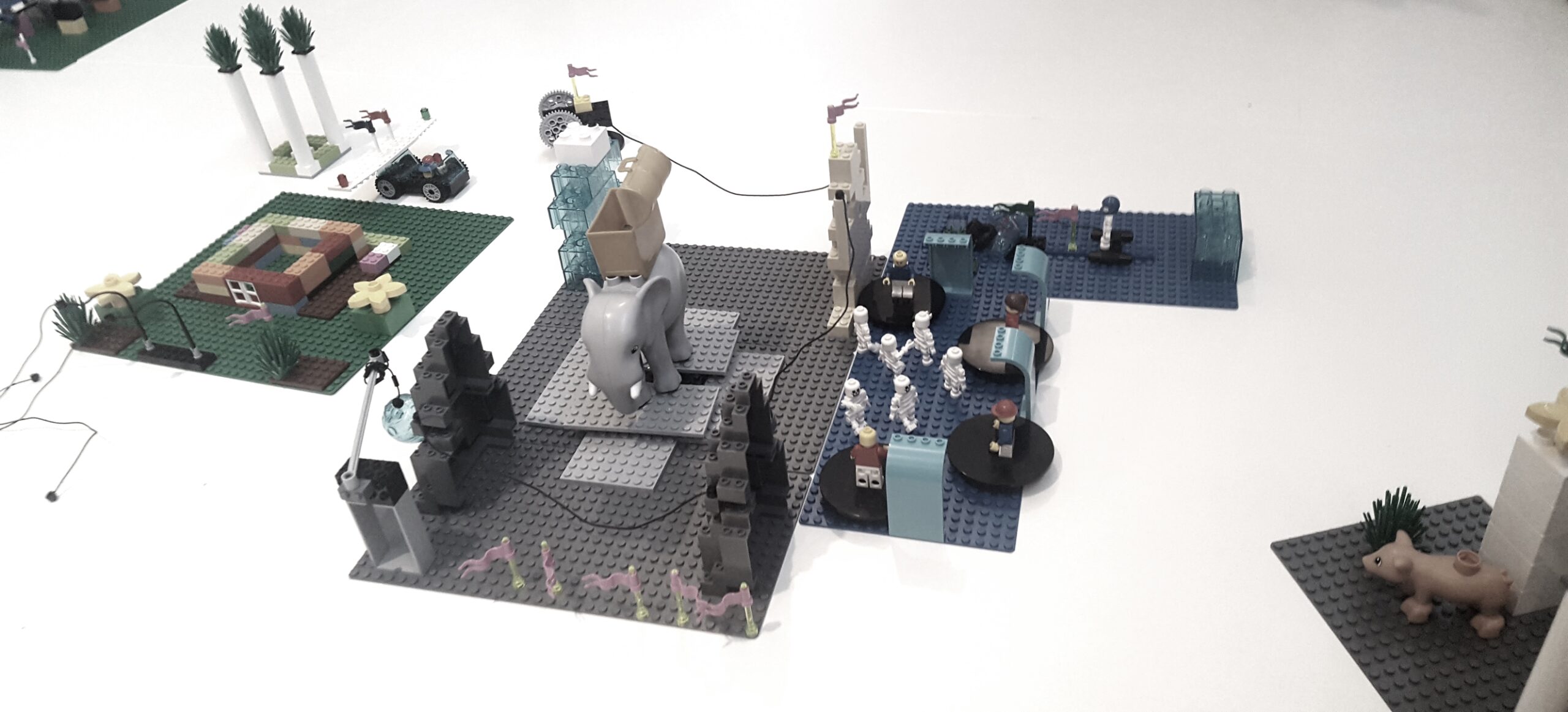
The Strategic Implication: from Analysis to Imagination
The thing is, you can’t develop original strategies for complex systems you don’t fully understand, and you don’t fully understand complex systems through analysis alone. With LEGO Serious Play, you understand them by building models of how they work, seeing those models challenged by other people’s perspectives, revising them, merging them, connecting them, and imagining how those systems might behave under different conditions.
That’s the work of strategy in a complex world. Not analysis, not consensus, but shared visualisation of complexity, followed by imaginative exploration of possibilities. That’s what LEGO Serious Play actually does.






No Comments