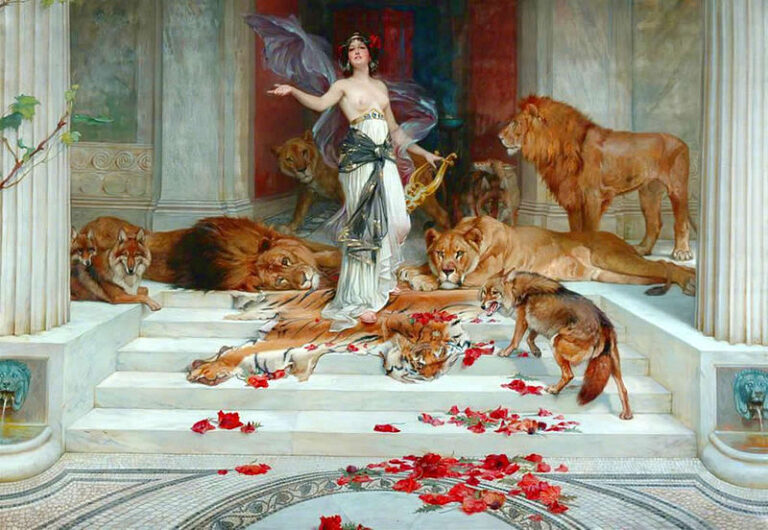
"All this he saw, for one moment breathless and intense, vivid on the morning sky; and still, as he looked, he lived; and still, as he lived, he wondered."

#Spooktober 7: the Phantom Piper

The Phantom Piper is a legendary figure from Tudor England, often associated with ghostly music and haunting various locations, particularly in the West Midlands of England.

One of the most famous legends involves the Phantom Piper of the Wrekin, a hill in Shropshire. According to local folklore, the piper’s music can be heard echoing through the hills, especially on misty nights. It is believed that the piper is a spirit of a long-dead musician who met a tragic fate, possibly linked to a historical event.

You can read more about him on my Patreon.

Further Readings:

  • Briggs, Katharine. The Encyclopedia of Ghosts and Spirits. New York: Dorset Press, 1971.
  • MacGregor, Alasdair Alpin. The Ghost Book: Strange Hauntings in Britain. London: Robert Hale, 1955.
  • Simpson, Jacqueline, and Steve Roud. A Dictionary of English Folklore. Oxford: Oxford University Press, 2000.
  • The Lore of Scotland: A Guide to Scottish Legends. New York: Random House, 2010.
  • “Phantom Piper of Derbyshire,” in Folklore of Derbyshire, Derbyshire Ghosts, and Legends
books and literature

Leo Tolstoy’s The Cossacks

After War and Peace, every character ranks a score between 1 and Pierre. On a scale from 1 to Pierre, The Cossacks‘ main character ranks a solid 9, with his strife for happiness and his zero idea of how to achieve it. Leo Tolstoy’s The

Read More »
books and literature

Alexander Pushkin’s The Queen of Spades (and other stories)

This particular collection, in the charming Penguin’s clothbound classics, contains three sets of stories: The Tales of the Late Ivan Petrovich Belkin, a collection of short stories; the fairly lengthy novella Dubrovsky; and the titular Queen of Spades. Though I would have appreciated the title to better reflect the

Read More »
games, gamification and rpg

Engagement as the Architecture of Learning

A few weeks ago, I gave you my two cents (well, they’re more than two cents, by now) on the future of adult learning, and the first pillar of my theory was the necessity to involve game design. This week, back from Denmark and while

Read More »
Share on LinkedIn
Throw on Reddit
Roll on Tumblr
Mail it
No Comments

Post A Comment

This site uses Akismet to reduce spam. Learn how your comment data is processed.

RELATED POSTS

Leo Tolstoy’s The Cossacks

After War and Peace, every character ranks a score between 1 and Pierre. On a scale from 1 to Pierre, The Cossacks‘ main character ranks a solid 9, with his strife for happiness and his zero idea of how to achieve it. Leo Tolstoy’s The

Read More

Alexander Pushkin’s The Queen of Spades (and other stories)

This particular collection, in the charming Penguin’s clothbound classics, contains three sets of stories: The Tales of the Late Ivan Petrovich Belkin, a collection of short stories; the fairly lengthy novella Dubrovsky; and the titular Queen of Spades. Though I would have appreciated the title to better reflect the

Read More

Engagement as the Architecture of Learning

A few weeks ago, I gave you my two cents (well, they’re more than two cents, by now) on the future of adult learning, and the first pillar of my theory was the necessity to involve game design. This week, back from Denmark and while

Read More