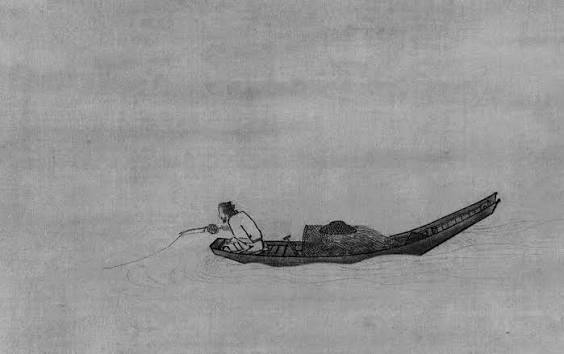
"All this he saw, for one moment breathless and intense, vivid on the morning sky; and still, as he looked, he lived; and still, as he lived, he wondered."

Nicholas de Monchaux – Spacesuits: Fashioning Apollo

All’interno dei percorsi che parlano di urbanistica digitale, includo spesso una pubblicazione apparentemente anomala, un libro di Nicholas de Monchaux in cui si parla delle tecnologie utilizzate per l’ingegnerizzazione delle tute spaziali durante la missione Apollo.

Nicholas de Monchaux
Spacesuits: Fashioning Apollo
MIT Press

Nicholas de Monchaux insegna al MIT dove è responsabile dell’architettura, è partner dello studio di architettura modem e fondatore della società di tecnologia del design Local Software, professore di architettura e design urbano, e Craigslist Distinguished Chair in New Media alla UC Berkeley, dove è stato anche direttore del Berkeley Center for New Media. Con i suoi lavori di progettazione ha partecipato alla Biennale delle Americhe, alla Biennale di Architettura di Venezia, alla Triennale di Architettura di Lisbona, al SFMOMA, allo Yerba Buena Center for the Arts, allo Storefront for Art and Architecture e al Museum of Contemporary Art di Chicago. È Fellow dell’Accademia Americana di Roma.

Il suo libro è “una storia architettonica e urbana” delle tute Apollo Spacesuit, ha vinto il premio Eugene Emme dell’American Astronautical Society ed è stato selezionato per l’Art Book Prize.

Nel 1968, l’allora vicepresidente degli Stati Uniti H.H. Humphrey nel tentativo di giustificare il denaro speso dall’amministrazione per la ricerca spaziale dichiarava:

«Le tecniche che porteranno l’uomo sulla Luna
saranno le stesse
di cui avremo bisogno
per ripulire le nostre città».
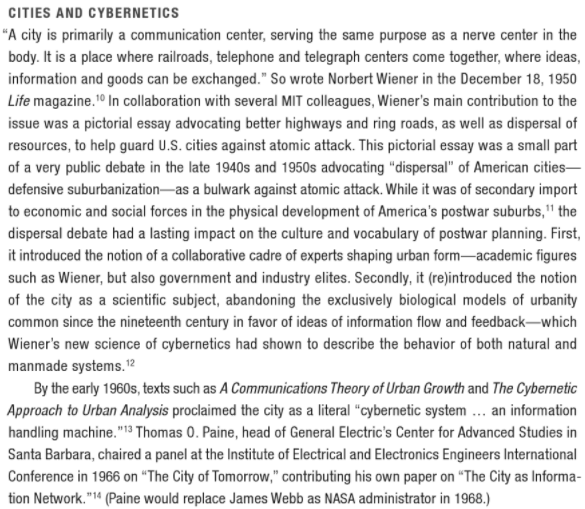
Le dinamiche che riguardano i tentativi di applicazione delle ricerche spaziali ad altri ambiti, sono oggetto del capitolo 19 del libro, intitolato “Cities and Cyborgs”. Ne ho scritto un pochino più nel dettaglio qui.
Per approfondire, dello stesso autore consiglio questo articolo, dal titolo “Space Suit And the City”.




books and literature

Lolly Willowes

Sylvia Townsend Warner is one of the most interesting literary figures of the 21st century, and Lolly Willowes is one of her finest works, even more stunning if you think it was her debut novel. Self-supporting, intellectually independent, and consistently sceptical of social and religious

Read More »
books and literature

Fugitive Telemetry

This is book #6 in the Murderbot series (yes, I accidentally skipped #5, I’m circling back to that), and I’m afraid I didn’t like this as much as the others. The whole investigation felt a bit rushed and, though the final twist is interesting in

Read More »
architecture, engineering and construction

The Discipline of Inspiration: Valéry and the Algorithmic Mind

Paul Valéry rejected inspiration as miracle, seeing creativity as the discipline of thought in motion. This week, we parallel his notion of mental “operations” with computational procedures in design: iteration, optimisation, constraint, and recombination, and challenge the dichotomy between intuition and automation. Drawing on contemporary

Read More »
Share on LinkedIn
Throw on Reddit
Roll on Tumblr
Mail it
No Comments

Post A Comment

This site uses Akismet to reduce spam. Learn how your comment data is processed.

RELATED POSTS

Lolly Willowes

Sylvia Townsend Warner is one of the most interesting literary figures of the 21st century, and Lolly Willowes is one of her finest works, even more stunning if you think it was her debut novel. Self-supporting, intellectually independent, and consistently sceptical of social and religious

Read More

Fugitive Telemetry

This is book #6 in the Murderbot series (yes, I accidentally skipped #5, I’m circling back to that), and I’m afraid I didn’t like this as much as the others. The whole investigation felt a bit rushed and, though the final twist is interesting in

Read More

The Discipline of Inspiration: Valéry and the Algorithmic Mind

Paul Valéry rejected inspiration as miracle, seeing creativity as the discipline of thought in motion. This week, we parallel his notion of mental “operations” with computational procedures in design: iteration, optimisation, constraint, and recombination, and challenge the dichotomy between intuition and automation. Drawing on contemporary

Read More