
It’s hard to give five stars to a collection of stories, since some are bound to strike you more than others, bit up until a certain point I was tempted.
- “Spring in Fialta”
- “A Forgotten Poet”
- “First Love”
- “Signs and Symbols”
- “The Assistant Producer”
- “The Aurelian”
- “Cloud, Castle, Lake”
- “Conversation Piece, 1945”
- “That in Aleppo Once…”
- “Time and Ebb”
- “Scenes from the Life of a Double Monster”
- “Mademoiselle O”
- “Lance”
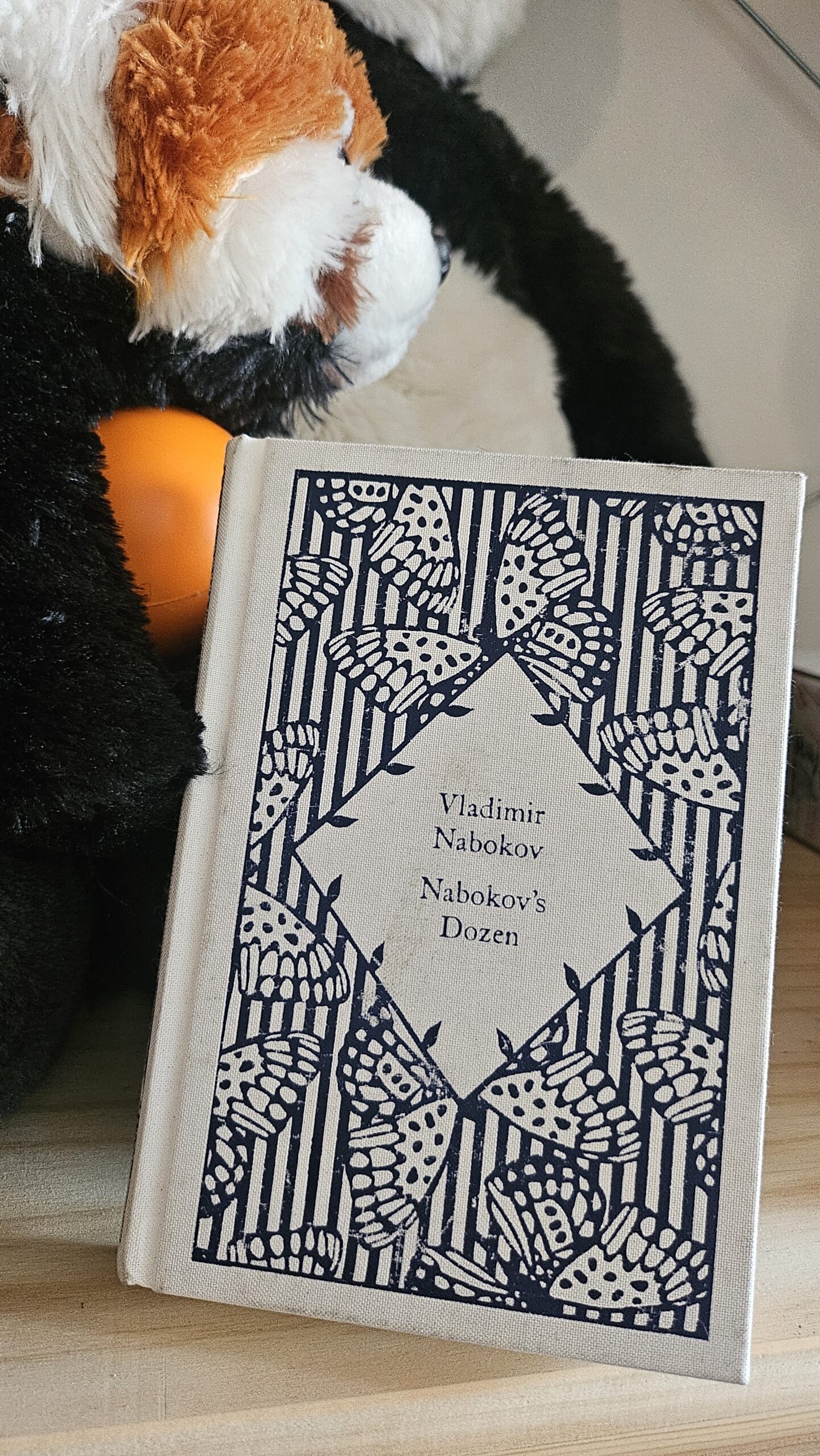
Nabokov’s Dozen is a 1958 collection of short stories by Vladimir Nabokov, often called his “baker’s dozen” because there’s thirteen of them. Though very different in length and scope, the stories explore trapped and/or exiled lives, fleeting joys, and historical upheavals, from imperial Russia to Nazi Germany and mid-century America, focusing on personal struggles amid larger forces. The luxurious prose pairs with situations that span from the tragic to the paradoxical: a man’s description of his relationship with a lover, an unreliable narrator with an equally unreliable wife, the story of conjoined twins from the perspective of one of them, the recollection of a French tutoress. Some will leave you perplexed. Others will strike you like a stone.
There’s even a timid attempt at science fiction, but with loads and loads of effort to convince us it’s not that shallow, trope-ridden genre, and this is where I wanted to strike Nabokov in the face with his own book.



No Comments