
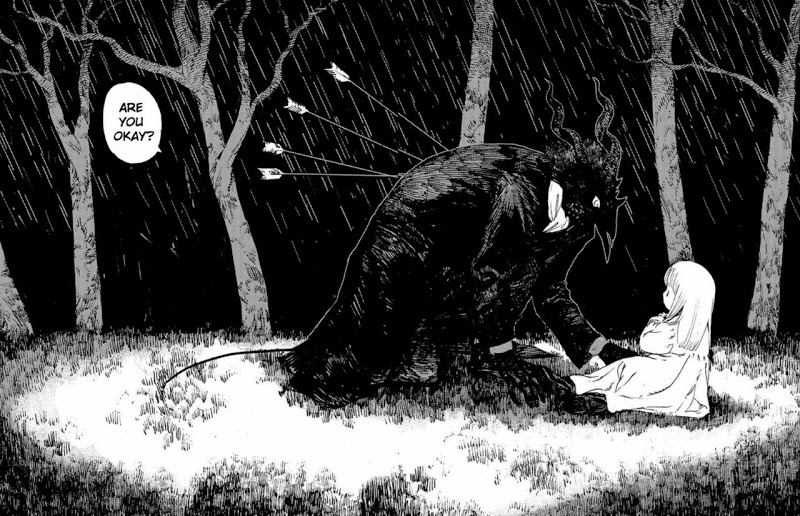
If you’ve been following this blog for a while, you might remember I was a very active comic book reader in my youth. In recent times, with many factors adding up to that result, very much less so. Some notable exceptions include the manga versions of Lovecraft stories by Gou Tanabe, which I’m not sure even counts, and the excellent series The Girl from the Other Side, a manga about a world divided between humans and creatures that can curse you through their simple touch, and a girl who’s abandoned in the forest and lives with one of such creatures. It is absolutely enchanting. There’s also the anime version.
I completely abandoned US comics, they became unreadable to me, and I became an old grumpy lady who feels nothing good is coming out anymore. If there’s such a thing as a reader’s block for comics, I have it.
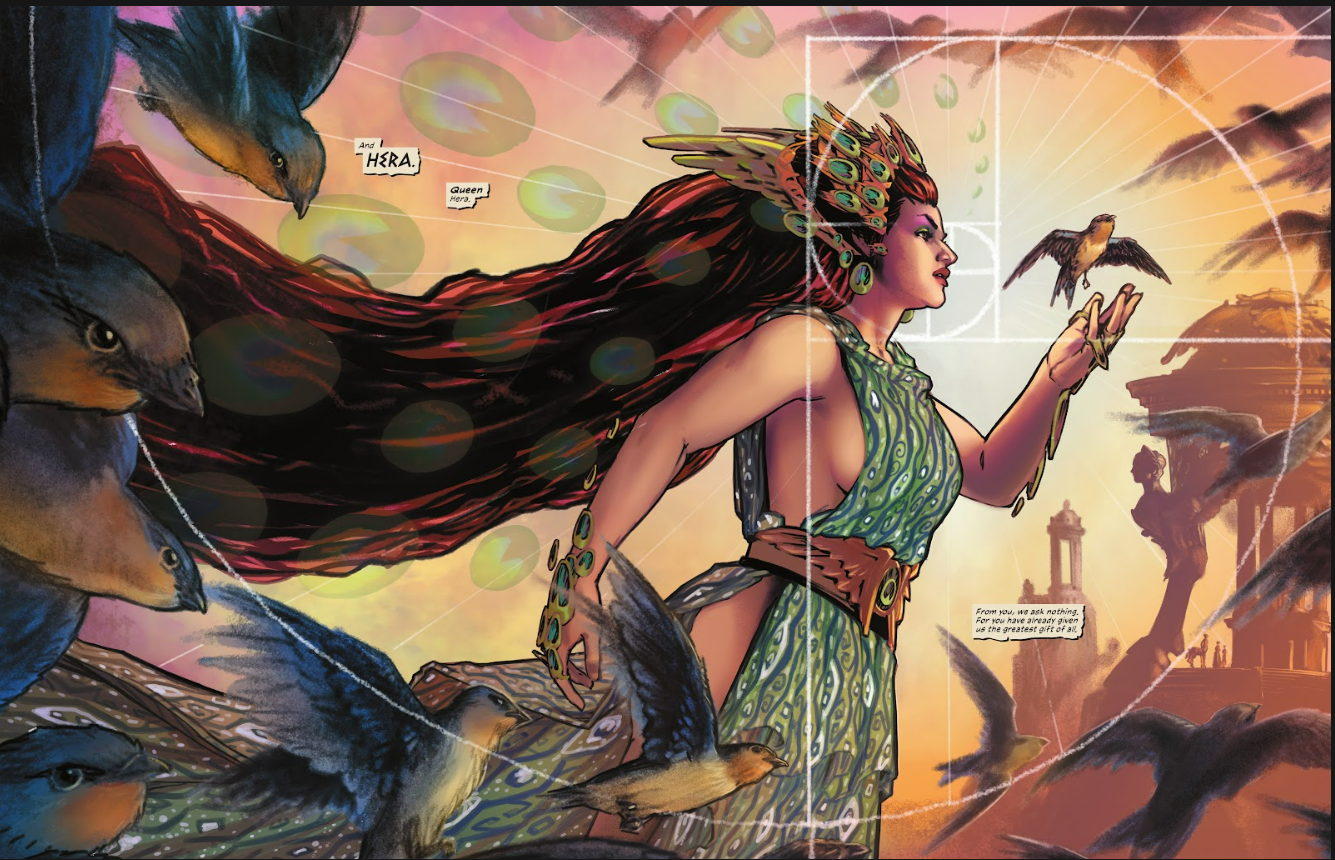
This year, I tried a couple of titles to emerge from the block: the first one is Wonder Woman Historia, written by Kelly Sue DeConnick and splendidly illustrated by an array of incredible artists including Nicola Scott, and it traces back Diana’s birth through the very birth of the Amazons. It’s also remarkable how it manages to be truly feminist without being tacky, and the portrayal of Hera is absolutely glorious.
I only wish Hestia had more space, but don’t we all?
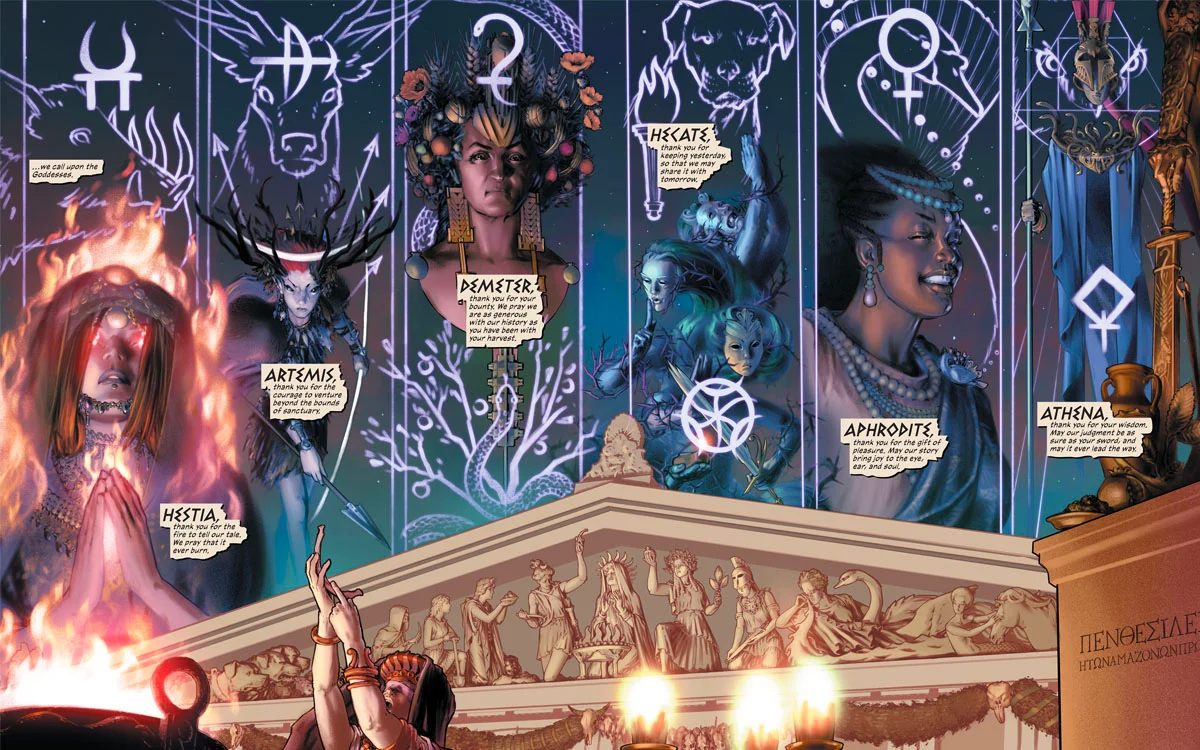
Anyway, the second title I tried to get back in the saddle is the one I wanted to talk to you about: it’s an ongoing series titled Monstress, written by Marjorie Liu and consistently drawn by Sana Takeda; the two had already worked together on X-23, but this work of theirs is edited by Image Comics, which already gave us Spawn and Witchblade.
Now, Monstress is usually described as a steampunk fantasy, set in a matriarchal world, and inspired by early 20th-century Asia. Which I think is where the problems start, so let’s get to work and start from what Monstress is not.
- Monstress is Asian-inspired because the creators don’t hold back on their heritage (Liu is Chinese-American, and Takeda is Japanese), but there’s very little beyond aesthetics: you have cheongsams and yukata robes, some creatures resemble yōkais and the main daemon/old gods might remind you of a kaiju, but there’s nothing here you wouldn’t find in a Western comic, I think, no out-of-the-box idea that’s eastern enough for a western reader to have to make an effort to understand;
- I don’t see how this is even remotely historical fantasy: while the traumas of war are designed and described to echo our recent World Wars more than a medieval war, the setting remains predominantly fantasy;
- Monstress isn’t steampunk. I think people keep saying that because they don’t know what steampunk is, and all it takes for them is that Takeda introduces mechanical swirls and decorations in the art for her settings and characters, but no mechanical contraption has a significant role in the story, nor in the society which is mostly governed by magic and the occasional flamethrower. In this, Monstress is far less steampunk than Witchblade, which had no steam but a decent dose of punk, and at least the gauntlet was metal.
Did you say Witchblade? Yes, I did. I think it’s fair to compare this title to that one, which I really liked back in the days, because this Monstress is a Witchblade where the main character isn’t designed and handcrafted to fulfil the white male’s fantasy: Sara Pezzini was a busty, white pin-up straight out of a Frazetta poster, and Danielle Baptiste isn’t any better. They were great characters, but they didn’t wear much. Maika Halfwolf, the main character in Monstress, is a skinny Asian-looking teenager, whose flat breasts are never a point of interest and who’s missing an arm. She’s a splendidly heroic, vulnerable character. Wich is where the good part starts.
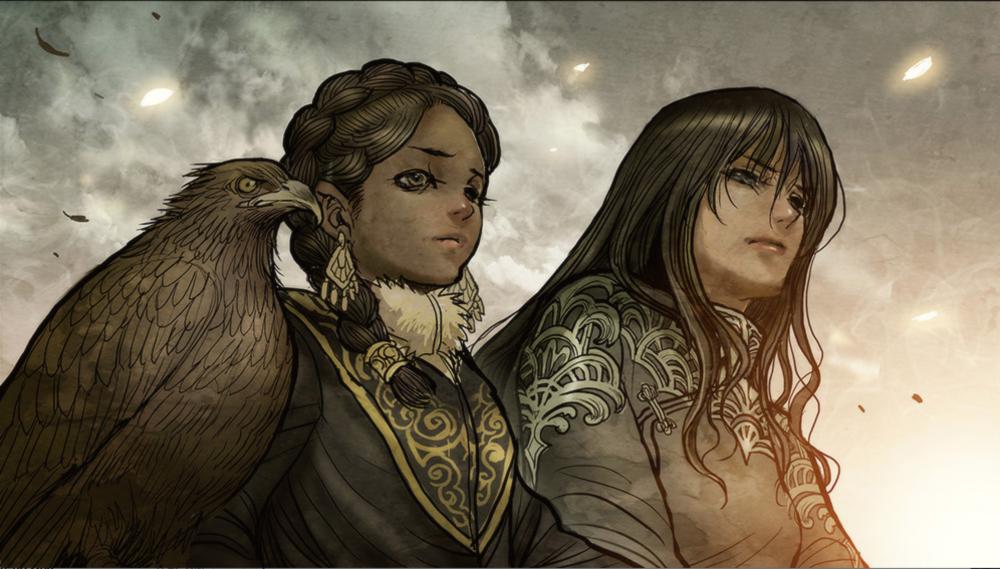
As it unfolds throuh the first volume (a collection of issue #1 through #6), the main story is pretty standard: a teenage warrior goes into an enemy’s stronghold to learn more about her dead mother, only to discover her mother’s relationship with the enemy witches was closer than she realised. Oh, and the girl is possessed by a daemon who sometimes springs out and murders everyone.
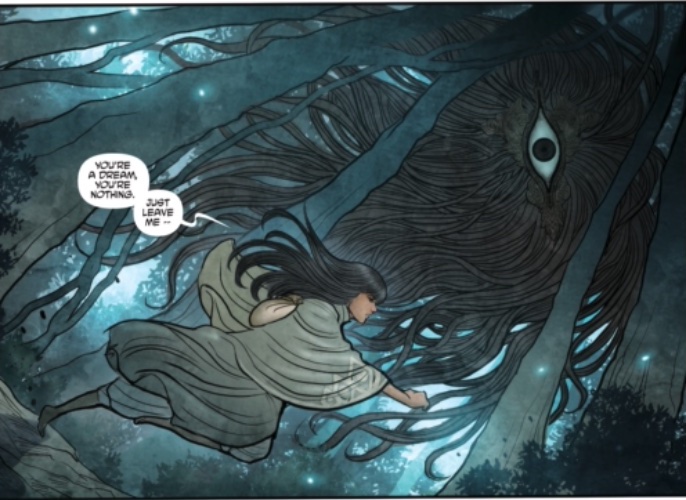
The worldbuilding is very well done, though it’s nothing particularly original: on one side you have the Arcanics, the magical creatures, and the human Federation is at war with them. The Cumaea, a congregation of sorceress, capture the Arcanics and feed upon them to fuel their power. It’s your classic reversal of the monster trope: the ones that are different are being harvested and hunted by humans, who are the real monsters here.
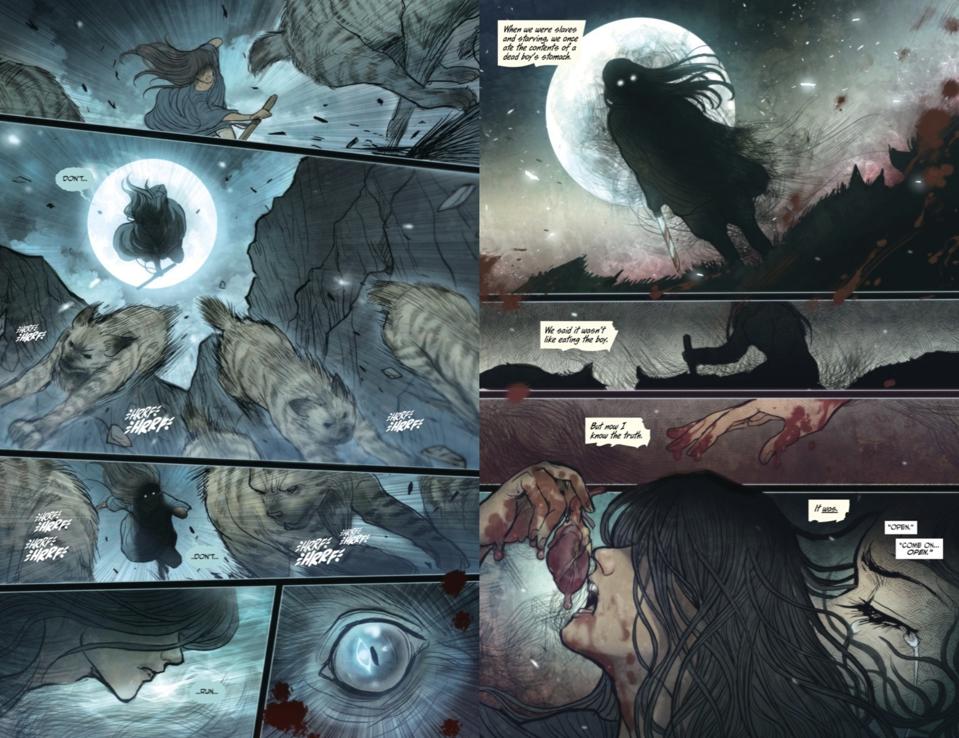
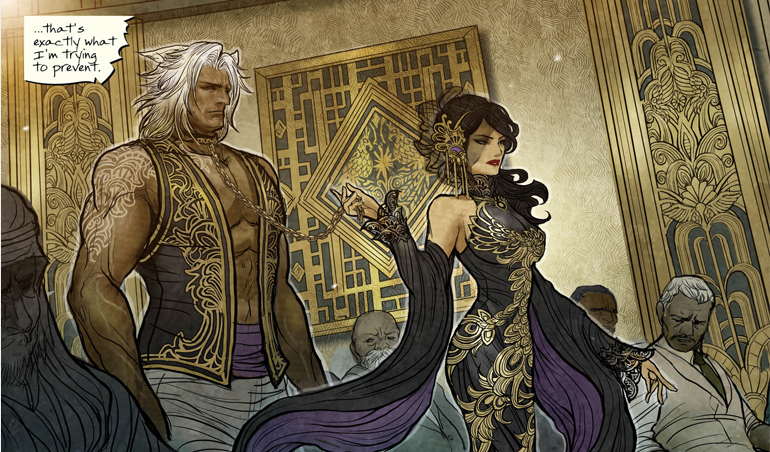
Characters are also intriguing enough to keep you reading: on one side you have Maika, accompanied by a necromancer cat and a fox-child she saved from prison; on the other side, you have the sorceresses and that includes Sophia, who’s haunted by the memories of what the Arcanics did in battle, her lover Atena who is by far the most complex character, and the deranged Yvette. Almost all characters are female, except when they’re cats, which is refreshing enough.
There’s only one problem, though. It can get really heavy. And I don’t mean “we found a boy with no hands because the witches severed them one by one in order to eat them” heavy. That’s fine. The problem is, sometimes the characters are absorbed in overexplaining. You are forced to read through walls of text where maybe, and I mean maybe, a couple of flash-backs more would have done the trick. I don’t think the worldbuilding would suffer from less info-dump, especially since it’s rarely on how the world works and mostly on what happened to certain characters before we set the stage. I heard that this is a problem you feel mostly in the first volumes, where they’re setting the stage, and then it gets better. I certainly hope so, because the art is absolutely gorgeous and I like the characters. I’ll certainly try to get into the second volume. Maybe I’ll let you know how it goes.
7 Comments
shelidon
Posted at 14:31h, 28 DecemberVolume 2 picks up the pace, compared to the prwvious one, and the story-arcon the bone island is very well crafted, with many themes that will feel familiar to fantasy readers: foxes and their glamous, infernal ferrymen, ghoulish mermaids, the bonesof a dead god.
There’s still a bit of overexplaining going on, and much of what was explained in the previpus volume doesn’t turn out to be particularly useful, but it looks like we’re finding our feet at last.
shelidon
Posted at 10:58h, 04 FebruaryIn volume 3, the siege of Pontus is another good story-arc and the art keeps being gorgeous, but I still feel we’re leaving pieces behind, bricks that were laid (and extensively explained) in the previous volumes and still haven’t found their way into the actual plot. We’re still building more and more. It would be nice to collect at least on some of these parts.
Volume 4 came very close to five stars, but still didn’t make it.
The art keeps being glorious, the dialogues are witty, and the characters have a way of growing on you. The first half of this volume (let’s say the first 1-3 issues collected here) was very good.
And then, just when I thought that all the lore we’ve been exposed was finally paying off… we turn another page, we discover more lore, and we’re there, faced with balloons upon balloons of this new stuff. I can practically write an essay on this world, by now, which I don’t believe is the point of reading fiction.
Anyway, we’re invested now.
Onwards to volume 5.
shelidon
Posted at 09:51h, 07 FebruaryVolume 5, halfway through the whole thing (so far), it’s coming together. No infodumping, no additional lore, no new characters, just (some of) the things we saw coming together in an inconsequential and yet grand battle that gives you a taste of what’ll come if everybody succeeds and our favourite few fail in stopping the nonsense that’s war.
Gorgeous.
shelidon
Posted at 17:05h, 07 FebruaryVolume 6. I reached the point where I want to beat characters over the head for not talking to each other or trusting the wrong people, which means I officially care.
shelidon
Posted at 14:00h, 16 FebruaryVolume 7:
I’m sad to report we’re back to people extensively explaining to each other stuff they should already know.
I liked the internal struggles of the two mirrored characters, the plot twist with the Baroness and some other elements, but I officially reached the point where I can’t stand any more lore exposition, no matter how gorgeous the art and characters are.
shelidon
Posted at 14:00h, 16 FebruaryVolume 8.
I never thought reading such a gorgeous comic could make for such a miserable experience, and yet here we are.
Since we’ve already explained the living s$it out of our previous setting, we decide to jump into another dimension where we can start doing all that again, except this time the explaining is done by Old Gods, which means you have to crawl through piles and piles of text written in bleeding lettering on a dark-coloured background. We get to see very little of how we got here, but we get told a lot of stuff, much of which doesn’t seem to tie up any of the loose ends of the stuff we’ve been told in the previous 7 volumes. How is it possible?
shelidon
Posted at 16:29h, 20 MarchVolume 9. Well, some of the stuff from volume 8 is coming together (though not nearly enough for me to go back and change my rating) and this would have been an excellent volume, same level as Warchild and The Vow, if it wasn’t for… well, I don’t want to release spoilers, but you can’t push a blood engineering plot and suddendly come up with random blood relations. I know we’ve seen the character before and bla bla bla, but their presence feels as random as the note from which one of the main characters learn of their existence.
Volume 10. The art keeps being beautiful, I don’t have to tell you that, and the story takes an interesting turn, though the last thing I wanted was a storyline connected to Volume 8, everybody’s least favourite in the series. Old characters turn up again, which is always good when you spent so much time developing them, and maybe we’re getting some backstory and development for the sister who sprouted out of nowhere, but I swear they keep talking to each other and say nothing meaningful, and sometimes I wanted to rip my eyeballs off.