"All this he saw, for one moment breathless and intense, vivid on the morning sky; and still, as he looked, he lived; and still, as he lived, he wondered."

Madeleine de Scudéry’s Femmes Illustres – Volumnia

Volumnia was a noblewoman and the mother of the Roman general and rebel Gaius Marcius Coriolanus. According to Titus Livius, she disapproved of her son’s rebellion against Rome and was ultimately successful, aided by her daughter-in-law Volumnia, in visiting her son’s camp and convincing him to desist in his will to launch an attack against Rome.

Volumnia became a symbol of strength and diplomacy: she asked for no favours but requested that the Senate would build a temple to the Goddess Fortuna, to honour her and the other women who were successful in the diplomatic effort. In telling her tale, Titus Livius always calls her Veturia. Because he’s one of the worst historians ever.

She is one of the central characters in Shakespeare’s play Coriolanus, where she’s called Volumnia following Plutarch. In Titus Livius, Volumnia is Coriolanus’ wife, while Shakespeare gives her the name Virgilia.
Mademoiselle De Scudery follows Shakespeare’s names: Volumnia, the mother, is writing to Virgilia, the daughter-in-law. She’s writing to Virgil.

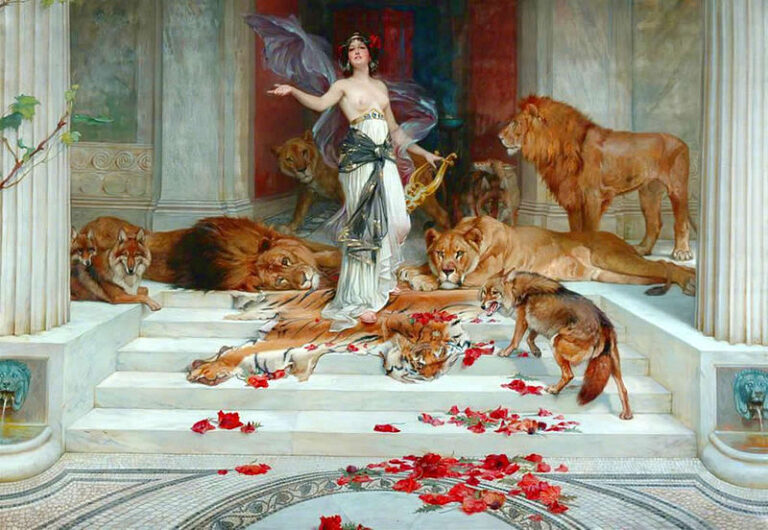
Among the paintings that depict her, Henry Singleton’s Volumnia and Virgilia pleading before Coriolanus.

comics and illustration

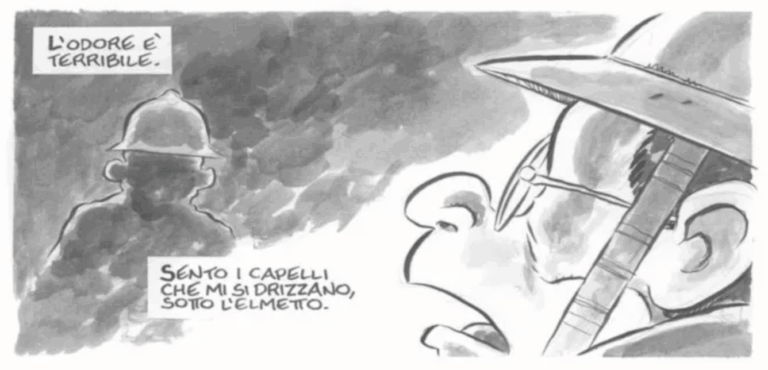
Leo Ortolani, Tapum

A un certo punto ci sarà una battuta, in questo fumetto, e riderete. Sappiate che è l’unica. Com’è giusto che sia. Se devo paragonare quest’opera a qualcosa, il confronto più azzeccato è probabilmente lo spettacolo che Marco Paolini trasse dal Sergente nella neve di Rigoni

Read More »
Summertime

Omeros in the Caribbeans

Derek Walcott was a Saint Lucian poet, playwright, and painter, and one of the major voices of Caribbean literature. He won the Nobel Prize in Literature in 1992, and his work often explores Caribbean history, identity, colonial inheritance, and the meeting of European and African

Read More »
books and literature

Ioanna Papadopoulou’s The Castaway and the Witch

I had a genuine “oh shit” moment when I read the author’s preface saying this was darker than “Winter Harvest” because – and I absolutely ADORED “Winter Harvest” – that was pitch-black dark. I thought “we’re all going to die”. This maybe has something to

Read More »
Share on LinkedIn
Throw on Reddit
Roll on Tumblr
Mail it
No Comments

Post A Comment

This site uses Akismet to reduce spam. Learn how your comment data is processed.

RELATED POSTS

Leo Ortolani, Tapum

A un certo punto ci sarà una battuta, in questo fumetto, e riderete. Sappiate che è l’unica. Com’è giusto che sia. Se devo paragonare quest’opera a qualcosa, il confronto più azzeccato è probabilmente lo spettacolo che Marco Paolini trasse dal Sergente nella neve di Rigoni

Read More

Omeros in the Caribbeans

Derek Walcott was a Saint Lucian poet, playwright, and painter, and one of the major voices of Caribbean literature. He won the Nobel Prize in Literature in 1992, and his work often explores Caribbean history, identity, colonial inheritance, and the meeting of European and African

Read More

Ioanna Papadopoulou’s The Castaway and the Witch

I had a genuine “oh shit” moment when I read the author’s preface saying this was darker than “Winter Harvest” because – and I absolutely ADORED “Winter Harvest” – that was pitch-black dark. I thought “we’re all going to die”. This maybe has something to

Read More