
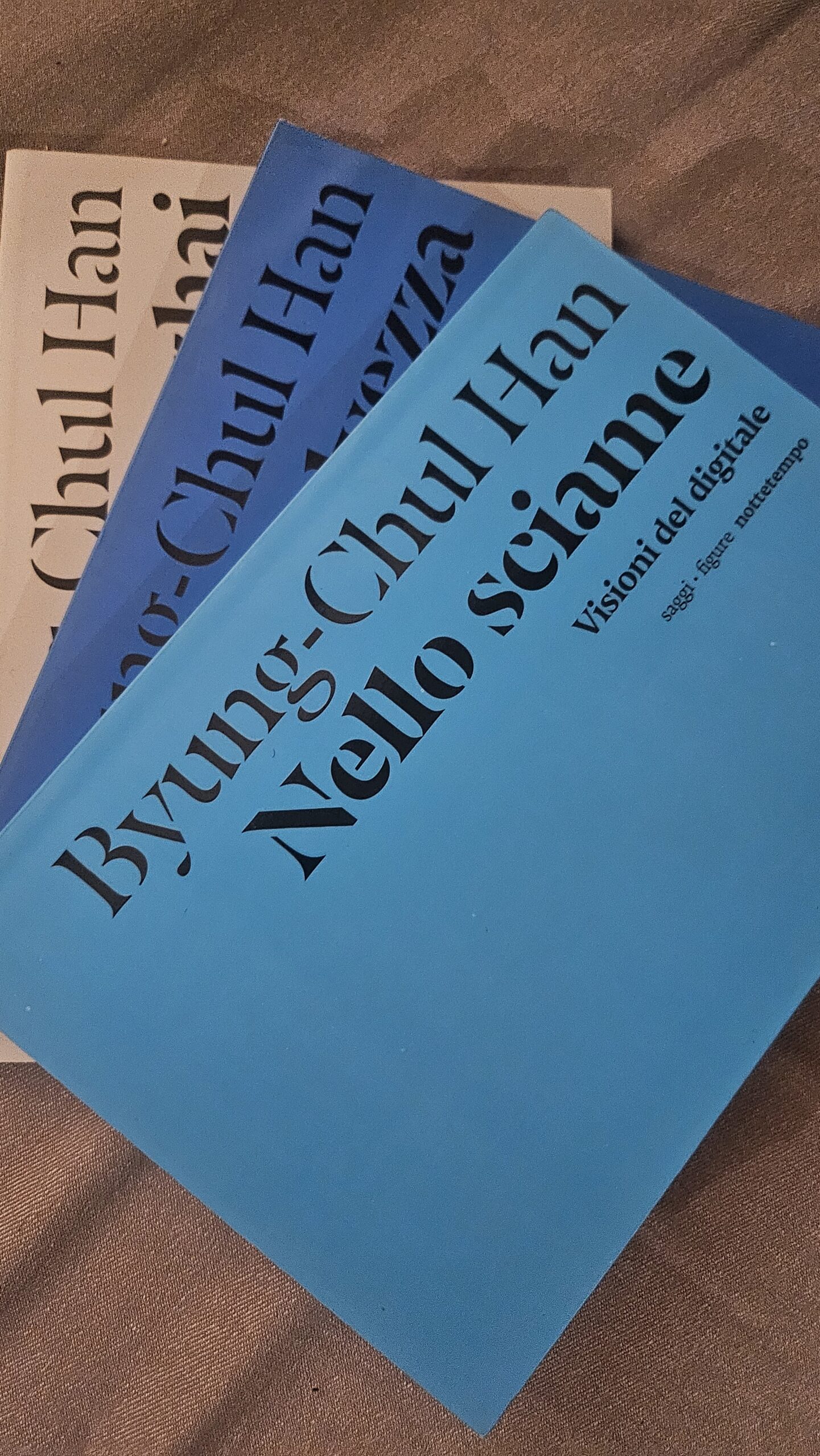
Byung-Chul Han is a contemporary German philosopher born in Korea whose work explores the transformation of subjectivity, power, and social relations in late modern and digital societies. In the Swarm fits within this broader inquiry, focusing specifically on the effects of digital communication on perception, politics, and relational life. The book itself is not a systematic theory of the digital but a constellation of diagnoses. This is both its weakness and its strength. The book often feels fragmented and occasionally too confident in its claims, and some of its examples now appear dated such as the continuous reference to Google Glasses (am I the only one who knows people who would rather die, or enlarge their phone’s fonts to the maximum size, before they put something on theirfaces?). Yet this looseness allows Han to grasp something structural: a shift in how reality is experienced under conditions of digital immediacy.

Rather than unfolding a continuous argument, it proceeds through a series of diagnoses. Across the chapters, the digital emerges as a perceptual regime in which distance collapses, but not in the liberating way others had anticipated; without distance, otherness is flattened, and exposure replaces encounter. Communication accelerates while relation thins out. The self, constantly addressed and measurable, turns into a project of visibility, losing opacity and resistance.
These themes hit hard, and Han’s tone can feel pessimistic, his diagnoses rigid, but they force the reader to question narratives of transparency, participation, and connection, and to ask what is lost when immediacy becomes the dominant value. Even where the analysis overreaches, In the Swarm remains valuable as a philosophical lens on how the digital quietly reconfigures our relation to reality, to others, and to ourselves.
What follows are my notes, chapter by chapter. Treat them as they are.
1. Without Respect
This opening chapter is striking in how radical yet precise Han’s critique is. What makes it compelling is that he does not moralise about “bad behaviour online,” but instead diagnoses a structural transformation of perception. Respect is not lost because people are worse; it is lost because the medium abolishes distance.
What resonates strongly is the idea that distance is not alienation, but a condition of ethical relation. If many contemporary narratives, distance is framed as a problem to be solved through transparency and constant access, Han flips this assumption: without distance, there is no respect, no responsibility, and ultimately no politics. That’s a twist I didn’t anticipate.
The chapter also reframes digital outrage in a useful way, trying to define what he calls, with diagnostic impudence, the shitstorm. The shitstorm is not collective anger, not can it be compared to a mob assaulting a public institution in outrage and revolt, but it’s a symptom of a communicative form that cannot sustain silence, hierarchy, or reflection. This helps explain why digital debates feel intense but rarely transformative.
As an opening chapter, “Without Respect” sets the conceptual tone for the entire book: the digital is not merely a technological shift, but a reconfiguration of attention, power, and social space. It invites the reader to question whether visibility and participation, when pushed to their extreme, may paradoxically erode the very conditions of communal life.
2. The Society of Indignation
Shorter but not less poignant, this chapter sharpens Han’s critique by framing indignation in the digital landscape not as political passion, as it would happen in the street, but as affect without gravity. What’s striking is the contrast between emotional intensity and political emptiness: outrage feels powerful precisely because it moves fast, but that speed prevents it from becoming history. Without distance, restraint, and narrative form, emotion cannot crystallise into responsibility or action.
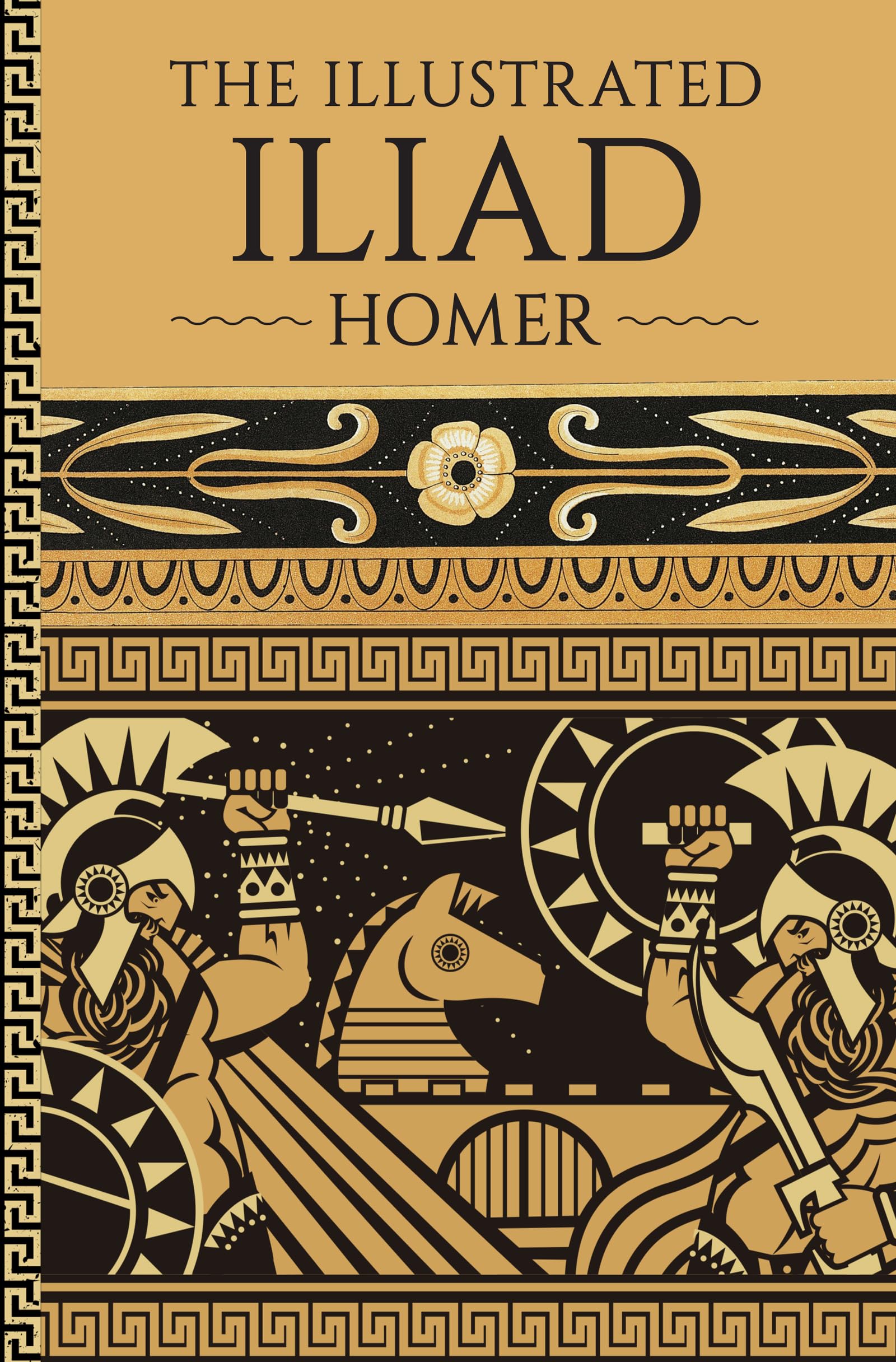
Han’s comparison with Achilles’ epic wrath is especially revealing. Han contrasts digital indignation with the Homeric concept of menis (wrath) in the Iliad, in fact, and suggests that epic anger is narratable, structured, and productive, as it generates action, meaning, and history. Digital indignation, by contrast, is a diffuse affective state that lacks the capacity to initiate sustained action. It disperses rather than concentrates energy and therefore fails to generate a future. It suggests that what we have lost is not anger itself, but its ability to endure, to be shaped, and to commit to consequences. Digital indignation burns bright and vanishes, leaving no institutions, no memory, and no future: only the illusion of participation.
3. In the Swarm
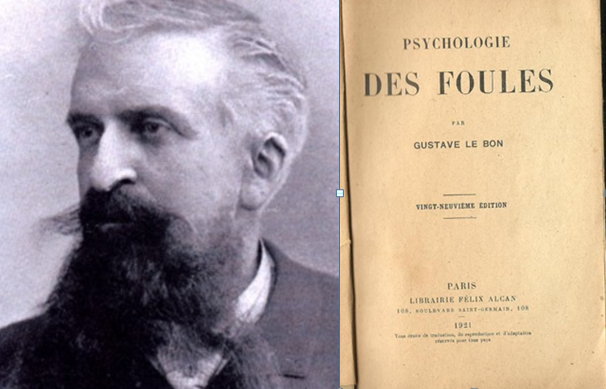
The author here starts from Gustave Le Bon’s diagnosis of modernity as the age of the masses, a moment in which traditional hierarchies collapse and power shifts toward collective formations, but he’s well aware that we need to define the term. For Le Bon, the mass is both politically powerful and civilizationally destructive: it dissolves responsibility, erodes culture, and threatens sovereignty.
Han argues that today we are again in a critical transition, but the collective form has changed: the digital age does not produce a mass or a crowd, but a swarm. Unlike the crowd, the digital swarm lacks an inner unity, a spirit capable of generating a shared We. It is composed of isolated individuals who remain distinct, each maintaining a profile and a private identity. As a result, the swarm does not speak with one voice; it appears as noise, as dissonance, as constant agitation (the shitstorm).
Drawing on McLuhan, Han contrasts the homo electronicus — absorbed into a mass spectacle and reduced to “Nobody” — with the homo digitalis, who is never truly anonymous. Even when acting anonymously, the digital subject remains “Someone”: exposed in their hopefully viral opinion, self-optimising their profile, competing for attention with their peers. Digital media isolate rather than gather; they replace physical assembly with a topology of dispersion.

This has deep and tragic political consequences: classical masses were stable, ideologically unified, and capable of sustained collective action; digital swarms are volatile, short-lived, playful in a carnivalesque, unflattering way, and politically weak. They dissolve as quickly as they form and cannot generate durable power. Shitstorms target individuals, not structures, leaving dominant power relations untouched.
Finally, Han critiques Michael Hardt and Antonio Negri’s concept of the multitude. While they imagine a networked collective capable of opposing the Empire, Han argues that neoliberal capitalism has already dissolved the conditions for such a We. Exploitation no longer requires domination from above: it operates through willful self-exploitation, a concept we’ve seen expanded in that capital installation on Artificial Intelligence that was Caltulating Empires (I’ll never shut up about it). In this system, no one rules, yet everyone is dominated. Atomization, solitude, and competition replace solidarity, making genuine collective action increasingly improbable.

This chapter sharpens Han’s most unsettling claim: connectivity is not collectivity. The swarm feels political because it is loud, fast, and reactive, but it lacks duration, direction, and responsibility. What disappears is not resistance, but the very form of the We that resistance would require. What is especially striking is Han’s insistence that the digital subject is not anonymous enough to be free, nor collective enough to be powerful. We are exposed without being together. Thus, the swarm produces outrage but fails to generate transformation; attention, not commitment. In that sense, digital participation becomes a bare simulation of what politics should be: it’s intense, sure, even exhausting, but ultimately remains harmless to power. Han’s critique of the multitude is deliberately pessimistic, but it raises an uncomfortable question: can there still be common action without shared spaces, shared time, and shared risk? If the answer is no, then the crisis is not simply political or technological, but existential: a crisis of being-with others at all.
4. De-medialization
The digital medium, in Han’s conception, is a medium of presence: it operates in an immediate present and progressively eliminates mediation. Information is produced, transmitted, and received without intermediaries, which makes mediation and representation appear inefficient, opaque, and obsolete, and this hits hard when it comes to journalism. Unlike classical electronic media such as radio or television — structured as unilateral, non-interactive amphitheatres — digital networks enable direct participation and if everybody can produce content and write the news, if users are no longer passive recipients but simultaneous producers and consumers of information, what’s the need for authors or curators of such information?
This de-medialization dissolves traditional roles that are now seen as gatekeepers: journalists, editors, and opinion makers lose their representative role, as communication shifts from representation to presence or co-presence, where everyone wants to express themselves directly. This transformation deeply affects politics: representative democracy is weakened as political representatives start to be perceived as barriers rather than mediators. The demand for total transparency and constant presence undermines strategic action, long-term planning, and the future-oriented nature of politics, because no one will enter a complicated exploration of possibilities in a scenario where work-in-progress thoughts might be leaked as finite positions, and people’s outrage (see previous chapters) will hit immediately and without right to appeal.
In turn, Han defends representation as a necessary filter that enables selection, quality, exclusivity, and cultural formation. De-medialization, by contrast, produces massification, linguistic flattening, and the kind of conformism where transparency, rendered panoptic, discourages dissent, enforces sameness, and replaces vision with immediate responsiveness. The same logic extends to writing and culture. Fully transparent, collective, additive writing cannot generate alterity, singularity, or genuine creation. Additivity is the logic of the digital, but art requires silence, delay, and opacity, all of which are eroded by digital communication.
This chapter sharpens Han’s critique by framing de-medialization not as emancipation, but as a loss of form. What disappears is not merely authority, but filtering, distance, and incubation. The insistence on presence and transparency feels democratic, yet it quietly destroys the conditions for vision, strategy, and difference. What resonates most is the idea that mediation is not an obstacle to meaning, but its precondition: without silence, slowness, and opacity, neither politics nor culture can produce anything genuinely new. Only more of the same slop.
5. Hans the Intelligent
Do you know the case of Clever Hans, the horse that appeared to perform arithmetic? I didn’t, and it knocked me out of my chair. The horse was asked to stomp its hoof how many times as the answer to simple mathematical operations, but it eventually turned out not to be intelligent in a cognitive sense, but extraordinarily sensitive to micro-gestures, facial expressions, and the bodily tension of people around him, those who indeed knew the answer to 4+4. Intelligence here is reframed as empathetic perception, rooted in corporeality and presence.

From this, Han develops a critique of digital communication as fundamentally deprived of tactility, corporeality, and multidimensional perception: digital media reduce communication to vision and efficiency, progressively eliminating direct contact with the Real and with others as embodied counterparts.
This reduction transforms the Lacanian triad:
- the Real is minimized;
- the Imaginary is totalized;
- the Symbolic loses depth.
The smartphone becomes a narcissistic mirror and only pretends to enable communication, while in fact it sustains self-reflection rather than encounter. The digital environment privileges positivity, speed, immediacy, and the “how many likes do you have” mentality, dissolving negativity, interruption, slowness, and duration. As a result, it weakens our capacity to relate to alterity, opposition, and resistance.
Central to this chapter is the concept of the sight. Unlike vision, sight is what comes from the Other and destabilises the subject. Digital communication is described as a sight-poor communication: even video calls simulate presence while structurally preventing reciprocal looking. We can be connected constantly, yet remain unseen.
Touchscreens further abolish distance. By touching images directly, we neutralise the Other’s alterity: the Other becomes manipulable, flattened, held “between thumb and index finger.” The screen is described as transparent, but transparency here means the absence of gaze.
Finally, Han links transparency to the end of desire. Desire requires opacity, shadow, interruption. There can be no desire where everything is visible, illuminated, and exposed — especially in the culture of self-exhibition — and the visage turns into a profile, losing interiority and reserve. What once bound through desire now dissolves into a paradoxical “hell of freedom.”
6. Flight into the Image
Contemporary culture no longer treats images as representations of reality, but as improved substitutes for it. Images are optimised: more vivid, more beautiful, more alive than lived experience itself. This produces an iconic reversal: reality appears defective when compared to its images. We no longer live in relation to the real, but according to a generalised imaginary. Made endlessly consumable, images lose their semantic depth, poetic force, and extravagance. Instead of opening onto truth, they shield us from it. The excess of images paradoxically produces iconoclasm: not through destruction, but through saturation. Images taken hostage by the real no longer reveal it.
Han illustrates this with the “Paris syndrome” and with Rear Window. In both cases, images function as a defensive screen against the disturbing intrusion of the Real. Digital images, unlike analogue ones, are especially effective at this: they increase distance from reality and reduce analogy with it. Their massive production is a form of escape, an optimised defence against imperfection, finitude, time, and death.

Finally, drawing on Barthes, Han contrasts analogue and digital photography: analogue images are temporal, mortal, and expressive of passion, but most importantly they age, decay, and bear the negativity of time; digital images, instead, exist in a frozen present without birth, without death, without becoming. They shine without shadow and bloom without withering.
The most unsettling idea is that digital images do not distort reality but anaesthetise it. By removing time, decay, and negativity, they remove the very conditions under which experience can wound us, change us, or demand responsibility.

7. From action to fingerplay
In Hannah Arendt’s concept, action is the capacity to initiate something radically new, and it’s tied to natality because all philosophers need a shrink: each birth carries the promise of a beginning, and acting means interrupting automatic processes. In this sense, action has a quasi-miraculous character, grounded in hope and freedom. The digital age, however, undermines this possibility. Human activity is increasingly absorbed into automated systems — digital and capitalist — that neutralise genuine initiative. We live in an era of living dead, where neither birth nor death truly matters. Digital life becomes post-political and post-metaphysical, focused on preserving bare life indefinitely, stripped of beginnings and endings.
Drawing on Vilém Flusser, Han describes the shift from acting to “playing with fingers.” The homo digitalis no longer acts but taps, counts, and manipulates information. Hands atrophy; resistance disappears. Action, which requires friction and opposition, is replaced by smooth, affirmative processes. Digital labour increasingly resembles play but not leisure: instead, play itself is subsumed under the logic of performance, optimisation, and self-exploitation.
Finally, Han contrasts counting with storytelling. Digital culture is additive, not narrative. Likes, friends, data points accumulate, but they do not form a story. What cannot be counted loses ontological weight. Being itself becomes measurable, and whatever resists quantification fades from existence.
8. From the Farmer to the Hunter
Han contrasts two anthropological figures: the farmer and the hunter, using Heidegger to frame the transformation brought about by digital media. Heidegger understands the hand not as an instrument of action but as the site of thinking and writing: the hand that writes mediates Being, and thought itself is manual. Technologies such as the typewriter, and even more so digital devices, sever this intimate bond, producing an atrophy of the hand that ultimately becomes an atrophy of thinking. Thinking requires slowness, resistance, and bodily engagement, all of which digital devices erode. We’ve seen these principles before with LEGO Serious Play, haven’t we? It’s scientifically proven that we think with our hands.
Moreover, the farmer embodies a world of listening, patience, and cultivation. Truth, for Heidegger, belongs to concealment (aletheia): it must be wrested from hiddenness and therefore requires time, interiority, and negativity. Information, by contrast, is purely positive, exterior, cumulative, and instantaneous. It lacks depth, duration, and a “heart”.
The digital age replaces the patient farmer with the hunter of information, in the sense that hunters do not wait or cultivate; they stalk, capture, and move on. Transparency becomes the dominant imperative: everything must be immediately visible, accessible, and exploitable as information. The digital “storm” destroys Heidegger’s notion of dwelling and replaces the earth — opaque, resistant, self-concealing — with a space of total exposure.
In this way, digital media might as well dissolve stable centres of power, but will never eliminate domination. Instead, users and devices form a functional unity: digital hunters actively operate their tools, constantly collecting informational prey. Devices like Google Glass might radicalise this logic, turning perception itself into hunting. Seeing would become equivalent to capturing data.
Ultimately, the chapter argues that while digital perception maximises efficiency, it destroys contemplative seeing. True perception, Han concludes, requires inefficiency: the ability to linger without exploiting.
9. From Subject to Project
Another shift occurs from the Heideggerian subject, understood as being-subjected-to a given order, to the contemporary individual conceived as a project that designs and optimises itself. The digital medium completes this transformation: it is a medium of project, where life becomes something to be planned, optimized, and continuously redesigned. Drawing on Vilém Flusser, Han thus presents the digital turn as an anthropological shift: humans are no longer subjects of a given world, but designers of alternative worlds. Art and science merge into projectual activity. In the digital universe, stable distinctions collapse: subject and object dissolve, the Self becomes a fluctuating node of possibilities, and identity is reduced to relational intersections.
This is theorised in striking opposition to Flusser’s early messianic vision of digital communication: his telematic connection promises proximity, resonance, intersubjectivity, even a form of secularised love of the neighbour; digital communication appears as a force capable of abolishing the isolated Self in favour of relational realisation. Han reverses this optimism: contemporary digital communication does not produce resonance but narcissistic isolation. Instead of dialogue, it amplifies ego-centric performance. The project, once imagined as liberation, becomes a new form of coercion, another concept we’ve seen expanded in Calculating Empires: freedom turns into self-exploitation, self-optimisation, and performance pressure. The subject-as-project ultimately turns against itself, becoming a projectile aimed inward, generating exhaustion, isolation, and self-aggression.
10. The Nomos of the Earth
The digital turn entails a definitive loss of the earth as an ordering principle (nomos), because the terrestrial order is grounded in firmness, limits, and material resistance; it allows for boundaries, distinctions, and orientation. By contrast, the digital order is fluid, calculative, and additive, dissolving stable foundations into operational processes. Drawing once again on Heidegger and Carl Schmitt, Han contrasts the nomos of the earth — law as spatial, grounding, and delimiting — with the digital order, which totalizes calculation and abandons the very idea of inscription, imprint, or character. Digital space resembles the sea rather than land: a medium without borders, marks, or lasting traces.
In this context, action is replaced by operation, decision by efficiency, and thought by calculation. Operations become atomised within automated processes lacking temporal and existential depth. Truth, too, becomes anachronistic: apparent transparency replaces narrative, as we have seen, and illumination gives way to mere irradiation without direction.
Han extends this logic to affective and ethical life: love, truth, proximity, and spirit all depend on the negativity of distance, pain, exclusion, and tension. Digital positivity suppresses negativity in favour of accumulation (“likes”), abolishing the distinction between friend and enemy, near and far, true and false. The result is a phenomenology of “I like,” liberated from pain, but also from experience, narration, and spirit.
This chapter feels like the ontological core of In the Swarm. The most striking move is the link between negativity and spirit and the idea that pain, distance, and exclusion are not pathologies to be optimised away; they are conditions of experience and narration. Without them, we may know everything and experience nothing. The digital world promises freedom from pain, but delivers a flattening of existence into smooth operability.
Han’s critique cuts deeper than technology: it challenges the contemporary obsession with fucking positivity, transparency, and efficiency. In doing so, it raises an uncomfortable question: whether a world without pain is also a world without depth, without stories, and ultimately, without spirit.
11. Digital Phantoms
Possibly my favourite chapter, it starts from Kafka’s suspicion toward written correspondence, seen as an inhuman medium that generates phantoms: intermediaries that intercept communication and drain it of presence. Letters, for Kafka, do not connect humans but nourish spectres that multiply uncontrollably.
Digital media generate a new breed of spectres: faster, noisier, more voracious. Communication no longer helps us think about the distant other or grasp the nearby one, but accelerates multiplication without meaning. The Internet of Things deepens this process: when objects begin to communicate autonomously, without human mediation, we might imagine the birth of a fully spectral world governed by invisible forces.
Han then contrasts stone and information drawing on Heidegger, again: stone represents opacity, resistance, and weight, an apparent antagonist to transparency. Digital communication dissolves this weight: information replaces the thing, producing a world that becomes soft, nebulous, and spectral. Communication turns viral rather than meaningful, operating at an affective level without interpretation. Writing becomes too slow to compete, says Han (and yet he writes so much that I’m not entirely sure about it).

Finally, Han introduces the notion of secrecy as the true antagonist of digital communication, and I can cheer him for 92 minutes straight. Secrecy belongs to silence, depth, and uneven spaces, whereas the digital world is smooth, flat, and open. Yet the society of transparency produces its own shadow zones: dark pools, algorithmic trading, flash crashes. As visibility increases, darkness grows with it: the more we illuminate, the more shadows proliferate. Transparency does not eliminate the ghost; it industrialises it. In that sense, digital culture perfects that very superstition we thought it would banish, and we see it every day, with negationists of every kind flourishing on the internet.
In connection to the previous ones, this chapter reads like a phenomenology of digital haunting, which is glorious in itself. What I found interesting is that Han does not frame the digital as immaterial, but as overactive: too many signals, too many exchanges, too much circulation without grounding. The problem is not the absence of substance, but excess without weight.
12. Information Fatigue
Walter Benjamin thought shock was the dominant mode of perception in modern media, arguing that today even shock has lost its power. Images no longer disturb or interrupt; they entertain. Even horror (real-life horror of children being bombed or trafficked by politicians, for instance) becomes consumable. As a result, perception is no longer protected by an immunological reaction of sorts. Total, continuous consumption of toxic stuff eliminates resistance.

Information now circulates faster precisely because our immunological threshold is low. What accelerates communication is not critique or resistance, but approval: the shallow “like”, the doom scrolling. This immunosuppression allows massive quantities of information to penetrate us without friction. While this boosts information consumption, it also atrophies perception and produces psychological disorders. Han refers to it as Information Fatigue Syndrome (IFS), a psychic pathology caused by an excess of information. Its symptoms include paralysis of analytical capacity, attention disorders, generalised agitation, and an inability to bear responsibility. Once limited to professions exposed to large amounts of data, IFS has become universal, because everyone is now immersed in an ever-accelerating information flow. A key consequence is the atrophy of thought itself. Thinking requires exclusion, distinction, negativity: the ability to separate the essential from the inessential, but excess information destroys this faculty. More information does not lead to better decisions, as we very well know; less produces more clarity than more. Beyond a certain point, information becomes deformative rather than informative, and communication turns purely cumulative.
Han links information fatigue to depression and narcissism (with the rather bold and very German statement that depression is the narcissist’s disease that earns him a well-deserved “fuck you, dude”): when the subject becomes trapped in self-reference, perceiving only their own echo, social media can intensify a narcissistic loop. IFS also undermines responsibility: responsibility presupposes time, commitment, and a future. Digital media, by absolutizing the present, erode the conditions needed for promising, trusting, and assuming responsibility.
Especially striking is the link between information excess and irresponsibility. In a world optimised for immediacy, commitment becomes almost irrational. I’ll have to expand upon that.
13. The Crisis of Representation
The chapter starts from Roland Barthes’ theory of photography as an emanation of the referent: analogue photography preserves a material trace of what once existed and is bound to truth through fidelity to the real. Photography, in this sense, is inseparable from mourning, memory, and loss. With digital photography, this bond collapses. The image no longer refers to a real object but becomes self-referential, producing an “hyper-photography” that does not represent reality but merely presents itself as hyper-real. This rupture marks the end of representation and the disappearance of the Real as a stable reference.
What’s interesting is how Han extends this logic to politics: political representation becomes autoreferential, no longer connected to citizens but to the system itself. The public sphere dissolves into isolated individuals, digital “hikikomori,” incapable of forming a collective “we.” Democracy risks being reduced to pure expression without discourse, where likes replace votes and opinion fragments replace ideology. What disappears is not truth in a moral sense, but reference as a shared anchor.
14. From Citizen to Consumer
QUBE was an early commercial interactive television system launched in the United States by Warner Communications in Columbus, Ohio on December 1, 1977. It was one of the first attempts to turn television from a passive one-way medium into a two-way interactive experience between viewers and content providers. I didn’t know about that. The attempt also came with a dramatic increase in the offer: at a time when most households had 3–4 broadcast channels, QUBE offered subscribers approximately 30 cable channels — including local programming, themed channels, and premium/pay-per-view options — and, crucially, a remote control with interactive buttons that allowed viewers to respond to prompts in real time.
Han discusses Vilém Flusser’s analysis of the QUBE system and its feature to allow users to make immediate, discrete choices — selecting products or even voting — by pressing a button. Flusser distinguishes these punctual, atomic decisions from existential decisions, which unfold over time, involve uncertainty, and carry responsibility. QUBE fragments decision-making into instant acts with immediate effects. From this system, Flusser imagines a future “direct village democracy”: de-ideologised, competence-based, administered by experts rather than politicians. As if that’s a good thing. Political participation would merge with leisure, and watching a screen would become political action: discourse would disappear, replaced by clicks, likes, and digital ballots. Voting would become indistinguishable from shopping.
Han, my pal Han, critiques this vision as misleading and far from utopian: political decisions are always existential, not consumer choices, and this sounds prophetic considering that this book is from 2017, just at the beginning of a certain US president’s tenure. In the digital agora, such reshaped, polis and market collapse into one, and the citizen gives way to the consumer whose motto is “I like it,” not “I endorse and take responsibility for this”. Han’s key move is a conceptual distinction: choice doesn’t equal decision. If politics becomes marketing, governance becomes data mining, and participation turns passive.
The most unsettling idea is that democracy does not die through repression, but through convenience. The figure that emerges is not the engaged player (homo ludens), but an optimised consumer that’s pleasantly active but structurally passive. In that sense, the “like” button is not a democratic tool, but its quiet replacement for an articulated opinion.

15. Protocol the Entire Life
In the digital panopticon, trust becomes unnecessary and ultimately obsolete. Where information is instantly accessible, trust as an act of faith is replaced by control, transparency, and apparent efficiency. Digital media accelerates this shift: instead of relying on social trust, society increasingly depends on data collection and monitoring. What feels most unsettling here is the affective shift of surveillance: control no longer needs violence, fear, or secrecy. It works because it aligns with desire, convenience, and the promise of freedom. Han’s diagnosis suggests that the real loss is not privacy alone, but the very conditions for trust, opacity, and distance. When life is fully protocolled, nothing is left that requires belief in the other—and without that gap, freedom quietly collapses into perfect visibility.
This means that surveillance no longer operates through isolation, as in Bentham’s panopticon, but through hyper-connection. Individuals are constantly communicating, exposing themselves voluntarily, and illuminating their own lives. This self-exposure is more effective than external coercion because it is experienced as freedom.
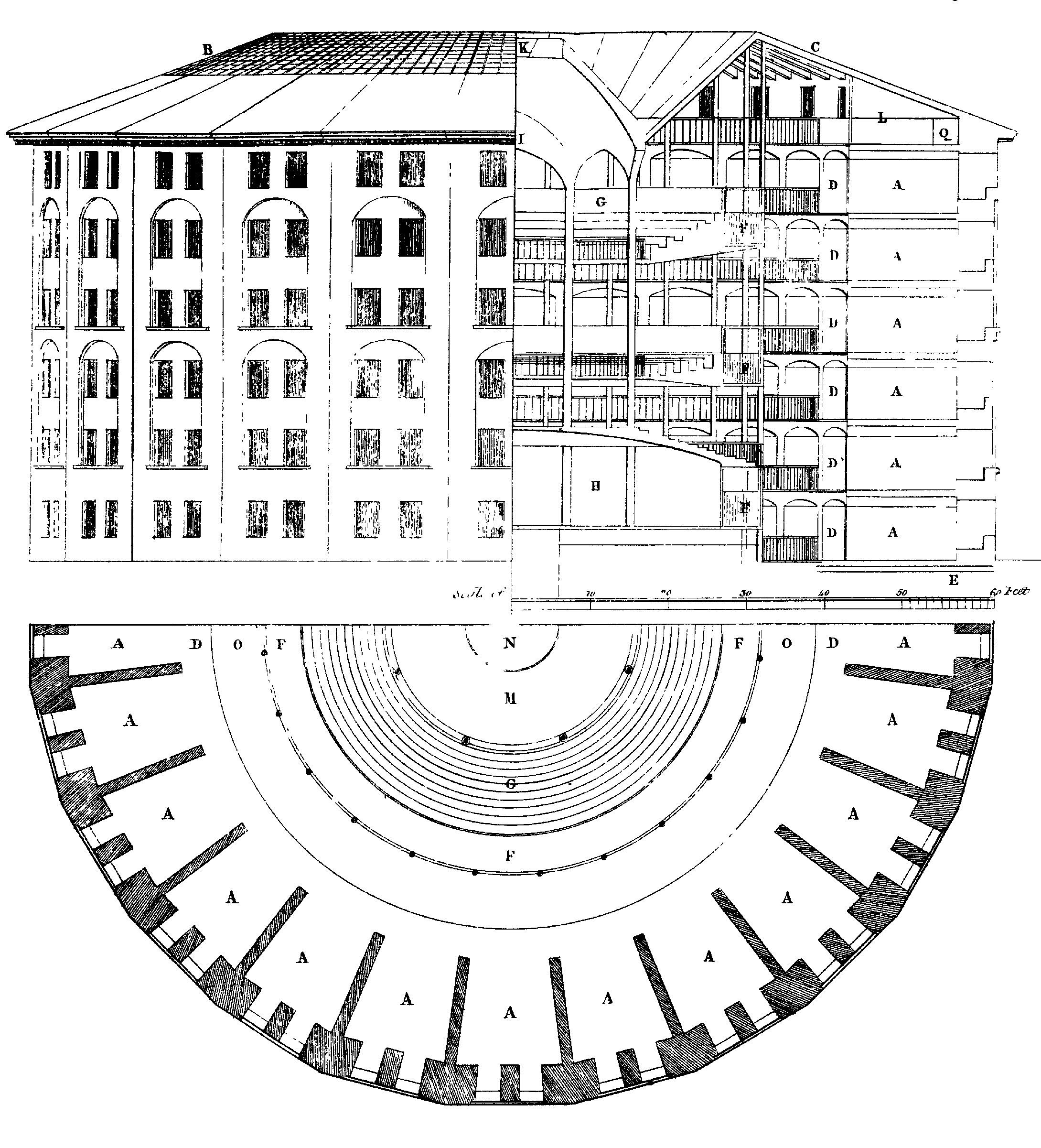
Big data replaces Big Brother: corporations and governments merge in their surveillance practices, blurring the line between market logic and intelligence work. In Han’s opinion, technologies such as RFID, IoT, and wearable devices (again) might extend surveillance to objects and even to human perception itself in a scenario where everyone becomes both observer and observed: Big Brother and prisoner at the same time.
16. Psychopolitics
The last chapter goes full Asimov, except it’s not fiction (and not even science, to be fair). Han builds on Foucault’s distinction between sovereign power and biopower: from the 17th century onward, power no longer primarily manifested as the right to kill, but as biopower, an administrative force that manages life, optimises populations, and regulates biological processes such as health, reproduction, and mortality, whether explicitly or not. Biopower operates through surveillance, organisation, and normalisation, but it remains external to the psyche.
Today, Han argues, a new paradigm has emerged: digital psychopolitics. Unlike biopolitics, psychopolitics finally managed to penetrate the psychological interior, so that the digital panopticon is no longer disciplinary but transparent; it does not rely on the visible gaze of Big Brother. Instead, it is a-prospectical, operating through data collection, pattern recognition, and — crucially — prediction. Digital surveillance does not merely observe behaviour anymore but it anticipates, influences, and shapes it from within.
Big data replaces theory. Correlation supersedes causality in such a way that spurious correlation might become accepted as a rule. With enough data, human behaviour can be registered, measured, and predicted without interpretation; Han links this to Chris Anderson’s claim about the end of theory, where models and hypotheses are no longer needed because data supposedly speaks for itself. Drawing on Benjamin’s notion of the optical unconscious, Han proposes the idea of a digital unconscious. Just as the camera reveals dimensions of reality inaccessible to the naked eye, data mining exposes collective behavioural patterns of which individuals are unaware. Psychopower operates precisely here: by accessing the collective unconscious, it becomes more effective than biopower, governing not from outside but from within. This marks the definitive transition from biopolitics to digital psychopolitics, with deeply totalitarian implications.




No Comments