"All this he saw, for one moment breathless and intense, vivid on the morning sky; and still, as he looked, he lived; and still, as he lived, he wondered."

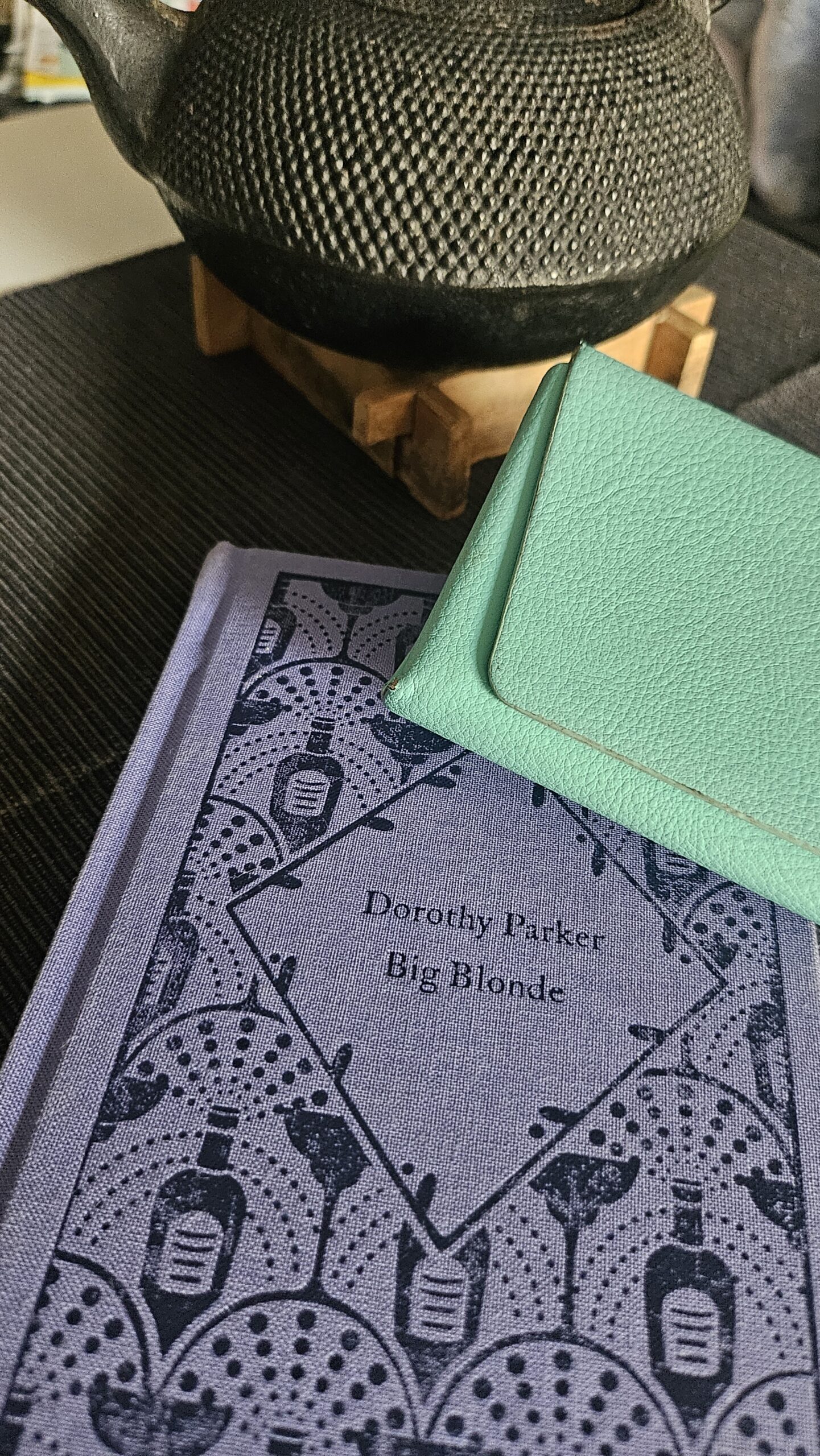
Dorothy Parker’s Big Blonde

Prohibitionism and depression: these are the two words that come to mind, reading this collection of short stories by Dorothy Parker, in her luxurious prose and through the sharp lenses of her social criticism.

Some of these are one-sided flows, voicing a dialogue from the point of just one actor.
Others are more traditional short stories, featuring stuff like a disgusting man who’s admiring a woman on the tram (and everything else would be a spoiler), a guy who’s courting the idea of leaving his family (and I can’t blame him, honestly, I cannot blame him), a lady who adopted a child with loads of plans for his future (the miserable thing).
The titular story is an absolute punch in the guts, and the main character won’t leave me for a while.

Here’s the list of stories:

  • The Standard of Living, in which two friends play a game of pretend, and they find luxury is much more expensive than they think:
  • You Were Perfectly Fine, in which a woman reminds a man what he did when he was drunk and, honestly, he was perfectly fine;
  • Such a Pretty Little Picture, the one with the guy thinking of dropping everything and make a run for it;
  • Glory in the Daytime, where a woman meets an actress and it’s all much more subtle than “never meet your heroes”;
  • From the Diary of a New York Lady (and you’ll want to punch her);
  • Mr Durant (and you’ll want to throw up);
  • Just a Little One, and they mean just a little glass of whiskey;
  • Little Curtis (the poor fellow);
  • Lady with a Lamp, a flow of one-sided conversation from a woman visiting a sick friend that’s probably better off without her;
  • Big Blonde.
architecture, engineering and construction

Get the Party Started

Paul Shillcock posted something honest a few weeks ago, which is rarer than it sounds on LinkedIn. He admitted that he spends half his time explaining the terms appointing party and appointed party from ISO 19650, that almost nobody uses them (not the way they

Read More »
books and literature

Il Detective Kindaichi e la Filastrocca del Diavolo

Mi sono avvicinata qualche tempo fa alla serie di gialli giapponesi che vedono come protagonista Kindaichi Kōsuke, scritti da Seishi Yokomizo ed editi in Italia da Sellerio, e devo dire che ho sentimenti contrastanti nei confronti della serie. Da una parte, l’approccio al romanzo giallo

Read More »
books and literature

Byung-Chul Han’s “Saving Beauty”

Saving Beauty (La Salvezza del Bello in Italian) is a short philosophical book (original German title: Schönheit retten) by cultural theorist Byung‑Chul Han, and it focuses on a critique of contemporary, consumerist notions of beauty, delving of course with the impact of digital technologies on

Read More »
Share on LinkedIn
Throw on Reddit
Roll on Tumblr
Mail it
No Comments

Post A Comment

This site uses Akismet to reduce spam. Learn how your comment data is processed.

RELATED POSTS

Get the Party Started

Paul Shillcock posted something honest a few weeks ago, which is rarer than it sounds on LinkedIn. He admitted that he spends half his time explaining the terms appointing party and appointed party from ISO 19650, that almost nobody uses them (not the way they

Read More

Il Detective Kindaichi e la Filastrocca del Diavolo

Mi sono avvicinata qualche tempo fa alla serie di gialli giapponesi che vedono come protagonista Kindaichi Kōsuke, scritti da Seishi Yokomizo ed editi in Italia da Sellerio, e devo dire che ho sentimenti contrastanti nei confronti della serie. Da una parte, l’approccio al romanzo giallo

Read More

Byung-Chul Han’s “Saving Beauty”

Saving Beauty (La Salvezza del Bello in Italian) is a short philosophical book (original German title: Schönheit retten) by cultural theorist Byung‑Chul Han, and it focuses on a critique of contemporary, consumerist notions of beauty, delving of course with the impact of digital technologies on

Read More