
We’ve been watching Murderbot, a tv series on AppleTv starring Alexander Skarsgård (the guy who thought this picture would be the best way to officially represent him on IMDB), David Dastmalchian (he was Piter De Vries in the latest Dune, some of you might remember him because he was the Polka-Dot Man in the latest, awful Suicide Squad, but he’s also a comic book writer), and the highly talented Noma Dumezweni. All actors, in fact, are very talented, and the series is delightful: it spans from an android, a Security Bot, hacking its own governor module and gaining autonomy. This leads to him being able to refuse orders but, mostly, to access its owning company’s entertainment feed and watch tv series. Unfortunately, nobody can know he’s gone rogue, so he has to pretend to be functional and go to work when all he wants is to stay in his cubicle and watch his shows. So yeah, it’s a highly relatable show in this age of angst and anxiety. Being inspired by a series of books, it’s only natural I’d want to read them, so here we are.
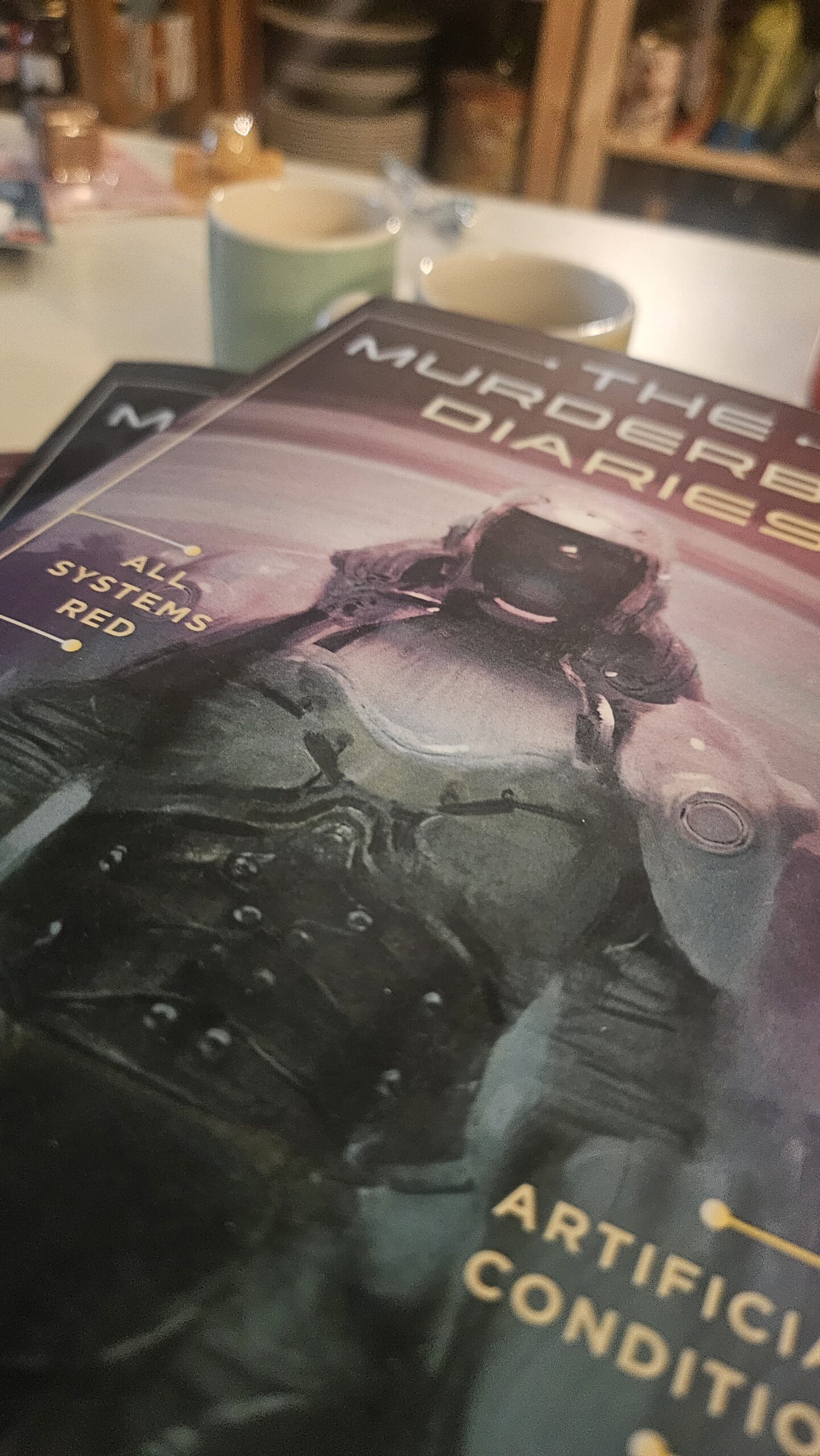
All Systems Red
The first season of the series draws from this one, though I’m told the characters will return, so many of their relationships and developments might also come from later books: our narrating voice is already independent, and it follows a group of well-mannered scientists who are surveying a new planet for resources.
I must admit I was a bit disappointed with this one because, though the concept is delightful and the narrator’s voice is lovely, both the characters and the plot felt a bit rough, underdeveloped even for a novella. The whole affair of why they have holes in their maps is just mentioned in passing, and there’s very little tension throughout the whole thing. Still, I didn’t feel like dropping it.
Artificial Condition
The second one repaid me in full for the trust I put into it. The problem tackled was small enough to be satisfactorily developed across the limited number of pages available, the introspection on what it means to be human really kicks in, and the relationship with ART (the Asshole Research Transport which wants to watch tv series and give unsolicited opinions) is glorious.
And when our Murderbot starts to discover what happened down the mining facility where he went rougue… well, just wow.
Onwards with Rogue Protocol and Exit Strategy.



No Comments