"All this he saw, for one moment breathless and intense, vivid on the morning sky; and still, as he looked, he lived; and still, as he lived, he wondered."

The Legend of Ochi

I have mixed feelings when it comes to movies with puppets. Not that I don’t like puppets, on the contrary, some of my favourite movies of all time are Muppet movies, but very few people can tackle the mixture of craft and poetics you need to make my kind of movie. Too little and it’s a travesty. Too much, it gets pretentious.

So what about the super-indie Legend of Ochi, by debutant Isaiah Saxon featuring Emily Watson and Willem Dafoe?
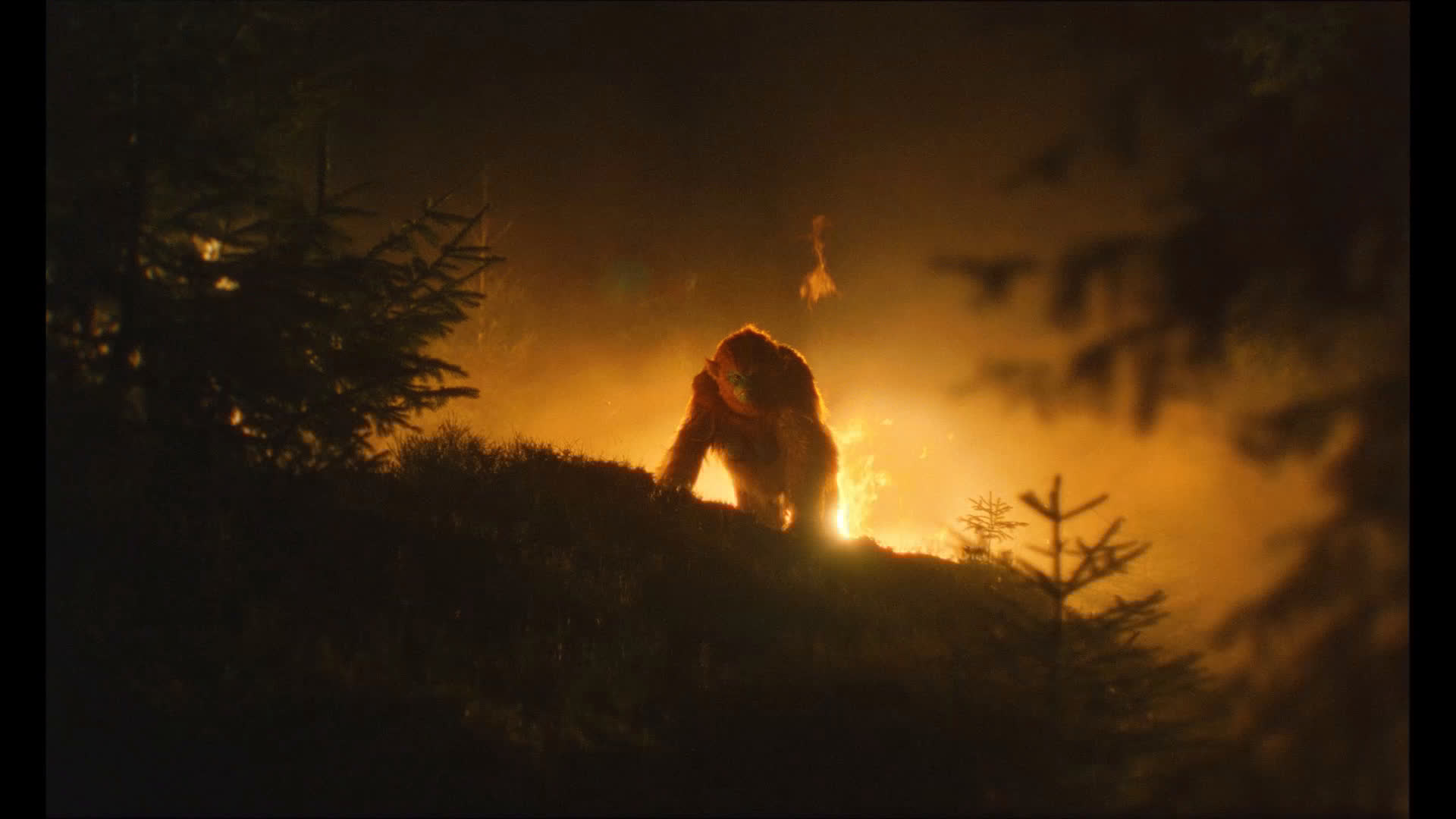
The best way I can describe it is an independent documentary on the gorillas of Transylvania. “But there are no gorillas in Transylvania,” one might say. Well, there are now.

The main idea of the movie takes place on a remote island on the Black Sea, where villagers have been at war with a primate species whose sole bite can kill a man. The villagers hunt these creatures, the Ochi, and this has been taking its toll on society: the beasts are said to kill cattle, people are ruined with the destruction of whole flocks of sheep, and a lunatic farmer — Willem Dafoe — takes it upon himself to collect orphans and estranged children, organise them in a militia, and lead night-time hunts.
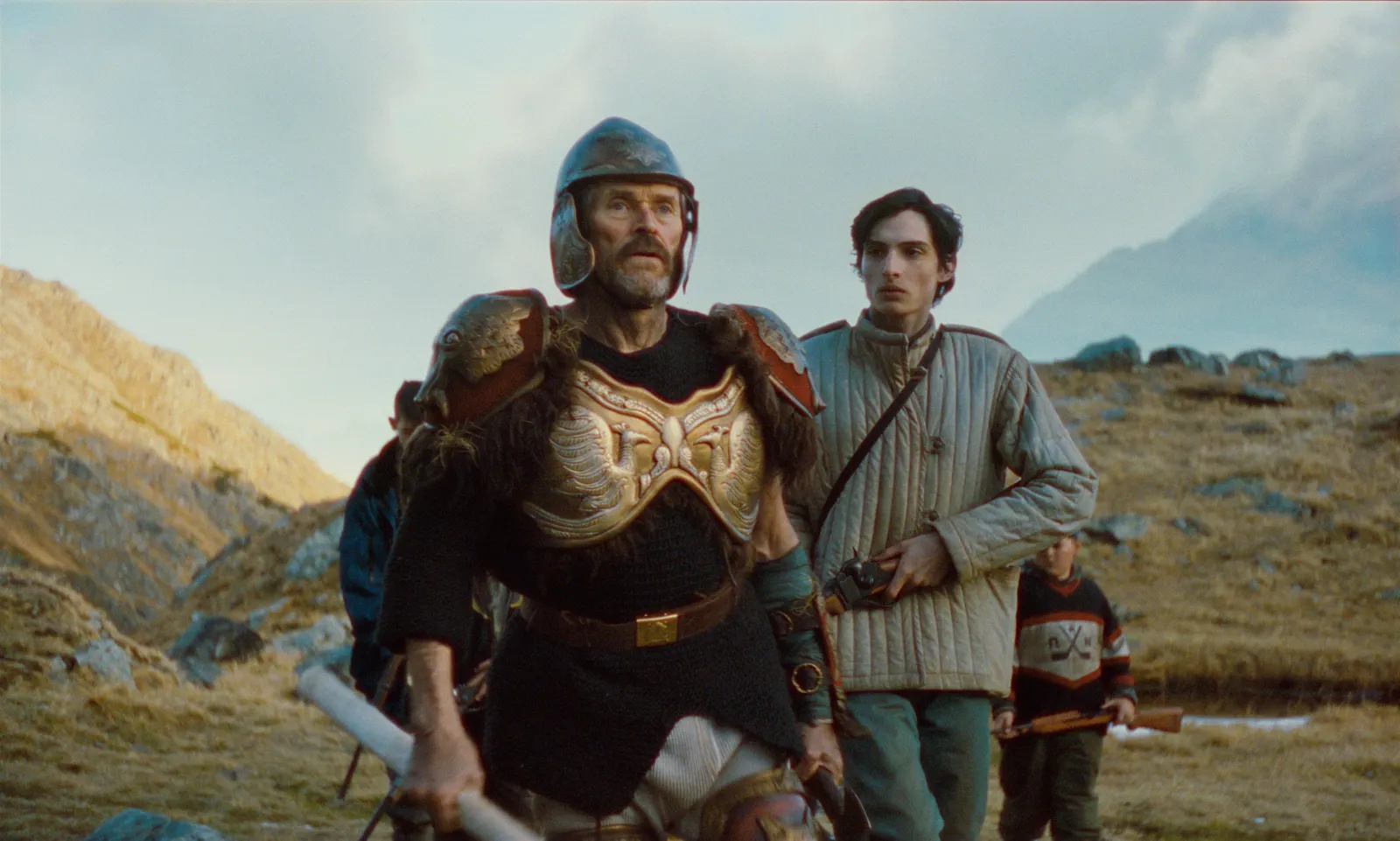
And when I say lunatic…

It all takes a turn when his estranged daughter finds a wounded child of these creatures, the Ochi, has the intuition they’re actually empathic and highly intelligent, and decides to bring him home to his mother (while maybe looking for hers).

The movie is made of long panoramic shots, loads of hiking and delicate interactions. It’s nothing revolutionary and the plot is fairly simple, but it’s honest in what to expect, and delivers.


books and literature

Lolly Willowes

Sylvia Townsend Warner is one of the most interesting literary figures of the 21st century, and Lolly Willowes is one of her finest works, even more stunning if you think it was her debut novel. Self-supporting, intellectually independent, and consistently sceptical of social and religious

Read More »
books and literature

Fugitive Telemetry

This is book #6 in the Murderbot series (yes, I accidentally skipped #5, I’m circling back to that), and I’m afraid I didn’t like this as much as the others. The whole investigation felt a bit rushed and, though the final twist is interesting in

Read More »
architecture, engineering and construction

The Discipline of Inspiration: Valéry and the Algorithmic Mind

Paul Valéry rejected inspiration as miracle, seeing creativity as the discipline of thought in motion. This week, we parallel his notion of mental “operations” with computational procedures in design: iteration, optimisation, constraint, and recombination, and challenge the dichotomy between intuition and automation. Drawing on contemporary

Read More »
Share on LinkedIn
Throw on Reddit
Roll on Tumblr
Mail it
No Comments

Post A Comment

This site uses Akismet to reduce spam. Learn how your comment data is processed.

RELATED POSTS

Lolly Willowes

Sylvia Townsend Warner is one of the most interesting literary figures of the 21st century, and Lolly Willowes is one of her finest works, even more stunning if you think it was her debut novel. Self-supporting, intellectually independent, and consistently sceptical of social and religious

Read More

Fugitive Telemetry

This is book #6 in the Murderbot series (yes, I accidentally skipped #5, I’m circling back to that), and I’m afraid I didn’t like this as much as the others. The whole investigation felt a bit rushed and, though the final twist is interesting in

Read More

The Discipline of Inspiration: Valéry and the Algorithmic Mind

Paul Valéry rejected inspiration as miracle, seeing creativity as the discipline of thought in motion. This week, we parallel his notion of mental “operations” with computational procedures in design: iteration, optimisation, constraint, and recombination, and challenge the dichotomy between intuition and automation. Drawing on contemporary

Read More