"All this he saw, for one moment breathless and intense, vivid on the morning sky; and still, as he looked, he lived; and still, as he lived, he wondered."

The Ghost Tower

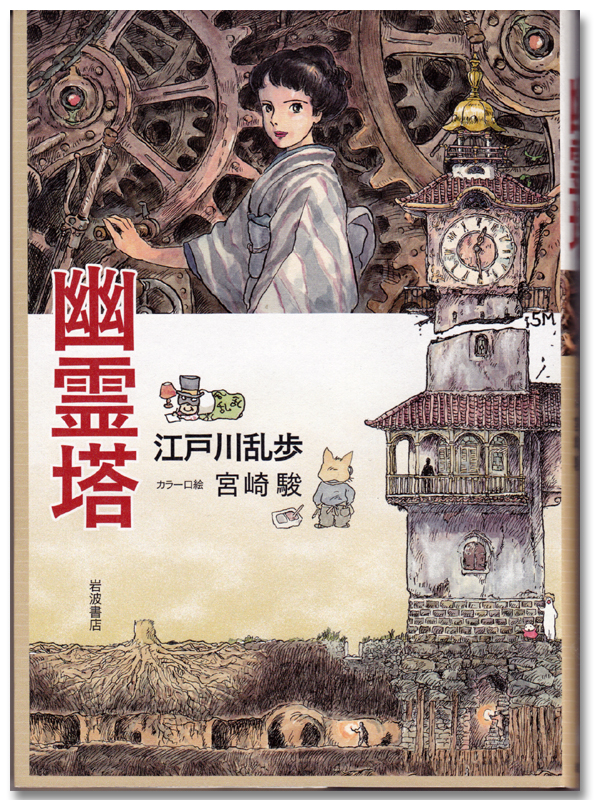
Remember Edogawa Ranpo? The Japanese author of horror and thrilller who gave us the strange and haunting Panorama Island. After reading the graphic novel, I read the novel last summer, and apparently it became tradition that I read Japanese horror when I’m on the traditional 10-days summer vacation with my friends, and this year I grabbed a relatively new Italian translation of Yūrei tō, translated as La Torre SpettraleGhost Tower.

The novel is better known for being the inspiration behind some elements of Miyazaki’s Castle of Cagliostro, and it has an intricate story. Published in 1936 after appearing serially in a magazine, it springs from Ranpo’s wish to make more accessible a work by Ruikō Kuroiwa – The Spectral Tower – published in 1900 also serially. According to what Ranpo himself writes as a preface to one of the chapters, the style of the original work would have been too old-fashioned for modern readers and nevertheleess he thought a waste to forget such a marvellous work just for the language barrier.

A connection has also been suggested between this work and Alice Muriel Williamson‘s A Lady in Grey, which I’m not familiar with: apparently Kuroiwa saw a movie from 1920 with scenes of an adaptation, and sought out the original work to make it available into Japanese, making significant adaptation in its translation.

Regardless of its intricated origin, the novel remains one of the most brilliant Japanese mystery novels I’ve read, with a complex mixture of traditional elements and values (family honor and vengeful ghosts being the more obvious), a touch of romanticism with cursed beauties and poisons, plain horror with elements such as the house of spiders, and strikingly modern elements that wouldn’t be out of place in a contemporary sci-fi thriller.

Highly recommended.

Note: there’s also a comic book version with drawings by Miyazaki himself.
books and literature

Il Detective Kindaichi e la Filastrocca del Diavolo

Mi sono avvicinata qualche tempo fa alla serie di gialli giapponesi che vedono come protagonista Kindaichi Kōsuke, scritti da Seishi Yokomizo ed editi in Italia da Sellerio, e devo dire che ho sentimenti contrastanti nei confronti della serie. Da una parte, l’approccio al romanzo giallo

Read More »
books and literature

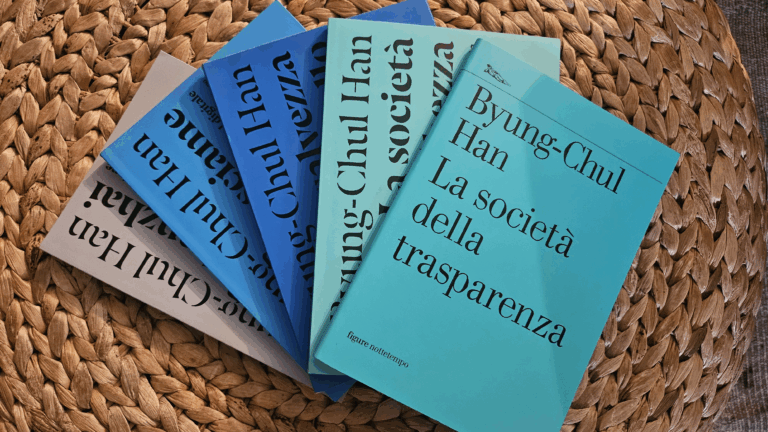
Byung-Chul Han’s “Saving Beauty”

Saving Beauty (La Salvezza del Bello in Italian) is a short philosophical book (original German title: Schönheit retten) by cultural theorist Byung‑Chul Han, and it focuses on a critique of contemporary, consumerist notions of beauty, delving of course with the impact of digital technologies on

Read More »
architecture, engineering and construction

The Saturday Nobody Asked For

Introduction: the question from LinkedIn A friend of mine posted recently about an engineer on their team who had, without being asked, put in an enormous amount of work over a weekend. The post asked a good question: once you’ve seen someone operate at that

Read More »
Share on LinkedIn
Throw on Reddit
Roll on Tumblr
Mail it
No Comments

Post A Comment

This site uses Akismet to reduce spam. Learn how your comment data is processed.

RELATED POSTS

Il Detective Kindaichi e la Filastrocca del Diavolo

Mi sono avvicinata qualche tempo fa alla serie di gialli giapponesi che vedono come protagonista Kindaichi Kōsuke, scritti da Seishi Yokomizo ed editi in Italia da Sellerio, e devo dire che ho sentimenti contrastanti nei confronti della serie. Da una parte, l’approccio al romanzo giallo

Read More

Byung-Chul Han’s “Saving Beauty”

Saving Beauty (La Salvezza del Bello in Italian) is a short philosophical book (original German title: Schönheit retten) by cultural theorist Byung‑Chul Han, and it focuses on a critique of contemporary, consumerist notions of beauty, delving of course with the impact of digital technologies on

Read More

The Saturday Nobody Asked For

Introduction: the question from LinkedIn A friend of mine posted recently about an engineer on their team who had, without being asked, put in an enormous amount of work over a weekend. The post asked a good question: once you’ve seen someone operate at that

Read More