"All this he saw, for one moment breathless and intense, vivid on the morning sky; and still, as he looked, he lived; and still, as he lived, he wondered."

The East Palace

The East Palace (동궁) is this new South Korean dark fantasy television series I’ve been watching on Netflix, and I must say it has some serious Constantine vibes. I’m not an expert on Korean drama, so I don’t know the authors nor the actors starring in it, but I love the concept as it’s a mixture of supernatural and non-supernatural investigation, featuring a man who can walk through the realm of spirits and a girl who can hear the dead. The setting is fictional, both the dynasty and the palace don’t exist, and yet the show positions itself in the same trace as Jadewind: royalty sucks, the Emperor’s an asshole, innocent suffer for no reason, except this time they come back as full-ass vengeful spirits.

The folklore is a mix between Korean folklore and some original sparks, and there’s an article over here explaining the difference between the several kinds of spirits. The gwi-shin are the closest to ghosts: humans who have died, often violently, and bear a grudge towards those who were responsible for their deaths. In the series, the horror aspects of their appearances are tied to the circumstances in which they died. They’re divided between common-gwi, those who are bound by duty and generally aren’t a threat, won-gwi, the ones bound by resentment, and ak-gwi, those bound by the evil they did in life.
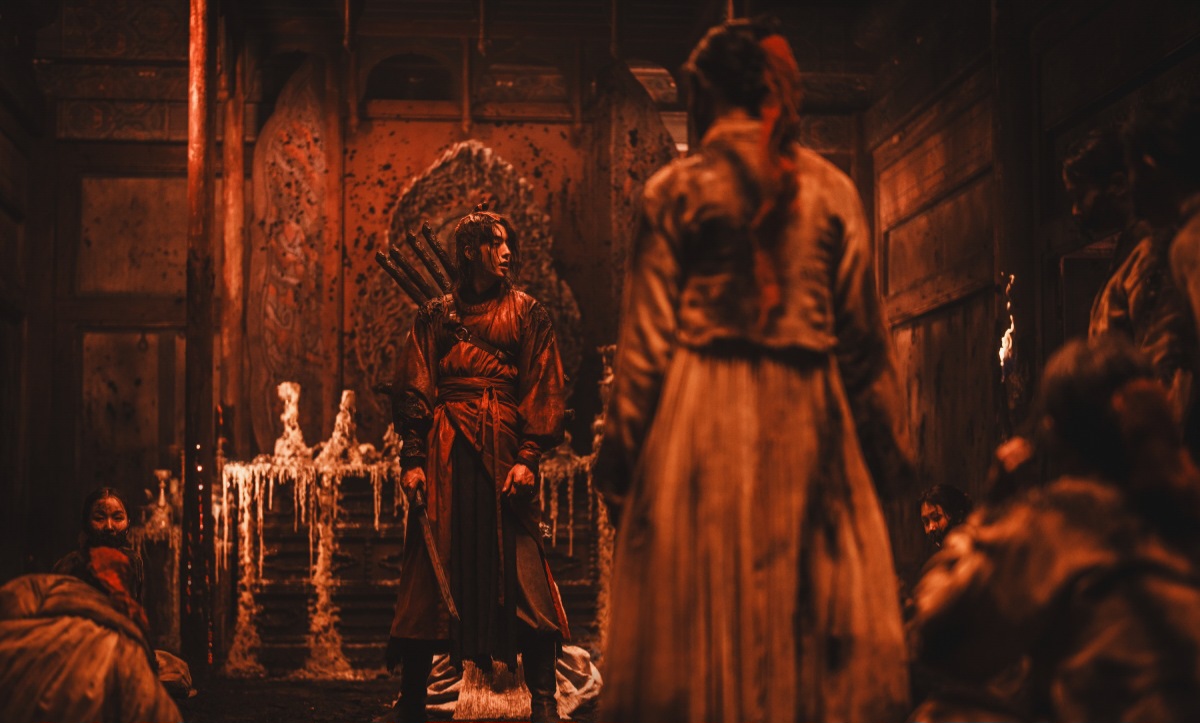
There’s also another kind of spirit, the gwi-mae, “here for the vibes” as the original Netflix article puts it: they’re spirits formed by the bad energy concentrated in one place, and they were never human to begin with. Trust me, it shows.

And then there’s the cute one, of course.

If you manage, give it a shot.

Summertime

Walkscapes

This is another book that was foundational in my intellectual development and it’s actually at the crossroads between architecture, level design and user experience. Francesco Careri, its author, trained as an architect in Rome and finished in Naples with a doctoral thesis titled “Il percorso,”

Read More »
Summertime

The Culture of Cities

Lewis Mumford never finished a degree, which is one of the main reasons I am attracted to his work: after chronic illness interrupted his studies at the City College of New York, what became one of the twentieth century’s most complete bodies of critical thinking

Read More »
Summertime

A Pattern Language

Christopher Alexander was born in Vienna in 1936, to a Catholic father and a Jewish mother, and left with his family for England after the Anschluss in March 1938 (which is a fancy name for when Hitler annexed unwilling Austria to Germany). He read mathematics

Read More »
Share on LinkedIn
Throw on Reddit
Roll on Tumblr
Mail it
No Comments

Post A Comment

This site uses Akismet to reduce spam. Learn how your comment data is processed.

RELATED POSTS

The Culture of Cities

Lewis Mumford never finished a degree, which is one of the main reasons I am attracted to his work: after chronic illness interrupted his studies at the City College of New York, what became one of the twentieth century’s most complete bodies of critical thinking

Read More

A Pattern Language

Christopher Alexander was born in Vienna in 1936, to a Catholic father and a Jewish mother, and left with his family for England after the Anschluss in March 1938 (which is a fancy name for when Hitler annexed unwilling Austria to Germany). He read mathematics

Read More

The Seduction of Place

We’re closing out the month a little differently than we opened it, and we’re circling back to the city since many of you will be doing just that. What’s left of August won’t be organised into weekly themes with a Wednesday essay tying them together:

Read More