"All this he saw, for one moment breathless and intense, vivid on the morning sky; and still, as he looked, he lived; and still, as he lived, he wondered."

The East Palace

The East Palace (동궁) is this new South Korean dark fantasy television series I’ve been watching on Netflix, and I must say it has some serious Constantine vibes. I’m not an expert on Korean drama, so I don’t know the authors nor the actors starring in it, but I love the concept as it’s a mixture of supernatural and non-supernatural investigation, featuring a man who can walk through the realm of spirits and a girl who can hear the dead. The setting is fictional, both the dynasty and the palace don’t exist, and yet the show positions itself in the same trace as Jadewind: royalty sucks, the Emperor’s an asshole, innocent suffer for no reason, except this time they come back as full-ass vengeful spirits.

The folklore is a mix between Korean folklore and some original sparks, and there’s an article over here explaining the difference between the several kinds of spirits. The gwi-shin are the closest to ghosts: humans who have died, often violently, and bear a grudge towards those who were responsible for their deaths. In the series, the horror aspects of their appearances are tied to the circumstances in which they died. They’re divided between common-gwi, those who are bound by duty and generally aren’t a threat, won-gwi, the ones bound by resentment, and ak-gwi, those bound by the evil they did in life.
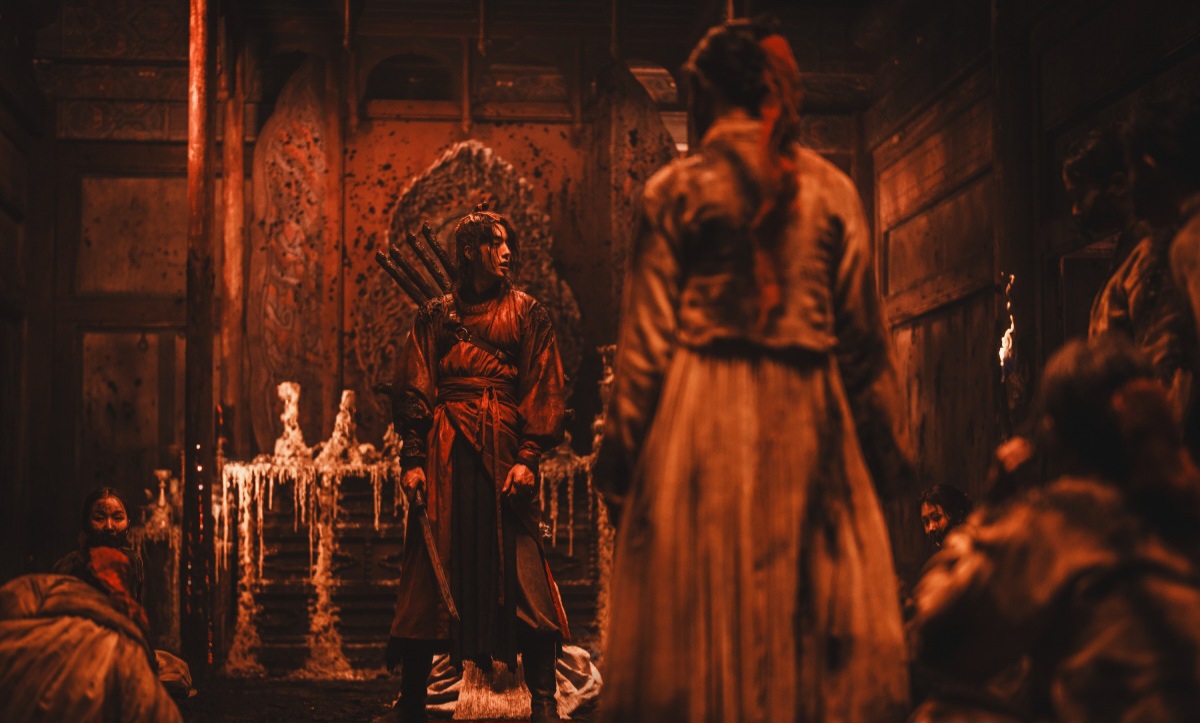
There’s also another kind of spirit, the gwi-mae, “here for the vibes” as the original Netflix article puts it: they’re spirits formed by the bad energy concentrated in one place, and they were never human to begin with. Trust me, it shows.

And then there’s the cute one, of course.

If you manage, give it a shot.

Spooktober

Spooktober 27 – The Black Monk (2)

Chapter 3 After supper, when the visitors had gone, he went to his room and lay down on the sofa: he wanted to think about the monk. But a minute later Tanya came in. “Here, Andryusha; read father’s articles,” she said, giving him a bundle

Read More »
Spooktober

Spooktober 26 – The Black Monk (1)

Anton Chekhov (1860–1904) was a Russian physician, short-story writer and playwright, and I’m not particularly fond of him, though he’s widely regarded as one of the greatest masters of modern short fiction and who am I to argue? His work is celebrated for its psychological

Read More »
art and fashion

Beauty and Ugliness: an exhibition

A few pictures from the recently closed exhibition on Beauty and Ugliness as an aesthetic paradigma in which what’s ideal and what’s grotesque melt together as sides of the same coin. The exhibition featured works by Brueghel (lent from the other exhibition at Palazzo Reale),

Read More »
Share on LinkedIn
Throw on Reddit
Roll on Tumblr
Mail it
No Comments

Post A Comment

This site uses Akismet to reduce spam. Learn how your comment data is processed.

RELATED POSTS

Spooktober 27 – The Black Monk (2)

Chapter 3 After supper, when the visitors had gone, he went to his room and lay down on the sofa: he wanted to think about the monk. But a minute later Tanya came in. “Here, Andryusha; read father’s articles,” she said, giving him a bundle

Read More

Spooktober 26 – The Black Monk (1)

Anton Chekhov (1860–1904) was a Russian physician, short-story writer and playwright, and I’m not particularly fond of him, though he’s widely regarded as one of the greatest masters of modern short fiction and who am I to argue? His work is celebrated for its psychological

Read More

Beauty and Ugliness: an exhibition

A few pictures from the recently closed exhibition on Beauty and Ugliness as an aesthetic paradigma in which what’s ideal and what’s grotesque melt together as sides of the same coin. The exhibition featured works by Brueghel (lent from the other exhibition at Palazzo Reale),

Read More
