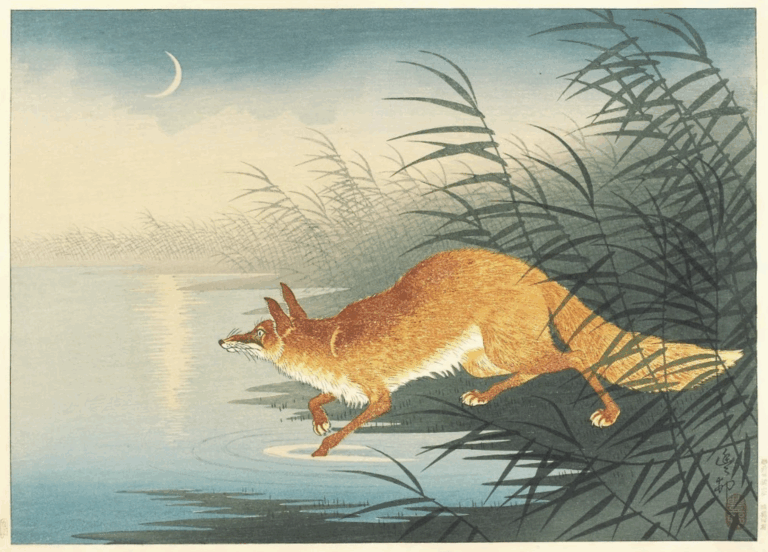
"All this he saw, for one moment breathless and intense, vivid on the morning sky; and still, as he looked, he lived; and still, as he lived, he wondered."

The Art of NASA

This is the second book I read by this author, and I bought it for two reasons:

  • I’m very fond of the world of illustrations, in every realm;
  • I wanted to figure out whether the author’s faults in my previous read (The Making of Kubrick’s 2001: A Space Odyssey) were just the glitch of a guy who was just too much enamoured with Kubrick.

Alas, I was disappointed on both fronts.
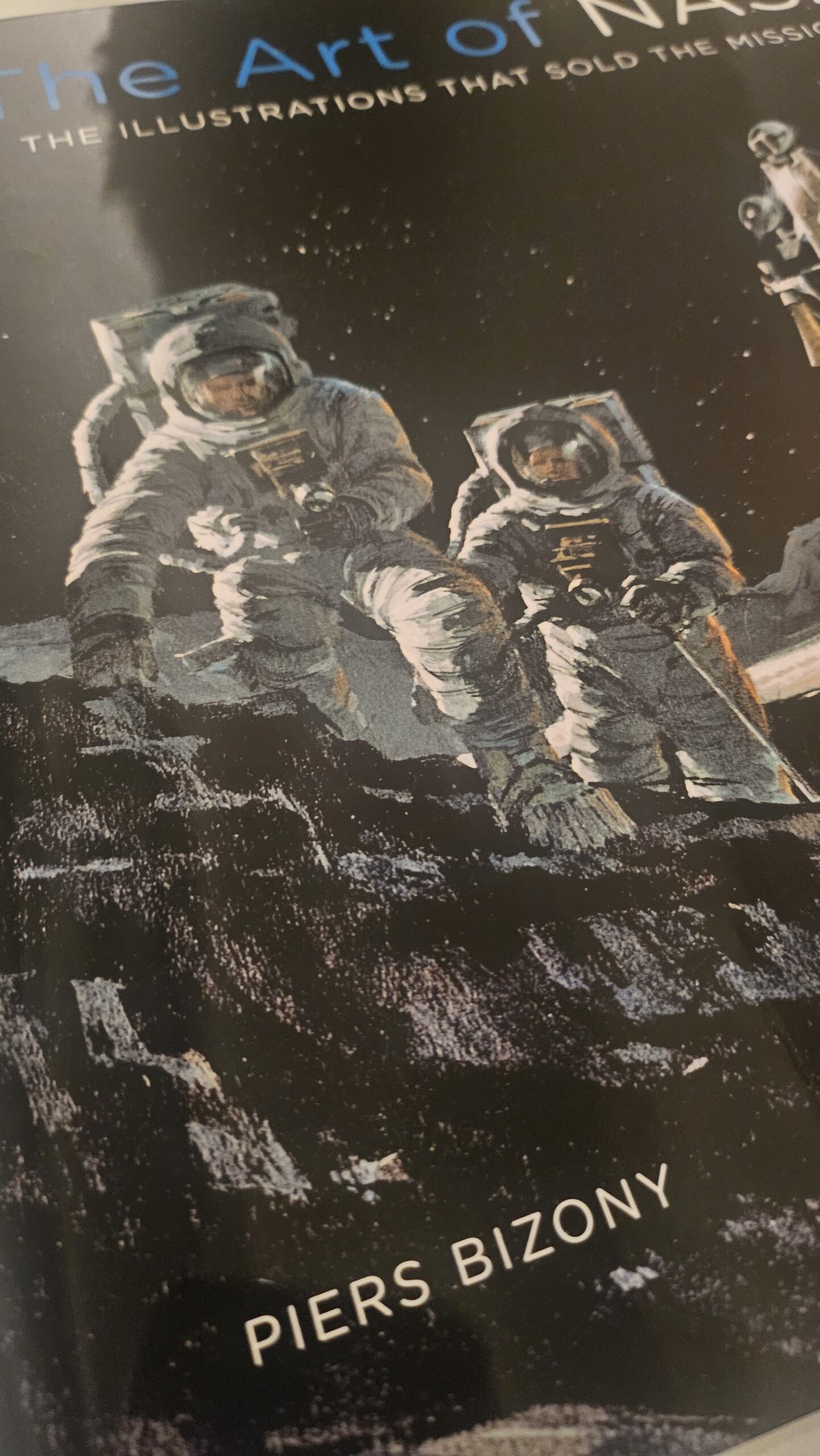
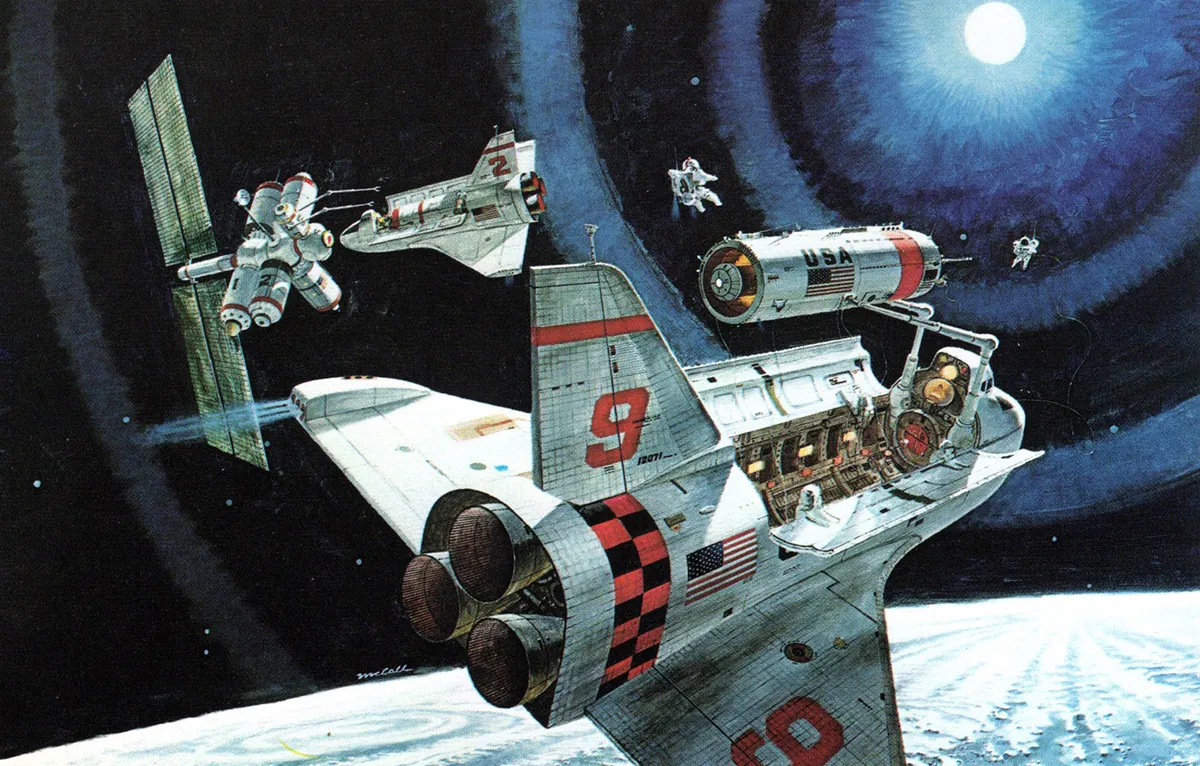
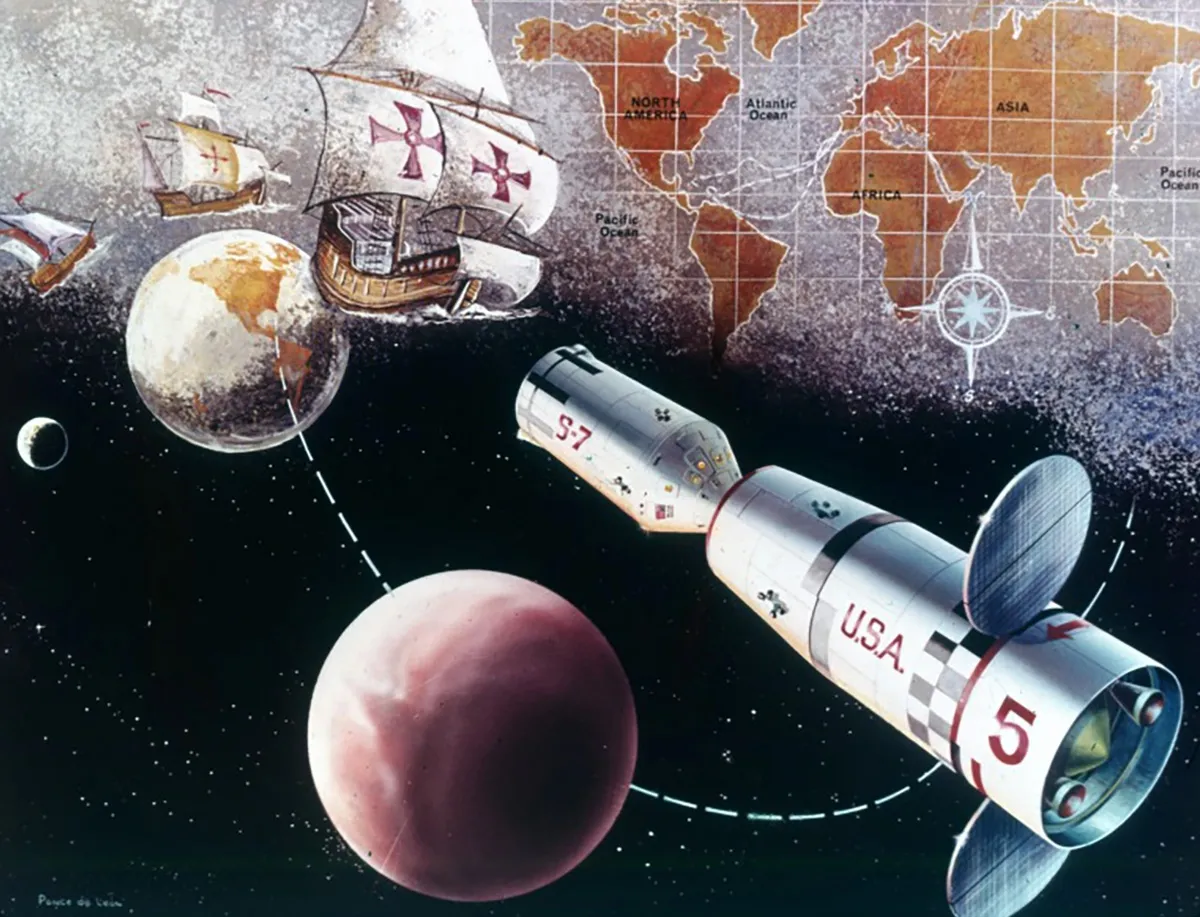
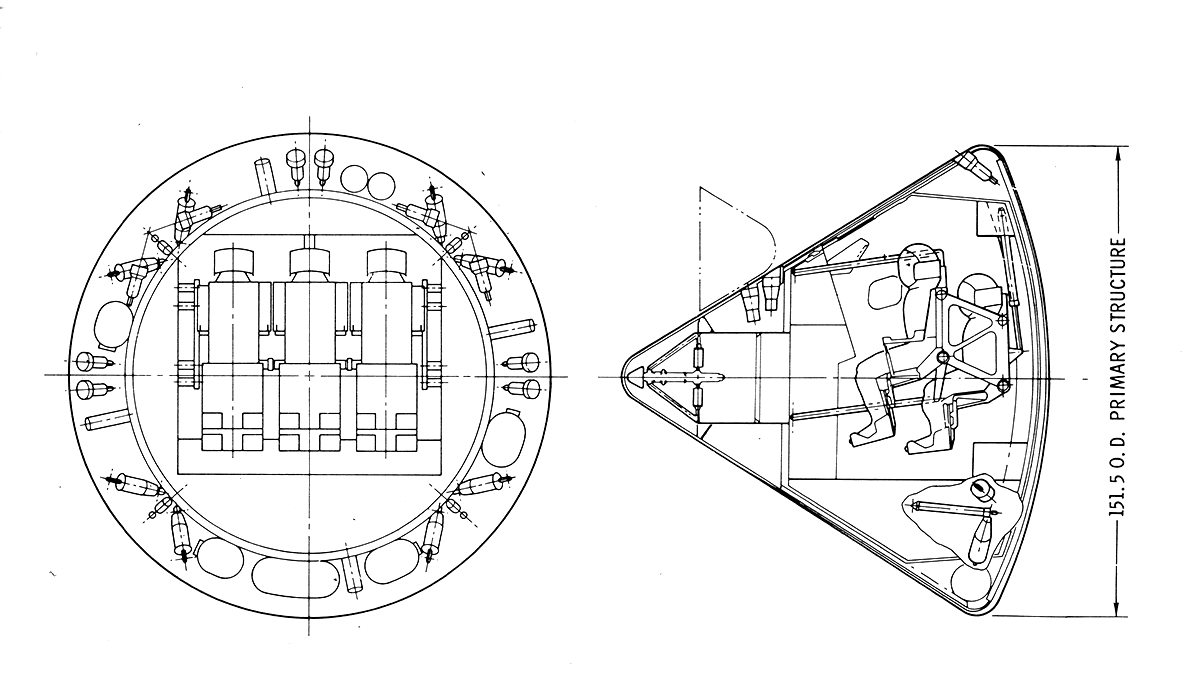
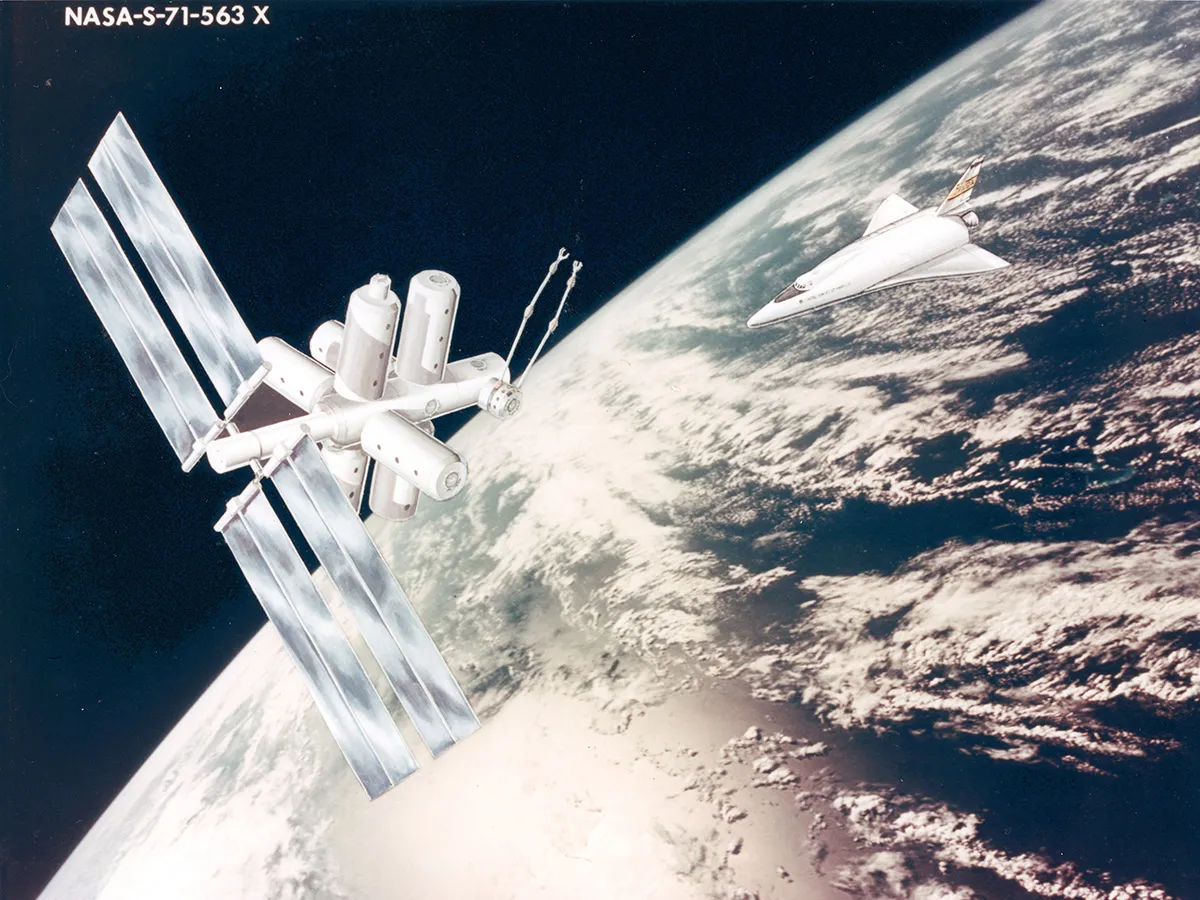
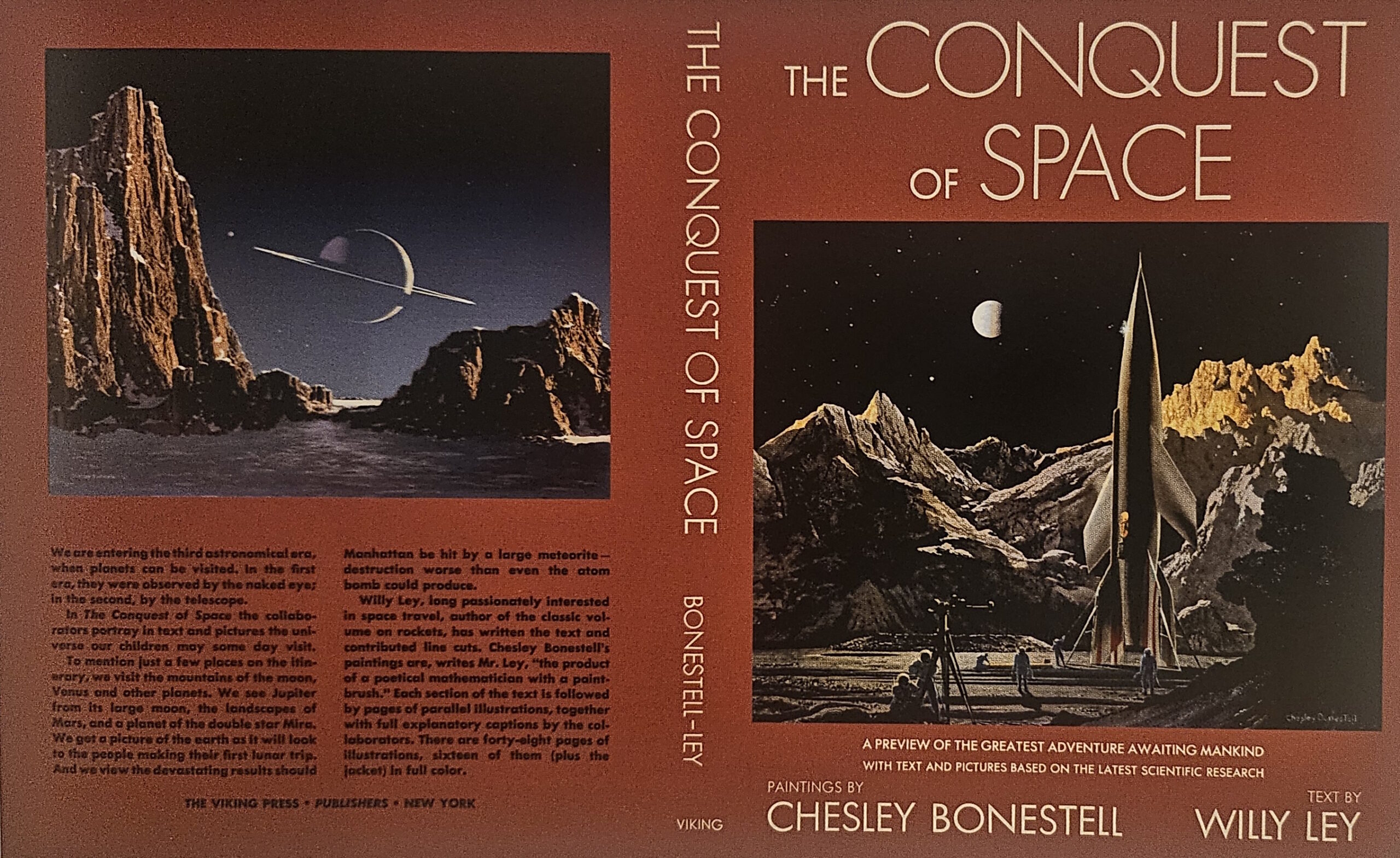
The preface is very good andframes the (excellent) graphics in this book as coming from two categories:
1) the will of NASA to communicate the vision behind their programs to the general public through newspapers and magazines, especially to counter the Russian similar effort;
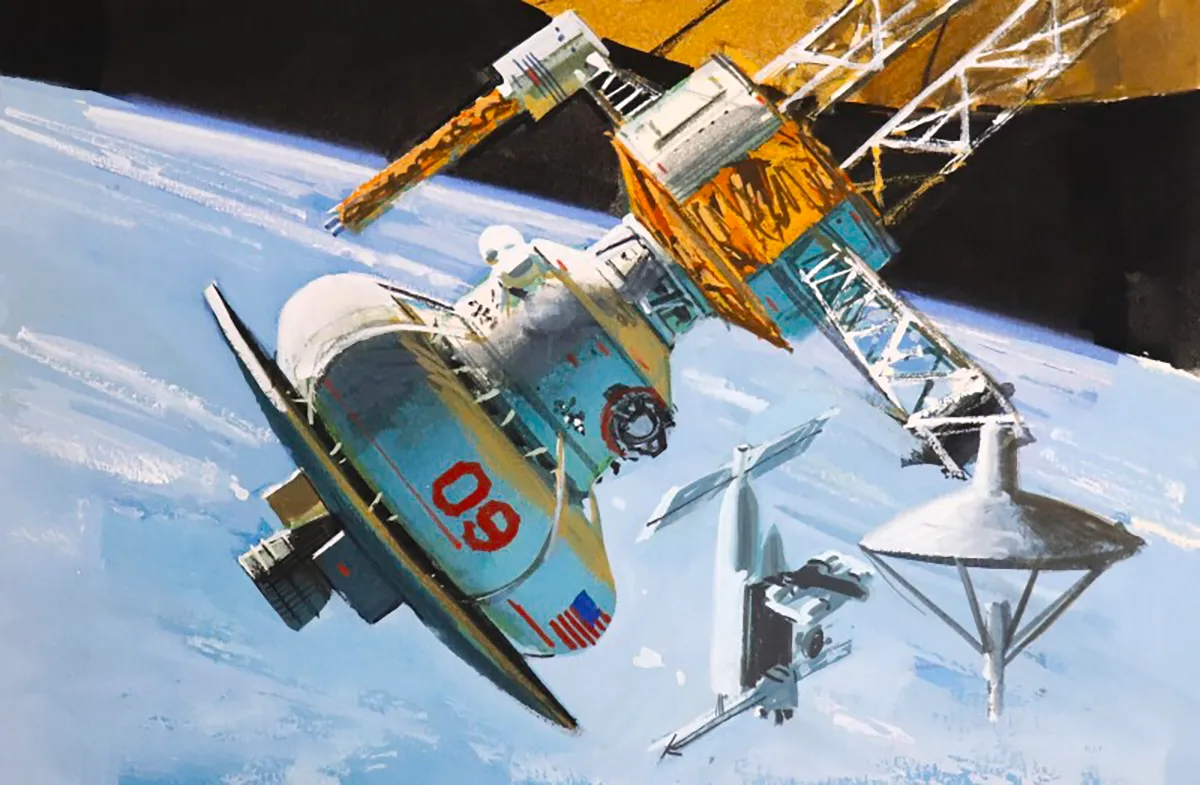
2) actual concept art for details of the missions, like how we are going to land this thing on the moon, way before the engineering process started.

The second aspect is as fascinating as the first (though I find it a puerile attitude not to use the p-word, propaganda, for the US materials and limit it to the USSR). Unfortunately, the rest of the book turns into a bland history of the space program and doesn’t really walk you through who designed what, and when, and why, and whether it was for propaganda (ooops, I said it) or internal use. Information on the illustrators is delegated to external sources. I particularly recommend this one.
When it comes to Bizony’s attitude, it should be enough to note that, when he spoke of the shuttle program, he claims that mentioning the deaths of 14 astronauts “would be wrong” without mentioning what the program accomplished. And listen, I’d be fine if this accomplishment was the advancement of science, space exploration, technology or whatever. What the author chooses to use as an accomplishment, however, is “asserting the American leadership in space”.
So yeah, Bizony’s dismissal of human life in the other book wasn’t an accident.

The prose is smooth and the pictures are gorgeous, if that helps.
books and literature

Il Detective Kindaichi e la Filastrocca del Diavolo

Mi sono avvicinata qualche tempo fa alla serie di gialli giapponesi che vedono come protagonista Kindaichi Kōsuke, scritti da Seishi Yokomizo ed editi in Italia da Sellerio, e devo dire che ho sentimenti contrastanti nei confronti della serie. Da una parte, l’approccio al romanzo giallo

Read More »
books and literature

Byung-Chul Han’s “Saving Beauty”

Saving Beauty (La Salvezza del Bello in Italian) is a short philosophical book (original German title: Schönheit retten) by cultural theorist Byung‑Chul Han, and it focuses on a critique of contemporary, consumerist notions of beauty, delving of course with the impact of digital technologies on

Read More »
architecture, engineering and construction

The Saturday Nobody Asked For

Introduction: the question from LinkedIn A friend of mine posted recently about an engineer on their team who had, without being asked, put in an enormous amount of work over a weekend. The post asked a good question: once you’ve seen someone operate at that

Read More »
Share on LinkedIn
Throw on Reddit
Roll on Tumblr
Mail it
No Comments

Post A Comment

This site uses Akismet to reduce spam. Learn how your comment data is processed.

RELATED POSTS

Il Detective Kindaichi e la Filastrocca del Diavolo

Mi sono avvicinata qualche tempo fa alla serie di gialli giapponesi che vedono come protagonista Kindaichi Kōsuke, scritti da Seishi Yokomizo ed editi in Italia da Sellerio, e devo dire che ho sentimenti contrastanti nei confronti della serie. Da una parte, l’approccio al romanzo giallo

Read More

Byung-Chul Han’s “Saving Beauty”

Saving Beauty (La Salvezza del Bello in Italian) is a short philosophical book (original German title: Schönheit retten) by cultural theorist Byung‑Chul Han, and it focuses on a critique of contemporary, consumerist notions of beauty, delving of course with the impact of digital technologies on

Read More

The Saturday Nobody Asked For

Introduction: the question from LinkedIn A friend of mine posted recently about an engineer on their team who had, without being asked, put in an enormous amount of work over a weekend. The post asked a good question: once you’ve seen someone operate at that

Read More