"All this he saw, for one moment breathless and intense, vivid on the morning sky; and still, as he looked, he lived; and still, as he lived, he wondered."

Ten Windows

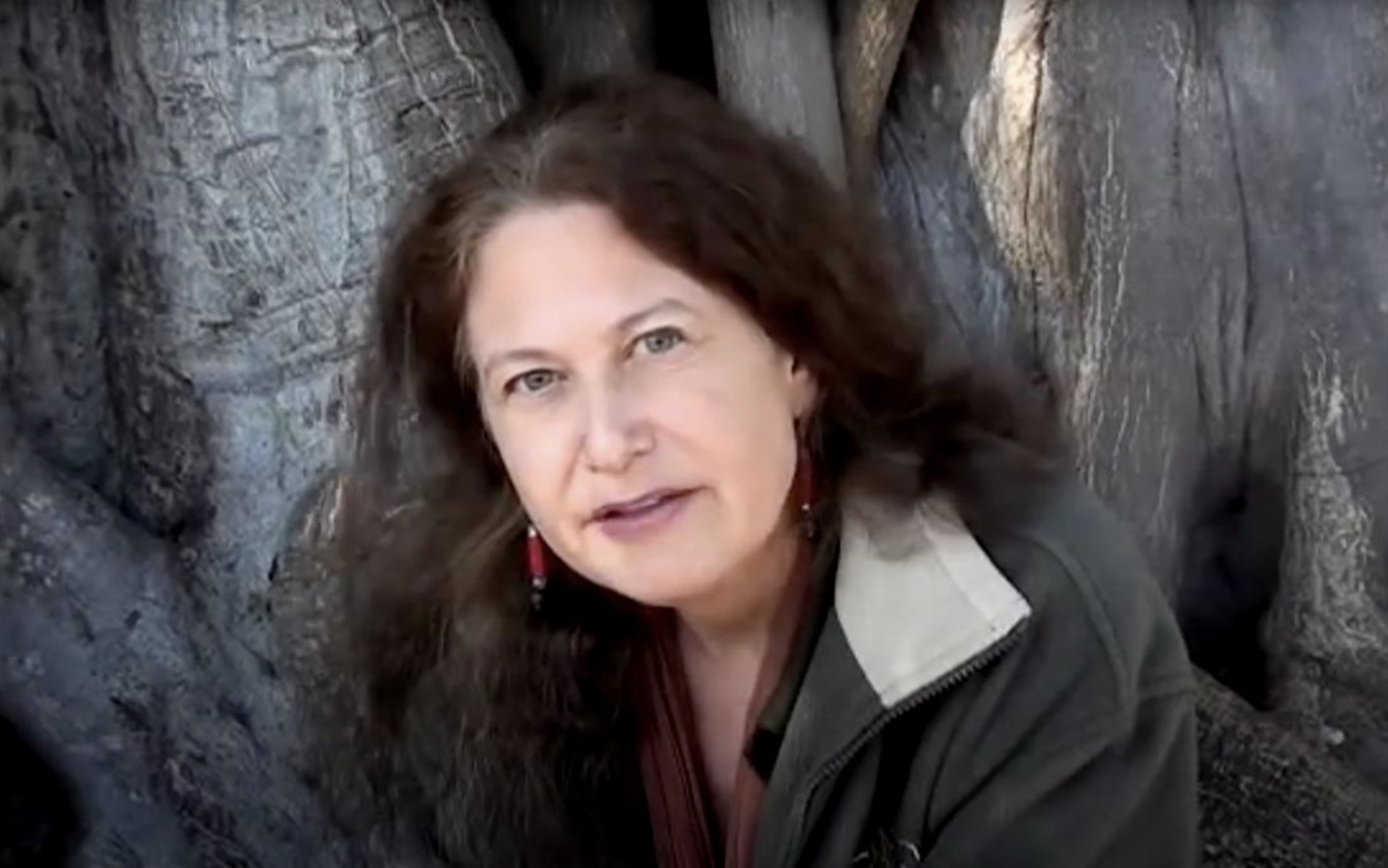
Jane Hirshfield is an American poet, essayist, and translator, widely admired for work that bridges lyric poetry, meditation, ecology, and philosophy. She’s also known as a lucid critic of poetry and has written influential essays on how poems work and why they matter.

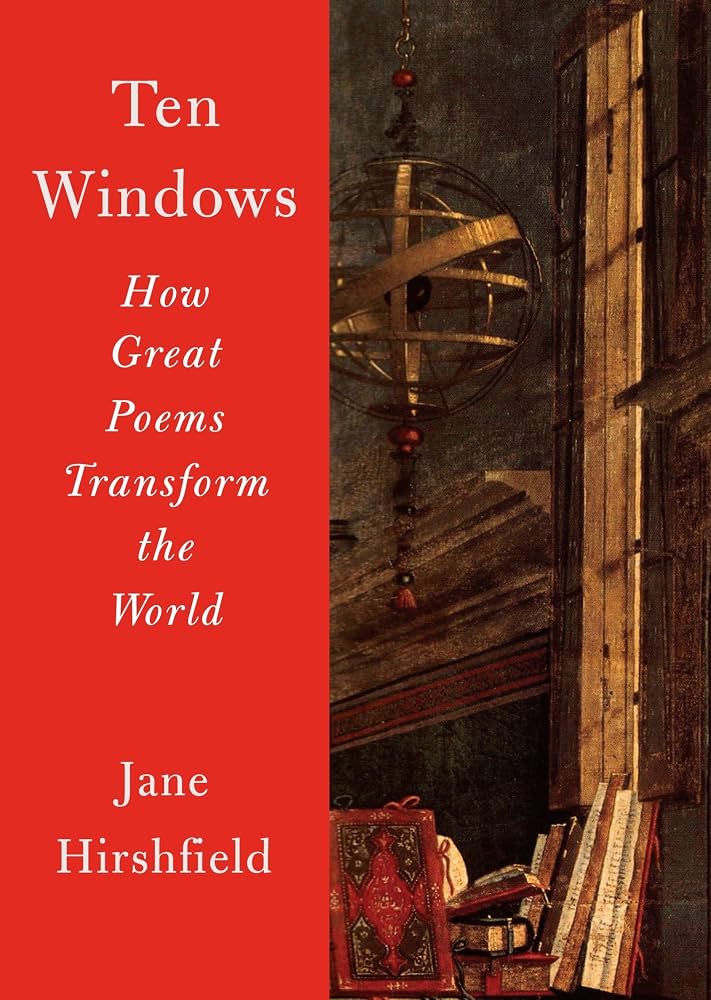
Ten Windows: How Great Poems Transform the World is a 2015 book of essays about reading poetry and understanding its power. In it, she explores ideas like the “window” moment in a poem, when a shift in tone, image, or attention opens the work outward and expands the reader’s sense of reality. A point where the poem changes its direction of gaze enough that the whole field of the poem becomes larger.

“Wherever the gaze rests,
art will draw it also elsewhere,
will remind that there is always more.”

The passage acting as window, whether it’s deliberately placed by the author or not, often breaks the poem’s interior logic open onto something the poem was not, up to that point, about.
What I like about this idea is how literal its vocabulary is and how rarely architecture treats it that literally in return. We build actual windows constantly, and describe what they do almost entirely in performance terms: daylighting, view corridors, solar gain, ventilation. All of that is true, and none of it is what Hirshfield is describing. Her window-moment is an authored pivot, placed at a specific point in a specific work, whose job is to redirect attention somewhere the piece hadn’t been looking, and to do it at exactly the moment the maker judged the interior logic had gone as far as it usefully could on its own. A poem earns its window-moment through craft. Buildings aren’t so different, and sometimes they do just that, but maybe we don’t know to phrase it quite in this way.
books and literature

Bulgakov’s The Fatal Eggs

Mikhail Bulgakov (Kyiv, 1891–1940) was a novelist, playwright, and former physician, whom I’m sure you know for The Master and Margarita, published posthumously. His work blends sharp satire, fantasy, grotesque comedy, and moral seriousness, often targeting Soviet bureaucracy and ideological hypocrisy, but I had no

Read More »
Spooktober

Spooktober 30 – The Black Monk (5)

Conclusion Kovrin received a professorship at the University. The inaugural address was fixed for the second of December, and a notice to that effect was hung up in the corridor at the University. But on the day appointed he informed the students’ inspector, by telegram,

Read More »
Spooktober

Spooktober 29 – The Black Monk (4)

Chapter 7 One long winter night Kovrin was lying in bed, reading a French novel. Poor Tanya, who had headaches in the evenings from living in town, to which she was not accustomed, had been asleep a long while, and, from time to time, articulated

Read More »
Share on LinkedIn
Throw on Reddit
Roll on Tumblr
Mail it
No Comments

Post A Comment

This site uses Akismet to reduce spam. Learn how your comment data is processed.

RELATED POSTS

Bulgakov’s The Fatal Eggs

Mikhail Bulgakov (Kyiv, 1891–1940) was a novelist, playwright, and former physician, whom I’m sure you know for The Master and Margarita, published posthumously. His work blends sharp satire, fantasy, grotesque comedy, and moral seriousness, often targeting Soviet bureaucracy and ideological hypocrisy, but I had no

Read More

Spooktober 30 – The Black Monk (5)

Conclusion Kovrin received a professorship at the University. The inaugural address was fixed for the second of December, and a notice to that effect was hung up in the corridor at the University. But on the day appointed he informed the students’ inspector, by telegram,

Read More

Spooktober 29 – The Black Monk (4)

Chapter 7 One long winter night Kovrin was lying in bed, reading a French novel. Poor Tanya, who had headaches in the evenings from living in town, to which she was not accustomed, had been asleep a long while, and, from time to time, articulated

Read More

