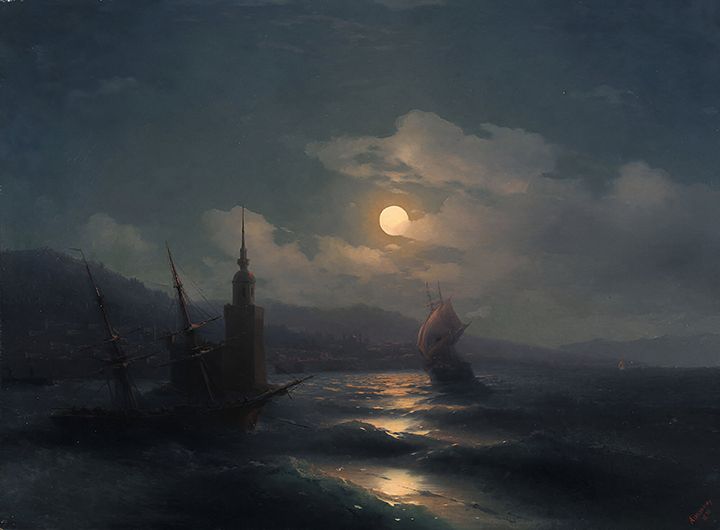
"All this he saw, for one moment breathless and intense, vivid on the morning sky; and still, as he looked, he lived; and still, as he lived, he wondered."

Ten Windows

Jane Hirshfield is an American poet, essayist, and translator, widely admired for work that bridges lyric poetry, meditation, ecology, and philosophy. She’s also known as a lucid critic of poetry and has written influential essays on how poems work and why they matter.

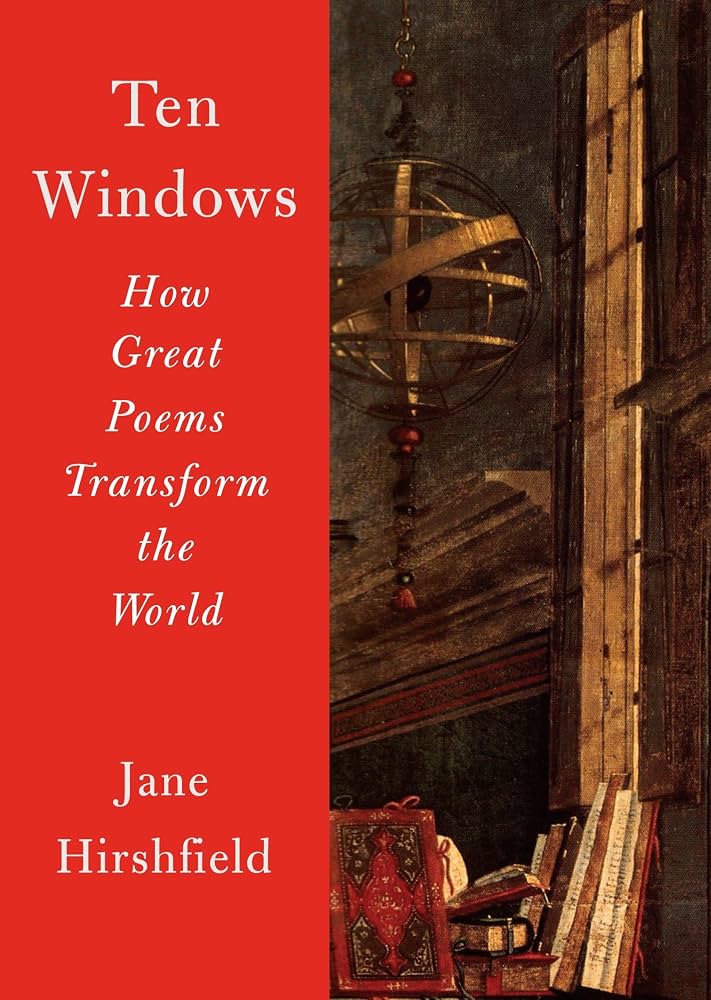
Ten Windows: How Great Poems Transform the World is a 2015 book of essays about reading poetry and understanding its power. In it, she explores ideas like the window” moment in a poem, when a shift in tone, image, or attention opens the work outward and expands the reader’s sense of reality. A point where the poem changes its direction of gaze enough that the whole field of the poem becomes larger.

“Wherever the gaze rests,
art will draw it also elsewhere,
will remind that there is always more.”

The passage acting as window, whether it’s deliberately placed by the author or not, often breaks the poem’s interior logic open onto something the poem was not, up to that point, about.

What I like about this idea is how literal its vocabulary is and how rarely architecture treats it that literally in return. We build actual windows constantly, and describe what they do almost entirely in performance terms: daylighting, view corridors, solar gain, ventilation. All of that is true, and none of it is what Hirshfield is describing. Her window-moment is an authored pivot, placed at a specific point in a specific work, whose job is to redirect attention somewhere the piece hadn’t been looking, and to do it at exactly the moment the maker judged the interior logic had gone as far as it usefully could on its own. A poem earns its window-moment through craft. Buildings aren’t so different, and sometimes they do just that, but maybe we don’t know to phrase it quite in this way.
books and literature

Classic Stories of the Sea

A charming collection of tales on the sea in various forms, curated by Harrier Sanders, all delightful if a bit too heterogeneous for my taste. You go feom tales of sailors (“The Captain’s Arm”, “Hornblower and the Widow McCool”) to tales in which the sea

Read More »
Summertime

Ten Windows

Jane Hirshfield is an American poet, essayist, and translator, widely admired for work that bridges lyric poetry, meditation, ecology, and philosophy. She’s also known as a lucid critic of poetry and has written influential essays on how poems work and why they matter. Ten Windows:

Read More »
Summertime

The Space You Have to Learn Is There

Annie Dillard is an American writer best known for her lyrical and philosophical essays about nature, attention, and spiritual life. Her most famous book, Pilgrim at Tinker Creek (1974), won the Pulitzer Prize for Nonfiction. It’s a work of made up of connected essays and

Read More »
Share on LinkedIn
Throw on Reddit
Roll on Tumblr
Mail it
No Comments

Post A Comment

This site uses Akismet to reduce spam. Learn how your comment data is processed.

RELATED POSTS

Classic Stories of the Sea

A charming collection of tales on the sea in various forms, curated by Harrier Sanders, all delightful if a bit too heterogeneous for my taste. You go feom tales of sailors (“The Captain’s Arm”, “Hornblower and the Widow McCool”) to tales in which the sea

Read More

The Space You Have to Learn Is There

Annie Dillard is an American writer best known for her lyrical and philosophical essays about nature, attention, and spiritual life. Her most famous book, Pilgrim at Tinker Creek (1974), won the Pulitzer Prize for Nonfiction. It’s a work of made up of connected essays and

Read More

The Voice of Things

Francis Ponge, a French poet mostly concentrated on everyday objects, wrote Le Parti pris des choses in seclusion during the German occupation of France, and published it in 1942. The title is usually translated into English as Taking the Side of Things (or The Nature

Read More