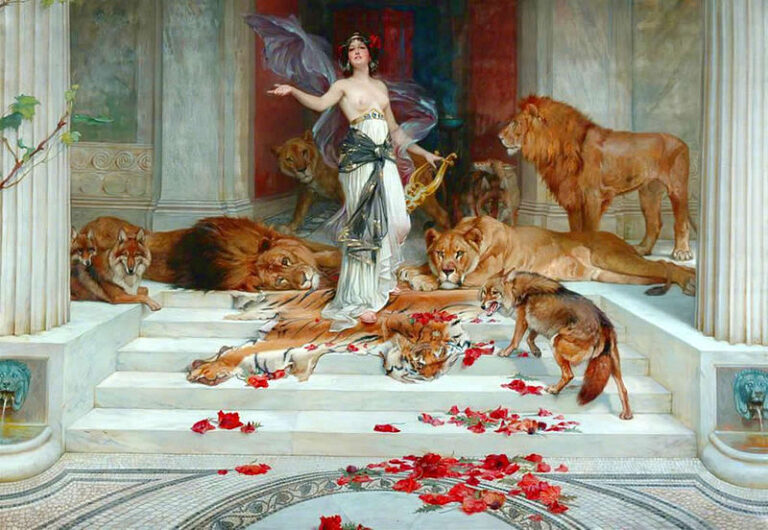
"All this he saw, for one moment breathless and intense, vivid on the morning sky; and still, as he looked, he lived; and still, as he lived, he wondered."

#Spooktober 6 – Dragon Age’s Orphanage

I don’t like jump scares, as I already said, and this means that most of the horror videogames have me rolling my eyes. Every once in a while, however, a genuinely haunting piece of narration occurs and this often happens within a videogame of a different tone. Take the 2009 role-playing game Dragon Age: Origins, a masterpiece of storytelling and worldbuilding. It incorporates many elements of horror, from the darkspawn being some sort of zombie epidemic to the grey wardens who basically curse themselves to try and fight them, from the broodmothers that are the stuff of nightmares and that cheerful moment when you meet a dwarf who cursed her own companions into become broodmothers for the sake of war science. And how do you discover that? Through a poem repeated by her captain and lover, who lost her mind.

First day, they come and catch everyone.
Second day, they beat us and eat some for meat.
Third day, the men are all gnawed on again.
Fourth day, we wait and fear for our fate.
Fifth day, they return and it’s another girl’s turn.
Sixth day, her screams we hear in our dreams.
Seventh day, she grew as in her mouth they spew.
Eighth day, we hated as she is violated.
Ninth day, she grins and devours her kin.
Now she does feast, as she’s become the beast.
Now you lay and wait, for their screams will haunt you in your dreams.

The Abandoned Orphanage however wins in my personal top ten of creepy: children there were massacred during an elven riot in Denerim, but you’d be mistaken to think they have left the place. You explore the site with audio on, following screams and creepy laughter through the dim-lit rooms, and eventually discover that it’s even worse than you thought.

 

comics and illustration

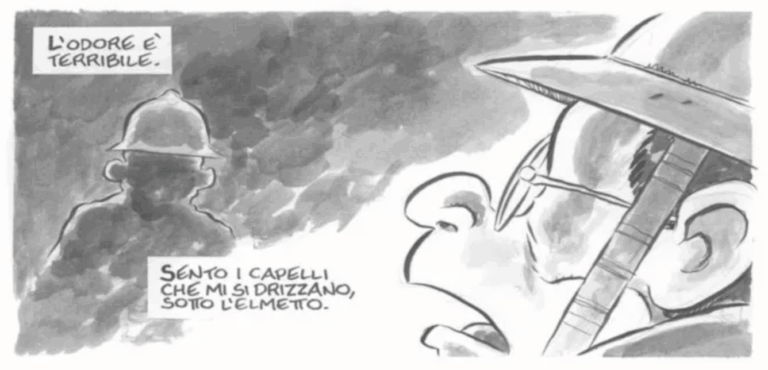
Leo Ortolani, Tapum

A un certo punto ci sarà una battuta, in questo fumetto, e riderete. Sappiate che è l’unica. Com’è giusto che sia. Se devo paragonare quest’opera a qualcosa, il confronto più azzeccato è probabilmente lo spettacolo che Marco Paolini trasse dal Sergente nella neve di Rigoni

Read More »
Summertime

Omeros in the Caribbeans

Derek Walcott was a Saint Lucian poet, playwright, and painter, and one of the major voices of Caribbean literature. He won the Nobel Prize in Literature in 1992, and his work often explores Caribbean history, identity, colonial inheritance, and the meeting of European and African

Read More »
books and literature

Ioanna Papadopoulou’s The Castaway and the Witch

I had a genuine “oh shit” moment when I read the author’s preface saying this was darker than “Winter Harvest” because – and I absolutely ADORED “Winter Harvest” – that was pitch-black dark. I thought “we’re all going to die”. This maybe has something to

Read More »
Share on LinkedIn
Throw on Reddit
Roll on Tumblr
Mail it
No Comments

Post A Comment

This site uses Akismet to reduce spam. Learn how your comment data is processed.

RELATED POSTS

Leo Ortolani, Tapum

A un certo punto ci sarà una battuta, in questo fumetto, e riderete. Sappiate che è l’unica. Com’è giusto che sia. Se devo paragonare quest’opera a qualcosa, il confronto più azzeccato è probabilmente lo spettacolo che Marco Paolini trasse dal Sergente nella neve di Rigoni

Read More

Omeros in the Caribbeans

Derek Walcott was a Saint Lucian poet, playwright, and painter, and one of the major voices of Caribbean literature. He won the Nobel Prize in Literature in 1992, and his work often explores Caribbean history, identity, colonial inheritance, and the meeting of European and African

Read More

Ioanna Papadopoulou’s The Castaway and the Witch

I had a genuine “oh shit” moment when I read the author’s preface saying this was darker than “Winter Harvest” because – and I absolutely ADORED “Winter Harvest” – that was pitch-black dark. I thought “we’re all going to die”. This maybe has something to

Read More