"All this he saw, for one moment breathless and intense, vivid on the morning sky; and still, as he looked, he lived; and still, as he lived, he wondered."

#Spooktober 22 – The Ghost in the City

Today’s book is published by the University of Washington Press and focuses on the life and work of Luo Ping, an XVII Century Chinese artist.

In 1771 the artist Luo Ping (1733–99) left his native Yangzhou to relocate to the burgeoning hub of Beijing’s Southern City. Over two decades, he became the favored artist of a cosmopolitan community of scholars and officials who were at the forefront of the cultural life of the Qing-dynasty (1644–1911). From his spectacular ghost paintings to his later work exploring the city’s complex history, compressed spatial layout, and unique social rituals, Luo Ping captured the pleasures and concerns of a changing world at the end of the Qing’s “Prosperous Age.”

This study takes the reader into the vibrant artistic and literary cultures of Beijing outside the court and to the networks of scholars, artists, and entertainers that turned the Southern City into a place like no other in the Qing empire. At the center of this narrative lie Luo Ping’s layered reflections on the medium of painting and its histories and formal conventions. Close reading of the work of Luo Ping and his contemporaries reveals how this generation of experimental artists sought to reform ink painting, paving the way for further developments in the nineteenth and twentieth centuries. Drawing on a vast range of textual and visual sources, The Ghost in the City shares groundbreaking research that will transform our understanding of the evolution of modern ink painting.

It’s another marvellous book by an Italian scholar and an instant favourite of mine. Michele Matteini is assistant professor of art history at New York University and associate faculty at the Institute of Fine Arts.

architecture, engineering and construction

One can easily say Dynamo

1. Prologue: The Add-On Debate (or, a False Choice) 1.1 “Use an Add-On” vs “Everyone Should Code” There are two stock answers that reliably surface whenever automation in BIM is mentioned: The second one is disarmingly simple: spend those five bucks and just use an

Read More »
art and fashion

The Painters of the Revolution

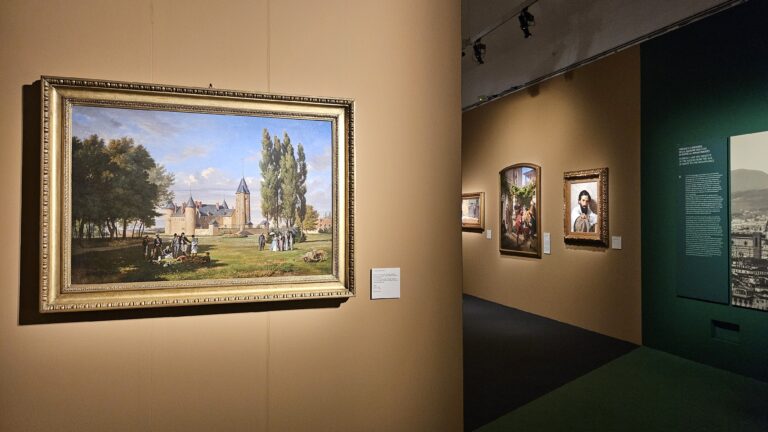
I have a problem with the artistic current of the Macchiaioli, and my problem is that I always get them mixed up with Divisionism. And I don’t like Divisionism, so I almost skipped this exhibition, and that would have been a shame because I do

Read More »
books and literature

The Apothecary Diaries

I discovered The Apothecary Diaries through the anime on Netflix: I generally don’t like them but we’re not getting good animation, I was desperate, and what caught my eye were the beautiful backgrounds in some of the promos. Then I switched to the manga. I

Read More »
Share on LinkedIn
Throw on Reddit
Roll on Tumblr
Mail it
No Comments

Post A Comment

This site uses Akismet to reduce spam. Learn how your comment data is processed.

RELATED POSTS

One can easily say Dynamo

1. Prologue: The Add-On Debate (or, a False Choice) 1.1 “Use an Add-On” vs “Everyone Should Code” There are two stock answers that reliably surface whenever automation in BIM is mentioned: The second one is disarmingly simple: spend those five bucks and just use an

Read More

The Painters of the Revolution

I have a problem with the artistic current of the Macchiaioli, and my problem is that I always get them mixed up with Divisionism. And I don’t like Divisionism, so I almost skipped this exhibition, and that would have been a shame because I do

Read More

The Apothecary Diaries

I discovered The Apothecary Diaries through the anime on Netflix: I generally don’t like them but we’re not getting good animation, I was desperate, and what caught my eye were the beautiful backgrounds in some of the promos. Then I switched to the manga. I

Read More