
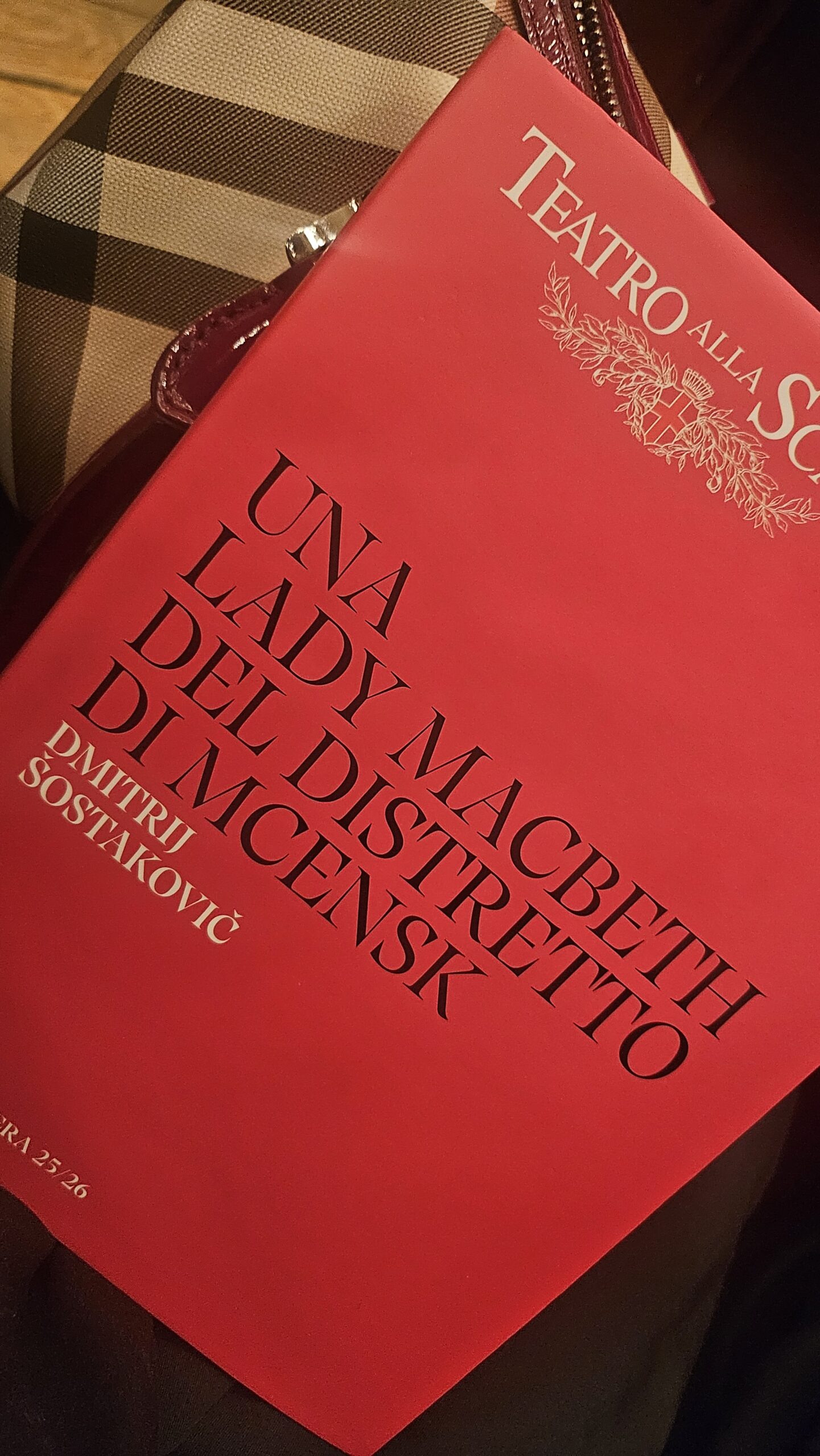
Lady Macbeth of Mtsensk is Shostakovich’s second opera, in four acts and nine scenes, based on a novella by Nikolai Leskov, with a libretto by Shostakovich himself and Alexander Preys. It’s also the show opening the operatic season in Milan, and I always have mixed feelings about it.
I always have mixed feelings because I rarely appreciate La Scala‘s historical tendency to present overly complicated works without making the slightest effort to render them enjoyable or, at least, understandable. This means the main audience is mostly comprised of two kinds of people: stiff-collared connoisseurs who take pride in enjoying something just because it’s complicated, and I despise them, and people with too much botox in their brains who just care about being there, regardless of what’s happening on stage, and I despise them too. You rarely see me writing about it because, despite my varied passion for a wide range of classical music, I rarely go there. Last time was, in a spur-of-the-moment decision, for The Name of the Rose, an unusual contemporary opera, and I loved it. This time wasn’t particularly different: I had no intention of going, and then I heard a guy whose opinion I generally trust, and changed my mind. Mostly because of the opera’s history.
What’s the Opera history?
By the early 1930s, when the work was conceived, Shostakovich had already established himself as a strikingly modern composer, with a sharp ear for urban sounds and a taste for collision: the high seriousness of symphonic argument met popular idioms, grotesque parody, circus energy, and sudden lyric vulnerability. People liked him. As we learn from the program of this rendition at La Scala, the initial attempt was to premiere here in Milan, which is probably why the work was chosen to open this season, but Shostakovich failed to send the music sheets with the necessary advance, regardless of the constant pleas, of which you can read some hilarious telegrams reproduced in the book.
Lady Macbeth‘s premiere history eventually happened in Leningrad, and it’s inseparable from Shostakovich’s larger significance because it dramatises the central tension of his life: how to be an ambitious, internationally competitive artist while working under a system that demanded ideological legibility and distrusted formal experiment. The opera opened on 22 January 1934 (and then in Moscow two days later), quickly becoming a high-profile Soviet success. Yet its fate shifted violently with the publication of the Pravda editorial “Muddle Instead of Music” on 28 January 1936, which condemned the opera defining it “coarse,” “vulgar” and — worse of all — “formalist,” reclassifying the work from cultural triumph to ideological threat. That was an institutional verdict: artistic reputation could be weaponised, and public approval could be reversed by a single authoritative denunciation. It was a different time, back then (ha ha ha ha).
That turning point shaped the rest of Shostakovich’s career when it came to his strategies, his ambiguities, and the particular kind of intensity we now associate with him. After 1936, Shostakovich worked constantly asking himself what a certain passage might mean socially, publicly, privately, and under what risk. Even when later works seem to conform outwardly, many listeners hear them as coded, layered, or haunted by what cannot be said directly, as it often happens with art under a regime. The cultural memory of Lady Macbeth — with its early acclaim and official condemnation — helps explain why Shostakovich became emblematic of the artist navigating surveillance, reputation, and survival, while still producing music of enormous expressive force.
What’s the Opera about?
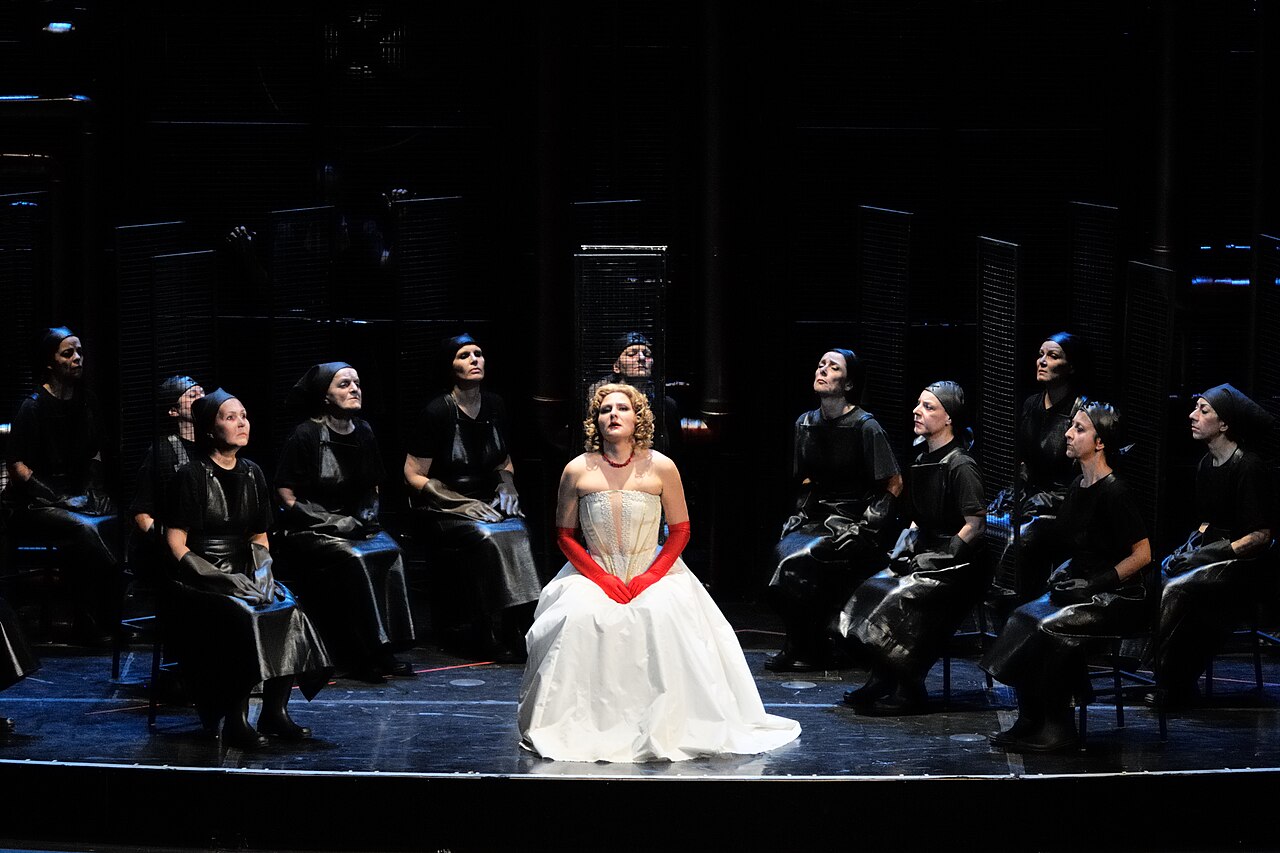
Dedicated by Shostakovich to his first wife, physicist Nina Varzar, the opera spans around three hours, and follows Nikolai Leskov‘s novella in its portrayal of women’s social oppression in 19th-century Europe. In its approach to themes like society and adultery, it’s often compared to Anna Karenina and Flaubert’s Madame Bovary, though the differences are significant and it would be interesting to tackle them. The main character of the novel is Katarina Lvovna, the unhappy wife of a merchant who has to deal with her father-in-law’s oppression, loneliness, and isolation.
Shit hits the fan when she indulges in an affair with Sergei, a farm worker: they are eventually discovered by Katarina’s father-in-law, and the woman poisons him, taking over the estate in her husband’s prolonged absence. But the title and the Shakespeare reference would make no sense if this were the ending: Katarina starts being haunted by the dream of a cat, which turns more and more surreal until it takes the appearance of the dead in-law. When her husband comes home, Katarina and her lover confront him and kill him too. Katharina is finally pregnant and can be with her lover, but the young cousin of her dead husband, Fyodor, shows up with his mother and claims rights to the estate. Pushed by her lover’s insistence, Katharina kills him too.
Unfortunately, a crowd returning from church sees her in the deed, and storms inside the mansion: Sergei, Katharina’s lover, breaks down thinking the mob is actually the ghosts of his murder victims coming back to haunt him, and confesses: the two are exiled to Siberia.
While in prison, Katharina gives birth and disowns her child, who comes back to the estate and is raised by Fyodor’s mother. Sergei starts having affairs with other convicts, and Katharina eventually drowns herself and her rival in the river, where she sees the faces of her victims.
Merry Christmas.
Now, the opera is in three acts and has a couple of differences. For starters, there’s no cousin: the husband’s body is discovered during Katharina and Sergei’s wedding. The most significant difference, however, is violence: the initial encounter between the lovers is Katharina defending another woman from the bullying of men, and Katharina is far less willing to take Sergei as her lover; where the novel implies some violence, in fact, Shostakovich shows it openly. Now, some said that this is what condemned the opera in the eyes of the Pravda: the somewhat sympathetic portrayal of an upper-class adulteress and murderess. I disagree.
While it’s true that the portrayal of Katharina is somehow sympathetic, nothing spells condemnation more than two of the choruses: the corrupted police who wreck Katharina’s wedding because they’ve been reported a murder, but mostly because they want the free drinks, and the splendid chorus of prisoners in Siberia, lamenting their fate and the brutal treatments they receive.
What about Katharina? Well, that’s where the problems start.
Katharina is raped by Sergei, the first time around, and Shostakovich’s music is expressionist enough to make no mystery of it. Then her father-in-law arrives outside the door and, as he does every evening, locks her in with her assaulter. Everything is good so far (so to speak). Unfortunately, we find ourselves in the presence of a trope that shouldn’t exist: the woman who’s attracted to her assaulter, he forces her to consent, and this makes her fall in love with him. Fuck this shit. Fuck this shit to hell and back.
I don’t know if I can bring myself to say “fuck Shostakovich,” this time. The music is harsh, coarse, violent, and when it turns dramatically romantic… well, much depends on the production. So, what about it?
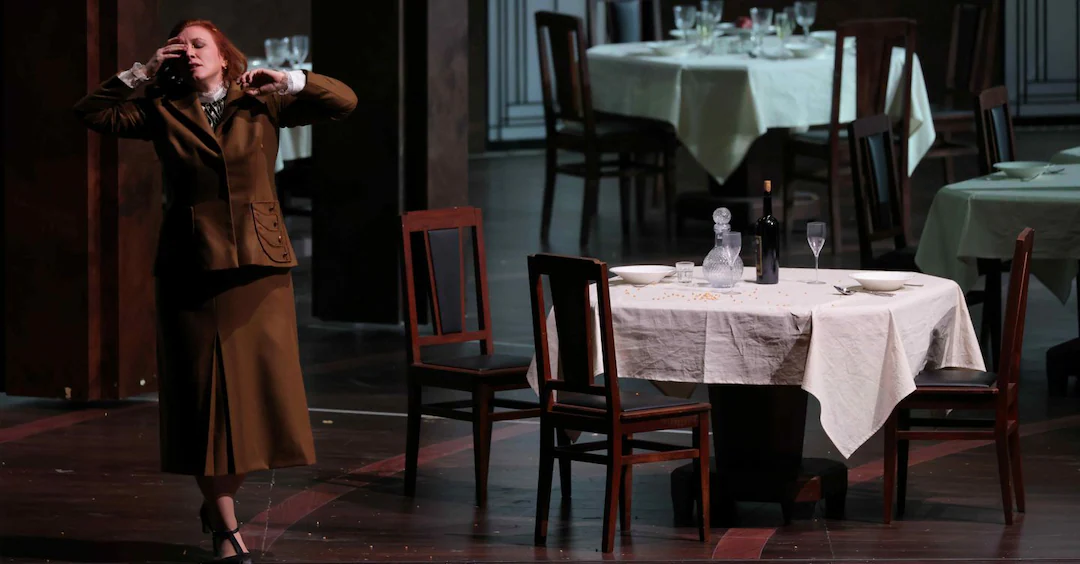
What happened in Milan
The groundbreaking idea of Milan’s production is a temporal shift in the narration, with the lengthy (and complicated) musical interludes setting the scene for the police interrogation of witnesses after the murders have been discovered.
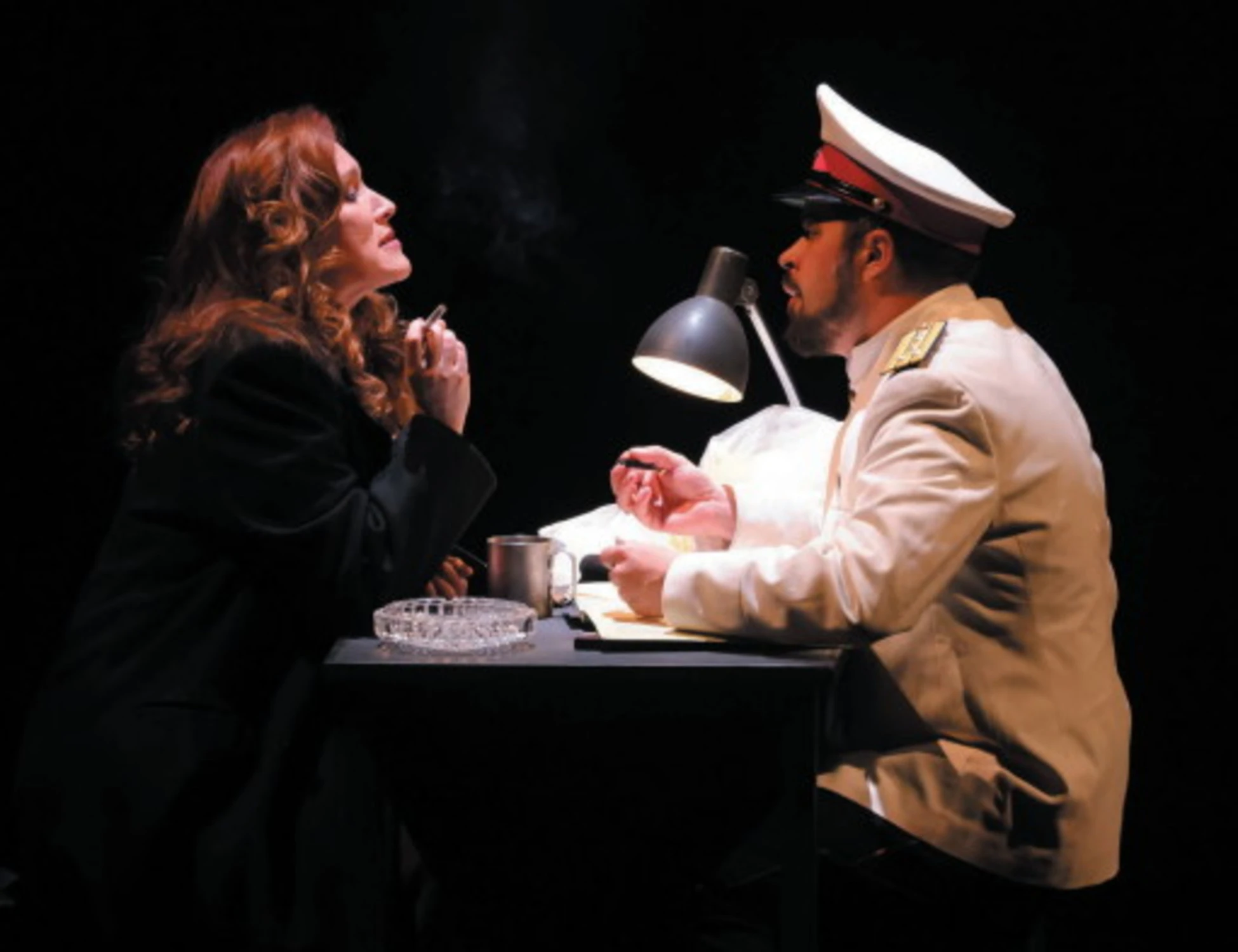
This means that you start the scene with Katharina and the police officer, and the drop screen shows black and white short movies of him taking her fingerprints, or pictures of the different proofs they supposedly gathered at the scene. A policeman with a camera will go around during the opera, sometimes shooting pictures of events as they unfold. This is an interesting twist.
This narrative device also helps with the rape scene: the two lovers are forced to recreate the scene in front of the police while still handcuffed, to Katharina’s dismay.
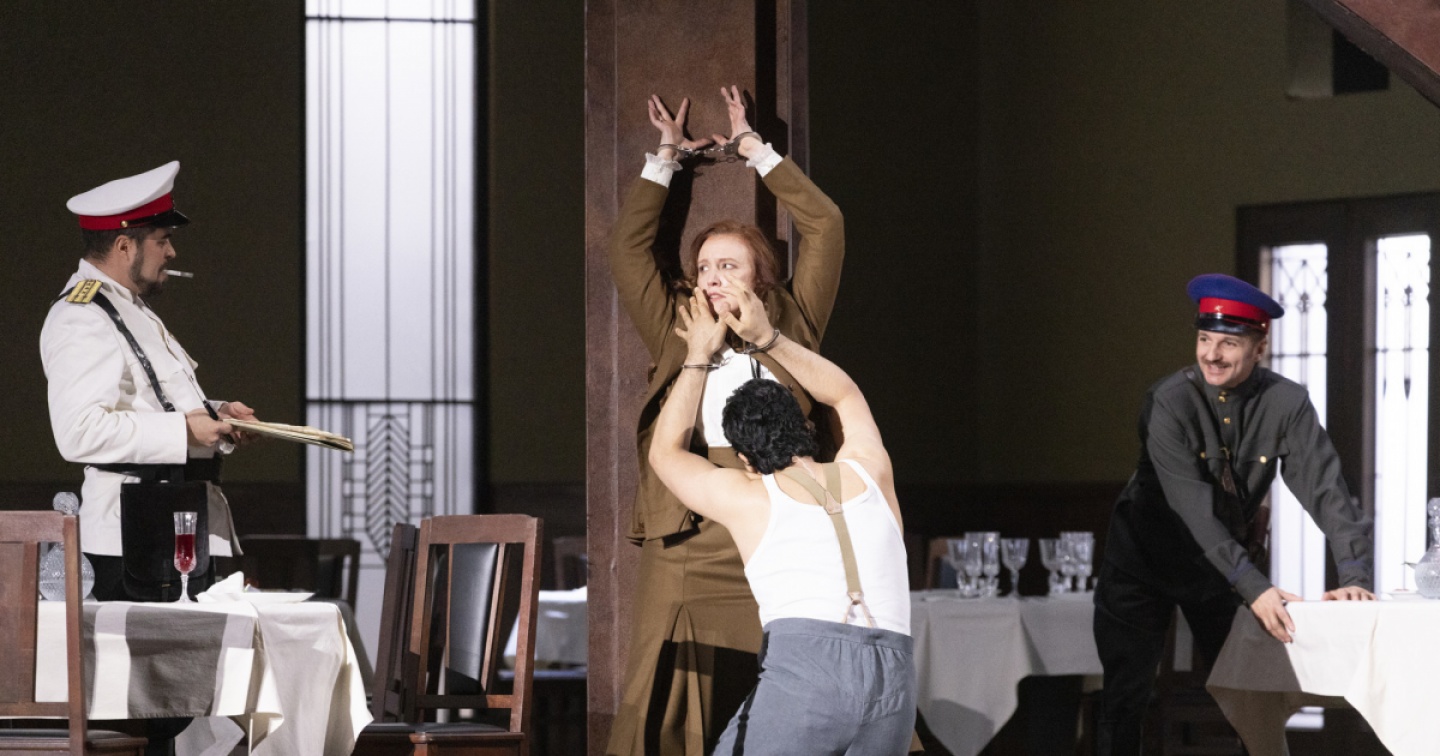
Then the police leave. And we had the chance to work with nuances, but we don’t: Katharina is all sweet and in love with her assaulter. So… fuck Vasily Barkhatov, I guess? That point is a plot problem, a huge plot problem, and it went completely unaddressed.
The original violence, however, is well rendered and the representation doubles down through the addition of an attempted rape of Katharina by her fellow female convicts in Siberia. It makes me laugh that one of our senators said the opera is scandalous: welcome to the XX Century, darling.
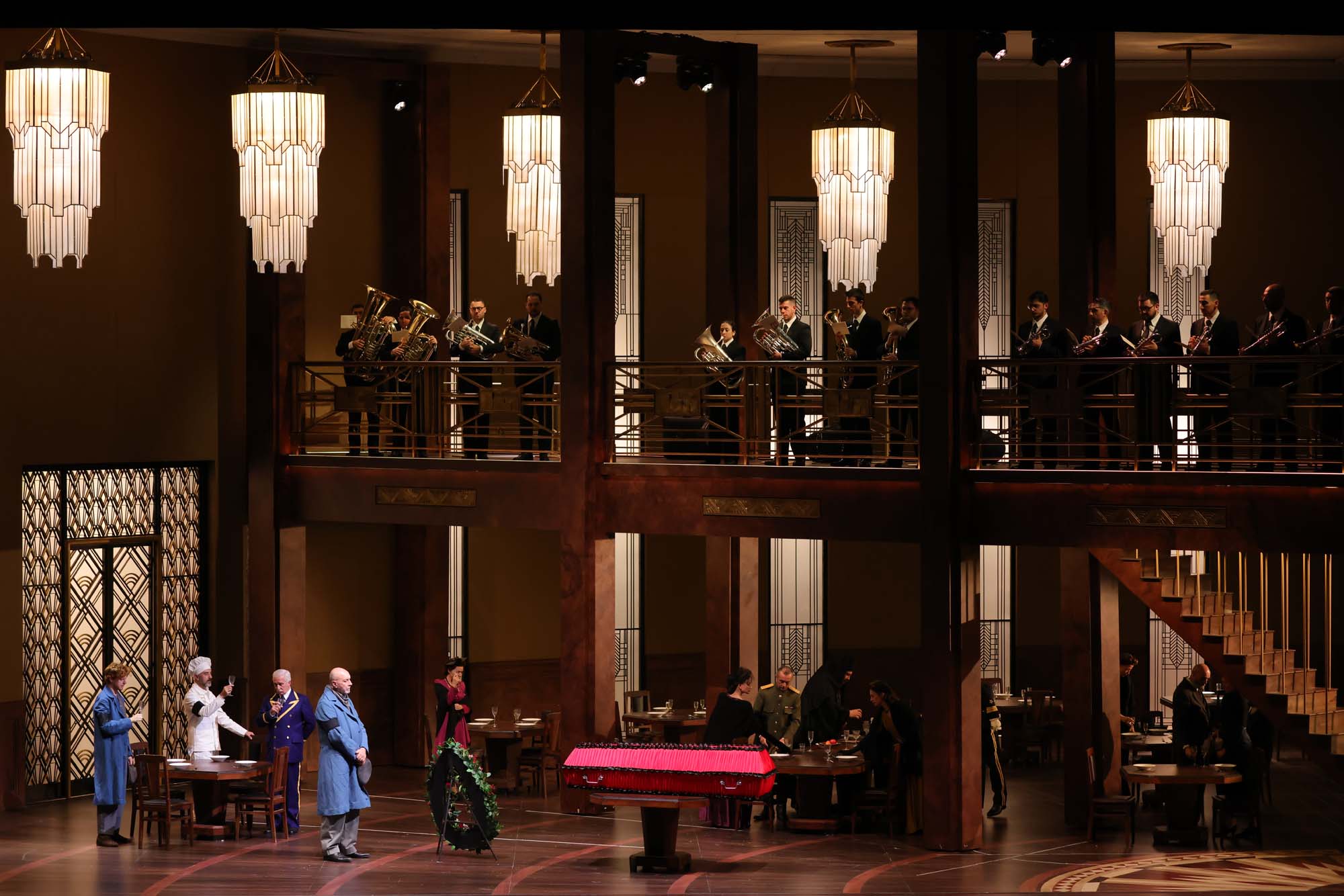
Katharina’s hallucinations are also interesting, at least some of them, with the ghost of the father-in-law appearing in bed instead of Katharina’s lover and his shadow darkening the stained glass of the gorgeous Art Decò stage. I didn’t particularly like the ghost of the husband springing out of the cake like Marilyn Monroe (or, if you prefer, the hitman in Some Like it Hot). And the lights are awesome, switching from warm to cold when the flas-back scene stops and the interrogation resumes.
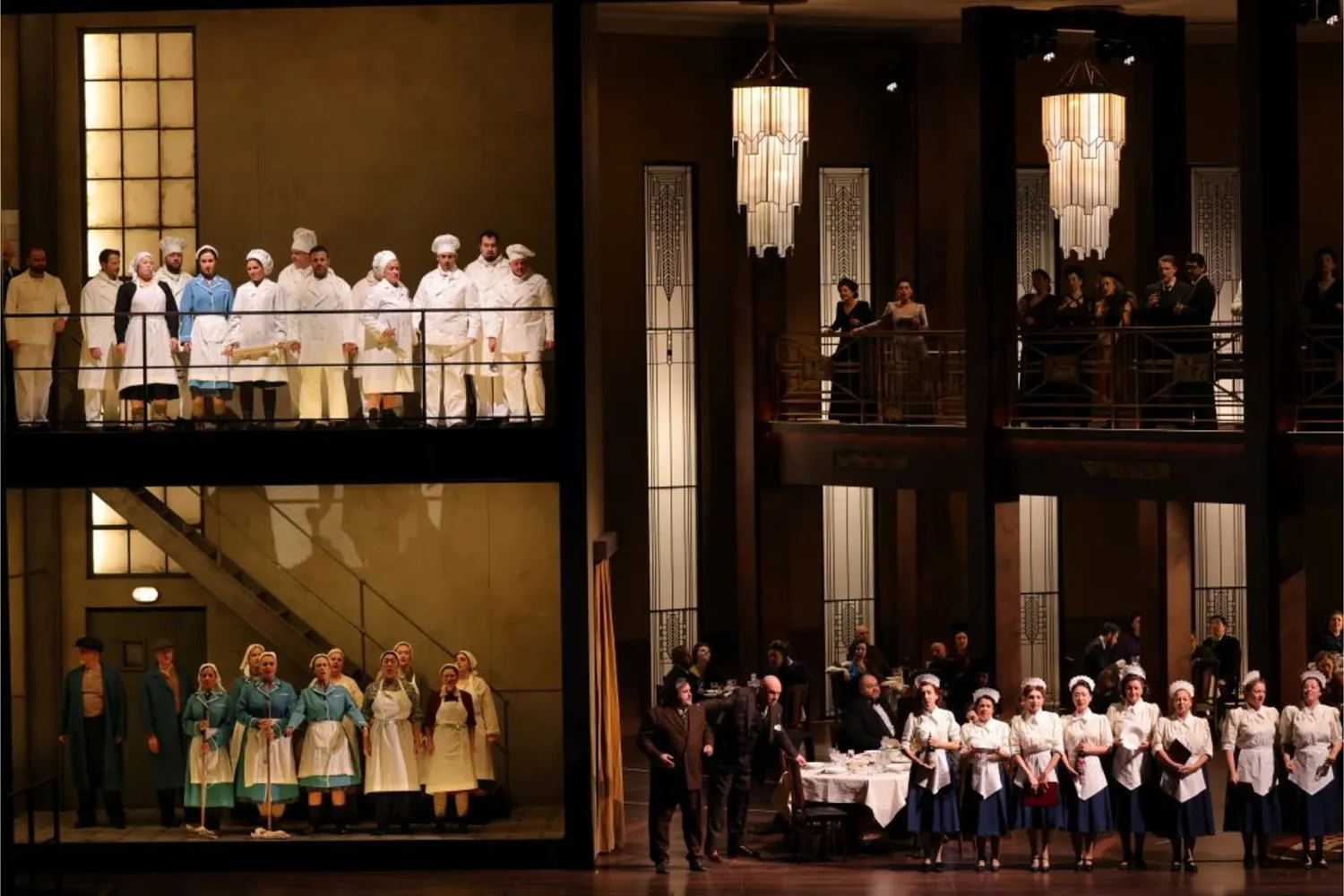
If you like moving stuff, you’ll also enjoy the fact that two whole rooms — the upstairs kitchen and downstairs the father-in-law office that also doubles as a bedroom for some adultery scene — are created in a box that slides across the stage from left to right, and the balcony rotates hinged on the right border while some of the orchestra — mostly the brass section while the police is on stage — tries to play.
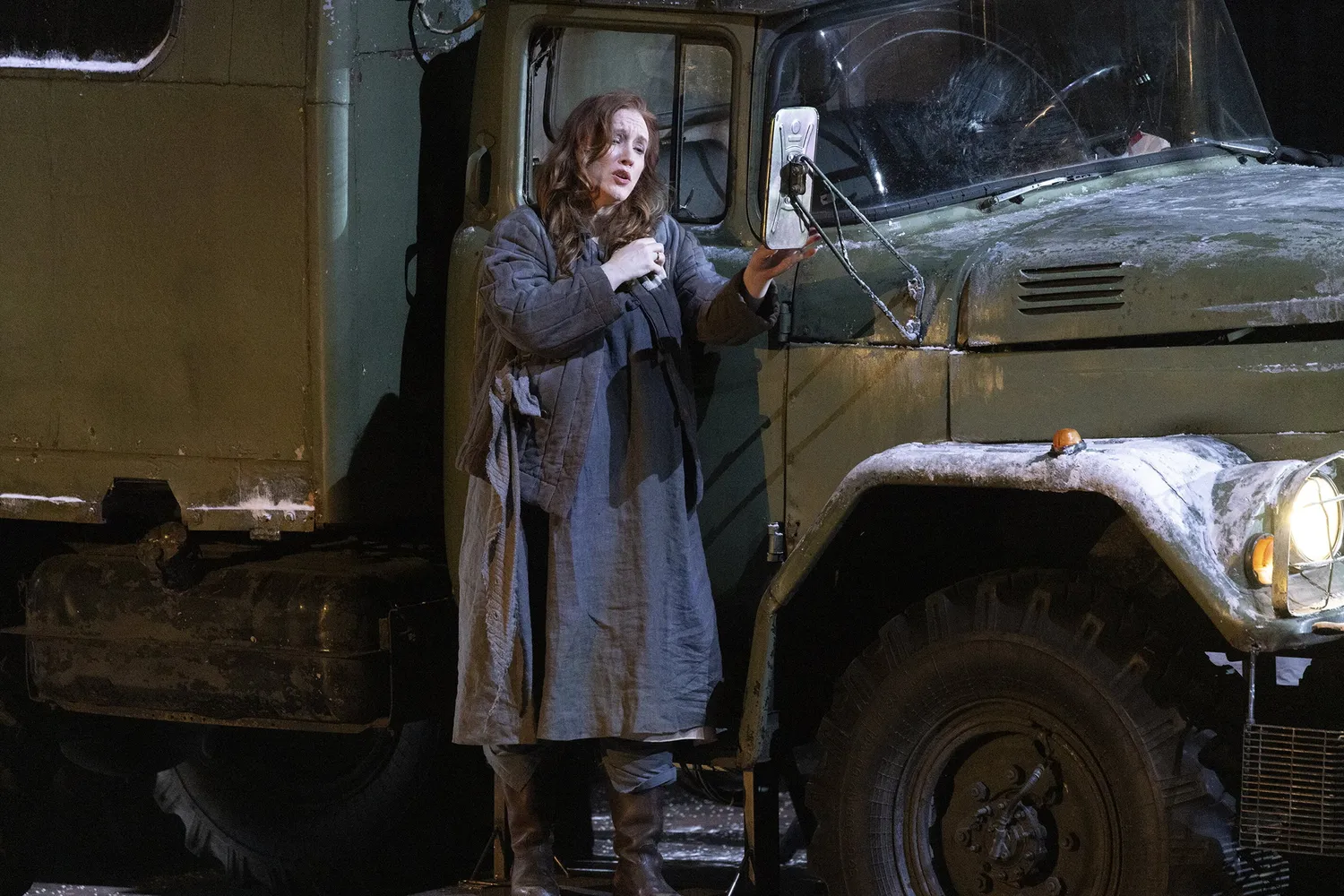
While people complain that the music is too difficoult — of course they don’t use this expression — and abandon their seats, the third act kicks in, and the scene stays pretty much the same. I knew there was going to be an armored truck on scene, I had see some of the pictures, and I thought they were going to change scene between the acts. How last decade of me. The armored truck literally breaks through the back wall and fake snow invades the stage while master Chailly turns around and shouts “Are you not entertained?”
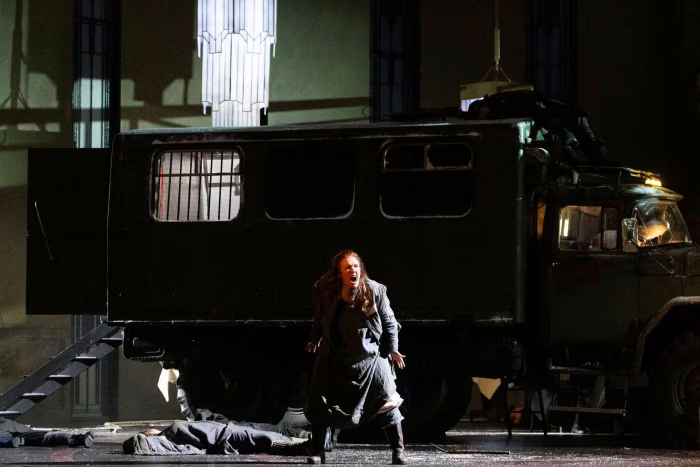
All that’s left now is to hear the heartbreaking chorus of convicts — while Shostakovich asks Verdi to kindly hold his beer — and then see the final tragedy unfold: Sergei betrays Katherina and trickes her into giving up her woollen socks, thinking they’re for him while in fact he uses them to seduce another convict and have sex with her. If you’ve ever been cold in your life, you’ll see how this is no trivial matter in Siberia. Katharina flips, and sings about a very cold lake that’s nearby. In the original work, she drowns herself and the rival, as we have seen. This time, she takes a gas tank and pours it on her while she sings. “What’s happening?” you ask yourself. I was expecting some changes. What I was not expecting was for two stuntwomen to appear on stage, literally on fire. You got me there.

In Summary
Was it worth it? Did I change my mind?
I wouldn’t say that, no.
While I agree that opera needs to be modern and bring relevant stuff on stage — and fuck the senator if she doesn’t like it — I don’t think this was about telling a relevant story about women, as it has been said.
It’s a story of domestic violence, that much is true, but the staging fails in giving Katharina a depth beyond what Shostakovich already did: she’s oppressed, she’s bored, she’s lonely, she’s brave in the face of other women’s oppression, she’s flirty, she’s scared, she rebels and never repents, all that because Leskov and Shostakovich make her so. There’s nothing “modern” about a woman falling in love with her rapist because she has no alternative. And the other themes — for instance the empathy with the deported convicts — simply can’t take the space to be as relevant as Stalin saw them back in the days. This production, while artistically doing something interesting with the time shift, doesn’t add anything to that.
So it’s La Scala all over again: you either have Verdi (but always the boring stuff) or some obscure work that will allow us to look very bright and intellectual while being very careful not to upset the ones who really matters to upset. Another year, another gorgeous show and monumentally wasted opportunity.
Next year, the new director Chung Myung-Whun will manage to direct Verdi’s Otello. Will they manage to avoid the issue even then?


No Comments