
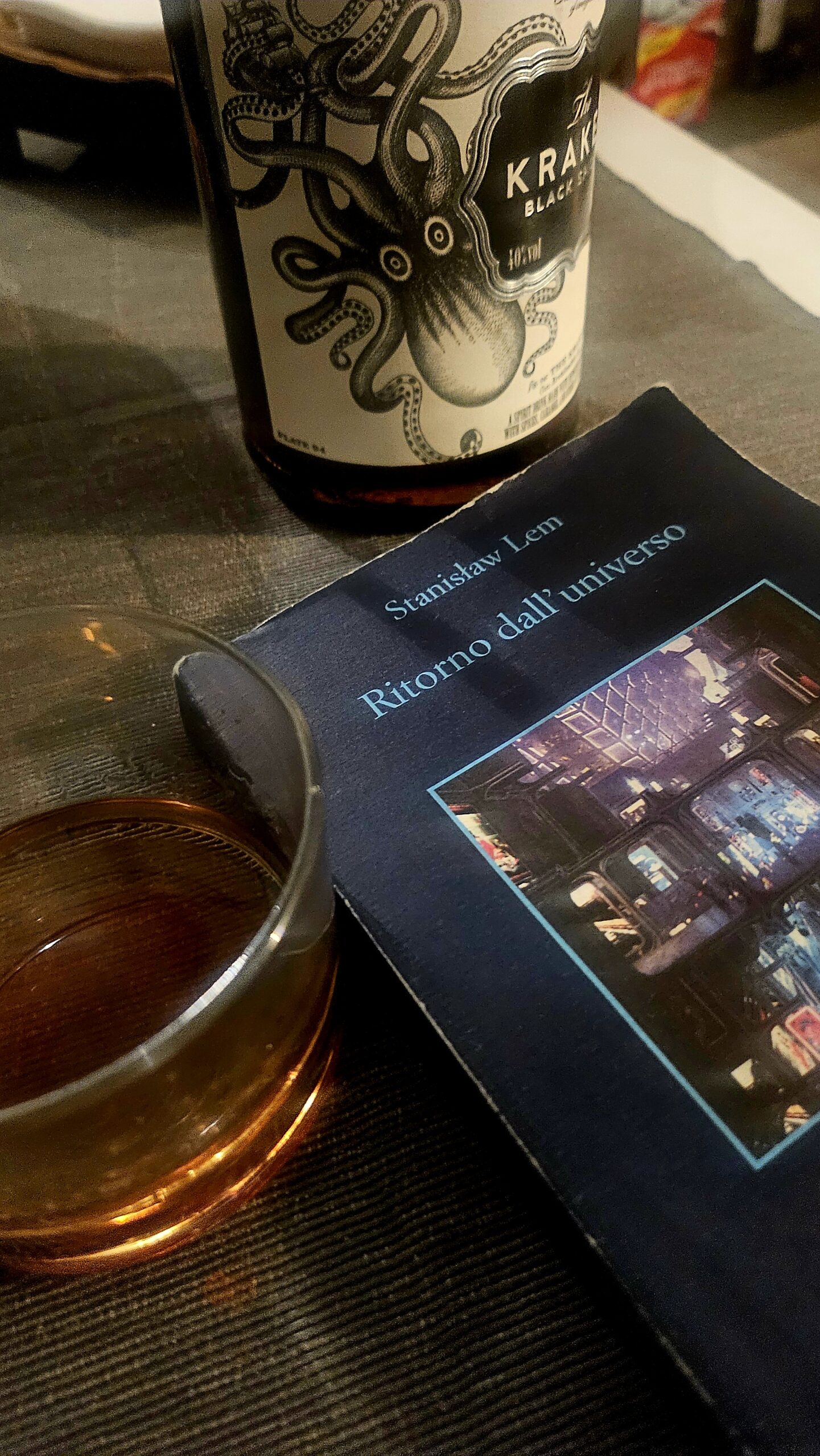
Though I think I get what Lem was trying to do with this novel, I also understand the many people whose reaction has been “what the fuck did I just read?”
The novel is about alienation, social estrangement, post-traumatic stress and culture shock, which are all very interesting themes when it comes to science fiction, but it’s long, stretched thin like not enough butter over too much bread, it’s all over the place, and approaches the theme of violence in a way that’s troublesome when it mixes with romance. Also, female characters have never been Lem’s strongest suit. I can offer no excuse nor explanation for all of that.
What I can do, following my original thesis that Lem writes horror dressed up as science fiction, is that this novel has some classic themes borrowed from a vampire story (the character returning to a society that’s too far removed from his own) and some interesting monster tropes, just reversed: in a society that’s been artificially epurated of violence, with heroism and derring-do as collateral damage, the original human finds himself to contemplate the idea that he’s the monster, which is interesting enough considering he’s one of the few surviving “natural” humans. Also, the theme of the cosmonaut’s disillusionment hits hard in light of the historical period in which the novel was written.
There’s also a chilling moment when you see Lem rising in all his glory, which is when the main character finds himself in a robots’ graveyard (zombies included), but I won’t spoil it.
In synthesis, not a novel I would recommend to someone who doesn’t know Lem, and I stand by my original feeling that this is Catcher in the Rye except he’s back from space, but is’t weird enough to approach if you have patience and you can afford to take a gastroprotector for every time a woman is described as attracted to a man’s violent nature.



No Comments