
Zbigniew Herbert was a major 20th-century Polish poet, essayist, and dramatist, born in Lviv in 1924 and associated with a strong moral, anti-totalitarian voice in postwar Polish literature. Report from the Besieged City is one of his best-known poems, first published in English in the homonymous collection, and it is often read as a meditation on endurance, civic responsibility, and life under oppression.
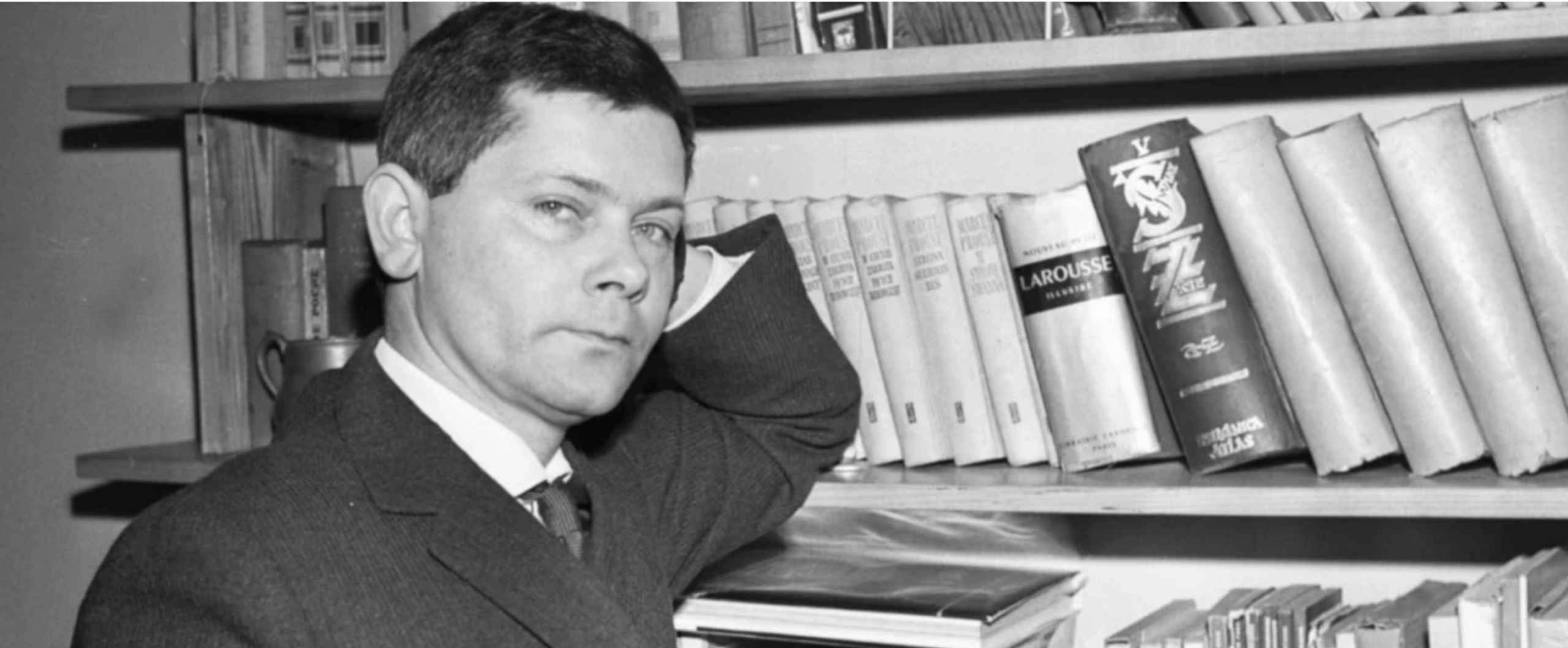
Herbert’s speaker in this poem isn’t a soldier, and he tells us that plainly, almost with embarrassment: too old to fight like the others, he’s been given “the inferior role” of chronicler, recording a siege he can’t even reliably date — “two hundred years ago / in December / in September / perhaps yesterday at dawn” — because prolonged siege does something specific to a population’s relationship with time. It doesn’t just make the days blur. It erases the fixed points a chronology needs in order to function at all, until nobody in the city can say with any confidence when the present emergency actually began.
What survives that collapse, in Herbert’s account, isn’t memory, and it isn’t morale, but the physical ground itself: “all we have left is the place / the attachment to the place / we still rule over the ruins of temples / spectres of gardens and houses.” And then, which always gives me the chills: “if we lose the ruins nothing will be left.” The broken, already-fallen, functionally useless remnant of what the city used to be. Herbert is not talking about heritage in the sentimental, plaque-and-guided-tour sense: he’s describing ruins as the last verifiable evidence that a city with a continuous history exists at all, once every other form of continuity — a reliable calendar, a functioning government, living memory across generations — has already been stripped away by the siege.
If you know me, you know how furious I get every time heritage is destroyed. I was furious when they tore down the fair here in Milan, and I still get upset when someone reminds me what happened to the medieval “sleeve” next to piazza del Duomo. This means that I didn’t always get along with my Archistar-adoring colleagues in some of the architectural firms I visited as a consultant.
However, Herbert does something more subtle here, I think.
He inverts a hierarchy that heritage policy, on the whole, always assumes: that new construction is where the real stakes of a city lie, and that ruins are a managed inheritance, worth conserving but not load-bearing in any structural sense. Herbert’s besieged city has that exactly backwards. The temples are already ruins. The gardens are already spectres, existing more as outline than substance. And it’s precisely because they’re ruined rather than intact that they’re able to do the one job an intact building can’t: serve as proof, when every other form of proof has failed, that continuity hasn’t yet been entirely severed. An intact building asserts the present. A ruin asserts a past that survived into the present despite every reason it shouldn’t have, which is a different and, under siege, considerably more valuable kind of claim.
We still have some ruins around Milan: places my grandmother used to remember as buildings, patches of brick walls and overgrown grass between buildings, where bombs landed. They are almost all being cleaned up, and used for new construction.
On behalf of Herbert and me, fuck you all.
No Comments