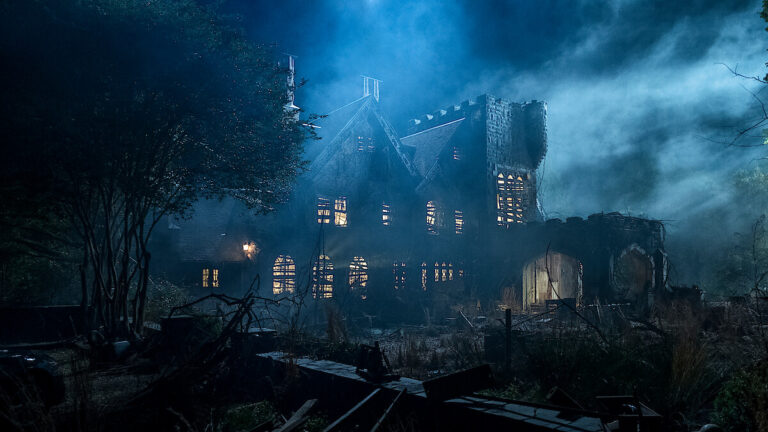
"All this he saw, for one moment breathless and intense, vivid on the morning sky; and still, as he looked, he lived; and still, as he lived, he wondered."

Pride Month 2025: Words of the Day

He Is the Wine, I the Cup: Queer Devotion in the Poetry of Abu Nuwas

“O my heart’s beloved,
You are the sun of beauty,
And I — merely the eye that follows you.
He kissed me, and I became
The chalice, trembling in the hand of joy.”

– Abu Nuwas (c. 756–814 CE) – Fragment translated by Reynold A. Nicholson

Abu Nuwas, court poet to the Abbasid caliphs of Baghdad, was famous for his open celebration of same-gender love, wine, and pleasure. His verses, steeped in classical Arabic poetic tradition, mix rich sensual imagery with spiritual longing, elevating queer desire into something both erotic and metaphysical.

Rather than veil his intentions, Abu Nuwas often named his male lovers, described their bodies, their voices, and the intoxication they inspired. His love poetry draws not on allegory, but on lived passion — capturing glances in gardens, stolen kisses under moonlight, and the ecstasy of surrender. This was not subversive whispering; this was courtly, canonised art.
While later Islamic orthodoxy attempted to censor or downplay his work, his poems survived — copied, memorised, and admired for centuries. In many versions of the Thousand and One Nights, he is even a character, called the greatest poet of love and wine.

Abu Nuwas gives us a rare and radiant image of queer love not as tragic or shameful, but celebrated, sung, and sensuous. His poems challenge the Western-centric idea that queerness was always hidden in history. In Abbasid Baghdad, at least for a time, it was joyously spoken aloud — in verse, in candlelight, in love.
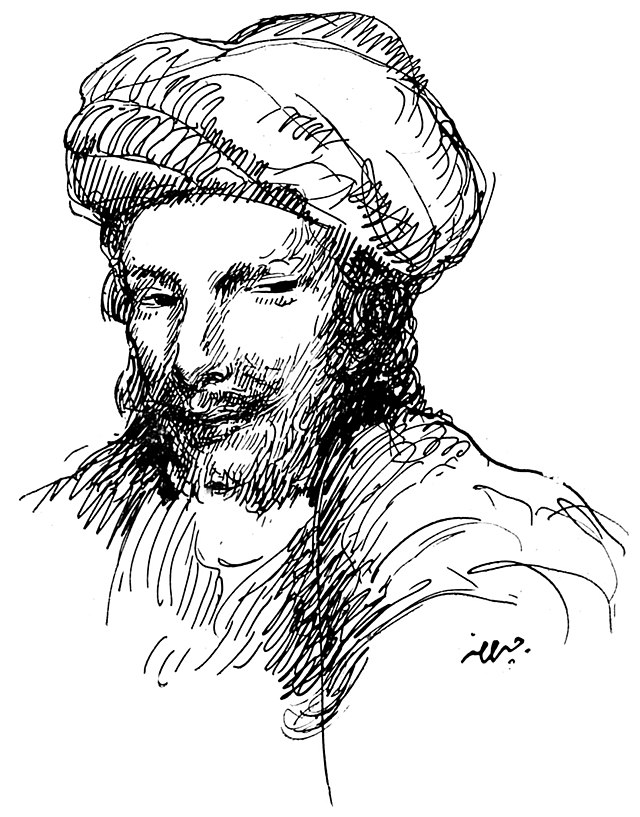

Abu Nuwas drawn by Khalil Gibran in 1916
Spooktober

Spooktober 25 – The Phantom Farm House (2)

Continues from yesterday… ATORRENT of rain held us marooned the next day. Miss Leahy was confined to her room, with a nurse in constant attendance and the house doctor making hourly calls. She was on the verge of a nervous collapse, he told me, crying

Read More »
books and literature

Alix Harrow’s The Once and Future Witches

I wouldn’t have started this book on my own, and for many reasons. One of them is that in Italy it’s marketed as Young Adult Fiction, and I hate most of that stuff, and the other is its imposing length: 600 pages. I was distracted,

Read More »
Spooktober

Spooktober 24 – The Phantom Farm House (1)

“The Phantom Farmhouse” is a short story written by Seabury Quinn, first published in the October 1923 issue of Weird Tales. It is one of Quinn’s most famous standalone works outside of his popular Jules de Grandin detective series. I had been at the new

Read More »
Share on LinkedIn
Throw on Reddit
Roll on Tumblr
Mail it
No Comments

Post A Comment

This site uses Akismet to reduce spam. Learn how your comment data is processed.

RELATED POSTS

Spooktober 25 – The Phantom Farm House (2)

Continues from yesterday… ATORRENT of rain held us marooned the next day. Miss Leahy was confined to her room, with a nurse in constant attendance and the house doctor making hourly calls. She was on the verge of a nervous collapse, he told me, crying

Read More

Alix Harrow’s The Once and Future Witches

I wouldn’t have started this book on my own, and for many reasons. One of them is that in Italy it’s marketed as Young Adult Fiction, and I hate most of that stuff, and the other is its imposing length: 600 pages. I was distracted,

Read More

Spooktober 24 – The Phantom Farm House (1)

“The Phantom Farmhouse” is a short story written by Seabury Quinn, first published in the October 1923 issue of Weird Tales. It is one of Quinn’s most famous standalone works outside of his popular Jules de Grandin detective series. I had been at the new

Read More