"All this he saw, for one moment breathless and intense, vivid on the morning sky; and still, as he looked, he lived; and still, as he lived, he wondered."

Pride Month 2025: Story of the Day

Silence Speaks: Gender, Nature, and Identity in a 13th-Century Romance

In the Roman de Silence, written in Old French by Heldris of Cornwall, we meet Silence—a child born female but raised as a boy to circumvent a royal decree forbidding women from inheriting. As the story unfolds, Silence becomes a celebrated knight, surpassing his male peers in bravery and virtue. Yet the heart of the romance isn’t just chivalry—it’s a profound meditation on gender as performance, and a direct confrontation between Nature and Nurture, who are personified as allegorical characters fighting over Silence’s identity.

Nature insists that Silence must return to her “true” womanhood; Nurture argues that the male role has shaped who he has become. But Silence defies both forces. He chooses his life, his body, and his name—challenging the binaries imposed upon him by society, biology, and even the narrative structure itself.

Despite ultimately being “outed” and married to the king, Silence’s journey offers a powerful and rare medieval exploration of gender fluidity and the tension between identity and expectation, and it’s not an unicum in its genre.

Le Roman de Silence gives us more than a literary curiosity—it offers one of the earliest known Western narratives of a transmasculine identity. Written centuries before the words existed, it reveals how queerness has always pressed at the limits of category, even when veiled in allegory and parchment.


architecture, engineering and construction

The Digital Ghosts

In Letters to Milena, Franz Kafka tries to name a specific distortion he believes is introduced by mediated communication, such as letters, then (already, in 1922) telecoms. Kafka writes this after a long, anguished correspondence in which he repeatedly doubts what writing letters is doing to him and

Read More »
books and literature

The Bicentennial Man (and other stories)

If not for the single story where they cure depression by blasting jazz against brainwaves (not how depression works, I’m afraid), one of the best collections I’ve read so far. It has the sequel of “Marooned off Vesta”, one of Asimov’s the best stories of

Read More »
books and literature

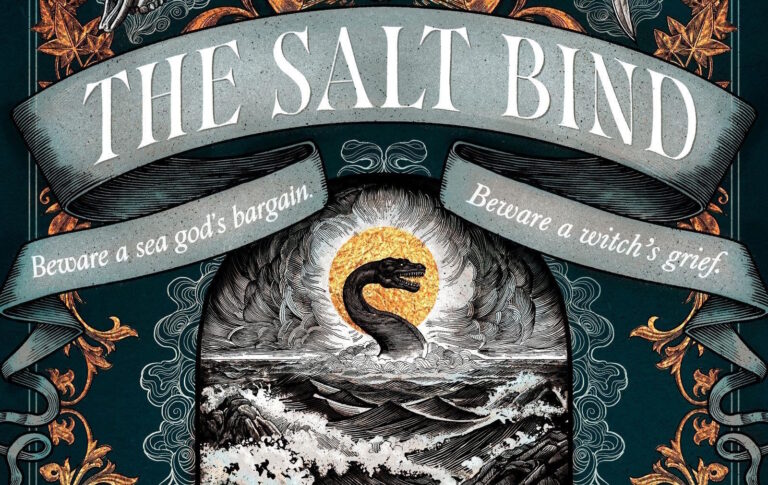
Rebecca Ferrier’s The Salt Bind

Rebecca Ferrier’s The Salt Bind is a historical fantasy novel, set on the storm-lashed Cornish coast and steeped in folklore, sea magic, and women’s lives on the edge of the sea. It follows Kensa — daughter of a smuggler and with a regularly-complicated relationship with

Read More »
Share on LinkedIn
Throw on Reddit
Roll on Tumblr
Mail it
No Comments

Post A Comment

This site uses Akismet to reduce spam. Learn how your comment data is processed.

RELATED POSTS

The Digital Ghosts

In Letters to Milena, Franz Kafka tries to name a specific distortion he believes is introduced by mediated communication, such as letters, then (already, in 1922) telecoms. Kafka writes this after a long, anguished correspondence in which he repeatedly doubts what writing letters is doing to him and

Read More

The Bicentennial Man (and other stories)

If not for the single story where they cure depression by blasting jazz against brainwaves (not how depression works, I’m afraid), one of the best collections I’ve read so far. It has the sequel of “Marooned off Vesta”, one of Asimov’s the best stories of

Read More

Rebecca Ferrier’s The Salt Bind

Rebecca Ferrier’s The Salt Bind is a historical fantasy novel, set on the storm-lashed Cornish coast and steeped in folklore, sea magic, and women’s lives on the edge of the sea. It follows Kensa — daughter of a smuggler and with a regularly-complicated relationship with

Read More