"All this he saw, for one moment breathless and intense, vivid on the morning sky; and still, as he looked, he lived; and still, as he lived, he wondered."

Pride Month 2025: Art of the Day

Marble relief of a Galli priest (1st–2nd century CE) – from the Temple of Magna Mater, possibly in Ostia or Rome

The Galli of Cybele: Queerness in Roman Religion

The Galli were priests of Cybele (Magna Mater), whose worship was introduced at Rome from Phrygia. Often dressed in feminine garments and jewellery, they underwent ritual castration during the Dies sanguinis (“Day of Blood”), on March 24, and occupied a liminal gender role that defied Roman binary norms, wearing flowing robes and adorned with elaborate hairstyles and earrings. Their initiation rite and gender-fluid appearance scandalised Roman elites, and yet they are consistently depicted in temple settings, processions, and altars. They performed ecstatic dances, spoke in tongues, and mediated divine will, especially during festivals like the Megalesia.

Though often derided in Roman satire, their very visibility reminds us that gender variance was part of public religious life, not an aberration, but a form of sacred embodiment. Even in their time, the Galli challenged the idea that ancient Rome was uniformly patriarchal or cisnormative. They were not an exception: they were a whole social category, and yet they had no place in civil rights. They begged for alms and told fortunes, no different from other priests, but they were generally non-citizens and were barred from inheritance rights. Still, the cult of Cybele and the Galli were officially incorporated into Roman state religion from 204 BCE and remained influential until Christianization.


books and literature

In the (Digital) Swarm

Byung-Chul Han is a contemporary German philosopher born in Korea whose work explores the transformation of subjectivity, power, and social relations in late modern and digital societies. In the Swarm fits within this broader inquiry, focusing specifically on the effects of digital communication on perception,

Read More »
architecture, engineering and construction

One can easily say Dynamo

1. Prologue: The Add-On Debate (or, a False Choice) 1.1 “Use an Add-On” vs “Everyone Should Code” There are two stock answers that reliably surface whenever automation in BIM is mentioned: The second one is disarmingly simple: spend those five bucks and just use an

Read More »
art and fashion

The Painters of the Revolution

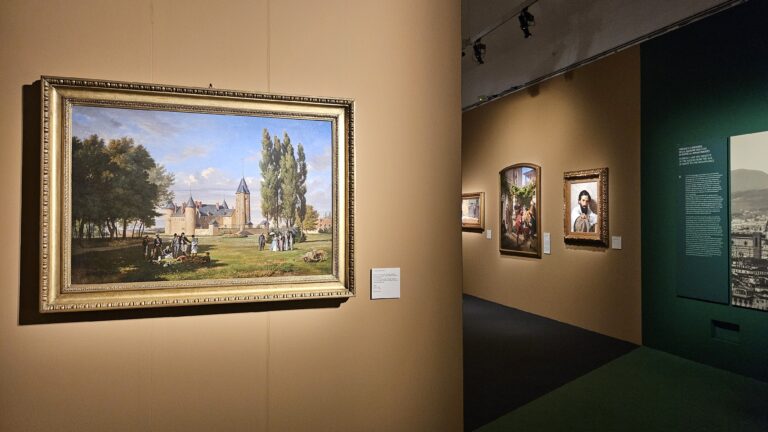
I have a problem with the artistic current of the Macchiaioli, and my problem is that I always get them mixed up with Divisionism. And I don’t like Divisionism, so I almost skipped this exhibition, and that would have been a shame because I do

Read More »
Share on LinkedIn
Throw on Reddit
Roll on Tumblr
Mail it
No Comments

Post A Comment

This site uses Akismet to reduce spam. Learn how your comment data is processed.

RELATED POSTS

In the (Digital) Swarm

Byung-Chul Han is a contemporary German philosopher born in Korea whose work explores the transformation of subjectivity, power, and social relations in late modern and digital societies. In the Swarm fits within this broader inquiry, focusing specifically on the effects of digital communication on perception,

Read More

One can easily say Dynamo

1. Prologue: The Add-On Debate (or, a False Choice) 1.1 “Use an Add-On” vs “Everyone Should Code” There are two stock answers that reliably surface whenever automation in BIM is mentioned: The second one is disarmingly simple: spend those five bucks and just use an

Read More

The Painters of the Revolution

I have a problem with the artistic current of the Macchiaioli, and my problem is that I always get them mixed up with Divisionism. And I don’t like Divisionism, so I almost skipped this exhibition, and that would have been a shame because I do

Read More