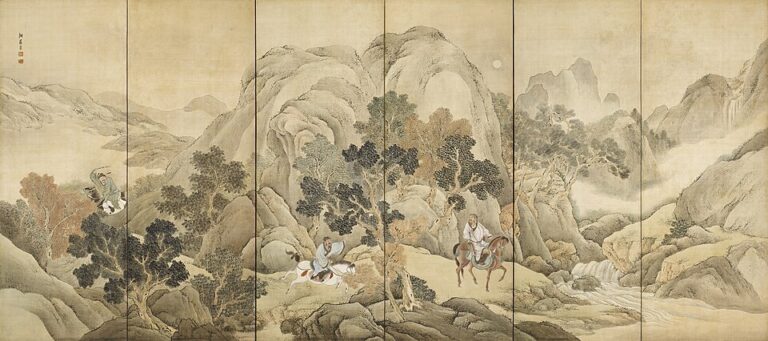
"All this he saw, for one moment breathless and intense, vivid on the morning sky; and still, as he looked, he lived; and still, as he lived, he wondered."

BIM Execution Planning for Heritage

The third focus of our cycle on BIM Execution Planning was on historical buildings, and we focused on:

  1. Specific Goals and Model Uses where heritage is involved;
  2. Model categories and how to draft a taxonomy for historical elements that might not be covered by standard classification systems;
  3. The concept of Level of Accuracy (LOA) paired with the Level of Development for model objects;
  4. Peculiar needs, players and outputs.

Summertime

The Space You Have to Learn Is There

Annie Dillard is an American writer best known for her lyrical and philosophical essays about nature, attention, and spiritual life. Her most famous book, Pilgrim at Tinker Creek (1974), won the Pulitzer Prize for Nonfiction. It’s a work of made up of connected essays and

Read More »
Summertime

The Voice of Things

Francis Ponge, a French poet mostly concentrated on everyday objects, wrote Le Parti pris des choses in seclusion during the German occupation of France, and published it in 1942. The title is usually translated into English as Taking the Side of Things (or The Nature

Read More »
architecture, engineering and construction

The Sustained Path

Every text this last few days has, in one way or another, been circling around the same question: what’s a path and what makes a path? Not a road already drawn and simply walked afterward, but a path in the sense that seems to keep

Read More »
Share on LinkedIn
Throw on Reddit
Roll on Tumblr
Mail it
No Comments

Post A Comment

This site uses Akismet to reduce spam. Learn how your comment data is processed.

RELATED POSTS

The Space You Have to Learn Is There

Annie Dillard is an American writer best known for her lyrical and philosophical essays about nature, attention, and spiritual life. Her most famous book, Pilgrim at Tinker Creek (1974), won the Pulitzer Prize for Nonfiction. It’s a work of made up of connected essays and

Read More

The Voice of Things

Francis Ponge, a French poet mostly concentrated on everyday objects, wrote Le Parti pris des choses in seclusion during the German occupation of France, and published it in 1942. The title is usually translated into English as Taking the Side of Things (or The Nature

Read More

The Sustained Path

Every text this last few days has, in one way or another, been circling around the same question: what’s a path and what makes a path? Not a road already drawn and simply walked afterward, but a path in the sense that seems to keep

Read More