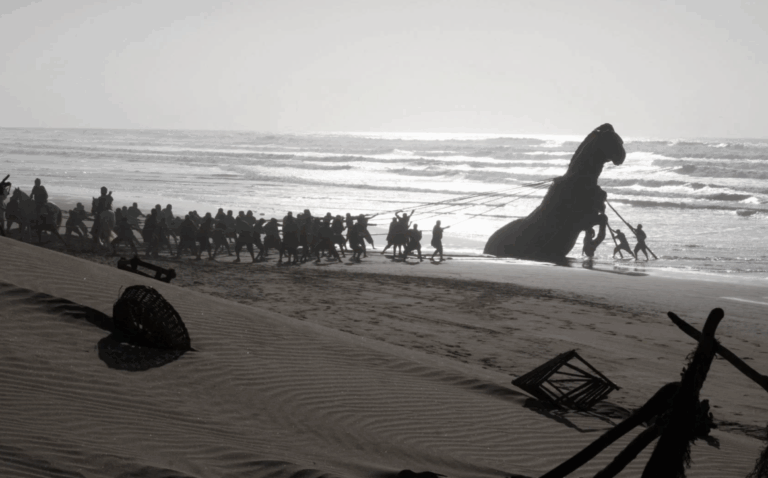
"All this he saw, for one moment breathless and intense, vivid on the morning sky; and still, as he looked, he lived; and still, as he lived, he wondered."

Nuvole Nere – i racconti di Carlo Lucarelli approdano al fumetto

20120424-174103.jpg

Ricordate quella piccola delizia che era Cornelio, l’ironico e autoironico giallo che vedeva come protagonista un alter ego di Carlo Lucarelli? Beh, Lucarelli è tornato, in un certo senso, e con lui uno dei due geniali autori di Cornelio: Mauro Smocovich. Non lo affianca, questa volta, Giuseppe Di Bernardo che all’epoca aveva firmato con lui i primi, più brillanti numeri di Cornelio, mentre lo affiancano disegnatori sempre diversi quali Francesco Bonanno (già visto non solo su Cornelio ma a che sull’Insonne di Di Bernardo), Fabio Ramacci (esordiente) e Francesco Lo Storto, Paola Camoriano (anche lei volto noto da Cornelio e al centro del famoso problema della pipetta), il bravissimo Daniele Statella, Marco Fara (anche lui già visto su Cornelio) e Beniamino Delvecchio che tutti ricorderanno per Dogma o per Diabolik. Le copertine dei primi quattro numeti fino ad ora usciti (su un progetto di soli sei numeri bimestrali) sono firmate da Andrea Fattori, reduce da Brendon.
Ogni volume si compone di una racconto lungo, uno breve e uno brevissimo, e per me che non li ho mai sfogliati sono un intrattenimento davvero godibile, anche se bisogna ammettere che dopo un paio di numeri i meccanismi narrativi diventano abbastanza riconoscibili. Ma non è il colpo di scena la forza di questi noir, bensì l’Italia che tratteggia, un’Italia di provincia con poliziotti corrotti, professori cinici, brava gente incastrata in torbide faccende, assurde coincidenze e fatti di cronaca inspiegabili, un’Italia di misteri misteriosi, le cui storie di puro orrore sono storie quotidiane, plausibili nella loro totale follia e, nel contempo, intrise di quel pizzico di follia che in una narrazione non guasta mai, specie in una narrazione di questo genere. Consigliato.

Summertime

The Path You Have to Sing

Alexis Wright‘s Carpentaria, an epic work set in a fictional town called Desperance, opens before there are any people in it at all: an ancestral serpent, “a creature larger than storm clouds,” descends from the stars and drags itself across the wet clay of the

Read More »
movies and tv

But for pursuit of virtue and of knowledge

I’m sure you’ve read enough analysis of Nolan’s Odyssey to last a lifetime, and you don’t need another European ranting that he changed stuff, so I’m not going to. Instead, I’d like to talk about the movie in itself, as an independent work, granting the

Read More »
Summertime

A Pilgrimage With No Shrine

The full German title of today’s book is Die Ringe des Saturn: Eine englische Wallfahrt — “The Rings of Saturn: An English Pilgrimage” — and it was written by W.G. Sebald, a German-born writer, essayist, poet, and literary scholar who lived much of his life

Read More »
Share on LinkedIn
Throw on Reddit
Roll on Tumblr
Mail it
No Comments

Post A Comment

This site uses Akismet to reduce spam. Learn how your comment data is processed.

RELATED POSTS

The Path You Have to Sing

Alexis Wright‘s Carpentaria, an epic work set in a fictional town called Desperance, opens before there are any people in it at all: an ancestral serpent, “a creature larger than storm clouds,” descends from the stars and drags itself across the wet clay of the

Read More

But for pursuit of virtue and of knowledge

I’m sure you’ve read enough analysis of Nolan’s Odyssey to last a lifetime, and you don’t need another European ranting that he changed stuff, so I’m not going to. Instead, I’d like to talk about the movie in itself, as an independent work, granting the

Read More

A Pilgrimage With No Shrine

The full German title of today’s book is Die Ringe des Saturn: Eine englische Wallfahrt — “The Rings of Saturn: An English Pilgrimage” — and it was written by W.G. Sebald, a German-born writer, essayist, poet, and literary scholar who lived much of his life

Read More