
Now, before I tell you whether I liked this movie or not, I think I should make something perfectly clear: I hate Robert Pattinson. Not him personally, of course — the guy hasn’t done anything to me — but I don’t think I’ll ever get over his career association with that shitty franchise. I can never bring myself to go to the theatre and see a movie featuring him, and this is why we waited so long even if this might have been my kind of sci-fi.
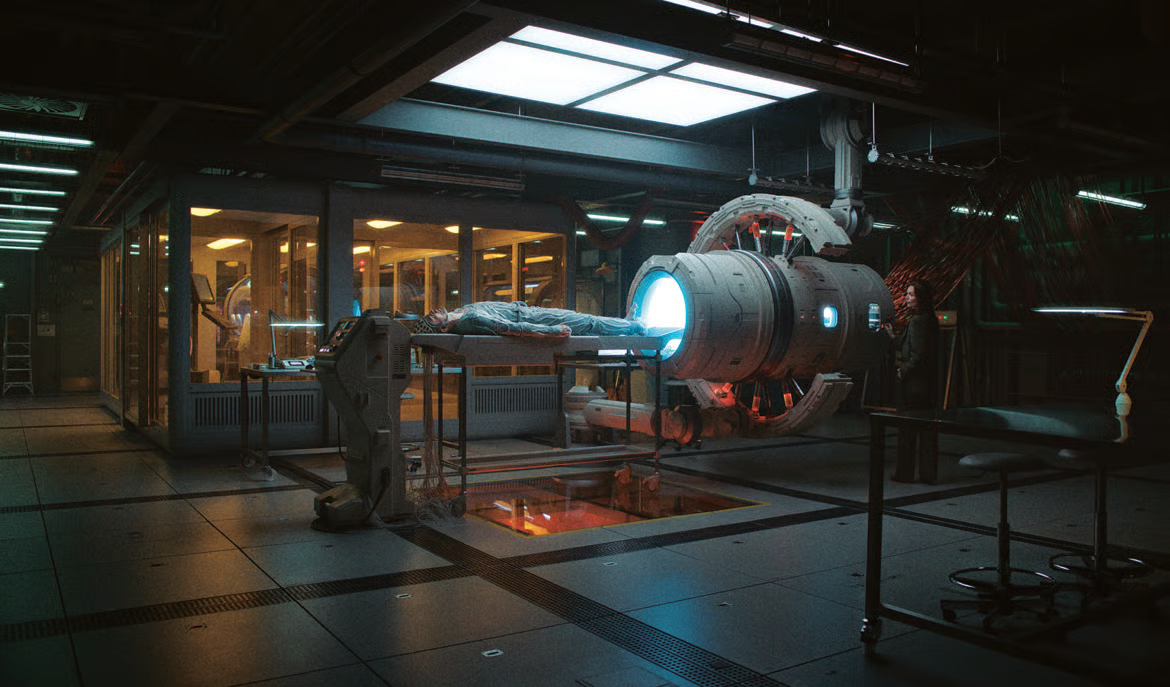
The premise of the movie is strong enough: does life lose its value when death isn’t permanent? The answer of course is yes, and the movie seems to be willing to engage in answering it thoroughly, from the way politicians are willing to exploit scientific progress to the way science approaches the human being as an expendable resource to the way such a human has been expendable all along because of… well, capitalism and macarons, I guess. The movie starts with a weird mix of drama and the grotesque, with the main character having an odd, nasal, infant-like voice and characters being generally over the top, but I guessed it was one way to cope with such a strong basic question without overwhelming the viewer right from the start. I guessed wrong.
At a certain moment in the movie, I started getting Passengers vibe. Do you remember that one? It was a 2016 movie featuring Chris Pratt and Jennifer Lawrence, in which a guy accidentally wakes up from suspended hibernation on a spacecraft travelling to a distant colony, has no way of going back into hibernation, and has to face the fact he’ll never live long enough to see their destination, except he decides he can’t face it alone and he wakes up a random woman to keep him company. And she doesn’t murder him. She gets upset long enough for us to see her in a swimsuit and then they live happily ever after.
Now, this movie gave me the same vibe: a moderately good sci-fi concept — good enough to do one of the things sci-fi does best, which is exploring human nature in extreme circumstances — which is diluted down. In The Passenger‘s case, it was doomed by writers who don’t seem to accept that stalking is bad and the Stockholm syndrome isn’t something we should romanticise. In this case, there’s a weird love story going on, indeed there is, but the main problem was the clumsy attempt at comedy with characters who start badly and turn worse without any sense.
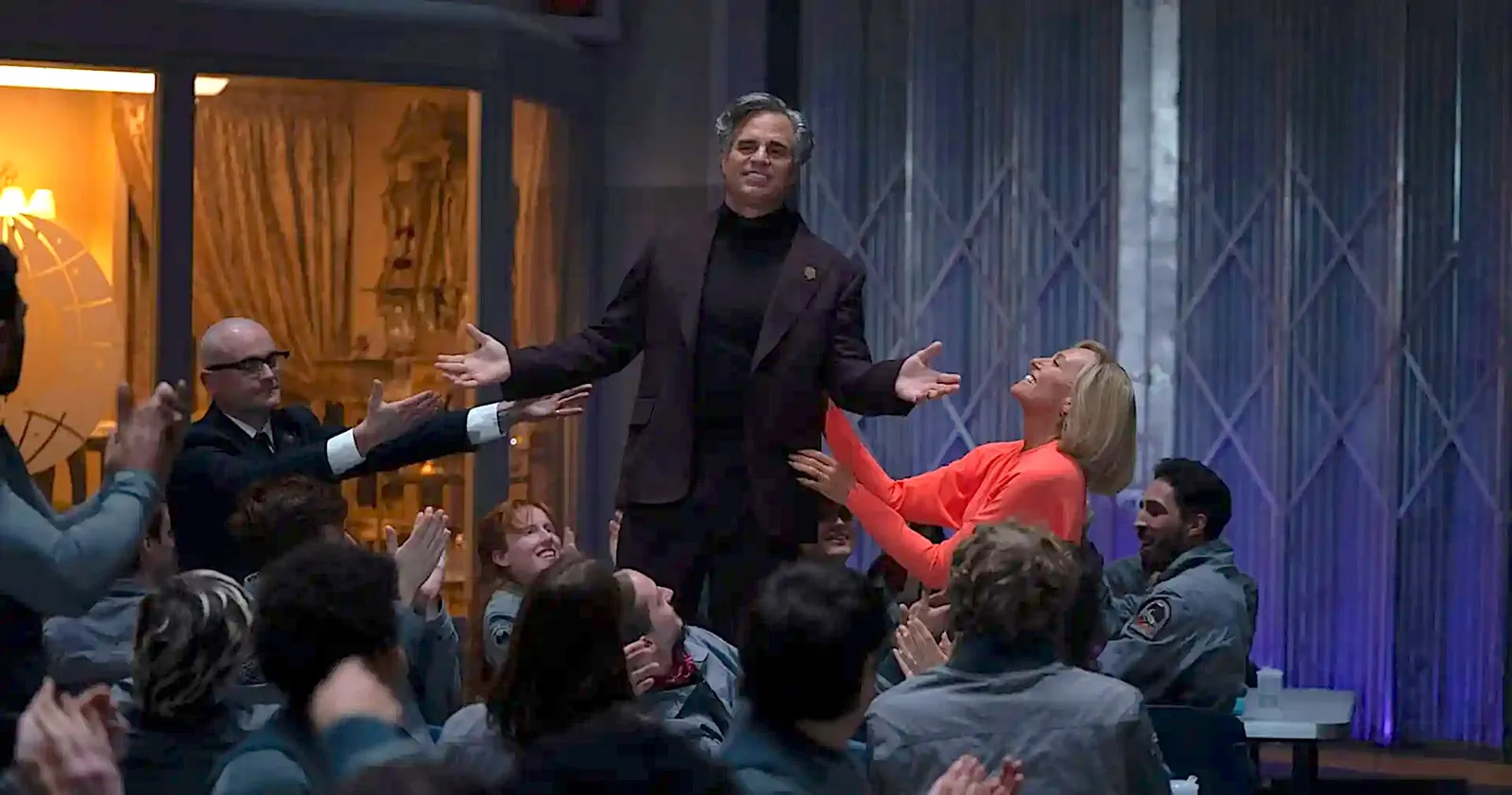
One of the main problems of the movie — spoiler alert — is the lack of construction for a crucial topic: even if every version of Mickey is an identical, 3D-printed copy of the previous one, each of them apparently has a different personality. You don’t see it while they’re showing you all the ways they died, and you just have to accept it when you have two of them simultaneously on screen, possibly as a way to pretend Pattinson is an actor. While being a cornerstone of the movie, the fact that #17 and #18 have two radically different ways of behaving never results in the logical conclusion that:
a) they are different people;
b) their recurring girlfriend is a psychopath, and theirs isn’t a grand romantic story in which she loves “every version of him”.
Also, characters that seem to be going somewhere eventually don’t: when do we lose the other girl? What’s with the politician’s cough?
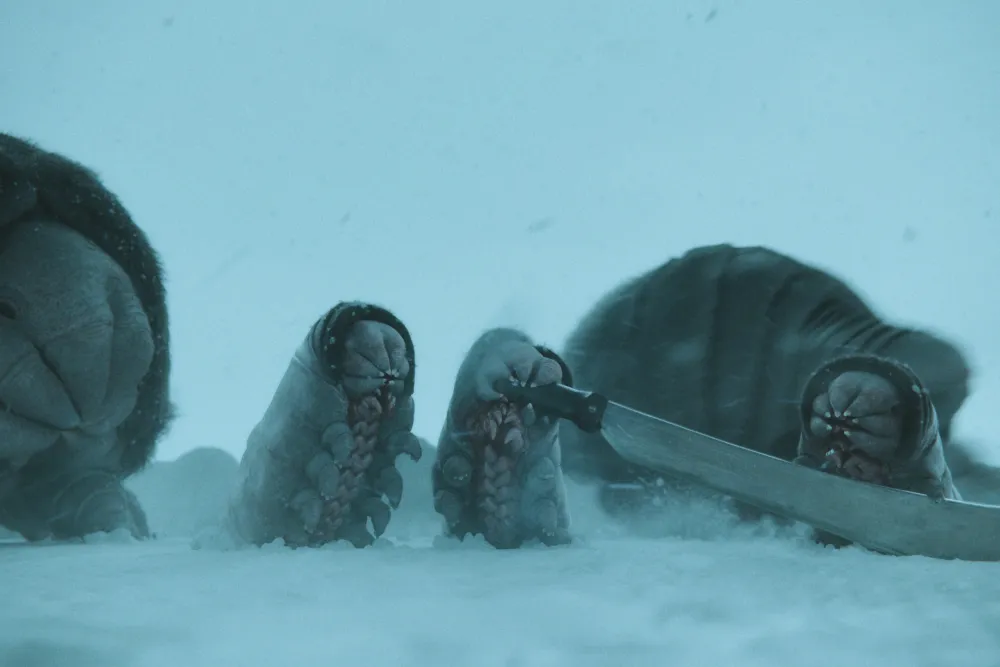
You don’t have enough time to worry about any of these things, because cute aliens who roll up in a ball are coming to save the day. If this is good sci-fi, I’m a monkey’s uncle.


1 Comment
Pingback:Shelidon | Good Luck, Have Fun, Don’t Die — and Other Things We Say Instead of Grieving
Posted at 09:00h, 20 June[…] and it exists as an apparent quick fixer to the problem of school shootings. If you remember Mickey17, there’s a fundamental cultural change that happens when death isn’t […]