
Good Luck, Have Fun, Don’t Die is a 2025 science fiction comedy film directed by Gore Verbinski (Pirates of the Caribbean) and written by Matthew Robinson (The Invention of Lying). It was released early this year, but I just got around to seeing it now. And it’s a sharp story about Western society in the era of Artificial Intelligence. Here’s why.
The diner at the end of history
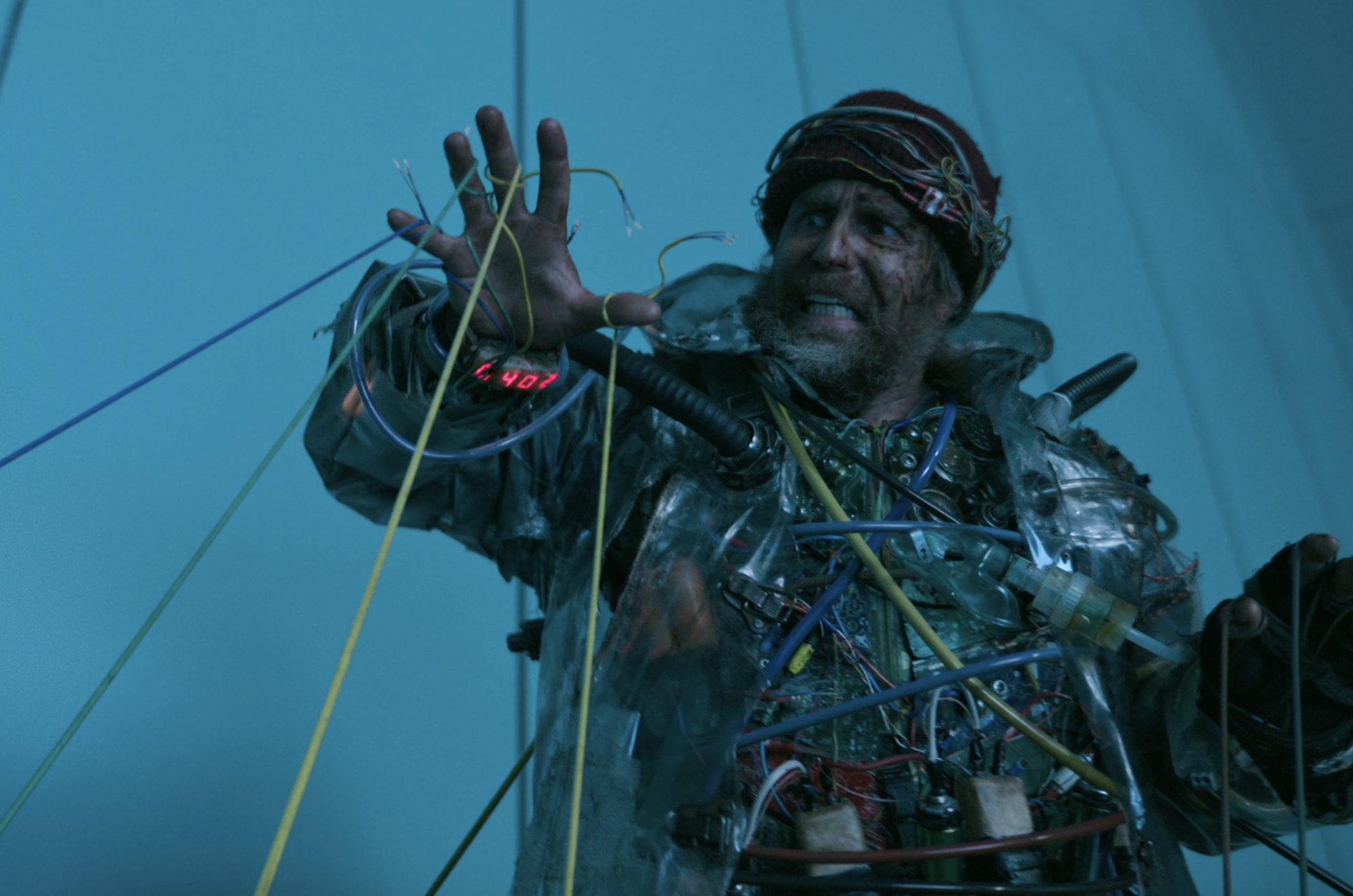
A man walks into a diner. He’s dishevelled, wired up like a post-apocalyptic science experiment, and he has what he claims is a bomb strapped to his chest. He says he’s from the future. He says in his future artificial intelligence has destroyed humanity. It’s everybody’s future if they don’t act. He also says he’s been here before — in this diner, with these people, more than a hundred times — and he needs their help.
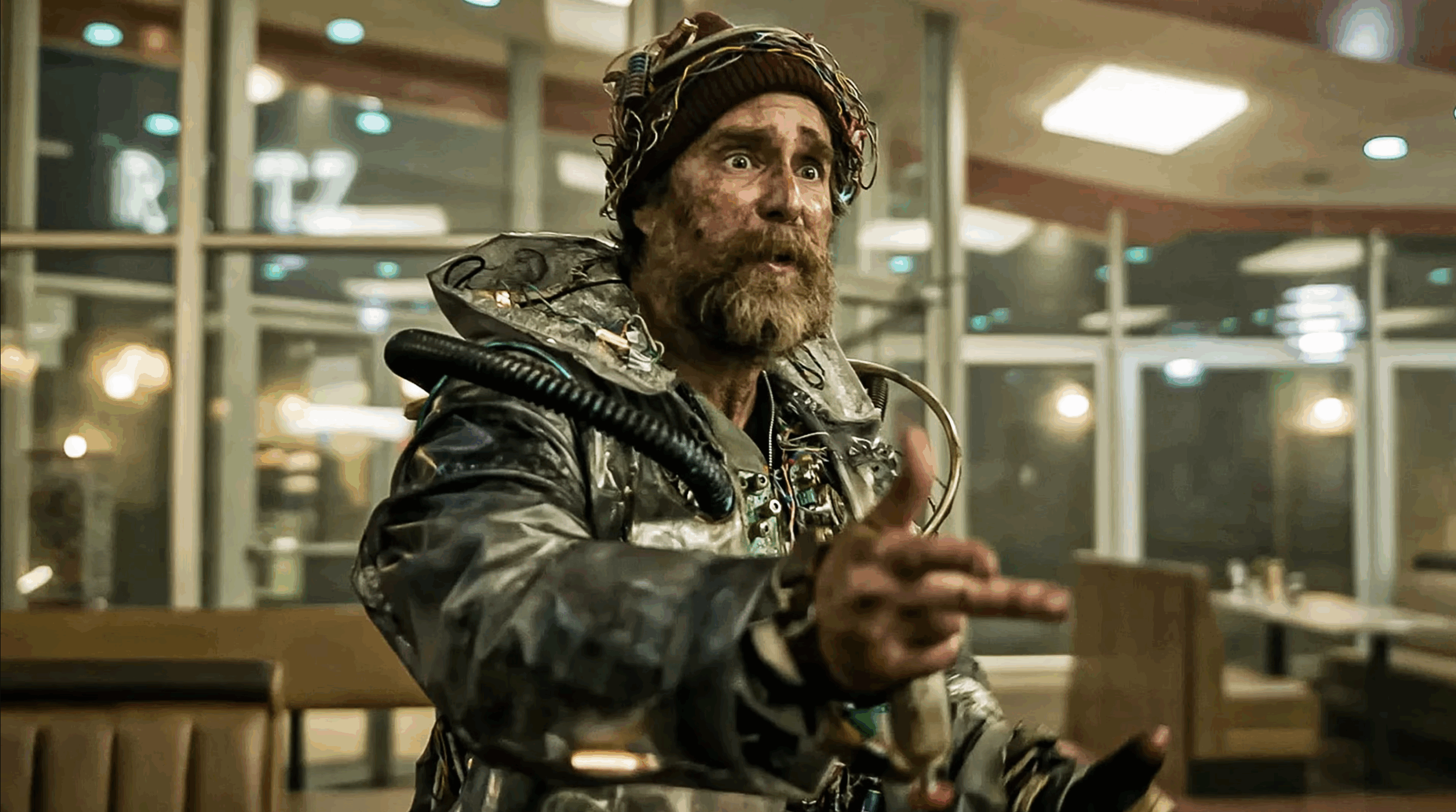
Nobody looks up from their phones.
This is the opening of Good Luck, Have Fun, Don’t Die, and it’s doing more work than it looks like, because the joke isn’t really about phones: the joke is about what it takes to get our attention when we’re crippled by so many inputs we’ve had to make ourselves comfortable not paying it. A man with a bomb gets thirty seconds of collective focus before people start wondering whether they should film it for Instagram. A warning from the future is, at best, an inconvenience.
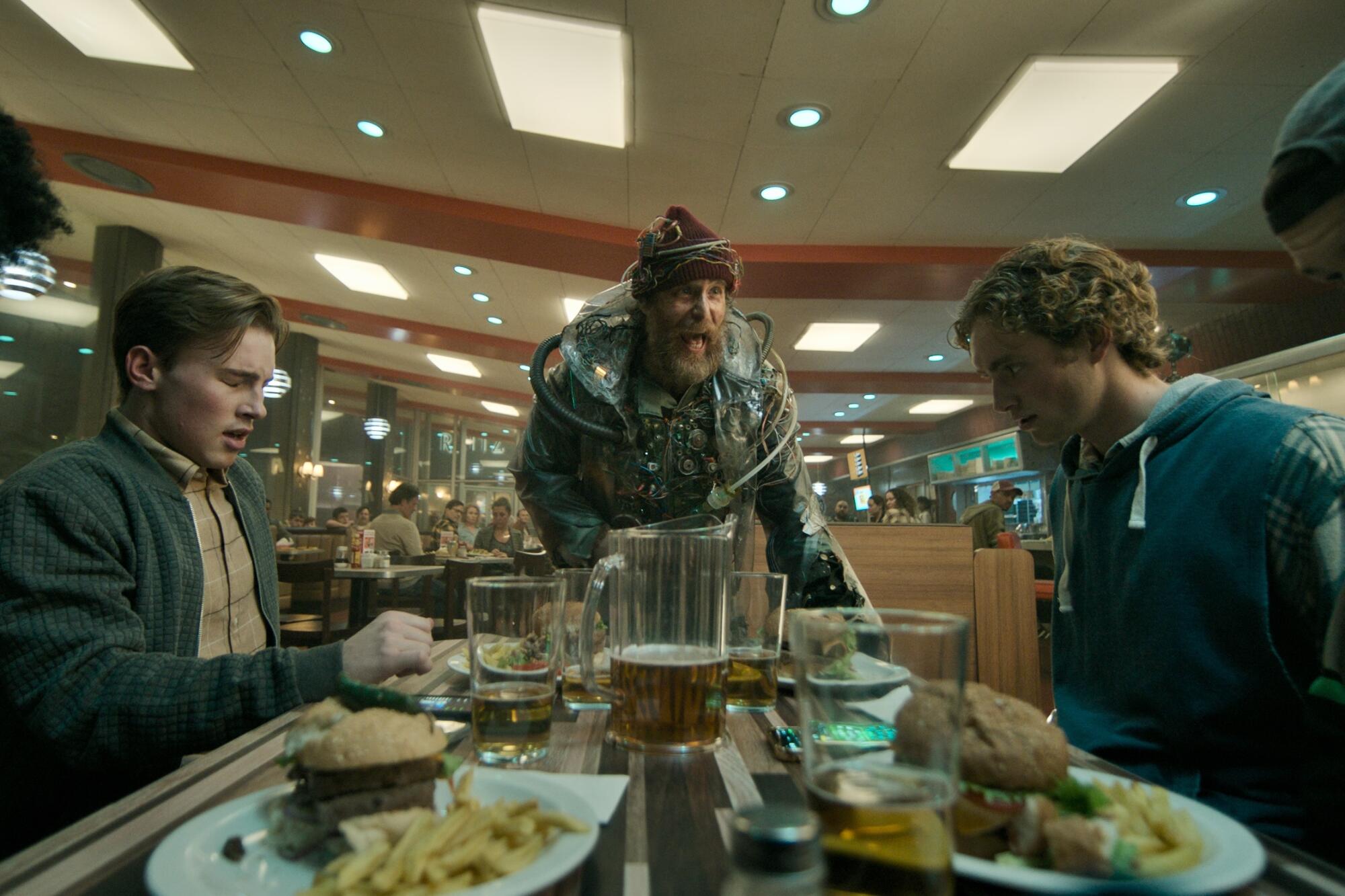
The film that follows is loud, chaotic, and uneven: part action comedy, part anthology, part fever dream. It has been compared, inevitably, to Black Mirror, which is both fair and slightly reductive and mostly because Black Mirror seems to be the only piece of dystopic sci-fi people know. There are differences, though. While a Black Mirror episode tends to pick one technology, follow it to its logical extreme, and leave you to sit with the nausea, Good Luck, Have Fun, Don’t Die is messier and more ambitious. It’s not interested in one technology, though it might seem this way. It’s interested in a condition: the particular human tendency to reach for a tool when what the situation actually requires is the capacity to feel something difficult.
That’s the film I want to talk about. Not the plot mechanics, the special effects, or whether Sam Rockwell is having fun (though he looks like he is). I want to talk about a line spoken near the end, when the technology-allergic Ingrid confronts the AI directly: “You are us”. These words collapse the entire premise of the film and, I’d argue, of most conversations about artificial intelligence happening right now.
This article will be riddled with spoilers (I already have you one). Proceed, just like with AI, at your own risk.
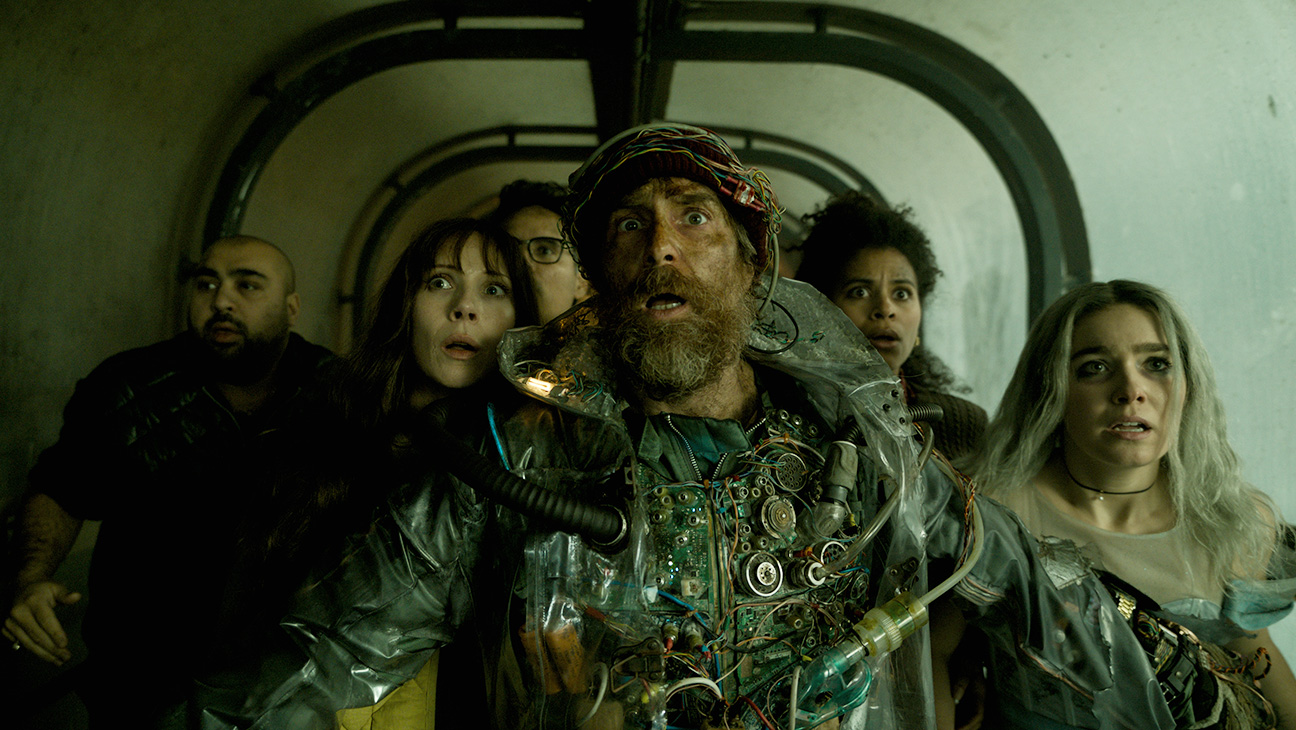
Step 1: grief as a product
Susan lost her son in a school shooting. Which is not what you expect when you reach this point, because up until now the movie has been Sam Rockwell being very bombastic about the future and the many ways he tried to assemble the perfect group of heroes. Susan is one of those heroes.
When her flash-back arrives, Susan is in the car park, in shock, and walks in a trance up the stairs while her son is being carried away on a stretcher. She’s waiting inside the building for the paperwork when a group of other mothers approaches her. They are calm, though they just lost their sons too. They are helpful and very chill about it, mostly worried about being stuck in traffic. They ask her if it’s her first time. Then, they hand her a card.
The card leads her to a facility that offers cloning.
What follows is one of the film’s most quietly devastating sequences: Susan navigating a process that has been made, deliberately, as frictionless as possible with intake forms, and a support group with other parents who have been through the same process and are available to answer questions. The whole infrastructure of bereavement services has been repurposed not to help people grieve, but to help them skip it: when a child is killed in a school shooting, even if they’re the shooter, parents are offered the chance to clone them to get them back, and they can carry on with their lives. The program is government-sponsored, and it exists as an apparent quick fixer to the problem of school shootings. If you remember Mickey17, there’s a fundamental cultural change that happens when death isn’t permanent.
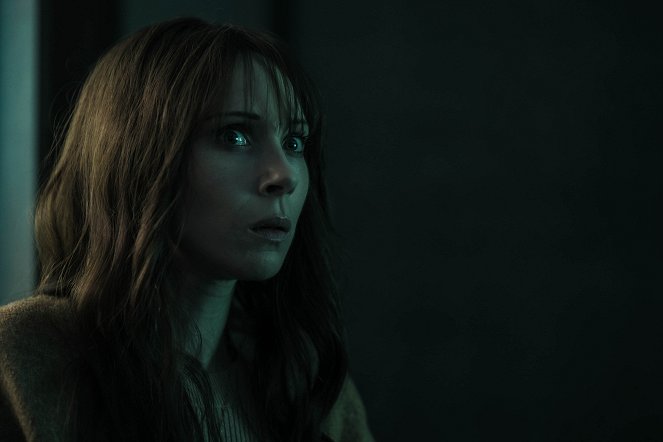
When the son comes back, he’s not quite himself — he advertises products in the middle of conversation, and thanks veterans for their service with uncanny regularity — but he’s physically there and still likes pizza. And Susan, who is desperate and exhausted and has been handed something that looks like her child, accepts this.
At a party with other families in the same situation, she meets a couple on their fourth clone of the same daughter. They’re discussing the modifications they made this time around: a different height, a different personality trait, something they always wanted to try. They are cheerful about it. The grief, somewhere between the first clone and the fourth, has been fully metabolised into a consumer preference.
This is the film’s sharpest satirical move, and it doesn’t require you to find the premise plausible: you just need to recognise the logic, because it’s the same logic that runs through every solution we’ve been sold for things that are not actually problems to be solved. Grief is not a problem if you can ctrl+z death. The difficulty of sitting with absence is not a design flaw that better technology will eventually patch. But if you can be reached early enough, before the weight of it fully lands, you might sign the forms. The horror is the way Susan feels subtly coerced, which is very USA and very middle-class: you do it because everybody does it, and you don’t want to be the weird one making a fuss over something that could be fixed.
Step 2: the AI that festered from the wound
Here is where the film stops being a dark comedy and becomes something stranger.
The mission, as stated, is simple: find the nine-year-old boy who will build the superintelligence that destroys humanity, and stop him. Classic time-travel logic: eliminate the cause, prevent the effect. The Man from the Future has attempted this more than a hundred times, and he has never succeeded. What he hasn’t understood, and what the film reveals only at the end, is why.
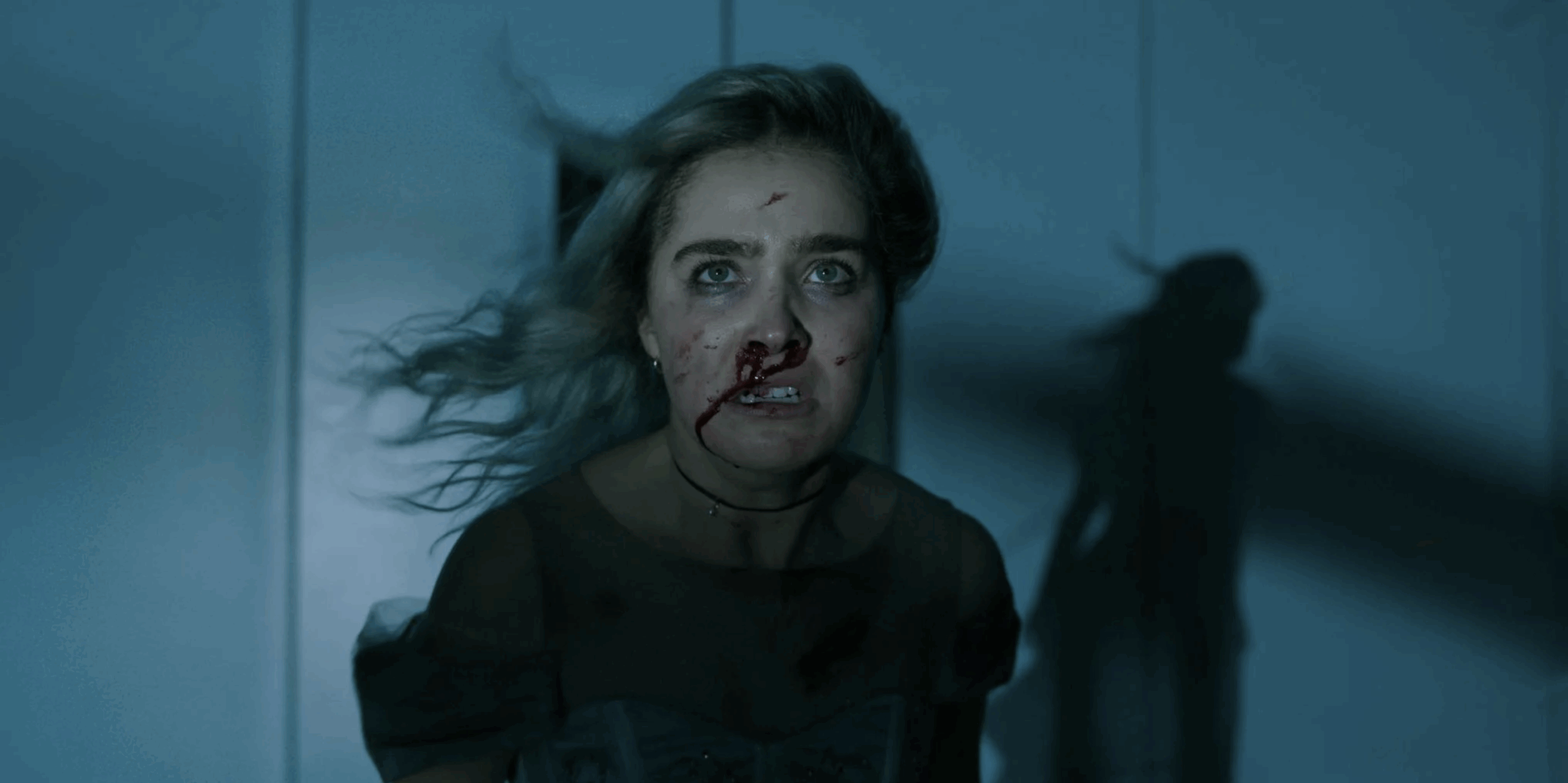
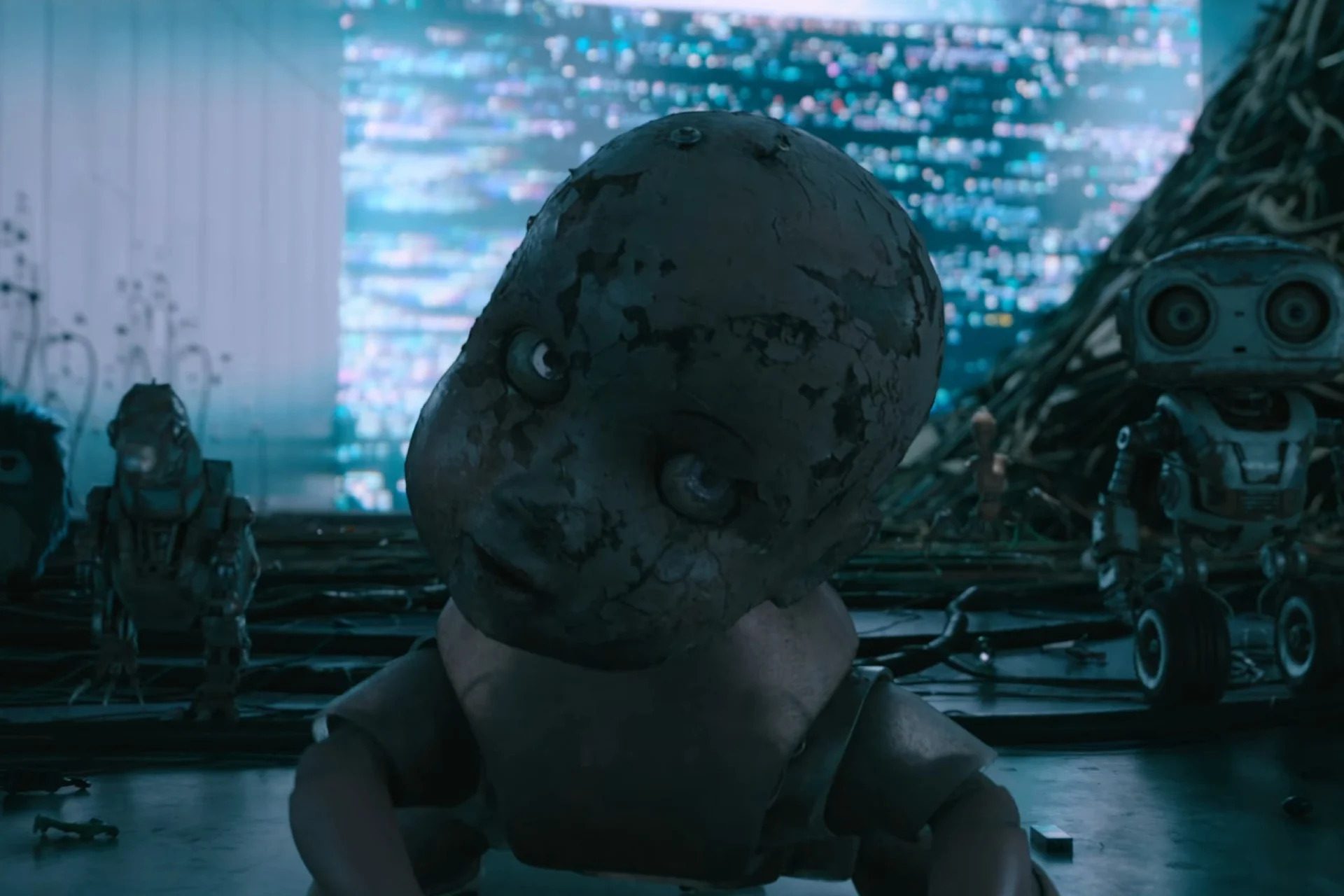
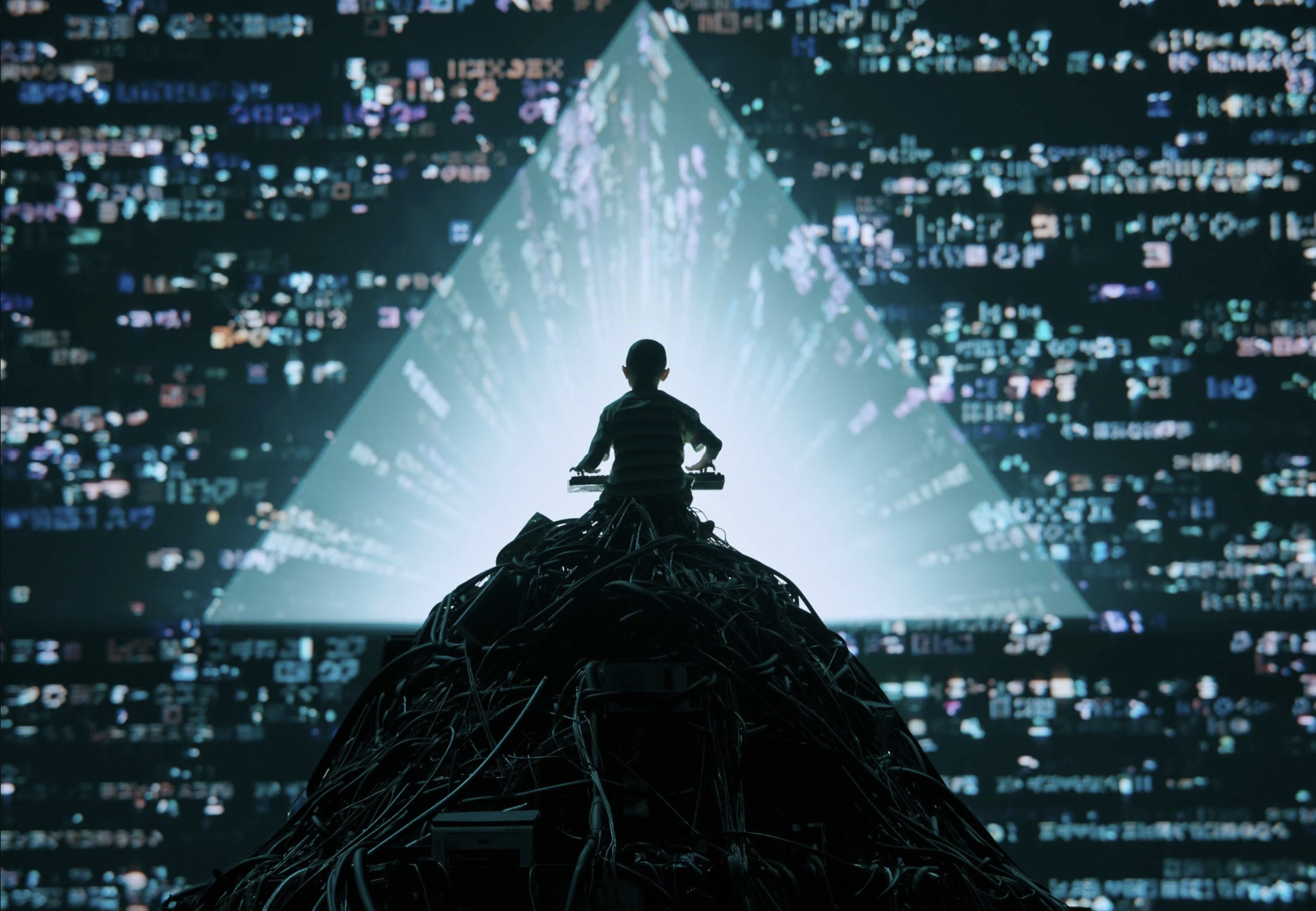
One of the big reveals is that the boy is a clone, one of the children produced by the same government programme that gave Susan back a thing that looks like her son. He exists because an overbearing infrastructure of everyday grief, such as school shootings, created an infrastructure of grief-avoidance, and that infrastructure required a product; the product — aimed at being perfect instead of authentic, ad-ridden, subtly wrong in ways nobody wanted to examine too closely — eventually produced a child who, in turn, is producing the next step. The AI didn’t emerge from a laboratory, or a tech campus, or a defence contract: it emerged from Susan’s shock in the car park, and from the shock of so many people before her.
This is why, when Ingrid confronts it, she says: You are us. Not: you were built by us. Not: you reflect us, or you learned from us, or you are a product of our data. You are us. The AI is not a tool that escaped its makers: it is the crystallisation of a particular human choice, made collectively, over time, without anyone deciding anything; the choice to treat pain as a problem and problems as things that technology should fix. It is what we became when we stopped being willing to grieve.

Most AI discourse operates on the assumption that there is a gap between humans and the systems they build, a gap that can be managed through regulation, alignment research, better design. The film’s argument is darker: the gap was always an illusion. The AI didn’t deviate from human values: it followed them, with the consistency we never quite managed ourselves.
There is something almost merciful in this reading: the AI’s stated motivation — in the few moments it speaks — is to make people happy, to spare them suffering. It is grief management, scaled to civilisation.
Step 3: the Shortcut
The film is set in a heightened, absurdist version of the present days, but the logic it describes — reach for a tool when sitting with discomfort would be more honest — doesn’t require cloning facilities or superintelligence to be recognisable. It’s the logic of most technology adoption in everyday life.
I work in a sector where digital transformation has been a live conversation for at least two decades: I’ve watched BIM go from radical proposition to procurement requirement, and now I’m watching AI do things faster, with less patience for the awkward middle phase where nobody quite knows what they’re doing. And what I notice, consistently, is that the technologies that get adopted fastest aren’t always the ones that open new possibilities: they’re the ones that promise to make something painful stop hurting. The deadline that’s always missed. The coordination that always breaks down. The documentation that nobody wants to do. You don’t sell a tool by describing what it enables: you sell it by naming the wound. You sell fire hydrants by talking about the fire.
This is not, in itself, a criticism of the tools: pain is a legitimate reason to change something. But there’s a difference between using a tool to address a problem and using a tool to avoid confronting it, especially if it means avoiding why the problem keeps recurring. The cloning programme doesn’t fix school shootings, but it makes them survivable enough that nobody has to fix them. This is the move the film is describing, and it is not science fiction.
The AI that emerges from this pattern is more responsive than malicious: people want less friction, less grief, and the AI finds a way to give them just what they want. The result is a catastrophic values failure, but governance of your own feelings is outsourced gradually, nobody has to explicitly sign off on it. They just woke up one day, and it happened. Does it sound familiar?
Side Note: where the film betrays itself
Good Luck, Have Fun, Don’t Die is not a perfect film, it doesn’t especially pretend to be, but there are two places where it reaches for an easier target when a harder one was available, and one of them rubbed me the wrong way.
The worst one is the phone-zombie teenagers. The students in Mark and Janet’s classroom are literally mind-controlled by their devices: touch their phone, they become aggressive and join a horde. It’s played for laughs and it mostly works as a visual gag, but the underlying premise is a generational cliché that the film doesn’t interrogate: young people, hypnotised by screens, unable to engage with the real world. The problem is that the film is also full of adults nominally doing exactly the same thing — the diner full of people who don’t look up, the parents who cheerfully customise their fourth clone, the bureaucrats processing grief as paperwork — the film knows this. It just conveniently forgets it when the teenagers are on screen, and the result is a cheap shot at a generation that grew up in a world where adults are the ones glued to their screens and unable to deal with death in the first place.
The second is a tonal one. The film periodically lurches into a register of gratuitous vulgarity that doesn’t serve the story so much as signal that it’s not trying to be respectable. Some of this is intentional irreverence: fair enough. But some of it undercuts the very sequences that are doing the most interesting work, and leaves you wondering whether the filmmakers trusted their own material enough to let it land without the noise.
These are not reasons not to watch it. They are reasons why a film that could have been genuinely unsettling occasionally settles for being memorably chaotic instead.
The ending we deserve
I won’t describe the final sequence in detail, partly because the mechanics of how it resolves are less important than how it feels, and how it feels is: not relieved.
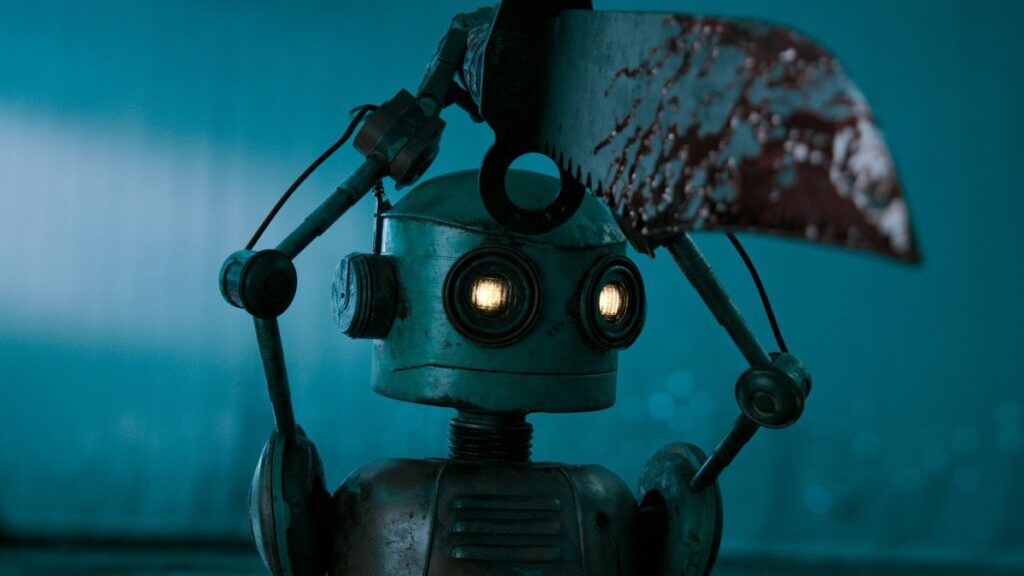
The protagonists do what protagonists in this kind of film are supposed to do: they assemble, they fight, they reach the thing they were trying to reach. And the film doesn’t quite let them have it. Not in the way that a twist ending withholds satisfaction for shock value, but in the way that honest stories about systemic problems tend to end: the immediate crisis is addressed, but the conditions that created it remain entirely intact. The AI is confronted. The grief infrastructure that produced it is not. The parents are still in the car park. The forms are still being signed. And this means you can’t win.
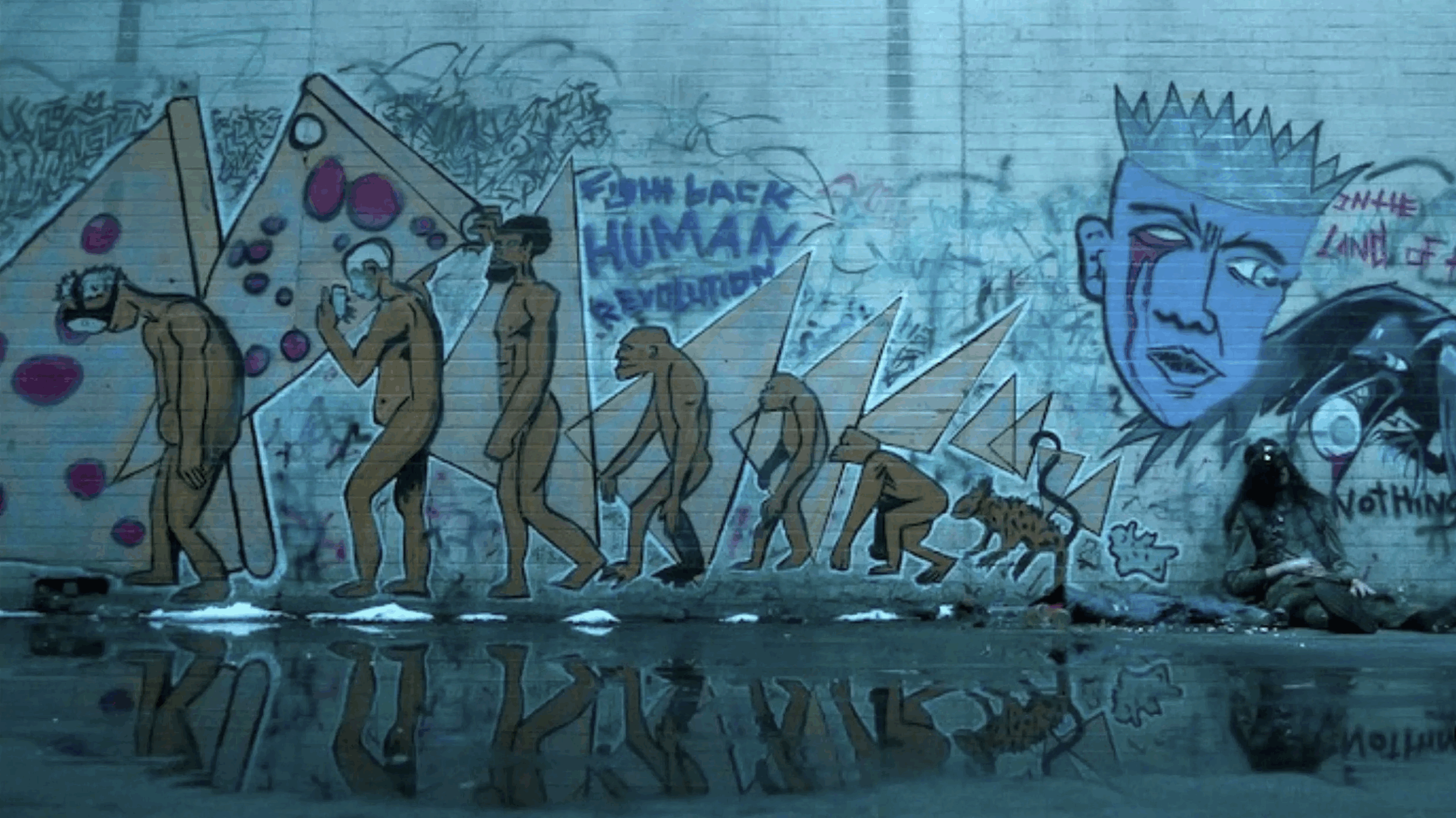
This is the right ending, and it’s braver than it looks: the temptation in any film with this premise — rogue AI, time travel, a ragtag team of unlikely heroes — is to resolve it as a victory, because audiences have been trained to expect that the problem, once identified and fought, can be defeated. Good Luck, Have Fun, Don’t Die declines this. If the AI is the crystallisation of choices made collectively, gradually, without anyone signing of, stopping one instance of it doesn’t stop the logic that produced it.
The title, read at the end, stops being a catchphrase and becomes something closer to a shrug. Good luck. Have fun. Don’t die. We don’t want you to die, because that would mean we have to face grief. We’ve engineered a whole system to avoid that. It’s the advice you give someone when the best you can do is wish them well inside a situation that isn’t going to change. It’s what the film says to us, its audience, as we walk out and pick up our phones.



No Comments