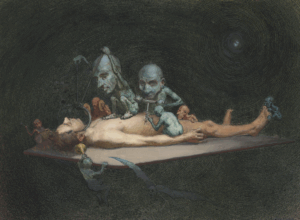
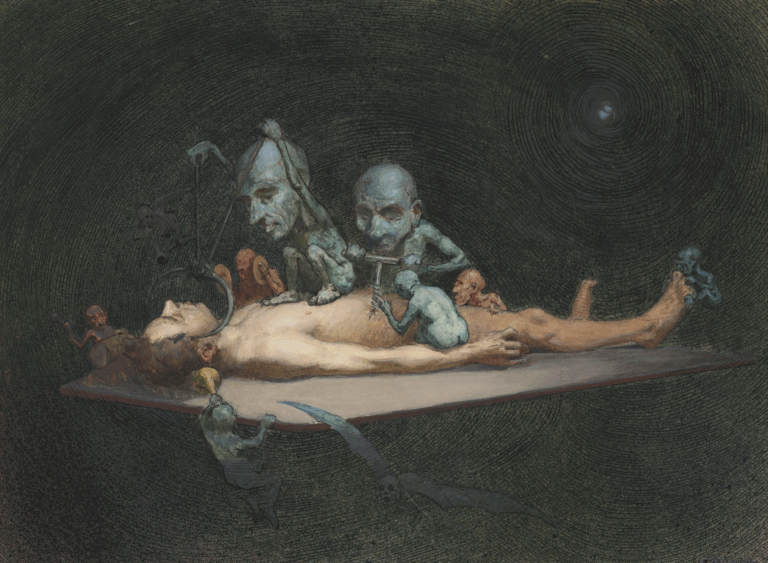
"All this he saw, for one moment breathless and intense, vivid on the morning sky; and still, as he looked, he lived; and still, as he lived, he wondered."

Madeleine de Scudéry’s Femmes Illustres – Pantea Arteshbod

Panthea was a Persian Lieutenant Commander who served under Cyrus the Great, a thing far from being uncommon for Persian women.
She played a crucial role in the Battle of Opis (539 b.C.) during the Persian invasion of Mesopotamia, in which the armies of Cyrus defeated the neo-Babylonian emperor Nabonidus, thus annexing Babylonia into the Persian Empire.
According to Xenophon’s biography of Cyrus, probably fictional, she was married to Abradatas, king of Susiana. ’cause she had to be a princess, otherwise the dude could not explain her commanding troops.

As the story goes, she was crucial in the formation of the alliance between Abradatas and Cyrus, which started off as enemies.
After a battle between the two parties, in fact, it is said that the lieutenant was captured and one of Cyrus’ trusted officers, named Araspe, firstly tried to seduce her and then, when refused, tried to force himself on her, without success.
Informed of this fact, Cyrus rebuked his officer and sent for Abradate to come and free her without fear of retribution.
When he knew how Cyrus had acted, the king of Susiana pledged his loyalty to him and became his general in the following battle against his former ally Croesus.
Panthea assisted in the formation of the so-called 10.000 “immortals” for the Persian army, that were crucial in the conquest of Lydia in 547 b.C.

King Abradate was then killed in battle and Panthea stabbed herself to death on top of his dead body, followed by her three eunuchs. They were buried on the spot and Cyrus had a pillar erected in their honour, with the names of the two in Syriac characters and a Greek inscription to commemorate the eunuchs.

De Scudery has her writing to Cyrus.
books and literature

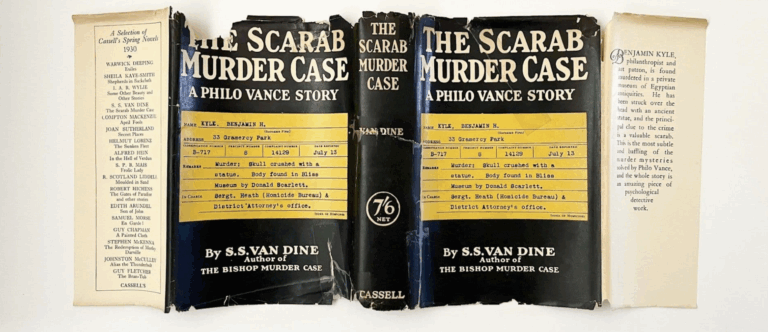
S.S. Van Dine’s The Scarab Murder

S.S. Van Dine was the pen name of Willard Huntington Wright (1888–1939), an art critic, editor, and novelist from the US who created Philo Vance, apparently one of the defining amateur detectives of the Golden Age of detective fiction. The Vance series ran to twelve

Read More »
books and literature

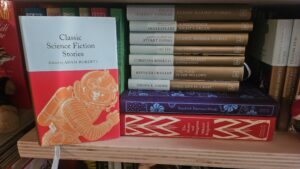
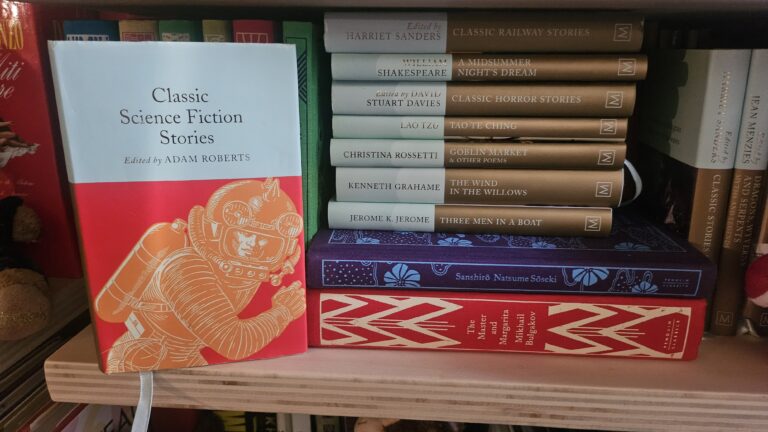
Classic Science Fiction Stories

This is the third collection I read from these charming little light-blue books with the golden pages, and they’re uneven at best. Once again, as such, I have mixed feelings about this collection and I’ll have to proceed scientifically to give a rating, so here

Read More »
architecture, engineering and construction

Artificial Integrity in the Age of Anxiety

In 1947, British-American poet W.H. Auden published The Age of Anxiety, a long poem subtitled “A Baroque Eclogue”. In a nutshell, four strangers meet in a bar on Third Avenue in Manhattan, on All Souls’ Night, so it’s even seasonal, in the middle of a

Read More »
Share on LinkedIn
Throw on Reddit
Roll on Tumblr
Mail it
No Comments

Post A Comment

This site uses Akismet to reduce spam. Learn how your comment data is processed.

RELATED POSTS

S.S. Van Dine’s The Scarab Murder

S.S. Van Dine was the pen name of Willard Huntington Wright (1888–1939), an art critic, editor, and novelist from the US who created Philo Vance, apparently one of the defining amateur detectives of the Golden Age of detective fiction. The Vance series ran to twelve

Read More

Classic Science Fiction Stories

This is the third collection I read from these charming little light-blue books with the golden pages, and they’re uneven at best. Once again, as such, I have mixed feelings about this collection and I’ll have to proceed scientifically to give a rating, so here

Read More

Artificial Integrity in the Age of Anxiety

In 1947, British-American poet W.H. Auden published The Age of Anxiety, a long poem subtitled “A Baroque Eclogue”. In a nutshell, four strangers meet in a bar on Third Avenue in Manhattan, on All Souls’ Night, so it’s even seasonal, in the middle of a

Read More