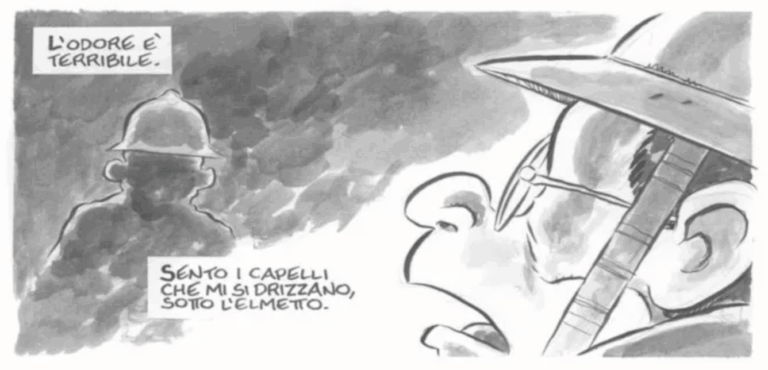
"All this he saw, for one moment breathless and intense, vivid on the morning sky; and still, as he looked, he lived; and still, as he lived, he wondered."

Madeleine de Scudéry’s Femmes Illustres – Octavia the Younger

Octavia was the eldest sister of Augustus and the fourth wife of Mark Anthony, whom she married by decree of the Senate in 40 b.C. The approval of the Senate was necessary because, at the time of the marriage, she was pregnant with her first husband, senator Gaius Claudius Marcellus, one of the most vehement opposers of Julius Caesar.

She was one of the most important women in Roman history, respected and admired for her loyalty, nobility of spirit and humanity. She embodied the traditional Roman virtues of a noblewoman, which we have already seen included patience in order to deal with Roman men.

Between 40 and 36 b.C., she travelled with Mark Anthony and she raised all the children of their enlarged family in Antony’s mansion in Athens.
She should have followed him more, as she was eventually abandoned when Antony decided to officially set up with his former lover, legendary Queen Cleopatra VII of Egypt. Regardless of her crucial role in providing him aid, political assistance and sometimes even troops during his campaigns, he divorced her in 33 b.C. and sent men to evict her from his house in Rome.

After his suicide in 30 b.C., she was able to have permission to raise both her sons and the sons Antony had with Cleopatra (two sons and one daughter, Cleopatra Selene II).
Augustus granted her high honours and privileges: particularly, just like Livia, she was made immune from the need of having a male guardian, something only Vestals were spared from in Ancient Rome.

She famously lost one of her sons and it is said that she fainted while Virgil recited the verses he dedicated to her son into the Aeneid. This scene is often depicted in paintings, as artists cannot resist a woman fainting in front of art.

A famous work is by Jean-Auguste-Dominique Ingres, with Virgil reading The Aeneid before Augustus, Octavia and Livia (1812).

Before him, Jean-Joseph Taillasson had already working on a Virgil reading the Aeneid to Augustus and Octavia (1787).
In this one, you’ve got to appreciate Augustus’ expression that seems to go like “Dude, tune down the tragedy: don’t you have any tact?”, and Virgil goes like “Pal, I thought she would be pleased”.

books and literature

Snow Country

Sometimes you read a book with beautiful prose and well-constructed characters but, when you put it down, you couldn’t tell the plot if your life depended upon it. Kawabata Yasunari‘s Snow Country is one of these books. Born in 1899, the author won the Nobel

Read More »
books and literature

War and Peace

I’m satisfied.Satisfied and surprised.Satisfied because this book, since reading the Peanuts as a child, is the Ultimate Achievement. Once you’ve read it, you feel you can achieve everything. You could even be the first beagle to land on the moon.And satisfied because… by God, this

Read More »
architecture, engineering and construction

A New Vision for the Learning Crisis

The end of 2024 brought us no grand educational reckoning, no moment of consensus that we need to reimagine how adults learn. Instead, through 2025, we’ve settled into a peculiarly quiet collective exhaustion with the pandemic’s educational experiments, paired with a creeping anxiety that something

Read More »
Share on LinkedIn
Throw on Reddit
Roll on Tumblr
Mail it
No Comments

Post A Comment

This site uses Akismet to reduce spam. Learn how your comment data is processed.

RELATED POSTS

Snow Country

Sometimes you read a book with beautiful prose and well-constructed characters but, when you put it down, you couldn’t tell the plot if your life depended upon it. Kawabata Yasunari‘s Snow Country is one of these books. Born in 1899, the author won the Nobel

Read More

War and Peace

I’m satisfied.Satisfied and surprised.Satisfied because this book, since reading the Peanuts as a child, is the Ultimate Achievement. Once you’ve read it, you feel you can achieve everything. You could even be the first beagle to land on the moon.And satisfied because… by God, this

Read More

A New Vision for the Learning Crisis

The end of 2024 brought us no grand educational reckoning, no moment of consensus that we need to reimagine how adults learn. Instead, through 2025, we’ve settled into a peculiarly quiet collective exhaustion with the pandemic’s educational experiments, paired with a creeping anxiety that something

Read More