
Introduction: I Promised We’d Get Back to Plato
Back in the second section of the previous article about LEGO® Serious Play®, I mentioned Plato and Socrates in passing, and then promptly moved on to Sutton-Smith.
“I could start with Plato through Socrates,
but we’ll get back to that later.”
This is later.
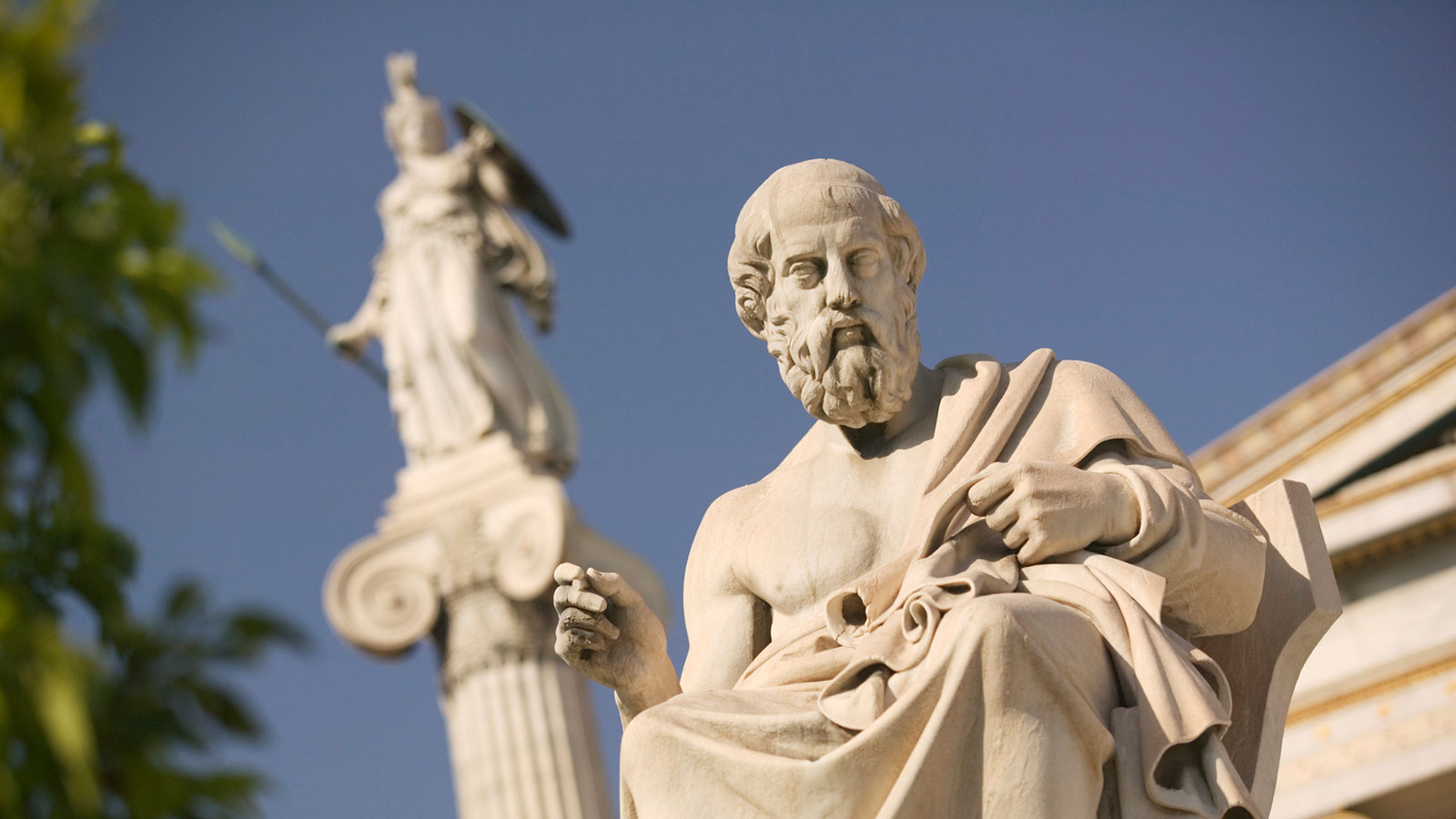
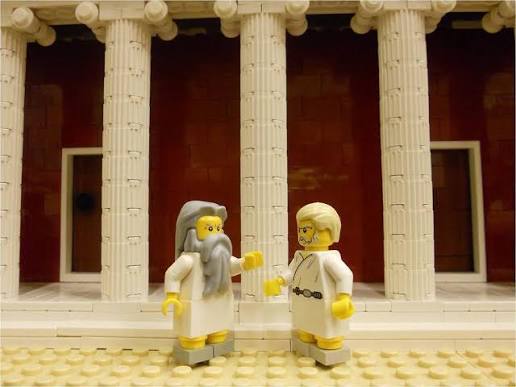
The reason I deferred is that Plato belongs to a different part of the argument. The reference was to the Euthydemus, one of Plato’s less celebrated but most structurally interesting dialogues, in which Socrates finds himself in the company of two sophist brothers, Euthydemus and Dionysodorus, who are virtuosos of a particular kind of intellectual performance. They play games with language and argument, to a devastating effect. They can prove anything. They can refute anything. They deploy paradox and misdirection with the ease of people who have spent years perfecting the art of winning, and winning is precisely the point: their game is eristic, from the Greek for strife, a form of argument whose purpose is not to find truth but to defeat an opponent and demonstrate superiority.
Socrates also plays, and that’s what makes the dialogue so interesting: at a surface level, his method looks similar to the one employed by the sophists. He also asks questions. He also generates confusion. He also dismantles his interlocutor’s confident assumptions with apparent ease. But the purpose is entirely different. Where the sophists play to win, Socrates plays out of curiosity. His questions don’t lead toward a predetermined conclusion: they open a space in which the other person might discover something they didn’t know they knew. The form is playful. The intent is serious. And the difference between the two — between eristic play that performs cleverness and serious play that pursues understanding — is the central question the Euthydemus stages.
In other words, it’s a dialogue about facilitation. Or at least about the most important distinction any facilitator needs to make: the difference between leading a process that serves their own agenda and holding a space in which other people’s thinking can genuinely emerge.
The previous Fridays in this series have been about the methodology itself — what LEGO Serious Play is, why it works, why it requires this specific medium and mode — but this week we’ll talk about the person who makes it work or fail. The facilitator is the human variable that theory consistently underspecifies, and the one that matters more than any other single factor in determining whether a session produces genuine strategic insight or an expensive afternoon of brick-stacking. The open-source document that LEGO released in 2010 is admirably clear about what the facilitator must do: pose building challenges, maintain the etiquette, support flow, focus and trust, and refrain from providing answers. What it doesn’t tell you is what kind of person the facilitator needs to be, what intellectual tradition their role belongs to, and where the hardest parts of the job actually lie.
The argument that follows is deliberately structured in the Socratic manner, if you’ll pardon me: we’ll begin not with a positive definition of what the facilitator is, but with a systematic elenchus — a clearing away — of what they are not. The most common failures in LSP facilitation don’t come from ignorance of the methodology: they come from facilitators who know exactly what they think they’re doing, and are doing something else. Three misidentifications are so common that they deserve to be examined in turn: the facilitator as trainer, the facilitator as therapist, and the facilitator as moderator. Once those are cleared, the positive account builds quickly. And then, at last, we get to Plato properly.
Part I: What the Facilitator is Not
A particular kind of professional competence makes the facilitation in LEGO® Serious Play® harder rather than easier, and it is the competence of people who are very good at one of three adjacent roles: trainer, therapist, or moderator. These are not incompetent people. They are often highly skilled. The problem is that each of these roles comes with a set of deeply ingrained habits — habits about where knowledge lives, who is supposed to produce it, and what a successful session looks like — that are precisely wrong for LEGO Serious Play, and that tend to reassert themselves under pressure precisely because they are so well practised. Naming them is not a criticism of the people who hold them. It is a precondition for understanding what the facilitator actually needs to do instead.
1.1. You’re not a Trainer
Nothing wrong with trainers. Hey, I’m a trainer myself. But the trainer’s foundational assumption often is that knowledge travels in one direction: from the person who has it to the people who don’t, through the careful design of content, sequence, and delivery. A good trainer knows their material thoroughly, structures it so that it builds logically, and measures success by whether participants leave with something they didn’t have when they arrived. There is nothing wrong with any of this, in the contexts where training is the right tool, though I always prefer building knowledge alongside the participants even in training sessions. The problem arises when a trainer-trained facilitator brings these assumptions into a LEGO Serious Play session, because the methodology is built on the diametrically opposite premise.
Even the open source document states it plainly: LEGO Serious Play begins with the assumption that the answers are already in the room. The facilitator’s job is not to transfer content but to help people in the room discover what they already know. More precisely, to help people discover what they know collectively and that no individual within it knows separately. A facilitator who slips into trainer mode will start steering participants toward correct answers, validating insights that match their own prior understanding of the topic, and subtly signalling when the building is going in the right direction. The session will feel efficient and well-managed. It will also produce exactly the insights the facilitator already had before it started, which is not what anyone paid for.
The hardest version of this failure mode is the subject-matter expert — the consultant who knows the industry, the internal strategist who understands the organisation — asked to facilitate a session on their own domain. Their expertise is genuinely valuable, and they know it, and every model that gets built in front of them is filtered through that knowledge, whether they intend it or not. We will come back to this problem, because it has its own specific remedy. Being an industry expert myself, and having facilitated my good amount of workshops on infrastructure and other complex projects, you can trust me on this. For now, the point is simply this: LEGO Serious Play isn’t for training, and the facilitator who treats it as training is, in the Euthydemus terms we introduced earlier, playing to win — toward their own answer — rather than playing out of curiosity.
1.2. You’re not a Therapist
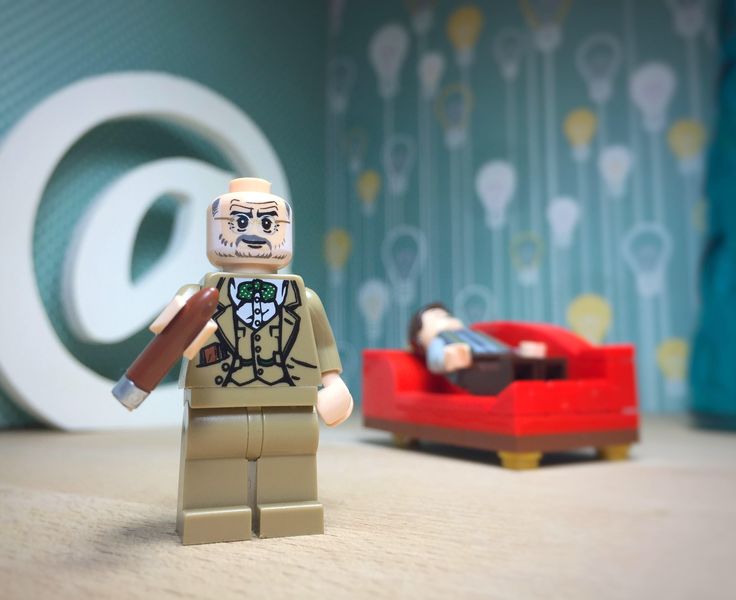
The therapeutic failure mode is subtler and, in some ways, more flattering to the facilitator, because it comes from genuine attentiveness rather than expertise. LEGO Serious Play sessions can produce moments of unexpected emotional depth: a participant builds a model of their organisation’s decision-making structure and suddenly sees, with uncomfortable clarity, that they have built themselves into a corner with no connections to anything; someone builds what they describe as a bridge and can’t explain why it has no other side. These moments are real, and they matter, and a facilitator who notices them is doing their job well.
The failure comes in what might happen next: the facilitator who treats LEGO Serious Play as a form of group therapy will lean into these moments, asking the participant to explore what the model reveals about them, encouraging the group to reflect on what this means for this person, using the emotional charge of the moment to go deeper into personal territory. This feels productive. It often feels profound. And it is, in most cases, a serious breach of the methodology’s boundary.
The etiquette rule included in the open source material is precise and deliberate: ask questions about the model and the story, not about the person who built it. It’s the builder who assigns meaning to their model. That meaning is the meaning, and the facilitator’s job is to help the builder articulate and develop it, not to suggest what it might really mean underneath, to probe for a deeper truth that the builder hasn’t offered, and absolutely not to interpret the model on the builder’s behalf. If a brick is a bridge with no other side, it is a bridge with no other side. If the builder says it represents their organisation’s relationship with its clients, it represents their organisation’s relationship with its clients. The facilitator who decides it represents something else — something more personally revealing, something the builder hasn’t admitted yet — has left the territory of facilitation and entered the territory of analysis, without training, without consent, and without the therapeutic relationship that makes such inquiry safe.
Also, a brick might be red because people couldn’t find another brick, because they didn’t think colour was important in that moment, or simply because it looked pretty. If the facilitator pushes for a meaning, they might get one. One that was invented in the moment just so that the people might look smarter, or simply get the facilitator off their asses.
LEGO Serious Play isn’t psychoanalysis. The potential space it creates is valuable precisely because it is bounded: it is a space for strategic thinking, not for excavating personal psychology. The moment the facilitator starts fishing for meaning that the builder hasn’t put there, the boundary collapses, and the magic circle with it.
1.3. You’re not a Moderator
The moderating failure mode is the most common and the most invisible, because moderation is a genuine and necessary component of the facilitator’s work, and the danger is not that the facilitator moderates, but that they moderate and nothing else.
A moderator manages the process: makes sure everyone gets a turn, keeps time, prevents a single voice from dominating, maintains a civil and productive atmosphere. These are necessary skills, and a facilitator in LEGO Serious Play who can’t do them competently will struggle regardless of how sophisticated their theoretical understanding of the methodology is. But moderation is the floor, not the ceiling. A session that is perfectly moderated — equitable, timely, conflict-free — can still produce nothing of strategic value if the facilitator has confused traffic management with holding a space.
The distinction is hard to articulate but immediately recognisable in practice. You see it when the moderator’s attention is on the surface of the session: who is speaking, for how long, in what order, at what volume. The facilitator’s attention, though, needs to be on something deeper: the quality of thinking that is happening, the relationship between what participants are building and what they are saying, the tension between different models that is either being genuinely explored or being prematurely resolved, and the degree to which the play mode is actually alive in the room or has quietly collapsed back into a meeting with bricks on the tables. These are different things to pay attention to, and paying attention to one makes it harder to pay attention to the other.
The moderator keeps the peace but, when it’s necessary, they also disturb it, not for the sake of conflict, but because productive tension is one of the primary mechanisms through which genuine strategic insight emerges in a LEGO Serious Play session. A facilitator who smooths it over too quickly, who rushes toward harmony and consensus before the divergence has done its work, is a coward who let the session produce comfort rather than clarity.

Part II: What the Facilitator actually is
2.1. The Midwife
I know. If you don’t know Plato, you didn’t see this coming. Give me a minute.
In Plato’s Theaetetus — a different dialogue from the Euthydemus, though the same cast of characters — Socrates offers the most precise description of his own method that survives in the Platonic corpus: his mother, Phaenarete, was a midwife, someone who assists at births, who knows how to recognise when labour is real and when it isn’t time yet, and who helps bring into the world something that was already there — already formed, already alive — without claiming authorship of the thing born. Socrates describes himself as doing the same thing with ideas. He doesn’t teach. He doesn’t provide answers. He asks questions with sufficient precision and persistence that the other person gives birth to knowledge they already possessed in latent form. He calls this maieutics: the art of intellectual midwifery.
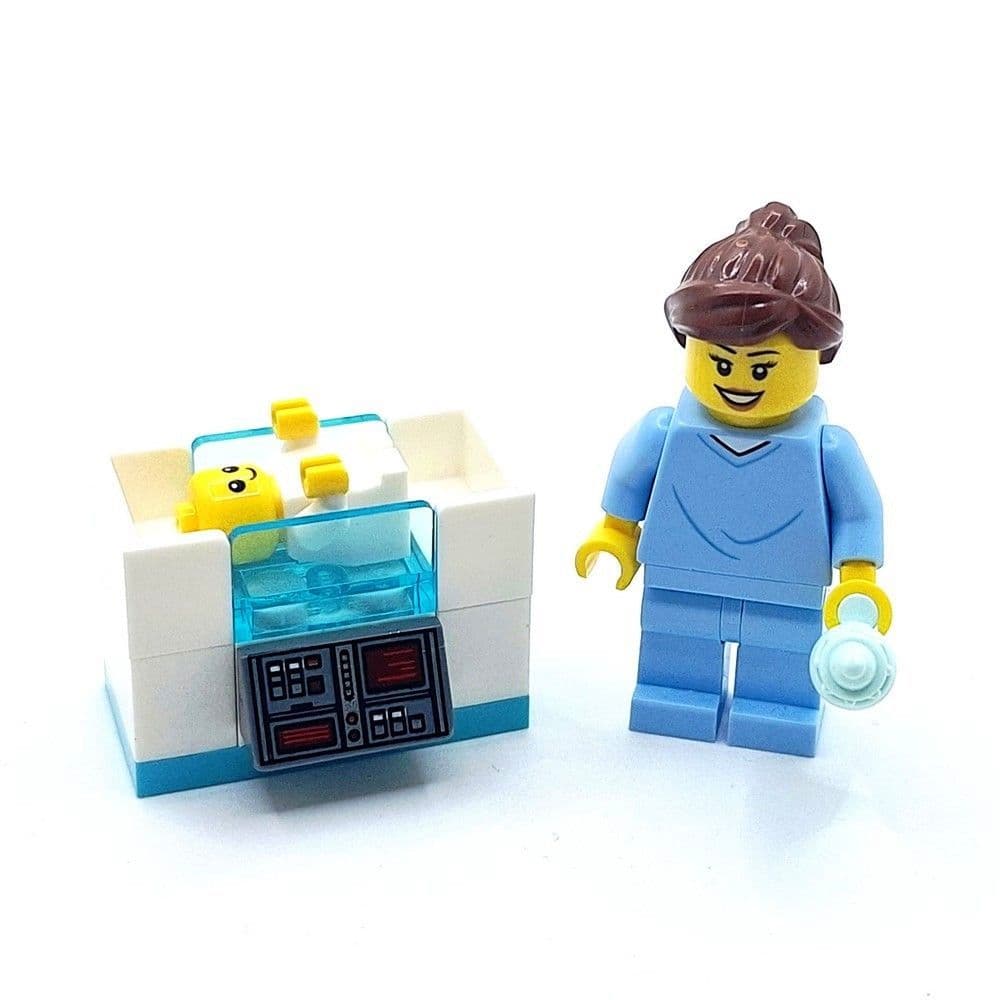
This is the intellectual tradition a LEGO Serious Play facilitator belongs to, and it matters to say so explicitly, because it changes what the job actually looks like. The maieutic facilitator is not neutral in the way a moderator is neutral, they are not indifferent to the quality of what emerges: they are deeply, actively invested in helping genuine insight be born rather than a phantom. Socrates was clear about this too: some interlocutors produce phantoms, ideas that feel real in the moment but dissolve under examination, and the midwife’s job includes testing what has emerged to determine whether it will hold, needs another slap on the butt or, god forbid, an incubator and more serious care. In LSP terms, this is the work of the sharing phase: asking questions that help the builder develop and test the meaning of their model, not to validate it or challenge it personally, but to find out whether it is as substantial as it felt during building.

The maieutic posture requires something that is genuinely difficult even for expert facilitators: the deliberate performance of not-knowing. Socrates called this irony: presenting himself as ignorant, as someone who genuinely needs the other person’s explanation, even when (especially when) he could see exactly where the argument was going. This is not deception, though: it’s a structural technique. When the facilitator performs genuine curiosity about a model — “I don’t understand how this piece connects to this one, can you tell me more?” — they are not pretending to be less intelligent than they are. They are creating the conditions under which the builder has to articulate something they might otherwise have left implicit, and in the articulation, the thinking develops. The question is an invitation to think more precisely.
The hardest application of this principle is the one I flagged in the previous section: facilitating in a domain where you have real expertise. When a participant builds a model that you, as someone who knows the industry, can immediately read — when you can see what the bottleneck is, where the competitive threat is coming from, what the bridge with no other side represents — the maieutic discipline requires you to ask the question anyway. Not because you don’t know, but because your knowing is not the fucking point. It’s not real, it’s not there, until the builder expresses it. It doesn’t matter if you saw it or think you saw it. You have to bring it out. The knowledge that matters in a LEGO Serious Play session is the knowledge that lives in the builders, and your job is to help them find it, not to demonstrate that you already have it. The sophist plays to win. The midwife helps the other person give birth without trying to claim the baby as their own.

2.2. The Holder of the Frame
There is a second role the facilitator plays that is less intellectual and more structural, and it is one that Donald Winnicott describes better than Plato does: the person who creates and maintains the holding environment.

We established last Friday that potential space — the intermediate zone where creativity and genuine strategic thinking become possible — requires conditions of sufficient safety and trust to open. What we didn’t say explicitly is that those conditions don’t maintain themselves: they require someone to hold them in place, actively and continuously, throughout the session. That person is the facilitator.
Holding the frame is not the same as keeping the peace. It is closer to what a good host does at a dinner party where the conversation is getting genuinely interesting: they don’t intervene to stop the argument, but they make sure it stays an argument between ideas rather than between people, that quieter guests are brought in before the conversation narrows, and that the table doesn’t tip over when someone makes a provocative point. The holding environment isn’t comfortable: Winnicott was specific about this. It is safe, which is different. Safety means that the magic circle will be maintained, that the etiquette will be upheld, that no one will be asked to defend a position they took in play mode as if they had taken it in work mode. Comfort doesn’t mean that nothing challenging will happen: it means that something challenging will be allowed to happen and it will be safe to ride the waves, see where they lead us. The two are not the same thing, and a facilitator who confuses them produces sessions that feel pleasant and leave no trace.
In practical terms, holding the frame means several things simultaneously. It means arriving with the session thoroughly designed, because an under-prepared facilitator who is working out the building challenges in real time is spending attention on their own process that should be on the room. It means enforcing the etiquette consistently — especially the rule about questions directed at the model rather than the person — because the moment that boundary is crossed and not named, participants begin to recalibrate how much of themselves is actually safe to put into their models, and the quality of the building drops accordingly. It means managing transitions between phases without rushing them, because the building phase needs to complete its work before the sharing phase can do its own. And it means tolerating, without flinching, the moments when the room goes somewhere uncomfortable, when a model reveals a conflict no one has named, when two participants build incompatible visions of the organisation, when the productive tension that is supposed to generate insight starts to feel more like genuine distress.
That last point is where the holding metaphor earns its weight: the potential space stays open not because the facilitator removes all risk from it, but because their steadiness signals that whatever emerges can be held. If the facilitator is visibly anxious when the session gets difficult — if they rush to smooth over conflict, redirect away from uncomfortable models, or perform cheerful productivity over genuine tension — the room reads that signal immediately and responds by going less deep. The facilitator’s capacity to stay present with what is actually happening, rather than with what they hoped would happen, is the single most important structural property of the holding environment. It cannot be faked, and it cannot be substituted by technique.
But how to achieve it?
Part III: the Art of the Question
3.1. Questions about the Model, never about the Person
The etiquette rule that appears in the open source document — ask questions about the model and the story, not about the person who built it — is presented there as a social convention, a way of keeping the session safe and equitable. It is that, but it is also something more precise: it is the operational translation of the pivot concept we developed last Friday.

When Lev Vygotsky described the pivot — the object that detaches meaning from its material properties and makes it available as a shared concept — the crucial feature was that the meaning lives in the object while it’s being used, not inside the person using it. The stick doesn’t represent the horse in the private world of the child’s mind: it is the horse, in the shared space of the play, and anyone watching can see it. The LEGO model works the same way: the meaning the builder has assigned to it has to be externalised, made visible, made available for examination by everyone in the room, including the builder themselves. This is why a LEGO Serious Play workshop produces insights that participants genuinely couldn’t have generated through conversation: the model shows them something about their own thinking that they couldn’t see while it was still inside their heads.
The moment a question shifts from the model to the person — a grand classic is “why did you build it that way?” rather than “does this piece represent anything?” — the meaning retreats. The builder is no longer examining something in front of them: they are being asked to justify something inside them, which activates a completely different cognitive and social register, one in which defensiveness, self-consciousness, and the political pressures of the work mode all immediately reassert themselves. The magic circle doesn’t survive that shift. The question “why did you build it that way?” is, structurally, an invitation to leave the play frame and re-enter the work frame, and most people will accept that invitation without knowing they’ve done so.
The discipline required of the facilitator is therefore not primarily a social one — it is not mainly about being tactful or non-threatening, though those things matter — it is a cognitive discipline: keeping their own attention, and directing the group’s attention, on what is actually present in the shared space, rather than speculating about what might be present in the individual’s private experience. What does this model show? What story does it tell? What happens if we follow this connection to where it leads? These are questions that develop the meaning that is already visible. They are the facilitator’s primary instrument.
3.2. The Building Challenge as Maieutic Question
If the questions asked during the sharing phase are the facilitator’s moment-to-moment instrument, the building challenge is the instrument they design before entering the room — and it is, in the fullest sense of the term, a maieutic question. It does not contain the answer: it opens up a space in which the answer can emerge, without determining what the answer will be.
If this sounds simple, it isn’t. The building challenge sits on an axis between two failure modes that are mirror images of each other: a challenge that is too open — “build something that represents your experience of this organisation” — produces anxiety rather than building, because there is nothing to push against, no constraint to generate the resistance that Donald Schön described as the material talking back in his The Reflective Practitioner (1983).
The idea is that when you build or design with physical materials, the materials resist or enable certain moves, and that resistance generates reflection. In other words, the material “talks back” by not doing what you expected, which forces you to reconsider your assumptions in real time rather than after the fact.
But if the question is too broad, participants stare at the bricks and feel exposed, because the challenge is so wide that whatever they build will feel like a personal revelation they didn’t consent to making.

On the other hand, a challenge that is too specific — “build the reporting structure of your team” — might produce technical execution rather than reflection, because the answer is already implicit in the question and the building is just its illustration.
Neither of these is a LEGO Serious Play building challenge. The first is an inkblot test. The second is a diagram with extra steps.
The well-designed building challenge sits in the productive middle: specific enough to provide direction and constraint, open enough to allow genuine metaphorical thinking. “Build a model that shows how decisions get made in your organisation” is different from “build the org chart”: it invites the builder to represent a process rather than a structure, which means they have to think about what they actually believe about how power and information move, rather than reproducing the official version. “Build a model of the biggest obstacle between your team and its goal” is different from “build the obstacle”: the possessive does something, asks the builder to locate the obstacle in relation to their own position. These differences are not subtle in their effects: the quality of the building, and the quality of the thinking it generates, changes substantially depending on how precisely the challenge is formulated.
The open source document recommends that facilitators test their building challenges on themselves before every session, even experienced ones. Though I don’t think this is very productive, ’cause you might fall into all sorts of confirmation biases, building your own response to a challenge might take you somewhere unexpected, somewhere that required genuine reflection rather than obvious execution. This will be a sign that the challenge is well-designed. If you can build the answer in thirty seconds without thinking, the challenge is probably too closed. And if you find yourself staring at the bricks with mild existential unease, the challenge is probably too open.
3.3. Holding Productive Tension
There is a version of a well-facilitated LEGO Serious Play session that looks, from the outside, like a pleasant and efficient workshop: everyone builds, everyone shares, the models are interesting, the conversation is warm, and the group arrives at a coherent shared understanding of the topic. This version exists, and when it happens it is genuinely valuable. It is also not the most valuable thing a session can produce.
The most valuable thing a session can produce is a collision, a moment when two models sit next to each other and don’t resolve, when the divergence between how different participants understand the organisation, the challenge, or the future is made visible and has to be reckoned with rather than smoothed over. This collision is what the three imaginations — descriptive, creative, and challenging — are designed to generate between them: the creative imagination proposes, the challenging imagination interrogates, and the tension between them is where original strategic thinking happens. A session in which the challenging imagination is never activated, in which every model is met with appreciation and every divergence is managed into consensus before it has done its work, is a session in which the most important mechanism of the methodology has not functioned.

The facilitator’s job, in these moments, is neither to provoke conflict nor to resolve it, but to hold it in the productive middle, to keep the tension alive long enough for it to generate insight, and to direct it at the models rather than at the people. “These two models seem to be telling different stories about where authority sits in this organisation: can you each say more about what you’re seeing?” is a facilitation move that keeps the divergence in the shared space, grounded in what is visible on the table, available for both parties to examine together. “You seem to disagree with what she said” is a facilitation move that personalises the tension and invites both parties to defend a position rather than examine a model. The first move keeps the magic circle intact. The second begins to collapse it.
Knowing when to surface tension and when to let it sit is the skill that separates a competent LEGO Serious Play facilitator from an excellent one, and it cannot be reduced to a technique. It requires genuine attention to what is happening in the room: whether the silence after a model is shared is the silence of genuine reflection or the silence of suppressed disagreement, whether the agreement that is forming is real shared understanding or the polite consensus that groups produce when they want the conversation to be over. These are not things you can read from a framework. They are things you learn to read from rooms, from the particular quality of attention that a group gives to a model that has disturbed something, from the slight shift when someone builds something that everyone recognises but no one has said out loud before. The holding environment exists to make that moment possible. The facilitator’s job is to recognise it when it arrives, and not to waste it.
Part IV: What the Facilitator must not do
4.1. Never Push an Agenda
There is a version of LEGO Serious Play facilitation that looks, from the outside, indistinguishable from the real thing: the challenges are well-designed, the etiquette is maintained, the building phases run their proper length. The sharing is structured and orderly. And throughout all of it, the facilitator is steering — gently, invisibly, consistently — toward a conclusion they decided on before anyone touched a brick.
This is the kind of LSP I get asked all the time from HR departments. The kind I always have to refuse. “We need to solve this conflict”. “We need to land this bit of hierarchical change.” Nope. LEGO Serious Play can’t push what you need.
The ones doing this are the eristic facilitators: they’re playing to win rather than playing out of curiosity, in the precise sense the Euthydemus established at the beginning of this story. And like the sophist brothers, they are often very good at what they do. The agenda doesn’t have to be cynical: it can be entirely well-intentioned, rooted in a genuine belief that they know what the organisation needs and that the session will be more productive if it gets there efficiently. The effect is the same regardless: when participants sense that the process has a predetermined destination — and they will sense it, even if they can’t articulate how — the autotelic quality of the play mode begins to collapse. The activity stops being its own point and starts being a vehicle for someone else’s point, and people respond to that shift by engaging less honestly, building more carefully, and saying what seems likely to be received well rather than what they actually think.

The insidious thing about agenda-driven facilitation is that it tends to produce sessions that feel successful. The group arrives at a coherent conclusion, the client is satisfied, the facilitator can point to outcomes, HR will call that consultant back the next year. What is invisible in this picture is everything the session didn’t produce: the dissenting model that would have complicated the conclusion but was redirected away from, the collision that would have generated genuine insight but was smoothed into consensus before it could, the participant who built something true and then took it apart because the room’s energy made clear it wasn’t welcome. You cannot measure what didn’t emerge. You can only maintain the discipline of not pushing toward what you already know, and trusting the methodology to find something better.
4.2. Never Interpret the Model
The corollary of the model-grounded questioning rule is that the facilitator never assigns meaning to a model that the builder hasn’t assigned themselves. This sounds obvious, when stated plainly, and is constantly violated in practice, through the ordinary cognitive habits of people who are paid to be insightful.
The failure mode looks like this: a participant builds a model and begins to describe it, and the facilitator — drawing on their knowledge of the organisation, the industry, the dynamics in the room, or simply their own pattern-matching intelligence — can see what the model means. They can see it clearly. And so they help: “so what you’re saying is—” or “it sounds like this represents—” or, the most sophisticated version, a question so leading that it contains the answer: “does this piece represent the way the leadership team tends to close down conversation before it’s finished?” The builder, presented with an efficient interpretation that is plausible and comes from someone in authority, will often accept it. The model now means what the facilitator said it means. The builder’s actual thinking has been replaced by the facilitator’s reading of it, and everyone in the room, including the builder, may be entirely unaware that this has happened.
This is the phantom that Socrates warned about: an idea that feels real — that has the texture and weight of genuine insight — but is actually someone else’s projection wearing the builder’s clothing. The test is simple, though applying it requires genuine discipline: does the meaning of this model come from the builder, in the builder’s words, developed through the builder’s reflection on what they built? Or does it come from somewhere else? If it comes from somewhere else, it isn’t the builder’s knowledge. It’s yours. And your knowledge, however accurate, is not what the methodology is designed to produce.

The hardest application of this — and I will keep returning to this particular difficulty because it is the one I find most demanding in my own practice — is when you are facilitating in a domain you know well. Often, you are right: the builder’s model does represent what you think it represents, your reading is accurate. You still have to ask the open question, wait for the builder to arrive there themselves, and resist the temptation to accelerate the process by offering what you can already see, because the value of the insight is not in its content alone: it is in the fact that it belongs to the builder, that they found it through their own reflection, that they will carry it forward with the conviction of someone who discovered something, rather than the compliance of someone who was told something. The midwife doesn’t deliver the baby and hand it back: she helps the birth happen and steps back only when it’s done.
4.3. Don’t Resolve What Needs to Stay Open
The last failure mode is the quietest and the most human: the facilitator who cannot tolerate unresolved tension and moves to close it before it has done its work.
This is not cowardice in the ordinary sense, because it rarely feels like avoidance when you’re experiencing it. It’s more like an engineer’s urge to fix stuff, through good facilitation this time: the group seems to be going in circles, so you help them find the synthesis; the energy is dropping, so you move to the next phase; two participants are building in different directions, so you find the framing that contains both of their models. Each of these moves is sometimes right. The problem is when the facilitator’s need for resolution overrides their attention to whether the group has actually finished with the tension they’re in.
The most common version of this in LEGO Serious Play sessions, and you will only get this if you’re a trainer facilitator yourself, is the premature shared model. The methodology includes a phase in which participants might move from individual models to a collective one, building together a shared representation of whatever the session is exploring. This phase is powerful and structurally important, it might be where the separate insights produced by individual building get integrated into something the group can own together. It is also the phase most vulnerable to premature resolution, because the collective building requires negotiation, and negotiation has a natural tendency to produce the lowest common denominator of the group’s actual thinking: the model that no one objects to, rather than the model that best represents what the group collectively knows.
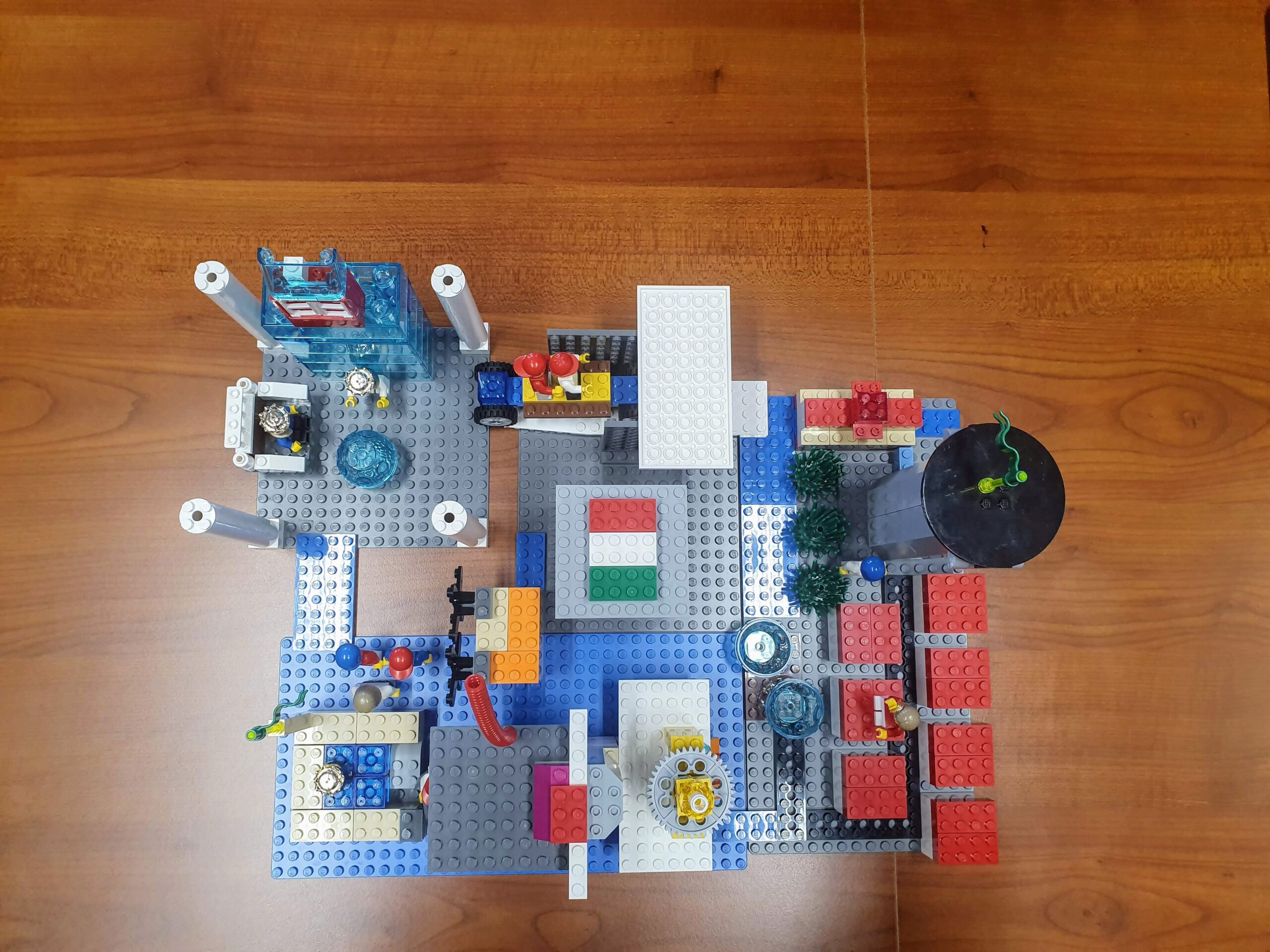
The facilitator who moves to the shared model before the individual divergences have been fully surfaced and examined is skipping the most generative part of the process. The collision between incompatible individual models is not an obstacle to the shared model: it is the raw material from which a genuinely useful shared model gets made. Resolving it too early doesn’t produce integration: it produces the appearance of integration, a polished surface over unresolved differences that will reassert themselves the moment the session ends and people go back to work.
Sitting with unresolved tension is the discipline the facilitator needs most and is trained for least. It requires believing, against the evidence of a room that looks uncomfortable, that the discomfort is productive, that the group is not failing to converge but merely thinking. It requires resisting the very strong social pressure that groups generate toward resolution, a pressure that is aimed at the facilitator as much as anyone else in the room, if not more. And it requires a specific kind of confidence: not the confidence of someone who knows the answer, but the confidence of someone who trusts the process enough to let it run without intervening. That confidence, like the holding environment itself, cannot be performed. It has to be real.
Conclusion: LSP Facilitation is the Discipline of Restraint
The Euthydemus ends inconclusively, as Platonic dialogues tend to do: Socrates has demonstrated, through the long and somewhat exhausting encounter with the sophist brothers, that there is a difference between playing to win and playing out of curiosity, but he hasn’t resolved it into a neat formula, and Crito, his interlocutor in the framing scenes, is still not entirely sure he can tell the difference between Socrates and the sophists from the outside. This is intentional, unless we think Plato was an idiot. The difference between eristic play and serious play is not always visible in the form of what someone does: it lives in the intent behind it, in what the player is actually oriented toward, and that is not something you can verify from a distance.
The same is true of facilitation in the LEGO Serious Play methodology. From the outside, a session run by a facilitator who is genuinely holding the space and one run by a facilitator who is steering toward a predetermined conclusion can look remarkably similar. The building challenges are posed. The models are built. The sharing happens. The etiquette is maintained, more or less. What differs is invisible to an observer who doesn’t know what to look for: the quality of the questions, the moment when a divergence was allowed to sit rather than resolved, the model that was built and taken apart and built again differently because the builder felt safe enough to change their mind in public. These are not things that you need to be careful during the session: they are the session.

What makes the difference, in the end, isn’t technique: it’s the facilitator’s genuine orientation toward the knowledge that lives in the room rather than the knowledge they brought into it. It’s their willingness to be, in the fullest sense of Socrates’ image, a midwife: someone whose job is complete when the birth has happened, who does not need to have delivered the insight themselves to consider the session a success, and who is capable of walking out of the room without having said the most interesting thing in it.
This, for people who are intelligent and knowledgeable, and accustomed to being valued for those qualities, is genuinely difficult. It is a discipline of restraint that runs against most of the professional habits that got them into a room worth facilitating in the first place. And it is, I would argue, the most interesting skill in the methodology, more interesting than building challenge design, more interesting than reading group dynamics, more interesting than understanding the theoretical apparatus this series has spent four articles constructing. Because it is not a skill you can learn from a framework. It is a practice you have to develop in rooms, with real people, with the bricks on the table and the tension in the air and the very strong temptation to just tell them what you can already see. And it’s all about learning to trust yourself, and to respect that people will find their way at their own pace. And it’s a lot.
The Socratic irony, it turns out, requires courage. Pretending not to know, when you think you do know, and waiting — genuinely waiting, without engineering the outcome — for the other person to find it themselves. That is what a LEGO Serious Play facilitator does, when they do it well. And that, finally, is what Plato was getting at.




No Comments