"All this he saw, for one moment breathless and intense, vivid on the morning sky; and still, as he looked, he lived; and still, as he lived, he wondered."

Lolly Willowes

Sylvia Townsend Warner is one of the most interesting literary figures of the 21st century, and Lolly Willowes is one of her finest works, even more stunning if you think it was her debut novel. Self-supporting, intellectually independent, and consistently sceptical of social and religious rules that constrained women, her work exposes the pressure of family pieties, patriarchal authority, and women’s enforced dependence through stories that aren’t slogans and where rebellion is psychologically constructed as the only alternative. On a side note, Warner openly lived in a lesbian partnership and wrote fiction in which same-sex love is a continuum with women’s solidarity, dissent, and desire, and part of an emotional and political stance.

Lolly Willowes, in particular, is an absolutely delightful novella in three parts, first about a young woman who never marries and is eventually cornered into leaving the countryside for a dull life in the city, then we follow her as she turns from Laura into Aunt Lolly, a tame and useful spinster who helps around the house and behaves as expected. Eventually, Laura isn’t that woman, and this turns into an origin story about how society, and the habit of taking women for granted, leaves you just one viable option: to embrace witchcraft and seek liberation in the Devil.

It’s often labelled as satirical, but I don’t think it is. On the contrary, it’s very delicate and plausible and subtle

Spooktober

Spooktober 13 – The Yellow Mask (4)

Chapter V. Of all the persons who had been present, in any capacity, at the Marquis Melani’s ball, the earliest riser on the morning after it was Nanina. The agitation produced by the strange events in which she had been concerned destroyed the very idea of

Read More »
Spooktober

Spooktober 12 – The Yellow Mask (3)

Continues from yesterday… PART THIRD. Chapter I. About eight months after the Countess d’Ascoli had been laid in her grave in the Campo Santo, two reports were circulated through the gay world of Pisa, which excited curiosity and awakened expectation everywhere. The first report announced that

Read More »
books and literature

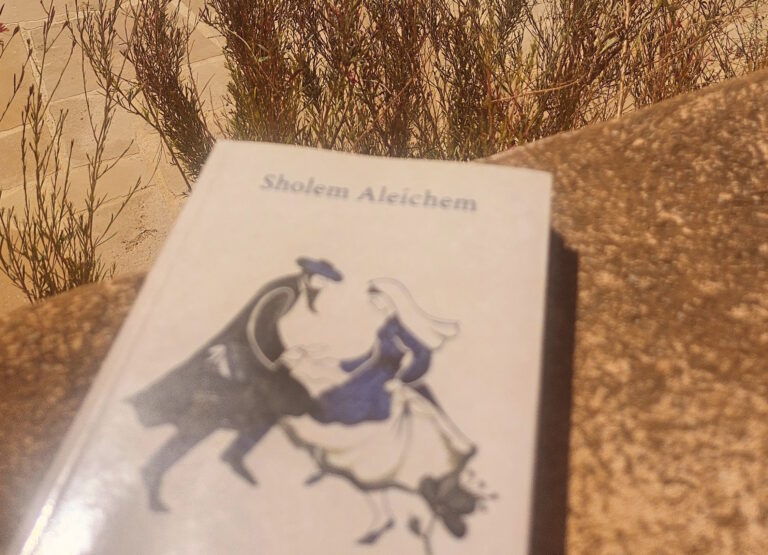
Sholem Aleichem’s Moshkele the Thief

Sholem Aleichem (1859–1916) was the most popular and influential writer in modern Yiddish literature, best known for creating Tevye the Dairyman, who inspired the popular musical Fiddler on the Roof. He wrote novels, short stories, plays, and epistolary satire that captured the life, particular humour,

Read More »
Share on LinkedIn
Throw on Reddit
Roll on Tumblr
Mail it
No Comments

Post A Comment

This site uses Akismet to reduce spam. Learn how your comment data is processed.

RELATED POSTS

Spooktober 13 – The Yellow Mask (4)

Chapter V. Of all the persons who had been present, in any capacity, at the Marquis Melani’s ball, the earliest riser on the morning after it was Nanina. The agitation produced by the strange events in which she had been concerned destroyed the very idea of

Read More

Spooktober 12 – The Yellow Mask (3)

Continues from yesterday… PART THIRD. Chapter I. About eight months after the Countess d’Ascoli had been laid in her grave in the Campo Santo, two reports were circulated through the gay world of Pisa, which excited curiosity and awakened expectation everywhere. The first report announced that

Read More

Sholem Aleichem’s Moshkele the Thief

Sholem Aleichem (1859–1916) was the most popular and influential writer in modern Yiddish literature, best known for creating Tevye the Dairyman, who inspired the popular musical Fiddler on the Roof. He wrote novels, short stories, plays, and epistolary satire that captured the life, particular humour,

Read More