
In a city that often hides its wonders behind unassuming façades, Casa degli Atellani is a palimpsest of Milan’s most profound historical, artistic, and architectural evolutions. And yet, this house — steeped in stories from the Sforza court to the 20th-century architectural revival — is now closed to the public, bought by Bernard “Louis Vuitton” Arnault and rumoured to be transformed into a luxury hotel. It would be hypocritical on my side to be against luxury hotels, but this quiet closure risks erasing not only a cultural treasure but also the complex and layered narrative it embodies, so let’s see why the house is important and hope this will guide the designers while they try to add one more layer.
And yet I’m so angry the house isn’t open anymore. Casa degli Atellani is not just a beautiful Renaissance residence; it is a living document of Milan’s shifting identity — from ducal ambitions and Leonardo da Vinci’s vineyard, to the recovery of Lombard frescoes and Piero Portaluppi’s architectural interventions. To lose its accessibility is to flatten a multidimensional history into a marketable surface. This blog piece invites you to dress in black, darken your face, and come with me to explore Casa degli Atellani’s layered history. We’ll see why every one of those layers — political, artistic, architectural — deserves to be both preserved and reinterpreted, not to fossilise the past but to honour its cumulative value, understanding that the addition of a new layer should be an act of cultural dialogue, not cultural overwrite.
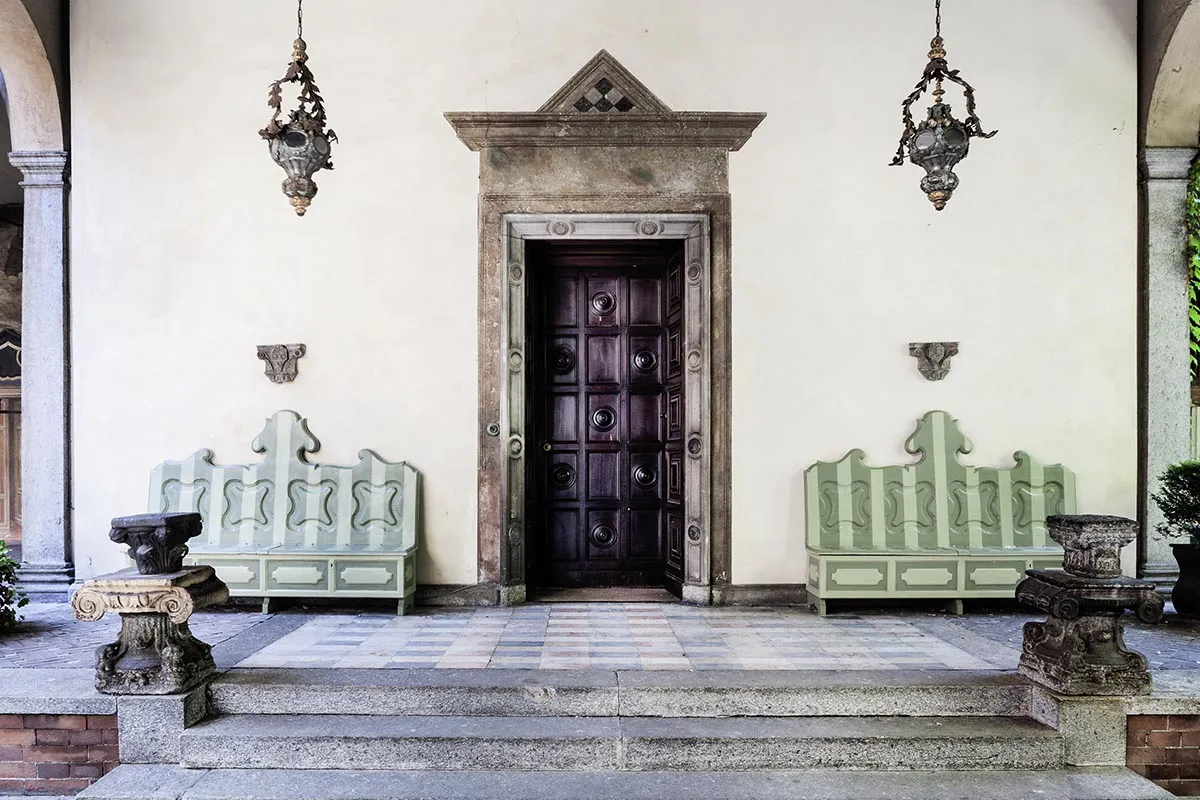
Casa degli Atellani is situated in corso Magenta 65, in the historical Porta Vercellina sestriere.

1. Early Origins: the Atellani Family and the Renaissance Context
To understand the significance of Casa degli Atellani, one must first immerse oneself in the social and political atmosphere of late 15th-century Milan. This was a city on the brink of transformation, poised between medieval urbanism and the Renaissance’s humanist aspirations. At the heart of this transition stood the Sforza dynasty, particularly Ludovico Maria Sforza — better known as Ludovico il Moro because of his dark complexion — whose vision was to establish Milan as a centre of art, science, and refined court culture.

A Gift of Power and Allegiance
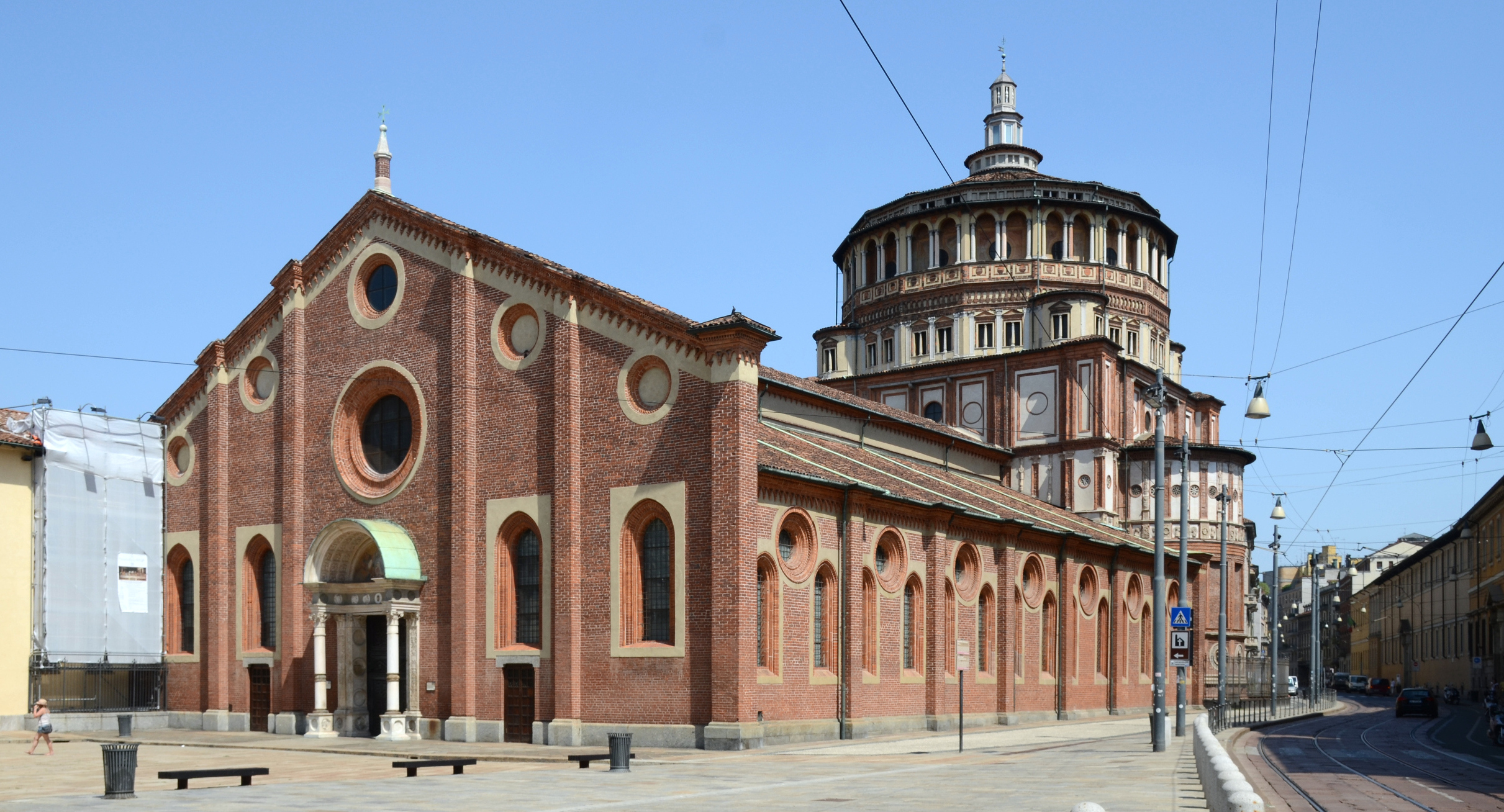
Casa degli Atellani owes its name to the Atellani family, a noble lineage of southern origin, possibly from Atella in Campania. The family had risen to prominence in Milan as loyalists to the Sforza and, in 1490, Ludovico il Moro donated the surrounding land and the existing residence to Giacometto of the Atellani family, as a political reward and a way of securing allegiance. The house stood on what was then a key thoroughfare in the emerging urban network near Porta Vercellina, just across from Santa Maria delle Grazie, the church and Dominican convent that Ludovico was ambitiously renovating.
The proximity was no accident. Ludovico sought to create an ideal courtly neighbourhood, a symbolic and physical extension of his power. By placing trusted allies in strategic residences, he was building both a literal and ideological fortification around his most cherished projects — Santa Maria delle Grazie — where he would later be a patron for Leonardo da Vinci’s Last Supper.
Architectural Roots: a Milanese Typology
The original structure of the house reflected a late Gothic-Renaissance hybrid, a style not uncommon in Milan during the 15th century. It likely featured a corte nobile (noble courtyard), arcades, and decorative frescoes, that served not only residential but also representative functions. Unlike the Florentine palazzo typology, the Milanese residence of this period integrated urban domesticity with strategic display, often oriented toward internal gardens or vineyards, and made for social diplomacy as much as for family life.
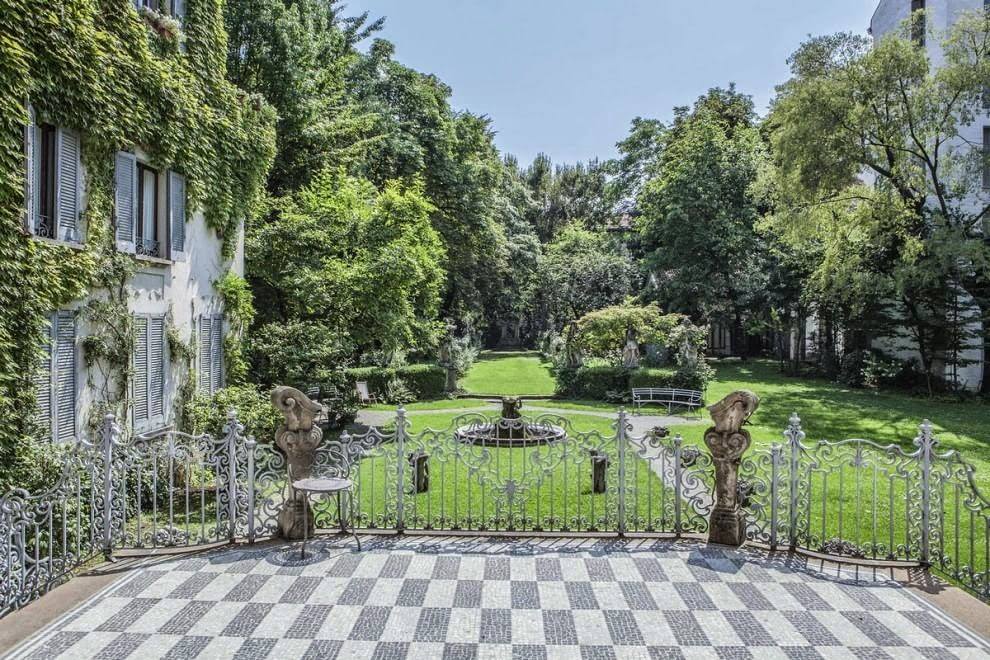
Although much of the early structure has since been altered or restored (more on that later), traces of the original configuration remain: the garden layout, which would later host Leonardo’s vineyard, reflects these Renaissance spatial principles: nature, order, and social prestige interwoven into the very fabric of the residence.

The Role of the Court and Urban Identity
At the end of the 15th century, Milan was not just a city of merchants and artisans: it was a court city. With Ludovico il Moro assuming de facto power in 1480 and then officially becoming Duke in 1494, the need for an elite, educated, and loyal class to embody his cultural project became central. The Atellani family was part of this effort.
In this sense, Casa degli Atellani was never a neutral space; it was a political artefact. Its location, ownership, and architectural language contributed to a network that sought to root the Sforza vision into the geography of Milan in ways we’ll see better in a while. Through this lens, the house represents not only private memory but also a foundational layer in the city’s public identity, which we still witness today.
2. Ludovico il Moro and the Dream of a Cultural Capital
In the final decades of the 15th century, Milan emerged as a powerful and cosmopolitan city-state, seeking to rival Florence, Venice, and Rome not only in military and economic power but also in cultural ambition. Central to this transformation was Ludovico Maria Sforza, known as il Moro, who wielded extraordinary influence even before officially ascending to the ducal throne in 1494. A patron of the arts and a shrewd political operator, Ludovico sought to recast Milan as the heart of the Italian Renaissance, a project in which Casa degli Atellani played a surprisingly deliberate role.
Santa Maria delle Grazie: Monument of Power and Legacy
The cornerstone of Ludovico’s cultural strategy was Santa Maria delle Grazie, a Dominican convent and church that he transformed from a modest Gothic structure into one of the most celebrated Renaissance landmarks in Europe. Construction of the new tribune began in the 1490s, entrusted to Donato Bramante, and the refectory was destined to host Leonardo da Vinci’s monumental Ultima Cena, a symbolic masterpiece representing divine order, dynastic legitimacy, and intellectual virtuosity.
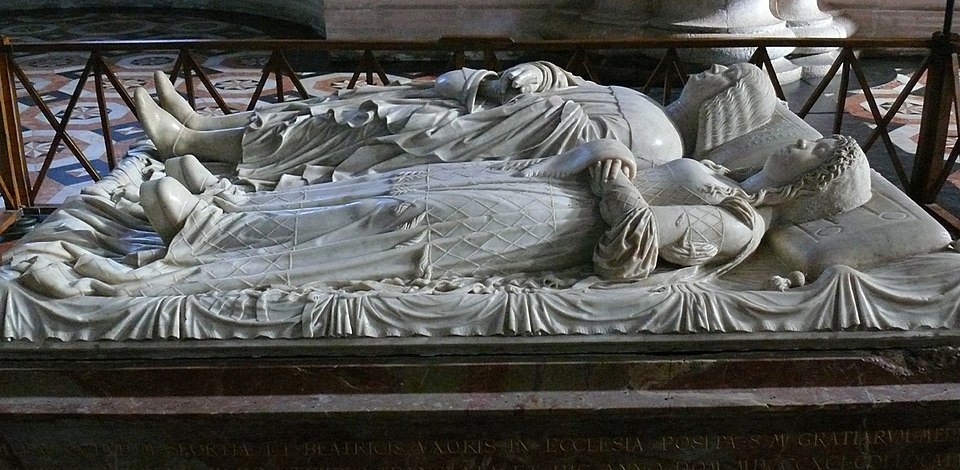
Ludovico’s motivations for such patronage were not purely aesthetic. His wife, Beatrice d’Este, was buried in the church, and it was widely believed that Ludovico intended it as a dynastic mausoleum for the Sforza family. Thus, Santa Maria delle Grazie became a locus of spiritual, political, and artistic energy, carefully calibrated to legitimize his rule in the eyes of both the Milanese and the broader Italian elite.
A Courtly Microcosm: The Urban Choreography of Power
Casa degli Atellani, located directly across the street from Santa Maria delle Grazie, was not an incidental neighbour, as we were seeing. It was part of a curated urban landscape, a deliberate weaving of noble residences into the orbit of the ducal complex. Ludovico granting the house to Giacometto degli Atellani, a courtier loyal to the Sforza ruling, signalled a strategy of consolidating allegiance through spatial proximity and architectural patronage, and also secured indirect control over the area, which wouldn’t be allowed to develop in directions not approved by the central aesthetic rule of the Sforzas.
This gesture had a twofold significance. Alongside embedding the Atellani family within the visual and social perimeter of the Duke’s most important architectural investment, it aligned private domesticity with public spectacle, a characteristic Milan would never, ever lose. The Atellani residence functioned not just as a home but as a courtly satellite, participating in Ludovico’s project to re-script Milan’s civic identity through art and urbanism.
From Residence to Representation
By placing a trusted family within Casa degli Atellani — in such close dialogue with Santa Maria delle Grazie — Ludovico blurred the boundaries between statecraft and stagecraft. The street itself became a corridor of influence where every structure, façade, and fresco reinforced a shared narrative of cultural ascendancy and political stability. In a way, this early form of urban branding mirrored the visual coherence of other Renaissance cities — such as the Medici’s Florence — but with a distinctly Milanese flavor, grounded in innovation, courtly diplomacy, and architectural fusion. Don’t forget that the castle is just a stone’s throw from there.
This interweaving of art, architecture, and ideology found its apex in Leonardo da Vinci’s presence in Milan. His work at the convent and his simultaneous ownership of a vineyard directly behind Casa degli Atellani (we’ll get to that in a moment) reveal the full extent to which Ludovico il Moro had constructed a cultural ecosystem: one in which the sacred, the domestic, and the artistic existed in choreographed interdependence.

3. Leonardo’s Vineyard: a Living Fragment of how the Economy Worked
Few places can claim a tangible connection to Leonardo da Vinci that extends beyond canvas and invention. Yet behind the walls of Casa degli Atellani, nestled in a quiet urban garden, lay a small parcel of land that tells an extraordinary story: the vineyard gifted to Leonardo by Ludovico il Moro in 1498. Although not the original vineyard, this modest stretch of soil has been reconstructed to signify centuries of transformation, rediscovery, and even destruction, emerging as one of the most intimate relics of Renaissance history. How did that happen, and why would an intellectual want a vineyard? First things first.

A Ducal Gift Amid Crisis
The vineyard was granted to Leonardo at a critical moment. In 1498, as he was completing The Last Supper in the refectory of Santa Maria delle Grazie, tensions were rising across the Italian peninsula. Ludovico il Moro, then at the peak of his power, sought to retain Leonardo in Milan despite political turbulence, and he wouldn’t have it. The gift of a 16-perch vineyard (roughly 8,000 square meters) was both a reward and a strategic gesture, land being among the most prestigious and enduring currencies of gratitude and status. Think about it. Nowadays, they give you money and you can invest it safely and effortlessly through a bank, but back in those days, banks were being invented. Literally. A piece of land was a strategic asset that would grant the kind of annuity, a regular and steady income, you would never have without being of noble birth.
Located directly behind what is now Casa degli Atellani, the vineyard symbolically anchored Leonardo to Milan. It is a revealing detail: Leonardo, an itinerant genius, was offered not gold, not titles, but something agricultural and eternal. The vineyard subtly reinforced Ludovico’s own self-image as a refined and generous patron, cultivating minds and vines alike, and the metaphor wouldn’t have been lost on Leonardo himself.
As we know, it didn’t work. Leonardo packed up his most precious belongings and left Milan in 1499, shortly after the French forces invaded and Ludovico was deposed.

A Disappearance and a Rediscovery
For centuries, the vineyard vanished from public consciousness. Changing ownerships, urban developments, and war all conspired to obscure its physical trace. As we’ll see, its rediscovery is due to Piero Portaluppi in 1920, who did a restoration of Casa degli Atellani and became aware of archival references to the land grant and its topographical clues. Though the vineyard was no longer visible, its story lingered beneath the surface, literally.
It was not until 2015, during preparations for Expo Milano, that the vineyard was scientifically reconstructed. Researchers from the University of Milan, led by Professor Attilio Scienza, conducted soil and DNA analysis to identify the original Malvasia di Candia Aromatica vines that had once grown there. Using historical documents and biological matching, they were able to replant Leonardo’s vineyard exactly as it had been, reintroducing a living element of his world into the 21st century. The vineyard became not only a tribute to Leonardo’s polymathy, which included deep botanical and agricultural knowledge, but also a symbol of continuity: a living organism reclaimed from archival silence.

4. From Renaissance Splendour to Modern Revival: between the 16th and 20th Centuries
While Casa degli Atellani is renowned for its Renaissance origins and its association with figures like Ludovico il Moro and Leonardo da Vinci, its journey through the subsequent centuries is equally compelling. This period saw the residence transition through various phases, reflecting the broader socio-political and architectural evolutions of Milan.
Post-Sforza Transitions and Changing Ownership
Following the death of Francesco II Sforza in 1535, the last Duke of Milan from the Sforza lineage, the duchy fell under Spanish control, as it was incorporated into the Habsburg Empire ruled by Charles V and subsequently Philip II of Spain. The fall of the Sforza dynasty marked a turning point not only for Milan as a duchy but also for the constellation of urban palaces and noble houses that had thrived under their patronage, including Casa degli Atellani, whose owning family began its long descent into relative obscurity.
Milan ushered in centuries of foreign rule, court structures were reshaped under Spanish absolutism, and the symbolic value of properties like the Atellani residence shifted from being active nodes of power to passive remnants of a previous ruling. The house changed ownership several times between the 17th and 19th centuries. After the Atellani family faded from prominence, the property was transferred to the Taverna family, one of the noble lineages that had gained favour under Spanish and later Austrian Habsburg administration. The Taverna maintained the house as a private dwelling, though little is recorded about any significant architectural or artistic modifications during this period.
By the 18th century, the building passed into the hands of the Pianca family, and later the Martini di Cigala, indicating its continued function as an elite residence, albeit increasingly detached from the cultural vanguard it once represented. During these centuries, the house followed the typical arc of many Milanese noble residences: maintaining its basic structure and aristocratic identity, while gradually being adapted to more domestic, and sometimes even fragmented, uses. Some rooms were rented, subdivided, or repurposed for utilitarian functions, as Milan itself grew denser.
What is striking is how the house managed to retain its architectural skeleton despite these transformations. Unlike other residences of its kind, Casa degli Atellani was not destroyed, absorbed into larger complexes, or completely remodelled in the neoclassical or eclectic styles of the 18th and 19th centuries. This relative architectural continuity may be attributed to a combination of luck, location, and discreet custodianship by private owners with an appreciation — if not always an active interest — in its historic value.

19th-Century Modifications and Neoclassical Influences
As Milan emerged from Napoleonic rule and entered the complex fabric of Austrian-controlled Lombardy-Venetia, the 19th century brought a wave of architectural transformations that reflected not just stylistic shifts but also a redefinition of civic identity. Neoclassicism — characterised by its orderly proportions, Greco-Roman motifs, and urban decorum — had become the architectural language of the empire, seeking to signify enlightenment and bourgeois modernity. Within this shifting aesthetic and political landscape, Casa degli Atellani underwent subtle but telling modifications that mirrored Milan’s own transformation from courtly capital to modern city.
The house, now owned by the Martini di Cigala family, was subject to internal reorganisations and exterior alterations aimed at aligning the ageing Renaissance structure with contemporary tastes. Though not radically overhauled, the building saw the injection of neoclassical vocabulary: smoother wall finishes, restrained stucco ornamentation, and possibly even modifications to fenestration and cornices to reflect more “rational” 19th-century ideals of balance and composure.
While exact documentation of every intervention is scarce, records suggest that a Milanese architect named Carlo Aspari, active in the early 1800s, was responsible for overseeing minor restorations and façade adjustments around 1823. His approach — typical of the time and unfortunately not just that time — was not to preserve Renaissance irregularities but to standardise and idealise. Decorative frescoes were often painted over or removed entirely, considered out of step with the sober elegance prized by 19th-century elites. This was a period when historical awareness had not yet developed into systematic conservation; the past was frequently aestheticised or erased in order to suit the values of the present.
In the broader urban context, the house began to suffer from its increasingly peripheral location within a changing cityscape. With the emergence of new civic centres around La Scala and Piazza del Duomo, the Corso Magenta district lost its centrality. The once-symbolic proximity to Santa Maria delle Grazie no longer held the same political or cultural charge. At the same time, maybe for this specific reason, the house avoided the drastic fate of many Milanese residences that were demolished or rebuilt to accommodate bourgeois apartment blocks, new commercial functions.
The 19th century marks a paradoxical chapter in the life of the house. On one hand, it underwent erasures, refinements, and functional reorientations that distanced it from its Renaissance essence; on the other, it persisted, architecturally recognisable and structurally intact, as Milan reshaped itself into a modern metropolis. Enter 20th-century historians and architect Piero Portaluppi.
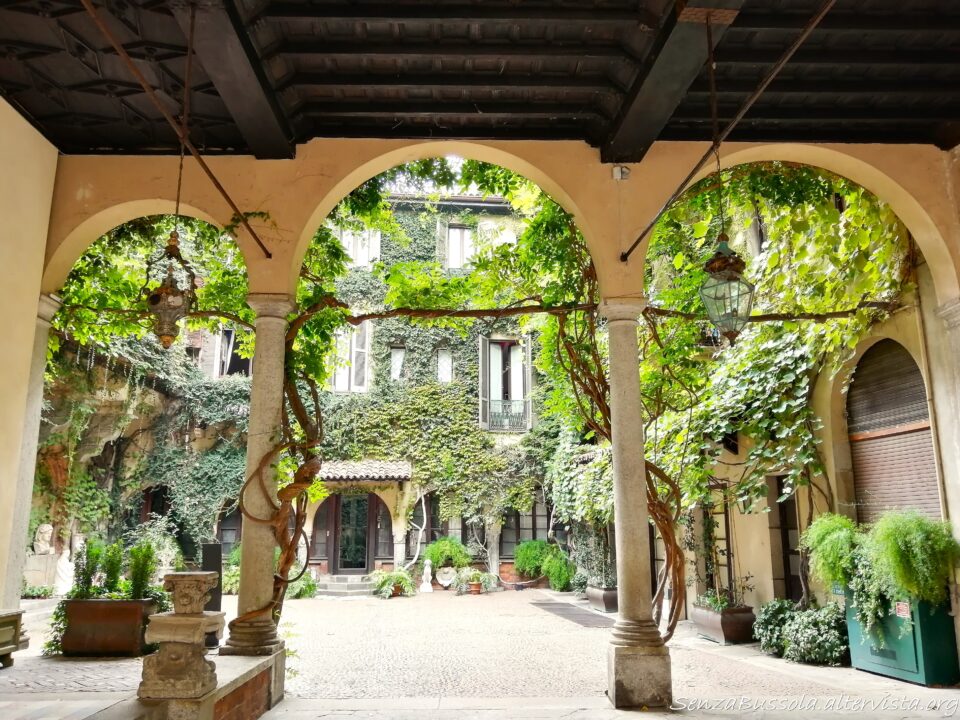
5. Portaluppi’s 20th-Century Revival: Modern Memory
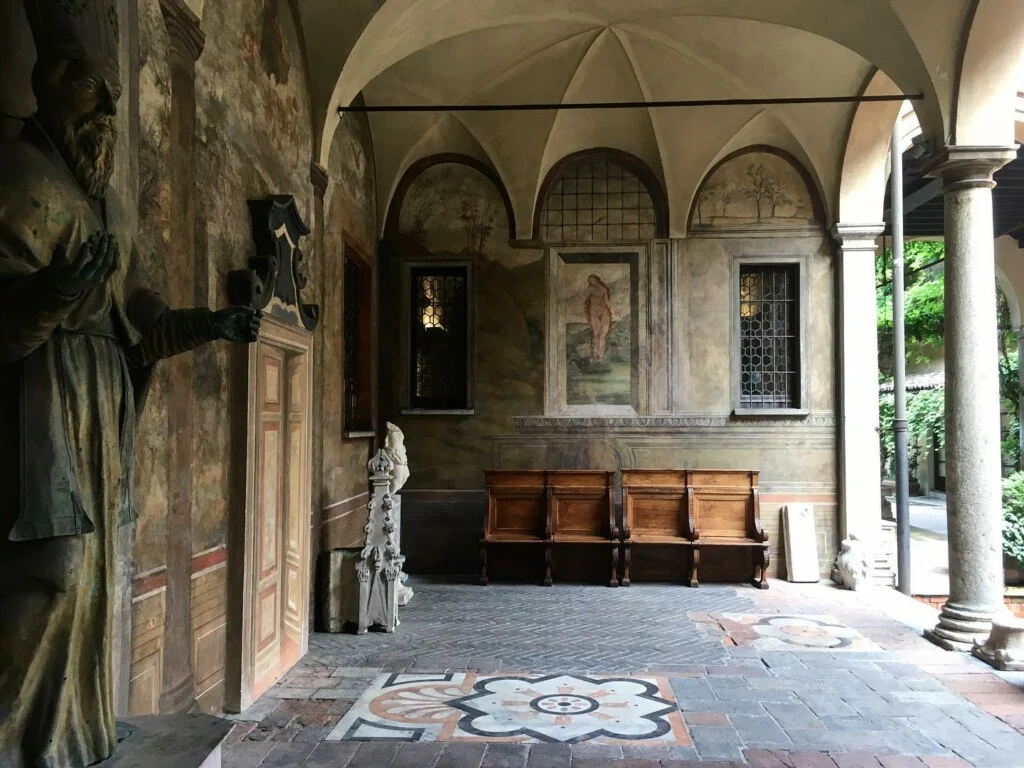
By the early 20th century, Casa degli Atellani had become a faded aristocratic residence, standing awkwardly between historical significance and urban anonymity. Yet it was precisely this fragile equilibrium — its partial erasure and surviving fragments — that made the house a fertile ground for architectural rebirth. That opportunity was seized by Piero Portaluppi, the visionary Milanese architect whose 1920s intervention transformed Casa degli Atellani into a dialogic space where Renaissance heritage and modern sensibility could coexist.

A Commission Rooted in Legacy
The revival of the house began when Senator Ettore Conti, a prominent industrialist and patron of the arts, purchased the residence in 1919. Conti, who married Portaluppi’s daughter, wanted to reclaim the home not as a museum but as a residence for an enlightened bourgeoisie, one that embraced both tradition and innovation. Portaluppi, already an acclaimed architect known for blending historical reference with modern geometry, was the perfect agent for this transformation, aside from being family, which is always very prized by the Milanese middle class when it comes to business.
His renovation, completed through the 1920s and early 1930s, was not a faithful restoration in the narrow sense, nor a full-on modernisation. Instead, it was an exercise in architectural interpretation, a curated reconstruction of the Renaissance filtered through a 20th-century eye, and deeply aware of the theatrical potential of history.
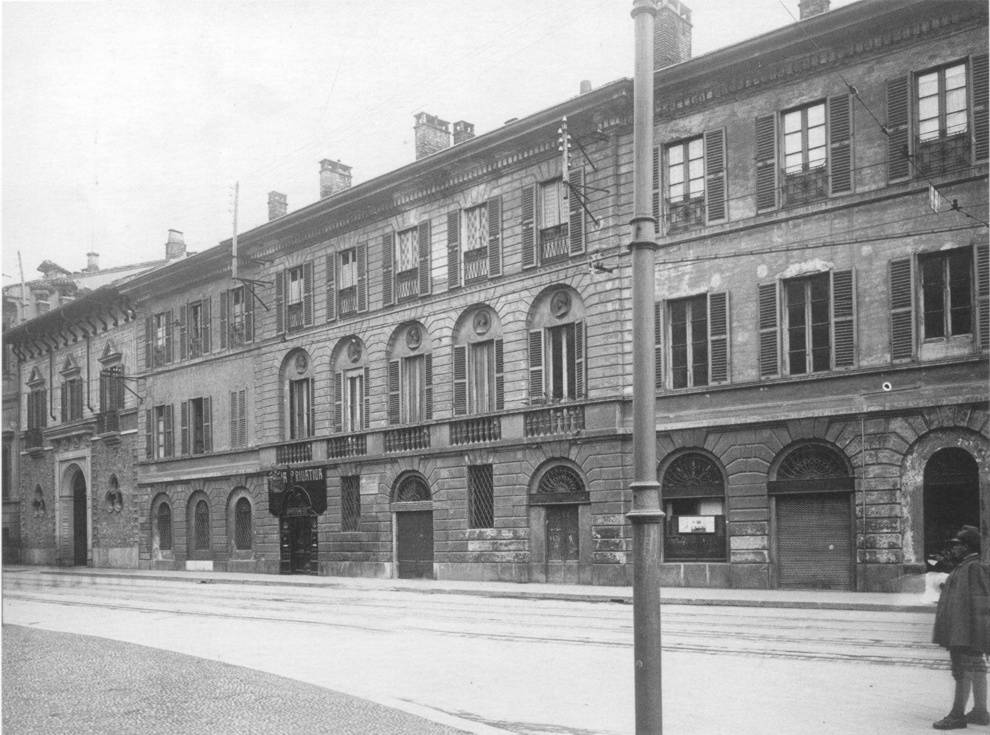
A Layered Architectural Language
Portaluppi’s interventions were sophisticated and varied. He reorganised the plan of the house, unifying previously fragmented rooms and courtyards to recreate a coherent flow between public and private spaces. Rather than simply rebuilding what had been lost, he constructed a new narrative of continuity, one that was respectful of the Renaissance origins but infused with modern elegance.
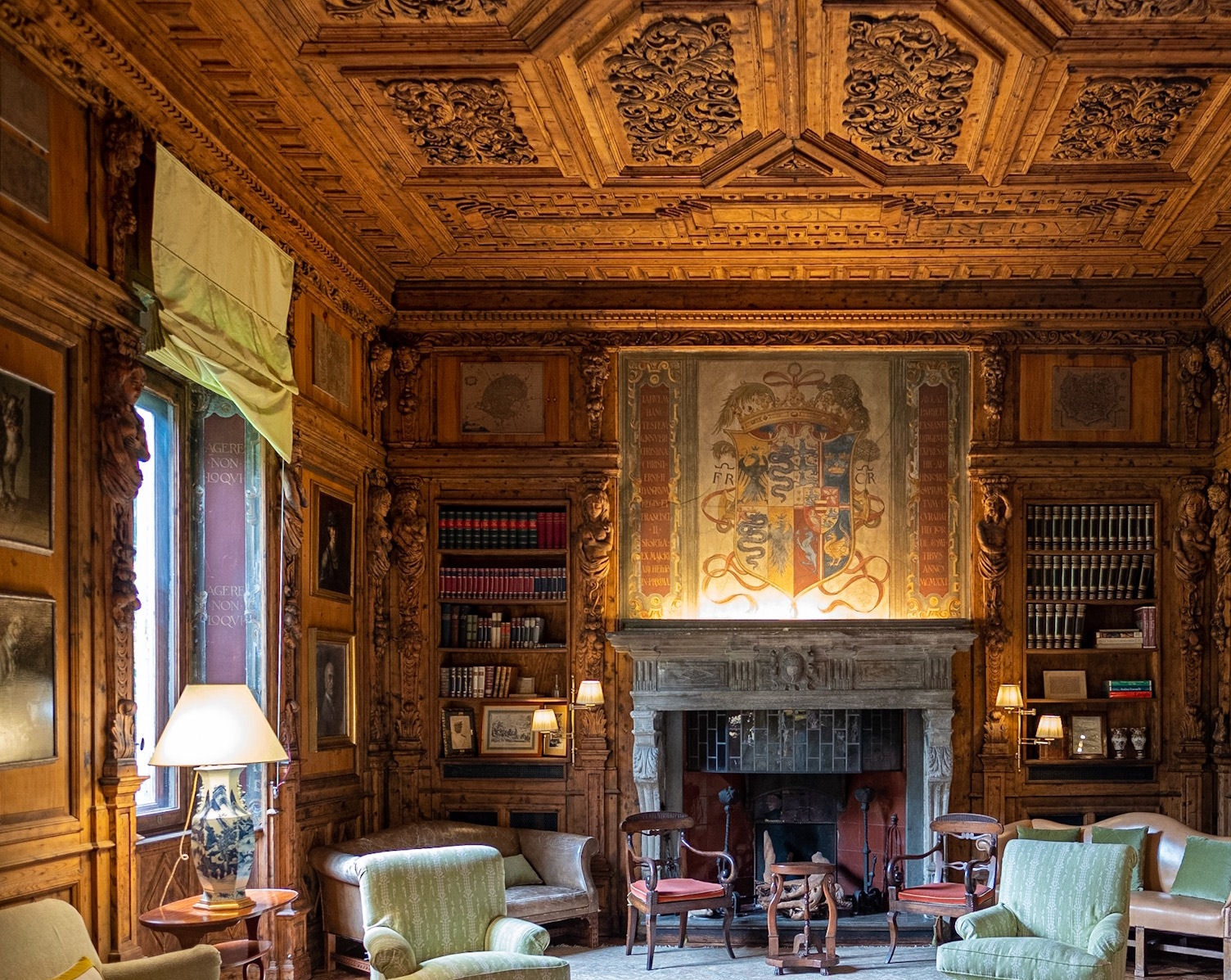
The decorative language he employed was rich in irony and symbolism: ceilings were coffered in geometric patterns inspired by Renaissance motifs but executed with crisp, modern lines; frescoes were uncovered, conserved, or carefully simulated where necessary. Portaluppi also designed custom furnishings and metalwork for the house, often incorporating stylised astronomical symbols — his signature theme — as a subtle reminder that time and memory were the building blocks of this new domestic mythology. His architectural idiom balanced historicist quotation with rationalist formality, making Casa degli Atellani an early case of what would later be recognised as critical regionalism: an approach to design that neither rejected modernism nor blindly mimicked the past, but instead used the local architectural language as a site of creative tension.
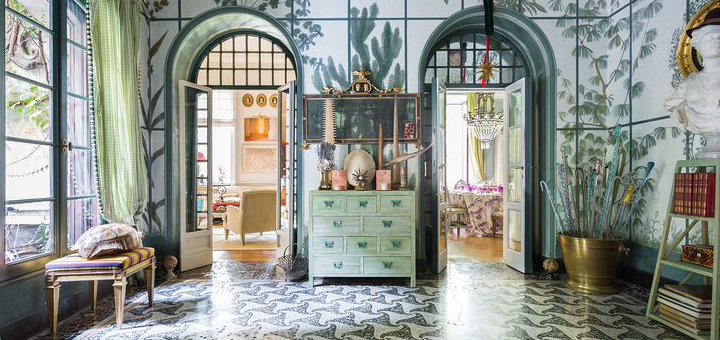
The Architecture of Memory and the Urban Ethos
Portaluppi’s renovation also reflected broader currents in interwar Italy, where architects and intellectuals debated the role of national identity, tradition, and modernity. While some contemporaries pursued a purist classical revival or radical futurism, Portaluppi carved a middle path, one that placed memory at the heart of modern architecture. He saw in Casa degli Atellani a vessel for cultural continuity, and in his own work, a responsibility to re-stitch time. That’s probably why he preserved key elements — stone portals, terracotta cornices, fresco fragments — but recomposed them in a way that invited the viewer to engage with history not as a static backdrop but as a living structure, open to reinterpretation. One of the most significant outcomes of this process was the rediscovery of Renaissance frescoes, including works attributed to Bernardino Luini, a disciple of Leonardo da Vinci. Their delicate figuration, re-emerging after centuries under whitewash and soot, became emblematic of the house’s transformation.
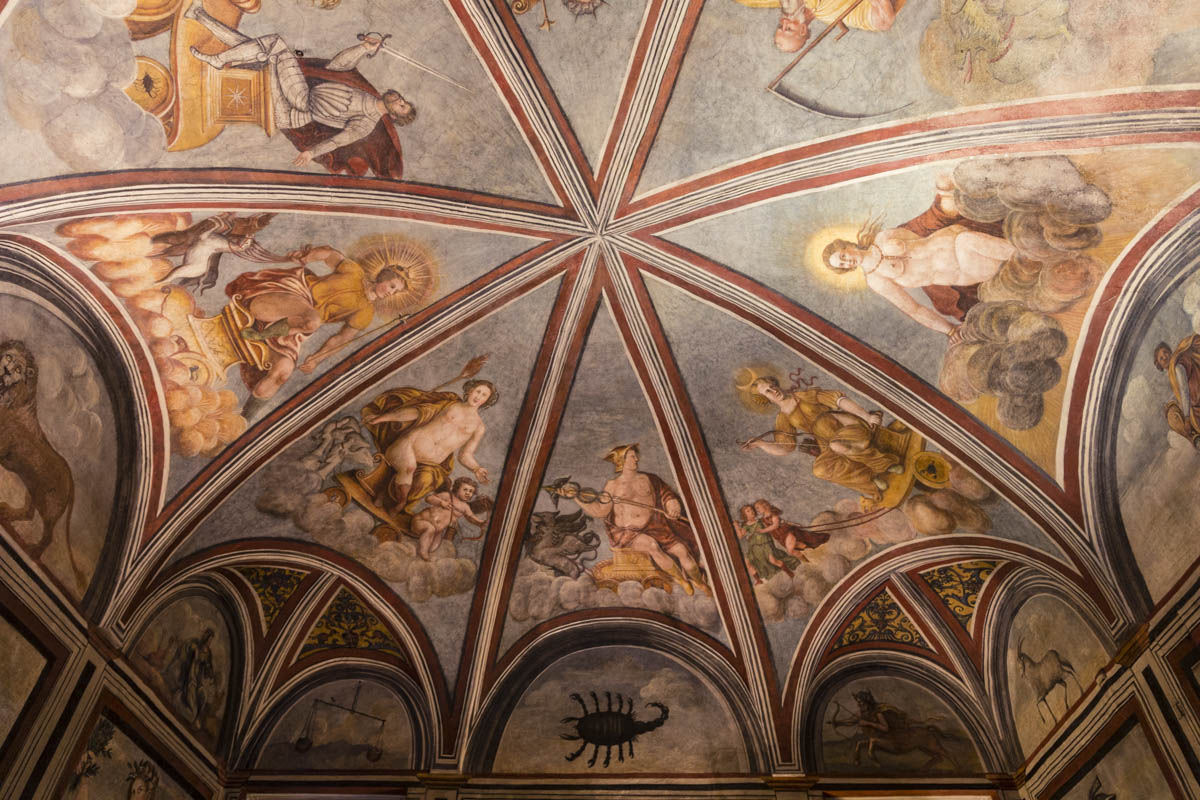
In this sense, Portaluppi’s work on Casa degli Atellani stands as a testament to Milan’s unique ability to adapt, layer, and synthesise without erasing (a lesson that is never fully learned, as the carnage done with the destruction of the historical fair testimonies). In many ways, the house became a manifesto of Milanese modernism: eclectic yet composed, historic yet forward-facing, elegant without spectacle.
His intervention thus wasn’t merely about preserving a building, but about reinstating its narrative agency in a voice calibrated to the tensions and aspirations of a city between wars, between monarchies and republics, between tradition and industrial modernity.
6. Did you say Bernardino Luini?
Yes, I did. Amid the architectural rediscovery and reinvention that marked Piero Portaluppi’s renovation of Casa degli Atellani, one revelation stood out for its art-historical weight: the emergence of frescoes attributed to Bernardino Luini, a key figure in the Lombard school and one of the most refined followers of Leonardo da Vinci. Their reappearance beneath centuries of stucco and soot was more than a stroke of archaeological luck: it was a moment of artistic reawakening, reconnecting the house not only to its Renaissance roots but to the visual and spiritual language of 16th-century Milan.

Leonardo’s Lombard Heir
Bernardino Luini (ca. 1480–1532) is often described as the most lyrical interpreter of Leonardo’s pictorial innovations in Lombardy. Trained in the Saronno region and active across northern Italy, Luini absorbed Leonardo’s sfumato, grace of expression, and compositional balance, translating them into a distinctly Lombard idiom marked by devotional intimacy, serene faces, and luminous colours.
Unlike other Leonardeschi, Luini never sought to imitate Leonardo’s grandeur but rather to domesticate his genius, applying it to altarpieces, private chapels, and villa frescoes. His work is characterised by a humanising softness and spiritual delicacy that appealed deeply to the religious and domestic patrons of early 16th-century Milan. He was celebrated in a 2014 exhibition at Palazzo Reale, one in which I was lucky enough to lend a hand.
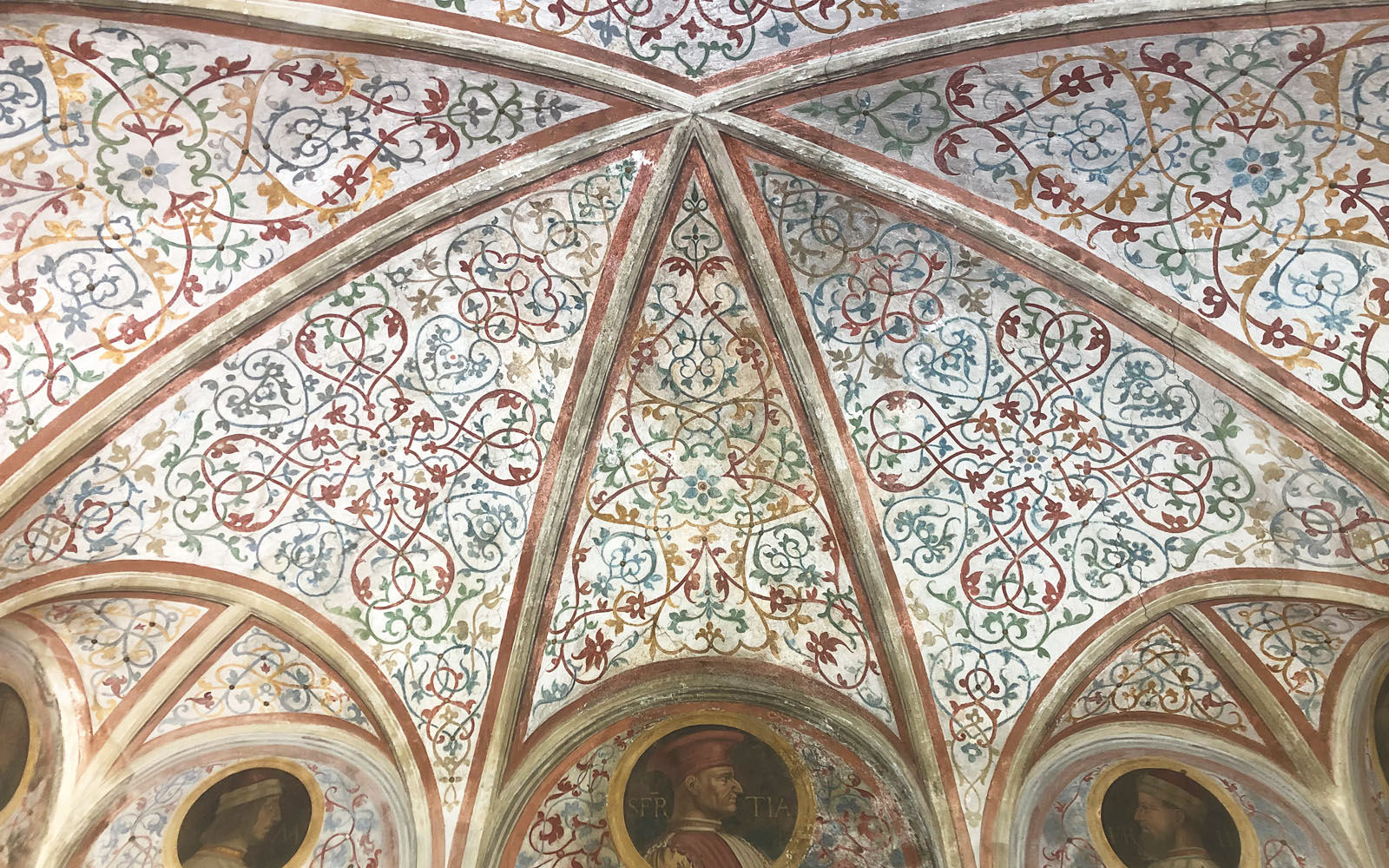
During Portaluppi’s meticulous interventions in the 1920s, parts of the house’s walls were stripped of later plaster and revealed scenes that bore unmistakable signs of Luini’s hand, or that of his workshop. The frescoes, though damaged and partially lost, displayed telltale elements of his style: oval-faced Madonnas, elegantly draped figures, and muted chromatic harmonies. Art historians quickly identified these paintings as important additions to the known corpus of Lombard mural painting, even if attribution remained debated in some quarters.
The location of the frescoes — inside a private domestic space — suggests a continuity with the tradition of Renaissance “studioli” and camera picta, where humanistic and religious imagery was integrated into the rhythm of everyday life. In this light, the house functioned as more than an aristocratic residence; it became a canvas of devotional and cultural identity, a space where spirituality, family prestige, and aesthetic refinement converged.
From Private Devotion to Public Memory
The frescoes are also significant for what they reveal about continuities in Milanese visual culture. Despite the turbulence of the early 16th century — marked by foreign invasions, regime changes, and let’s not forget the plague — the Lombard school persisted in its embrace of elegance, emotional restraint, and narrative intimacy. In this sense, Luini’s presence in Casa degli Atellani aligns with the very heart of the house: a space that was both anchored in political power and suffused with personal, almost meditative meaning.
Moreover, the rediscovery of these works in the 20th century points to an enduring dialogue between artistic memory and historical architecture. Portaluppi’s decision not to restore them to perfection, but rather to stabilise and exhibit them as fragments, was an early example of conservation ethics that favoured authenticity over illusion.

7. Milan’s Identity as a City of Layers: Preserving Casa degli Atellani
To walk through Casa degli Atellani — if one still could — is to cross a threshold not just into a residence, but into Milan’s cultural genome. Here, the Renaissance ideal of harmony, the echoes of Leonardo’s genius, the quiet religiosity of Luini’s frescoes, and the modern elegance of Portaluppi’s hand coexist in a fragile equilibrium. It is a house made of layers: political, artistic, architectural, symbolic. And it is precisely the threat to these layers that worries me more.
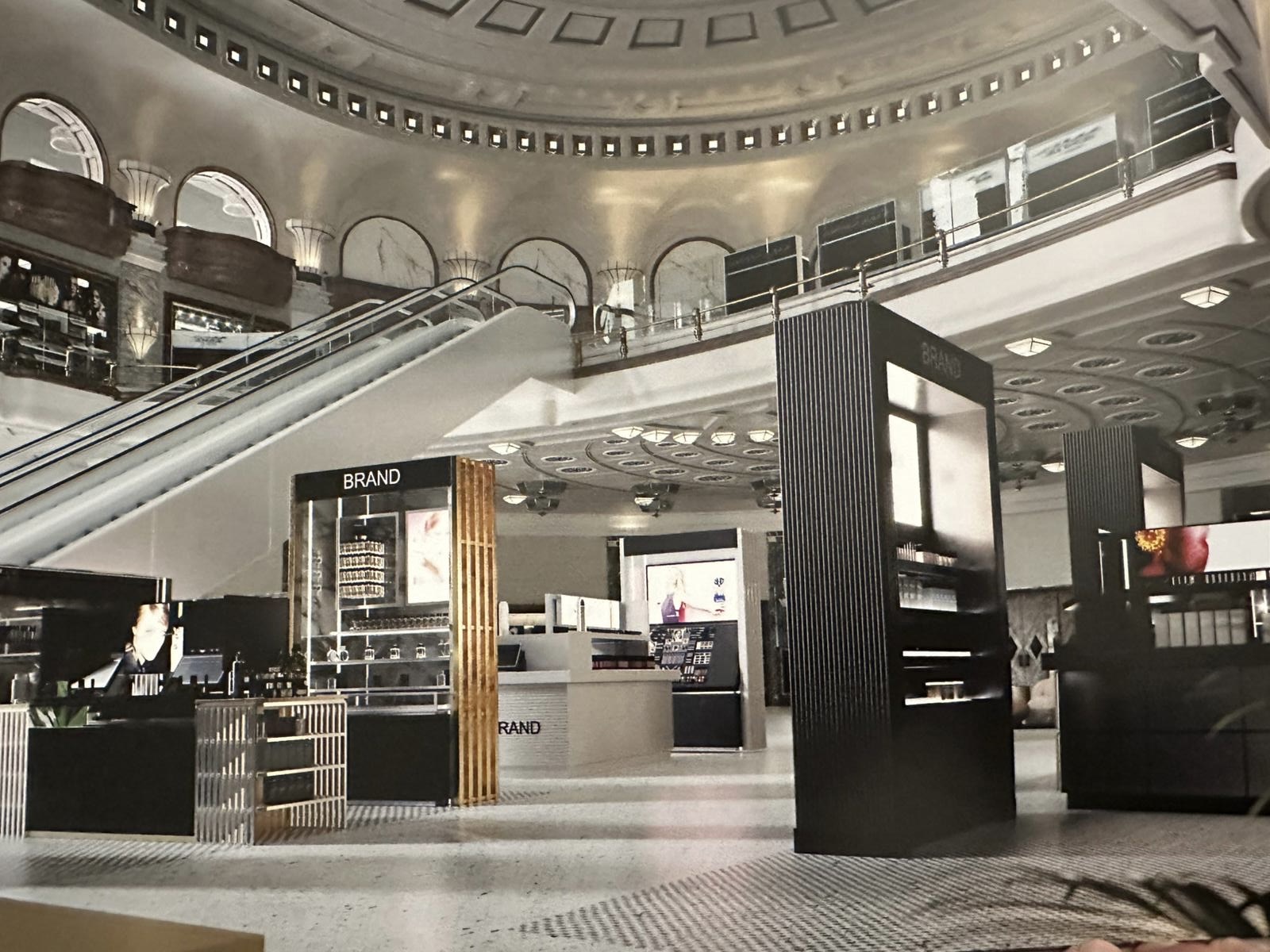
Casa degli Atellani’s acquisition and possible conversion into a luxury hotel represent more than a real estate shift: they signal a crisis of urban identity. The transformation of a historical site into a commercial operation risks flattening its narrative, reducing complexity to aesthetic branding, memory to backdrop, and heritage to profit. Such projects do not merely alter buildings; they risk amputating the continuity of meaning that binds past to present. It’s a risk we’re also witnessing with the conversion of the old Odeon theatre and cinema into a branch of La Rinascente shopping centre.
In Milan, a city where much has been lost to war, crazy-ass futurism and fascism revisionism, speculation and indifference, Casa degli Atellani is rare: not because it is untouched, but because it has been layered with care. Every generation — whether the Atellani family under Ludovico il Moro, the Martini di Cigala under the Habsburgs, or Portaluppi in the 20th century — has left its trace in dialogue. And therein lies the model it offers: preservation as addition, not as museumification or stagnation, but as a living, breathing urban memory.
To preserve Casa degli Atellani is not to fossilize it. It is to curate continuity, to recognise that cultural value lies not only in what is old but in how each era speaks with and through what came before. The potential transformation into a hotel would sever this dialogue, would replace civic meaning with private exclusivity, would turn a public story into a gated commodity. unless executed with extraordinary ethical and architectural responsibility. I honestly can’t think of many contemporary architects who could achieve this feat, but I can think of some.



No Comments