
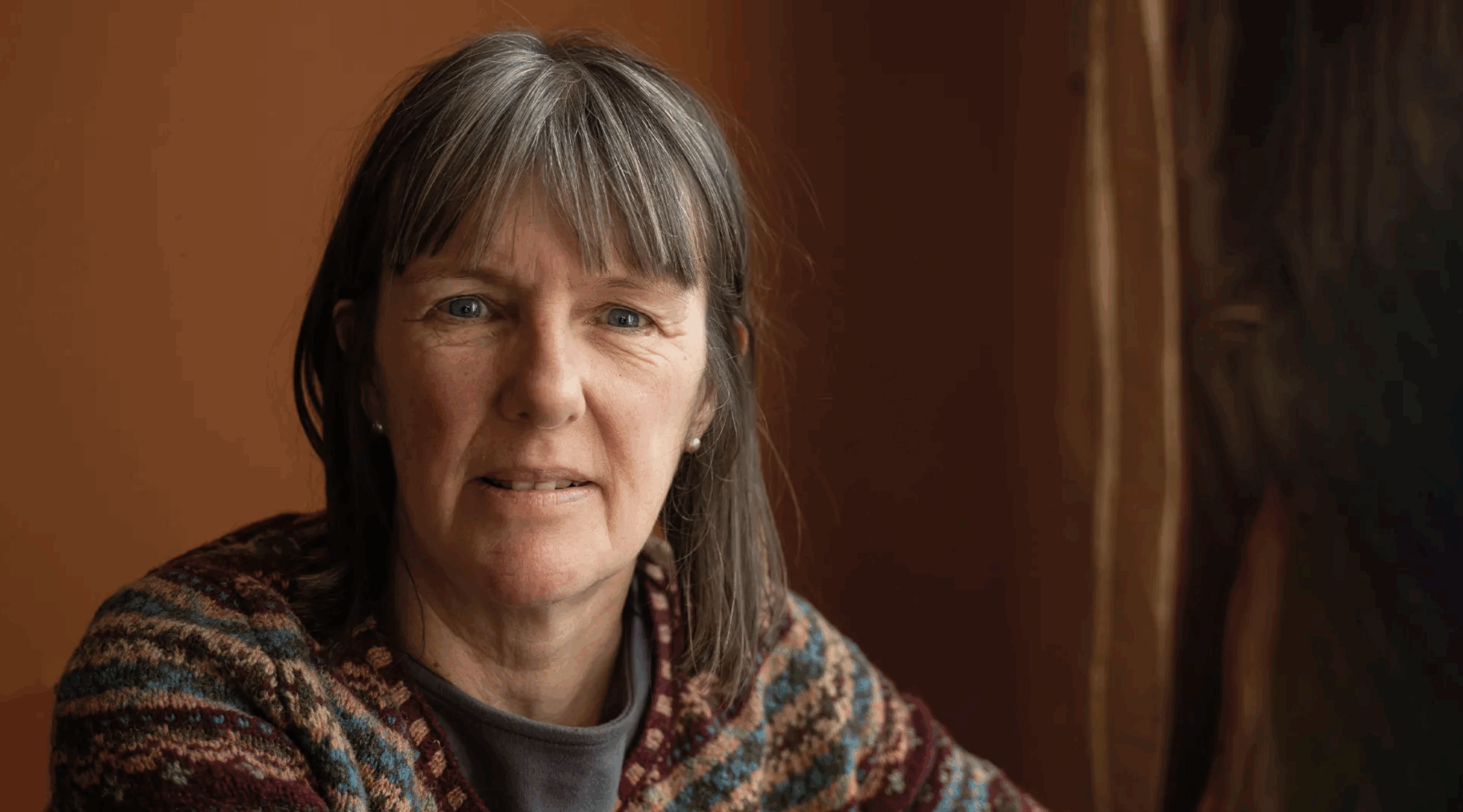
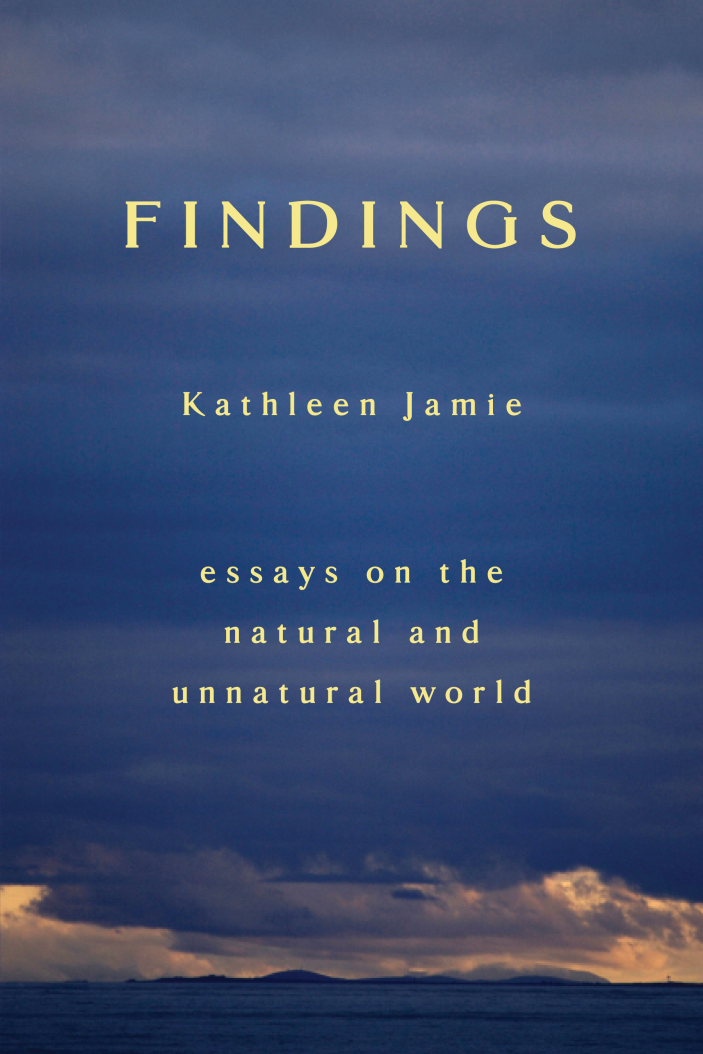
Kathleen Jamie is a Scottish poet and essayist, born in 1962, known for her prose and poetry about landscape, place, and everyday life. Findings is her essay collection of personal reflections, first published in 2005, and it moves through nature and cities, archaeology, hospitals, family life.
Most of the book takes place within a few miles of her own front door, or in a hospital corridor during her husband’s illness, or on a short trip to a Hebridean island to look at gannets, and its whole method rests on a much smaller, much stranger claim than any of the other writers in this selection have made: that the threshold worth crossing isn’t a door, or a mirror, or a coastline. It’s about attention, and when it actually arrives somewhere it wasn’t a second ago.
“This is what I want to learn:
to notice, but not to analyse.”
That’s the whole point of the book in eleven words, and it’s a harder discipline than it sounds, because noticing without analysing means resisting the very reflex most professional attention is trained to perform. An architect doesn’t look at a room; an architect reads a room, measures it, categorises its failures and opportunities before the eye has finished moving across it. You know if you ever accompanied an architect to a public place: they’ll start looking at exits, windows, placing and positioning. It’s relentless. It’s inevitable. Jamie is describing a kind of unguarded seeing that hasn’t yet been converted into a judgment, and she’s arguing that this earlier, uncategorised noticing is where the actual magic happens. In the noticing itself.
The passage that earns this book its place in a cycle about thresholds comes from the hospital sections, which are the least scenic and most demanding parts of the collection. Jamie, sitting through her husband’s treatment, tells a friend she doesn’t pray, then lists what she has been doing instead: noticing the cobwebs, the shifting light, the way a doctor listened, the tweed of a skirt, a speckled bird outside, the thin feet of another patient in the ward.
“Isn’t that a kind of prayer?
The care and maintenance of the web of our noticing.”
A hospital corridor is, by design, one of the least regarded thresholds in any building, a purely functional between-space, engineered for circulation and control, never meant to be dwelt in. Jamie dwells in it anyway, and what she finds there isn’t the corridor’s function: it’s a form of attention so total it becomes, in her own word, prayer, proof that the crossing a space can enable might have very little to do with what the space was designed to make you feel, and a great deal to do with whether the person moving through it happens to be paying heed.
From an architectural perspective, this suggests the formal apparatus we build to stage a crossing — the compressed entry, the framed view, the procession toward a revealed space — is doing much less of the actual work than we’d like to believe. Jamie crosses her most significant thresholds in a strip-lit corridor and at her own kitchen sink, neither of which was composed to produce that effect. What the corridor and the kitchen window share is only that she was looking properly when she was in them. You can design a beautiful sequence of arrival and still produce no crossing at all, if nobody inside it is paying attention; and a genuinely undesigned, purely functional space can apparently host the realest threshold-crossing available, if the person moving through it happens to be Kathleen Jamie.
There’s a smaller, sharper line elsewhere in the book worth keeping for later in the month: she notices, in passing, that we seem to be drawn to human habitation and can’t resist a ruin, and lets the observation sit there. I’m holding onto that one rather than unpacking it now, since ruins get their own week soon enough. For today, the more useful advice is smaller and harder to schedule: not the grand threshold, staged and crossed once, but the maintenance of a much humbler kind of attention, kept up daily, in corridors nobody designed to be noticed in at all.



No Comments