
Un libro non propriamente da ombrellone, questo lunedì, ma ve lo propongo perché ci è capitato di parlarne proprio questa mattina nella prima lezione di un corso sul estivo sul Project Management per il BIM (edizione autunnale qui).
Frederick Winslow Taylor scrive The Principles of Scientific Management nel 1911, tra uno scoppio di recessione e l’altro, e nel libro teorizza i principi di un metodo di gestione del lavoro che sia scientifico, scalabile e universale e che propone come soluzione all’inefficienza che vede dilagare nella sua nazione. I principi enunciati nel libro vengono spesso sintetizzati con il termine taylorismo, da cui a sua volta deriva il meglio noto fordismo.
taylorismo
/tay·lo·rì·ṣmo,tai-/
sostantivo maschile
L’organizzazione scientifica del lavoro, basata sullo studio dei fattori da cui dipende il rendimento del binomio uomo-macchina, e part. sullo studio dei movimenti e dei tempi necessari per ottenere una unità di prodotto.
Non sto chiaramente proponendo un’organizzazione taylorista (o fordista) del lavoro in studio, ma ritengo che sia una lettura interessante per chiunque si affacci a mansioni di coordinamento, specie se proviene dalla produzione.
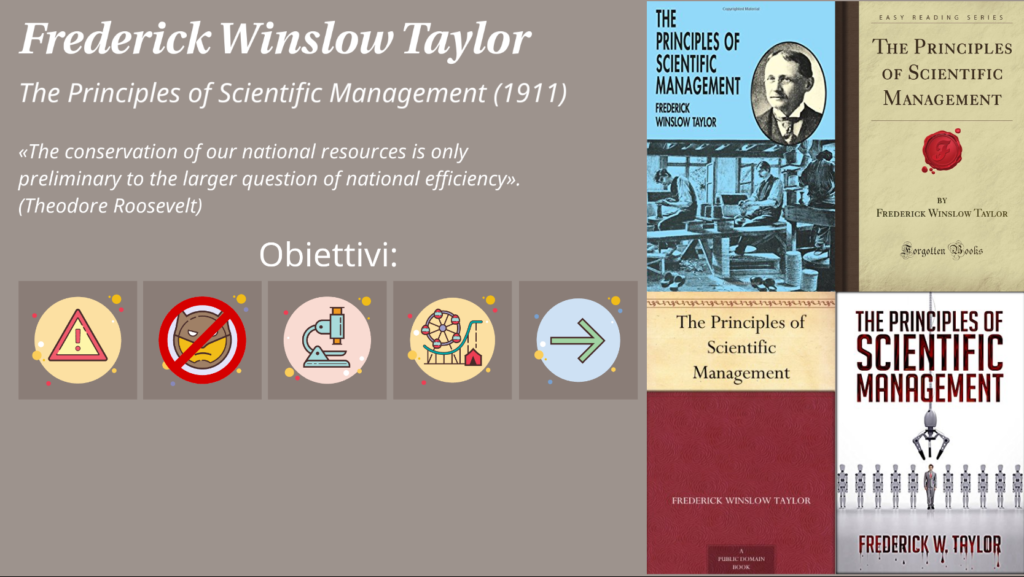
Tra i cinque obiettivi dichiarati nell’introduzione, trovo particolarmente interessante il secondo, ovvero la necessità di superare l’approccio supereroistico al lavoro. Ne ho già parlato, all’inizio dell’anno, in una riflessione sul ruolo dello specialista BIM.

Particolarmente rilevante nel dibattito sull’implementazione di principi di gestione un po’ più rigorosi è il discorso relativo alla scalabilità: si tratta di principi ugualmente validi sia per le piccole realtà (e Taylor sostiene addirittura per le nostre attività quotidiane di singoli) che per le grandi aziende che hanno necessità di processi collaborativi maggiormente strutturati.

In ultimo, è particolarmente rilevante l’accento che viene posto sul miglioramento continuo e sulla possibilità di proporre miglioramenti al processo da parte di chiunque:
Whenever a workman proposes an improvement, it should be the policy of the management to make a careful analysis of the new method, and if necessary conduct a series of experiments to determine accurately the relative merit of the new suggestion and of the old standard. And whenever the new method is found to be markedly superior to the old, it shoul be adopted a the standard for the whole establishment.
Ogni lunedì un libro per iniziare la settimana: sembra strano, ma è già lunedì. Di nuovo.




No Comments