
In the age of every Bill and Richard launching a digital crusade, we’ve come to believe that the tools of the past must bow to the technologies of the future. Like the sword giving way to the raygun, or the book to the neural implant, the sketchbook is often portrayed as a romantic relic to be displayed in an exhibition on “how we used to think.” In the architecture and construction industries, this narrative has taken a specific, almost dogmatic form: models will replace drawings. It’s preached at conferences and sold with every new tool that promises “drawing-less” delivery, and it’s been making the rounds here on LinkedIn for the past few months, so I thought I’d express more clearly some of the opinions I’ve been dropping around in comments.
Drawing isn’t dying because it’s misunderstood, and in fact, I don’t think it should.
1. The Myth of Obsolescence
Digitalisation poses as a disruptor, much like Prometheus bringing fire or Neo swallowing the red pill: it offers the power to see things differently, to do things that were never possible before and — why not — to break the system. But sometimes it also strips context, erases tacit knowledge, and flattens expression.
The myth of obsolescence in the construction industry stems from a flawed assumption: that efficiency is the ultimate virtue, and that interpretation is a bug to be eliminated rather than a feature to be embraced. In this view, drawings are cumbersome, ambiguous, and wasteful. Models are clean, rich, definitive. But anyone who has ever navigated a federated model with twelve linked files and no curation knows this isn’t the truth. We’ve traded legibility for data density, and have taught new specialists to read the new language, but what about everybody else?
In the same way a novel isn’t just a Word file and a screenplay isn’t just a CSV of camera movements, a drawing isn’t just a flat projection of geometry: it often is a visual script to understand, to persuade, and to dissent on something that’s being represented. So here’s what I’d like to bring you today:
- Sketching by hand is not primitive; it is cognitive. The pencil is a neural interface that our bodies still understand better than any touchscreen.
- Drawings — particularly technical drawings — are layered, editorial, and intentional storytelling. If we believe raw models can speak for themselves, we lose the ability to narrate our designs because they can’t. At least, not yet.
- We need to build new frameworks of storytelling that bring the richness of drawing into the model, not by mimicking lines on a screen, but by rethinking how we annotate, filter, and perform our models.
This is not a eulogy for drawing but a recruitment call for those who still believe that craft, clarity, and communication matter, that a single well-placed red line on a printout can still save a construction site, and that the rebellion isn’t against tools, but against mindsets.
Let’s draw the line. And then draw again.

2. The Pencil and the Brain: a Cognitive Affordance
In an industry obsessed with digital transformation, we often forget that the first interface any designer ever masters isn’t a mouse or a touchpad, but a tool that leaves a mark with the flick of a wrist, connected to our brains in ways equally complex and, arguably, more beneficial.
From cave walls to construction details, drawing is not just a representation of ideas but the idea itself that forms in motion. In other words, the act of drawing is a cognitive process just as much as playing with LEGO: it externalises thought, creates feedback loops between mind and hand, and allows the brain to perceive its own intuitions. Drawing doesn’t just document knowledge but builds it, line by line.
Cognitive scientists call this “distributed cognition“, a theory stating that thinking might not be happen in the brain alone, but through interaction with physical tools and the environment. In this framework, the pencil becomes an extension of the mind — not metaphorically or metaphysically, but functionally — responding to our thoughts in real-time, and allowing immediate and nuanced action. Digital tools, for all their sophistication, aren’t sophisticated enough and fail to address this loop. Even the most advanced stylus lacks the haptic richness of graphite on paper, so far. Touchscreens delay response. Parametric constraints rigidify spontaneity. And while AI tools might promise to autocomplete facades or generate floor plans from prompts, they still aim for perfection. There’s no twitch, no tremor, no subconscious gesture that interrupts the algorithm and says: “wait — what if?” The work-in-progress feel of handcrafting still hasn’t been translated into digital tools — with the perhaps illustrious exception of VR sculpting for creating assets in cinema and video games — and it doesn’t seem to have any interest invested in doing so.

Digital Tools enforce workflows, interfaces, and paradigms that reflect the way software wants us to think, not how humans naturally do, and the problem arises when we think they can be used in any part of the workflow, regardless and forget to ask what we lose when we stop drawing.
For starters, we lose spatial rehearsal, the mental simulation of space that sketching naturally supports. We lose motor memory, which links bodily motion to memory recall and ideation. We lose ambiguity, that beautiful, productive uncertainty that makes us reconsider a shape three times before committing. And we lose silence, the contemplative pause between marks where real creativity and problem-solving often spark.
To be clear: sketching is about access more than nostalgia. It’s a low-barrier, low-latency, high-bandwidth way of thinking, even for people who are highly proficient in digital tools. And right now, no CAD tool, no touchscreen, no gesture-controlled XR setup can rival it in early-stage design. Most digital interfaces are still built for execution, for refining what you’ve already imagined, not conjuring what doesn’t exist yet. So when we talk about man–machine interfaces, we must ask: do they truly enhance cognition, or just constrain it to what’s quantifiable? Because a pencil never asks you to pick a command before you draw. It just follows your thoughts.
Until digital tools can do that, we still need to draw, not as a backup, not as a compromise and not because digital tools are inferior, but because each part of the process needs its own tools and sketching is a first-class citizen in the design process, arguably the only one that still makes space for intuition, chaos, and surprise.
“I want to see, that’s why I draw.”
— Carlo Scarpa

3. Drawings as Stories: the Semiotics of Technical Communication
A drawing is not just a moment of geometry frozen in space: it’s visual storytelling where composition, emphasis, annotation, and silence work together to say “this is what matters”.
We like to think of construction documents as neutral, objective, but that’s never been true. Every drawing is an editorial decision: where you cut the section; what scale you choose based on the available and reliable information; what gets hatched, dimmed, tagged, or left blank. The margin notes, the revision clouds, the general annotation. All of these choices tell a story not just about the building, but about the priorities, risks, and logic behind it.
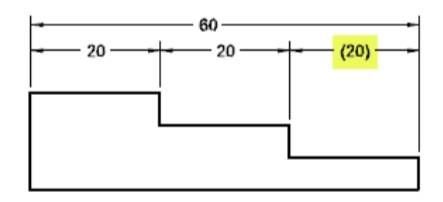
In the past, we used to scribble in the margins. Then came CAD, a tool that mimicked the translation from hand-sketch to polished drawings, and there could be no more doodling. Then information modelling, which isn’t a mimic of anything.

While digital tools made our drawings cleaner, faster, and easier to reproduce, they also made them quieter. We gained precision but lost the ability to be unsure, which is a fundamental need in many stages of design. Today’s tags and annotation objects carry data, yes, but they rarely carry tone. A model tag will tell you a wall type, but only an additional note will tell you that this wall is contentious, controversial, or critical to the client’s budget, and we’ve been avoiding those. The “Comment” parameter in Revit is being used for literally anything except… comments. And what about details? We live in the dream that you can slice a model whenever you want and get a 2D detail, but the right detail, handpicked and annotated, done right, can say: look here, this matters.
In semiotic terms, drawings are more than signifiers of objects: they are rhetorical devices, often there not to document but to persuade. A drawing can sell a concept in a design review or dismantle an argument in a coordination meeting. They don’t just show the “what”, but they should guide the “why,” and often preempt the “how.” When done right, 2D slices of a model offer curation because they’re selective, intentional, and graphic settings for 2D are equally important. They allow a parallel hierarchy to the one conveyed by categories: thick lines aren’t always for structure, thin lines aren’t always for finishes. In short, they offer visual grammar: dashes, dots, grey tones, callouts. These are not decorative: they are semiotic cues like facial expressions in a conversation. The moment we shift entirely to raw model data, we lose this grammar. We end up in a sea of equally weighted elements, where everything is visible and nothing is legible.
Let’s be honest: most federated models today are anti-narrative and we know that. That’s why the result of clash detection is… a report. Models are overloaded with data and underloaded with intent. The viewer opens the model and asks: “Where do I look?” And the model often responds with silence or, worse, with everything at once.

We’ve taught our tools to deal with complexity, but we still have to teach them to speak. So this is the real loss: not just the romantic stroke of a pen but interpretive control, and the ability to choreograph how someone else enters the project story. Drawings do that: they lead the eye, create rhythm, raise questions, and offer answers. They structure conversation. If we want to move forward — and we should — then the question is not how do we replace drawings? But how do we preserve their storytelling power in a digital world?
Because without narrative, data is noise.
4. From Drawings to Model-Based Storytelling: a Framework
So we’ve drawn the line and made the case that drawings are more than lines, but if we’re not here to defend the past, we’re here to bury it. So we need to ask a harder question:
How do we tell stories inside a model?
The federated model, in its raw state, is just a vast, detailed, unmapped terrain. Without guidance, even experienced explorers get lost. Clients panic. Contractors click aimlessly. And design decisions get buried beneath layers of metadata and geometry. It’s not the presence of data that’s the problem: it’s the absence of storytelling structures. We’ve replaced curated drawings with unfiltered environments, and we’re surprised when communication breaks down. So what can we do?
4.1. Bridging the Gap: Storytelling as a Layer
What if we stopped thinking of drawings and models as mutually exclusive, and instead treated narrative as a transversal layer that moves across both? In other words: what if we stopped asking “how do I annotate this model like a drawing?” and instead asked: how do I guide someone through this model as if it were a story?
Let me propose you three levels of narrative abstraction:
- Spatial;
- Temporal;
- Interpretive.
4.1.1. Spatial Narrative: Framing the Scene
Just like cinematographers frame a shot, we must frame our models. This is already partially possible with viewpoints and sections but they’re often underused, untagged, or unstructured. So here’s my suggestion:
- Curated viewpoints should be treated as narrative panels, not just bookmarks. Think comics, not coordinates.
- Named perspectives should include intent: not “View 17” but “Conflicting MEP run at Level 3 – Needs redesign.”
- View templates can carry symbolic weight that goes beyond traditional representation: bold colors for risk, transparency for future work, grayscale for frozen scope.
We need to treat these views as scenes.
4.1.2. Temporal Narrative: Telling Time in a Static Model
Drawings often carry a ghost of history (erasures, revision clouds, phases) but the model doesn’t have to. How can we change that?
- Phasing tools should be narrative devices, not just schedule outputs. They can show decision points, not just construction stages.
- Version tracking should be explicit in-model: not buried in CDE logs, but attached to the geometry itself, if it reflects a crucial design change that needs to be tracker. (“This wall changed in v3.2 because of fire egress.”)
- Decision breadcrumbs: we could tag objects with decision rationale. “Rotated 90° to align with daylight study from March 15th.” These become internal footnotes—storytelling within the model.
Every object has a history. The model should let us read it.
4.1.3. Interpretive Narrative: Making Models Speak to Humans
A model shouldn’t speak the same way to everyone. A contractor needs a different story than a sustainability consultant. To achieve that, we can build filters as personas:
- a “Clash Detective” persona highlights tolerances, interference risks, unresolved issues;
- a “Client Walkthrough” persona mutes technical elements and foregrounds finishes, daylight, views;
- a “Heritage Officer” persona overlays protected elements, regulations, and constraints.
Let users choose a narrative lens, and have the model reshape its voice accordingly.
Annotations, in this framework, are live comments, questions, perspectives. This is where we can integrate issue tracking, not as task lists, but as dialogic threads embedded in place.
Tools We Can Use Today
We can start building this now with existing tools:
- Templates and View Filters in Revit, Archicad, and Model View Definitions in the IFC scheme;
- saved Viewpoints with Notes in Navisworks, BIMcollab, BIM Track;
- colour-coding and transparency to visually differentiate urgency or narrative type;
- metadata tagging for design rationale, not just classification;
- naming conventions that communicate function, not just file structure.
Tools aren’t the bottleneck: lack of imagination is, alongside lack of intent. We’ve been trained to use these tools for documentation, not narration, but the potential is there. We just need to reclaim it, and demand better.
Tools that aren’t quite there
If you’re a software developer, let’s brainstorm: what could Model-Based Storytelling look like? Here’s where I’d like to invite you in:
- what if BIM viewers had timelines, like video editors, showing the evolution of design choices? And no, I don’t mean it by forcing phases where you don’t have them. I mean a video rendition of versioning.
- What if models had voice-over tracks layered by stakeholder? I know, we all hate voice messages, but a certain kind of people would certainly interact more with the model if they could annotate it by voice, and we have the means to translate into text if you don’t want to pause your Ozzy Osbourne revival marathon to listen to them.
- What if VR walkthroughs had director’s commentary mode, highlighting story arcs and design intent?
- What if we used symbolic language in model space — icons, overlays, glyphs — to mark tone and status?
Conclusion: a Pencil in One Hand, a Model in the Other
Bottom line is: the narrative drawing vs modelling is a false dichotomy, born out of the same binary mindset that tells us innovation means erasure. But the best revolutions don’t delete the past: they build on it. Until we’re able to convey through models the same level of storytelling we can convey through technical drawings, those will be the foundation upon which models stand because without them we don’t know how to communicate.




No Comments