
The words Terrae Motus — if you know latin — is enough to give you a hint, an echo, a vibration, a tremor that goes beyond the earth. Earthquakes often prompt a movement of conscience as much as of matter, and it is precisely this duality that defines the extraordinary collection housed in the Reggia di Caserta. Born from the vision of gallerist Lucio Amelio after the 1980 Irpinia earthquake, Terrae Motus is an art collection and a monument to fragility, and rebirth, a chorus of voices responding to catastrophe with creation. And, honestly, a good enough reason to visit a palace I wouldn’t otherwise recommend with the same fervor schools seem to consider it a must visit.
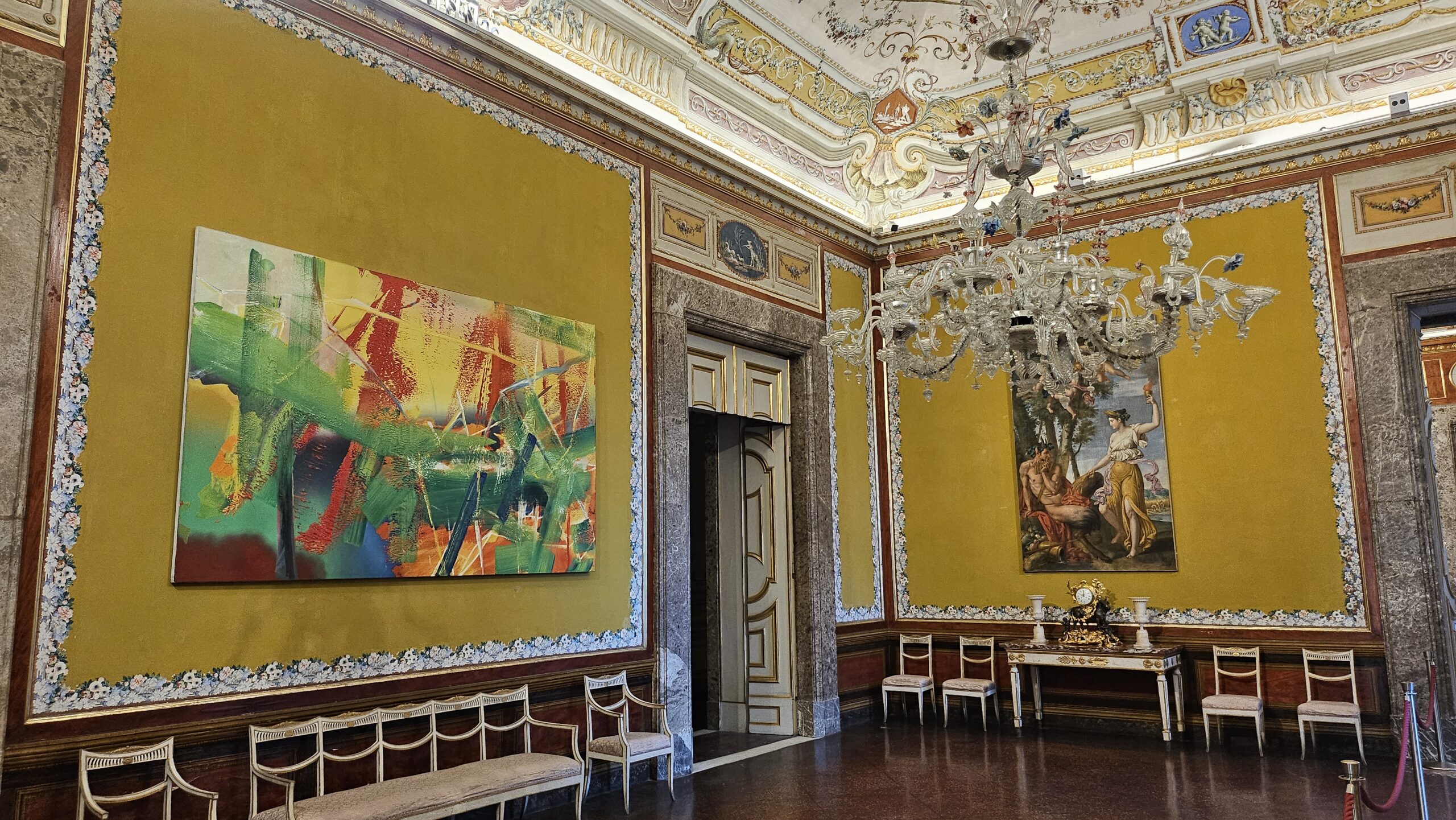
The Origin of the Collection: Art as Aftershock
When the earth shook in Campania, it left not only ruins but a wound in the cultural and civic body of Italy. Amelio, one of the most influential figures in the Italian contemporary art scene, chose to respond not with silence or nostalgia, but with provocation: he invited prominent artists from around the world — Andy Warhol, Joseph Beuys, Jannis Kounellis, Giulio Paolini, Richard Long, Michelangelo Pistoletto, Sol LeWitt, and many others — to create works that would speak to that seismic event. The result was Terrae Motus: a collection that treats the earthquake as a metaphor for the instability of modern society and the potential for regeneration.
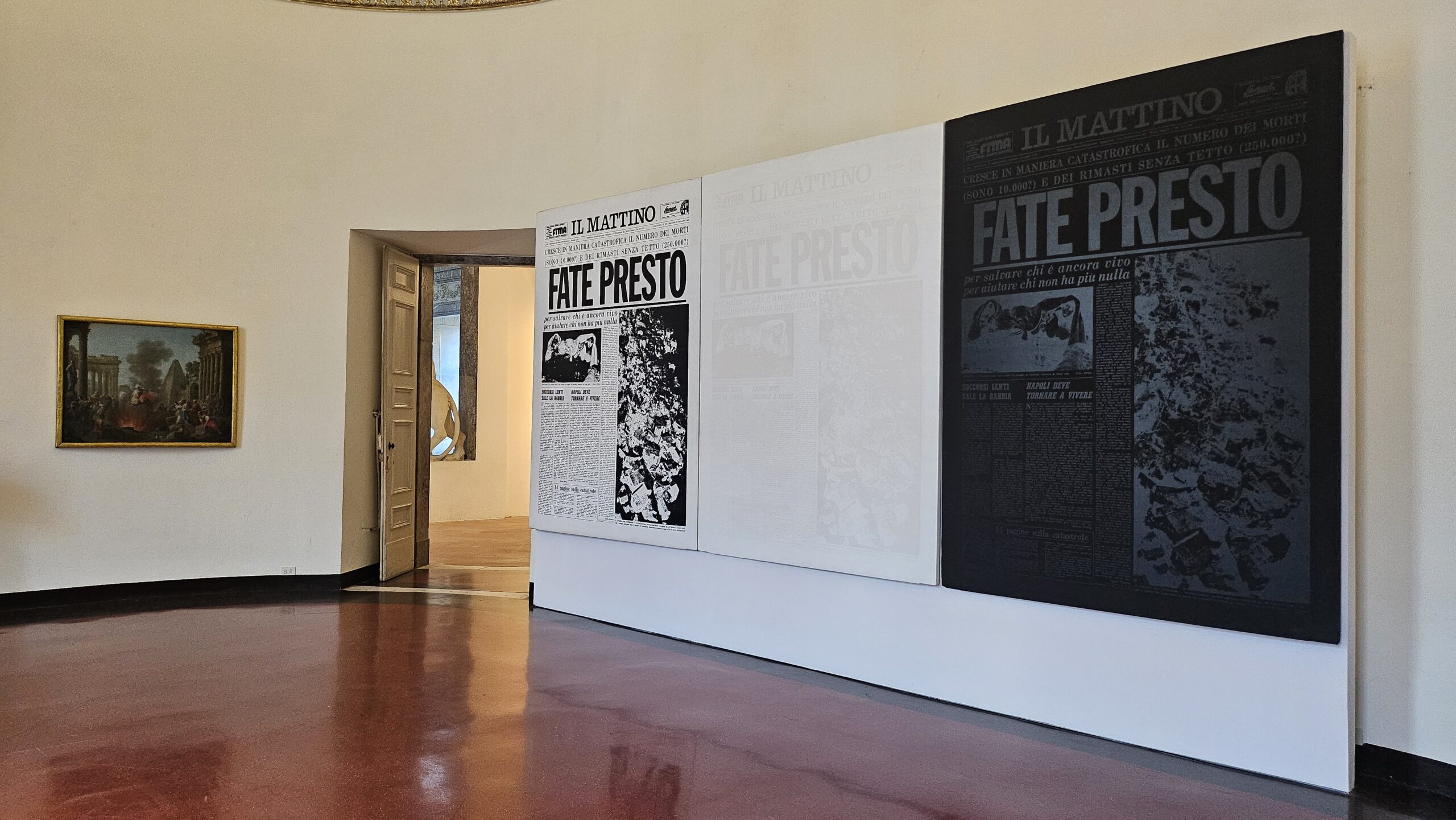
Each piece is an aftershock, a fragment of an ongoing dialogue between destruction and rebirth, matter and spirit. Joseph Beuys’ Terremoto in Palazzo is possibly my favourite, with its austere materials and enigmatic presence, feels like an archaeological find from the future. Andy Warhol’s Vesuvius turns the erupting volcano into an icon, transforming fear into repetition, disaster into pattern. The earthquake becomes pop, an event absorbed and reimagined through the language of mass culture.
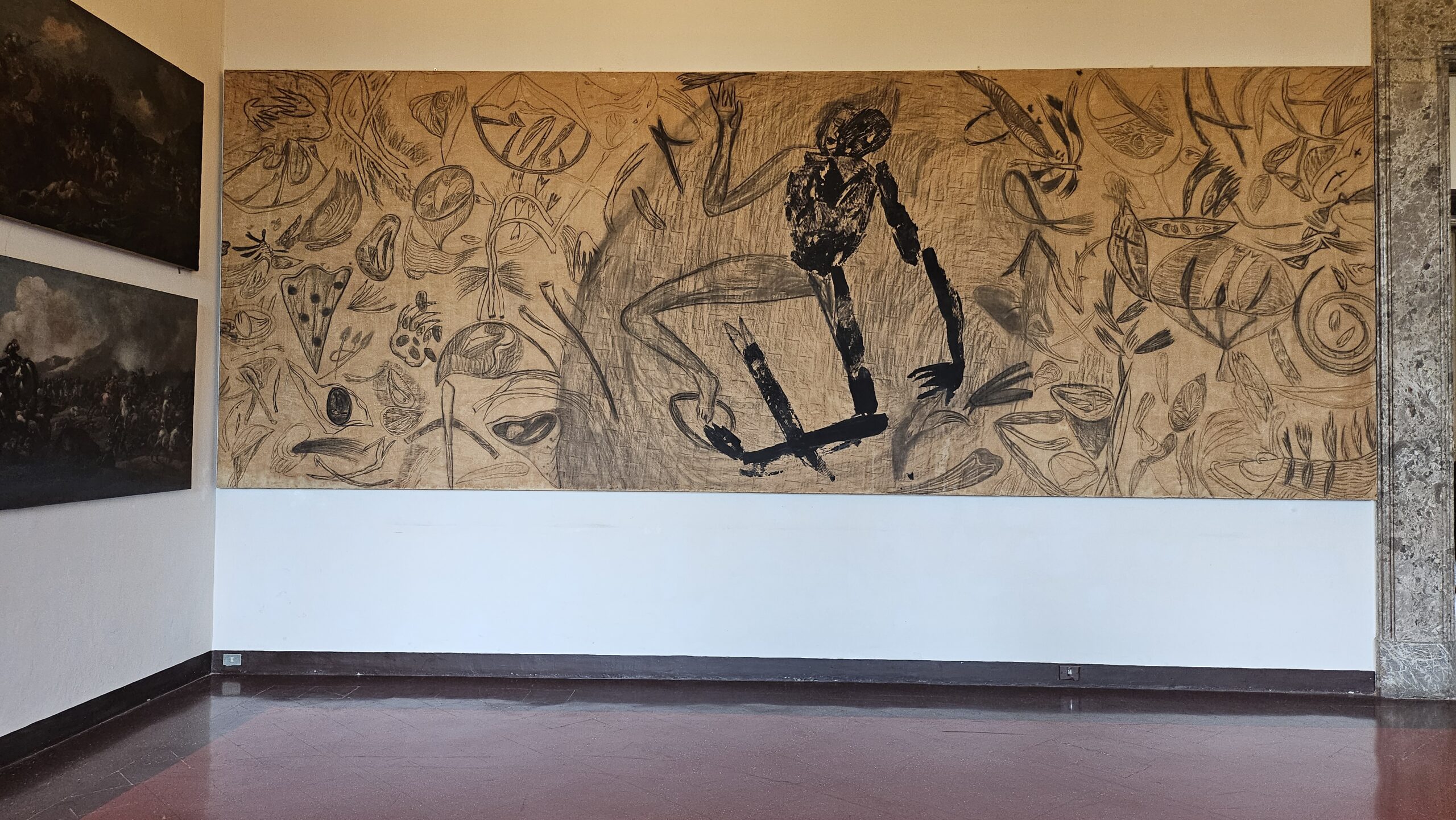
A Royal Contrast
The placing of these works within the Reggia di Caserta has an incredible effect. The Bourbon palace, designed in the 18th century as a symbol of power, symmetry, and control, becomes a stage for contemporary art’s unruly energy. Walking through its gilded halls and baroque corridors, encountering raw materials, industrial fragments, and conceptual provocations, the viewer experiences a shockwave of contrast.
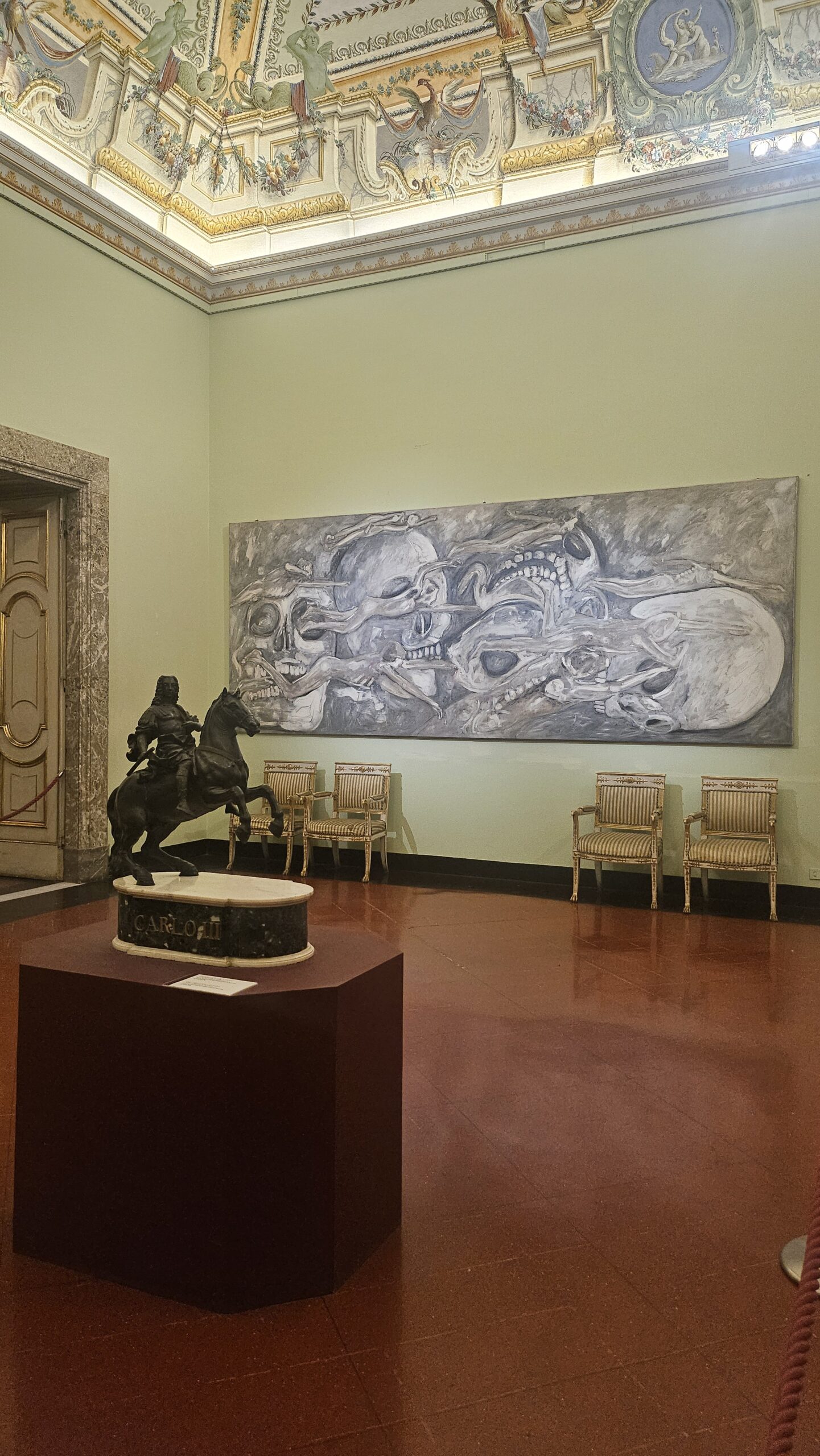
The friction between the palace’s opulence and the collection’s urgency is precisely what makes Terrae Motus so compelling. It stages the tension between two Italies: one imperial, anchored in grandeur and privilege; the other fragile, volatile, in search of meaning amid collapse. Beuys and Kounellis, under the frescoed ceilings of Caserta, create a dialogue between permanence and impermanence, between the weight of history and the need to break it open.
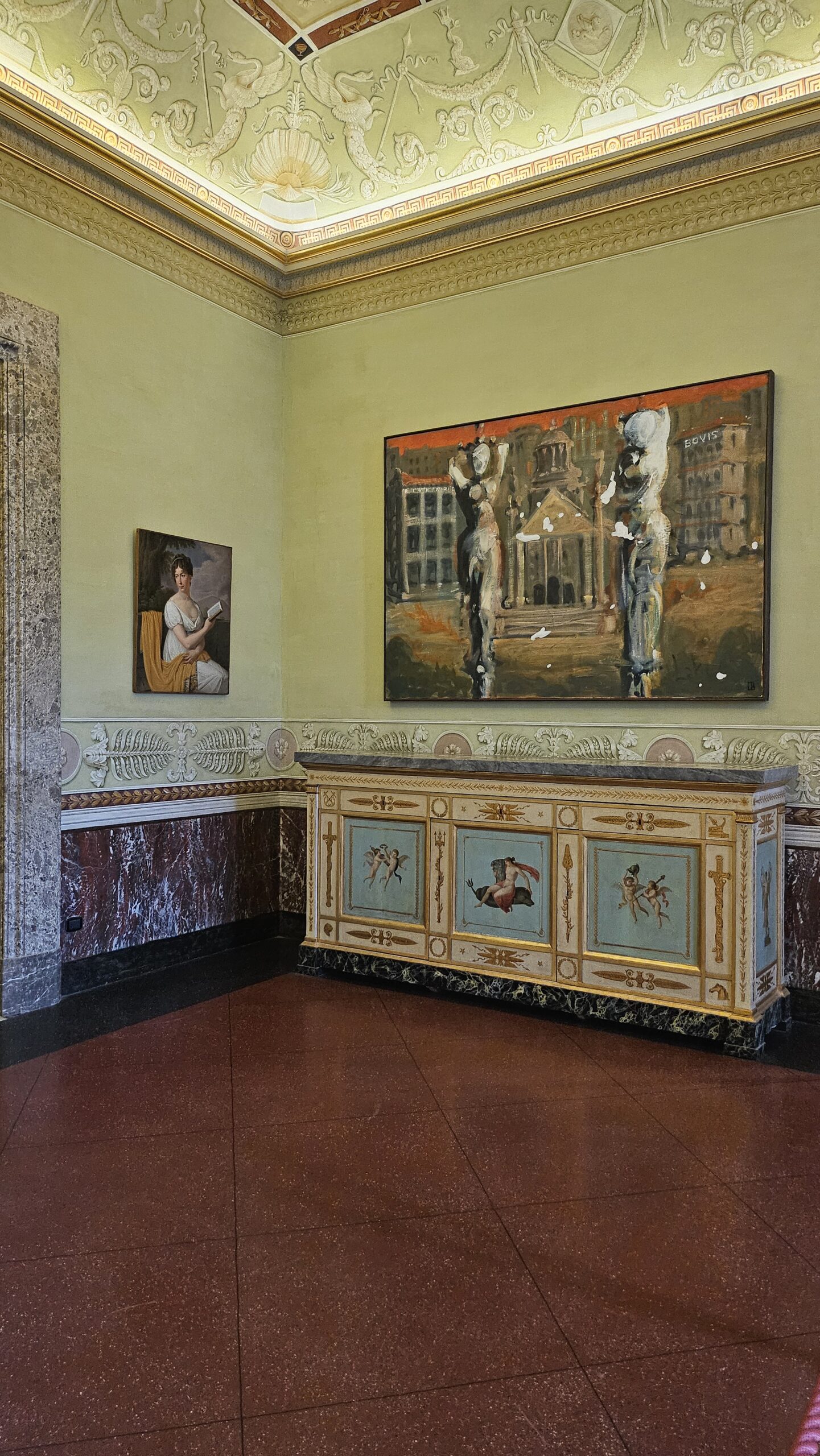
Terrae Motus, even when placed within luxury, speaks of loss. The palace — once a display of royal excess — hosts a reflection on disaster, displacement, and the human cost of progress, and the juxtaposition forces us to question not only the history of art but the politics of memory. What does it mean to commemorate tragedy? And why does the contradiction become more apparent when placed in marble halls? What does it mean to aestheticise the earthquake?
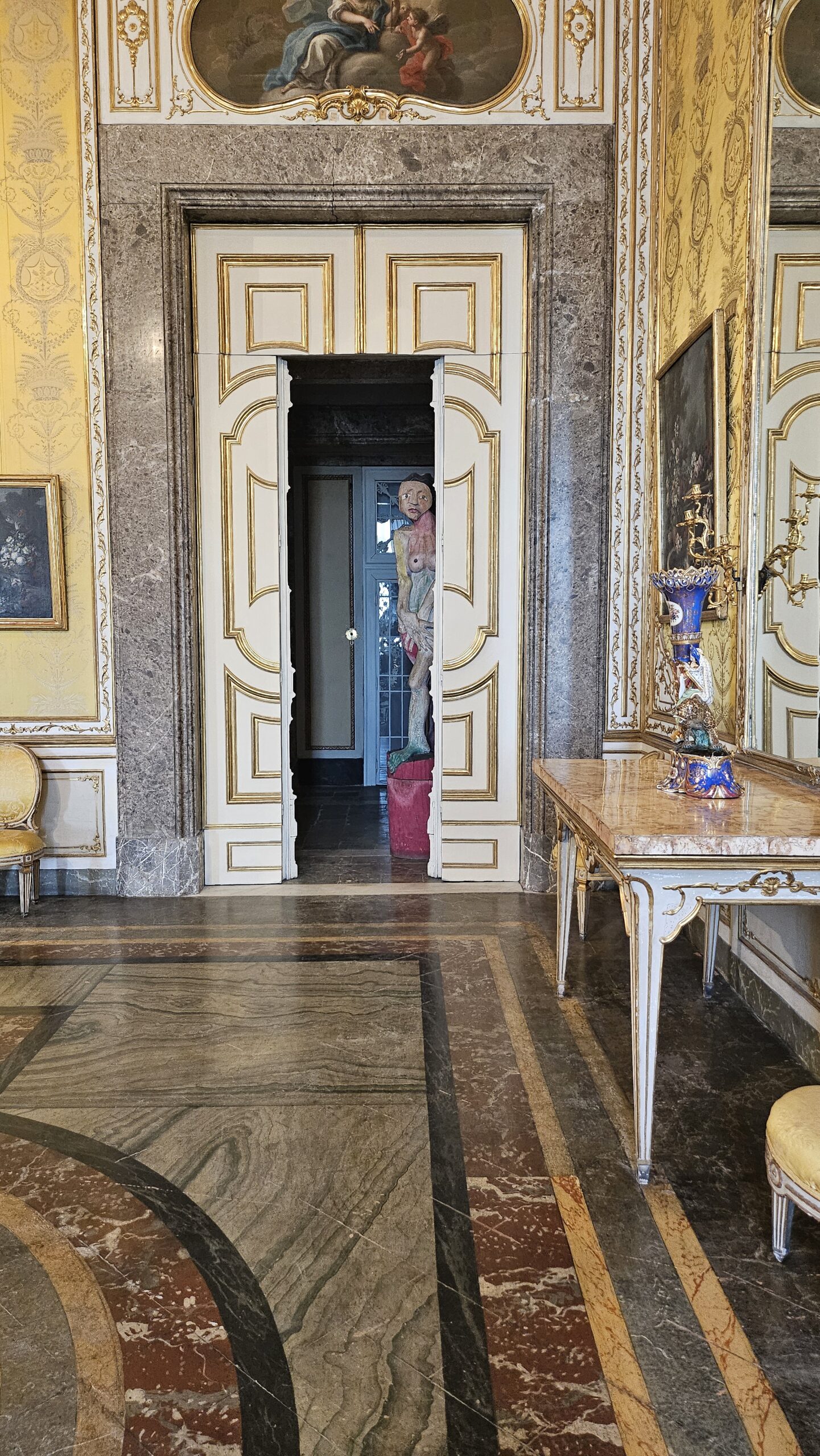
And yet, this discomfort is productive. It reminds us that art’s role is not to soothe but to disturb, to awaken. The earthquake of 1980 may have lasted only seconds, but its cultural aftershocks continue to ripple through Terrae Motus, urging us to see instability not as failure, but as transformation.
The collection includes 66 artists and over 70 works by the greatest world artists of the 80s. The Royal Palace of Caserta has housed the Terrae Motus Collection since 1994, when , when Amelio donated it to the palace. The collection is displayed with periodic rotations in the back rooms of the 18th-century Royal Apartments, integrated with the ancient and precious decorative apparatus of the palace.




No Comments