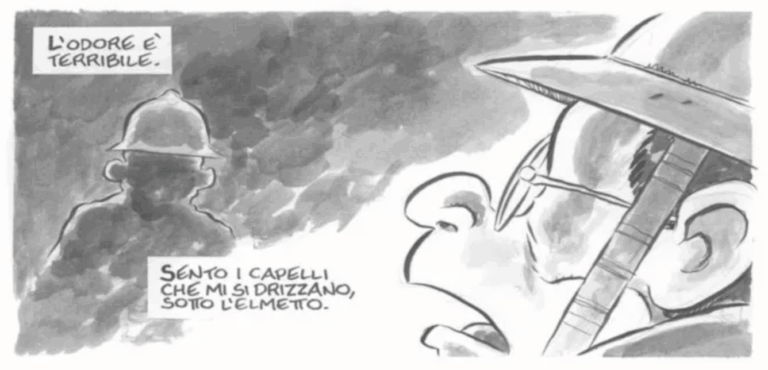
"All this he saw, for one moment breathless and intense, vivid on the morning sky; and still, as he looked, he lived; and still, as he lived, he wondered."

#ChthonicThursday: Lethe

Lethe, also known as Lesmosyne, was one of the Greek underworld rivers, and particularly the river of unmindfulness (Amelēs potamos): it gained its properties because it flowed around the cave of Hypnos, the god of sleep, son of Night and brother of Death. Whoever drinks from this river experiences forgetfulness. Interestingly enough, though, the Greek word for “truth” is aletheia (ἀλήθεια), which literally is “un-forgetfulness”. If being truthful means remembering, forgetting might not be such a good thing after all.

As it often happens, this concept is lost and subverted in the Roman world: drinking Lethe’s water was a requirement to the shades of the dead, in order to forget their earthly life, and we see this scene in book VI of the Aeneid.

The souls that throng the flood
Are those to whom, by fate, are other bodies ow’d:
In Lethe’s lake they long oblivion taste,
Of future life secure, forgetful of the past.

Lethe is sometimes personified or connected to a goddess. Hesiod identifies her as the daughter of Eris (Strife) in his Theogony, making her the sister of Ponos (Hardship), Limos (Starvation), Algea (Pains), Hysminai (Battles), Makhai (Wars), Phonoi (Murders), Androktasiai (Manslaughters), Neikea (Quarrels), Pseudea (Lies), Logoi (Stories), Amphillogiai (Disputes), Dysnomia (Anarchy), Ate (Ruin), Horkos (Oath).

A merry crowd indeed.
Hills Like White Elephants

I don’t think Ernest Hemingway needs any introduction, but his Death in the Afternoon maybe does: it’s a 1932 non-fiction book about Spanish bullfighting, and it’s part cultural study, part travel writing, and part reflection on courage, fear, death, and art. It’s not for the

Read More »
Summertime

Mapping the Furrow

Seamus Heaney was a major Irish poet, born in 1939 in County Derry, Northern Ireland, and winner of the Nobel Prize in Literature in 1995. He’s especially known for writing about rural life, memory, language, and Irish history. Death of a Naturalist is both the

Read More »
books and literature

Keanu Reeves & China Miéville: The Book of Elsewhere

It would be a vast understatement to say that this book was a surprise. Not being familiar with the comics (so unfamiliar, in fact, that I didn’t even know they existed), the first impact with the main storyline was “ok, what the hell am I

Read More »
Share on LinkedIn
Throw on Reddit
Roll on Tumblr
Mail it
No Comments

Post A Comment

This site uses Akismet to reduce spam. Learn how your comment data is processed.

RELATED POSTS

Hills Like White Elephants

I don’t think Ernest Hemingway needs any introduction, but his Death in the Afternoon maybe does: it’s a 1932 non-fiction book about Spanish bullfighting, and it’s part cultural study, part travel writing, and part reflection on courage, fear, death, and art. It’s not for the

Read More

Mapping the Furrow

Seamus Heaney was a major Irish poet, born in 1939 in County Derry, Northern Ireland, and winner of the Nobel Prize in Literature in 1995. He’s especially known for writing about rural life, memory, language, and Irish history. Death of a Naturalist is both the

Read More