"All this he saw, for one moment breathless and intense, vivid on the morning sky; and still, as he looked, he lived; and still, as he lived, he wondered."

#BIMpill – Work Breakdown Structure vs. Product Breakdown Structure

Una delle espressioni più popolari nella pianificazione di un progetto, specialmente quando si cerca di darsi un tono, è WBS (acronimo per Work Breakdown Structure). Il termine viene invocato ogni volta che ci si trova in presenza di un codice da assegnare agli oggetti e, nel 90% dei casi, viene utilizzato a sproposito.

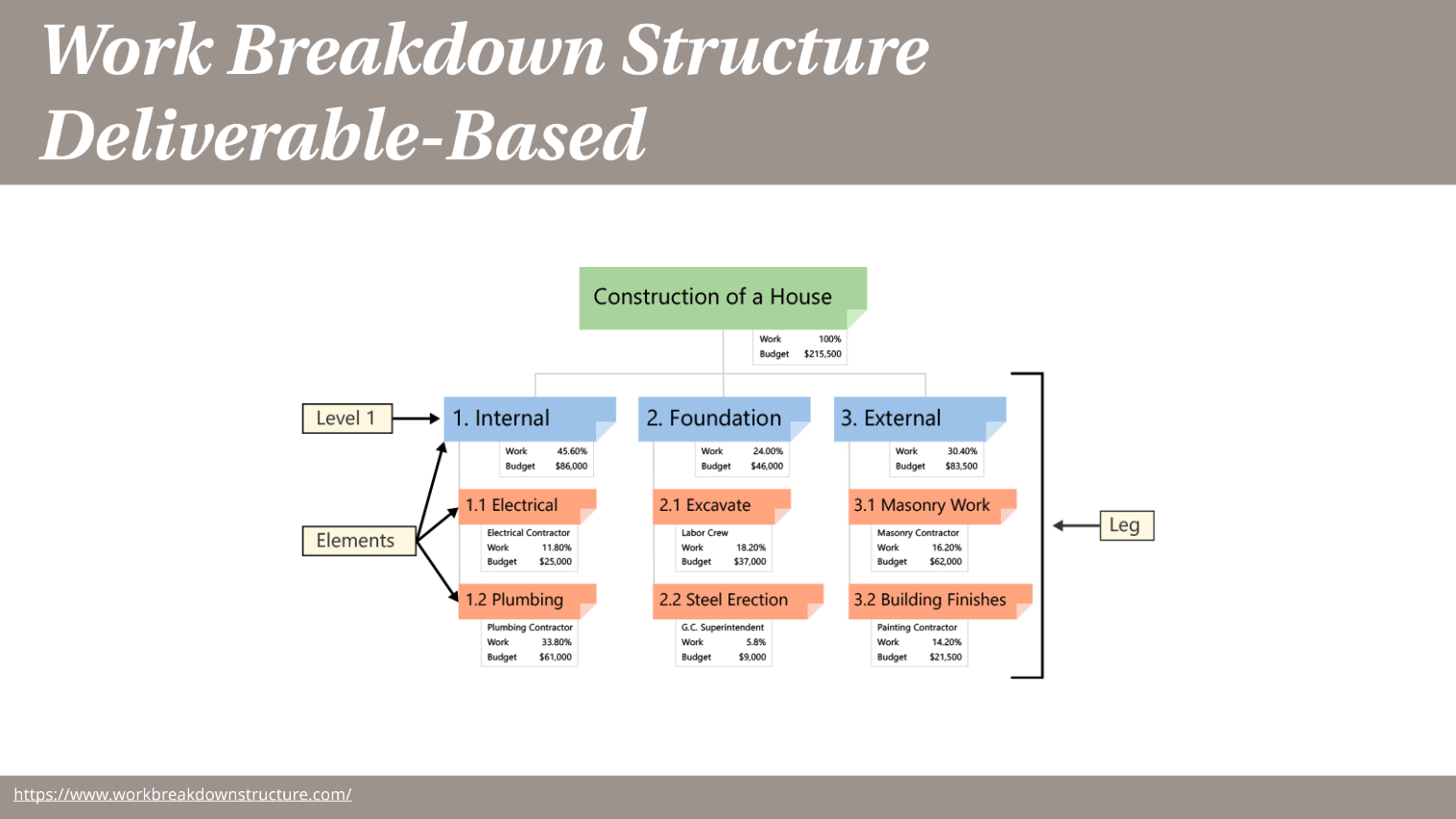
Vi è una differenza sostanziale tra WBS, la suddivisione gerarchica delle lavorazioni, e la PBS (Product Breakdown Structure) ovvero la suddivisione gerarchica dei prodotti. Lavorando in BIM, ci si trova in presenza di un modello per sua natura orientato ad oggetti, in cui ad ogni oggetto corrisponde più di una lavorazione o le lavorazioni sono agganciate ad oggetti la cui modellazione esplicita porta scarso valore aggiunto al resto degli usi. Si tratta del problema primario che ci si trova ad affrontare nell’uso di un modello informativo per la pianificazione delle sequenze di lavorazione (che qualcuno chiama “4d”).

A Product Breakdown Structure (PBS) is a hierarchical structure of things that the project will make or outcomes that it will deliver. It can be thought of as the project “shopping list.” It decomposes a “Main Project Product” into its constituent parts in the form of a hierarchical structure.

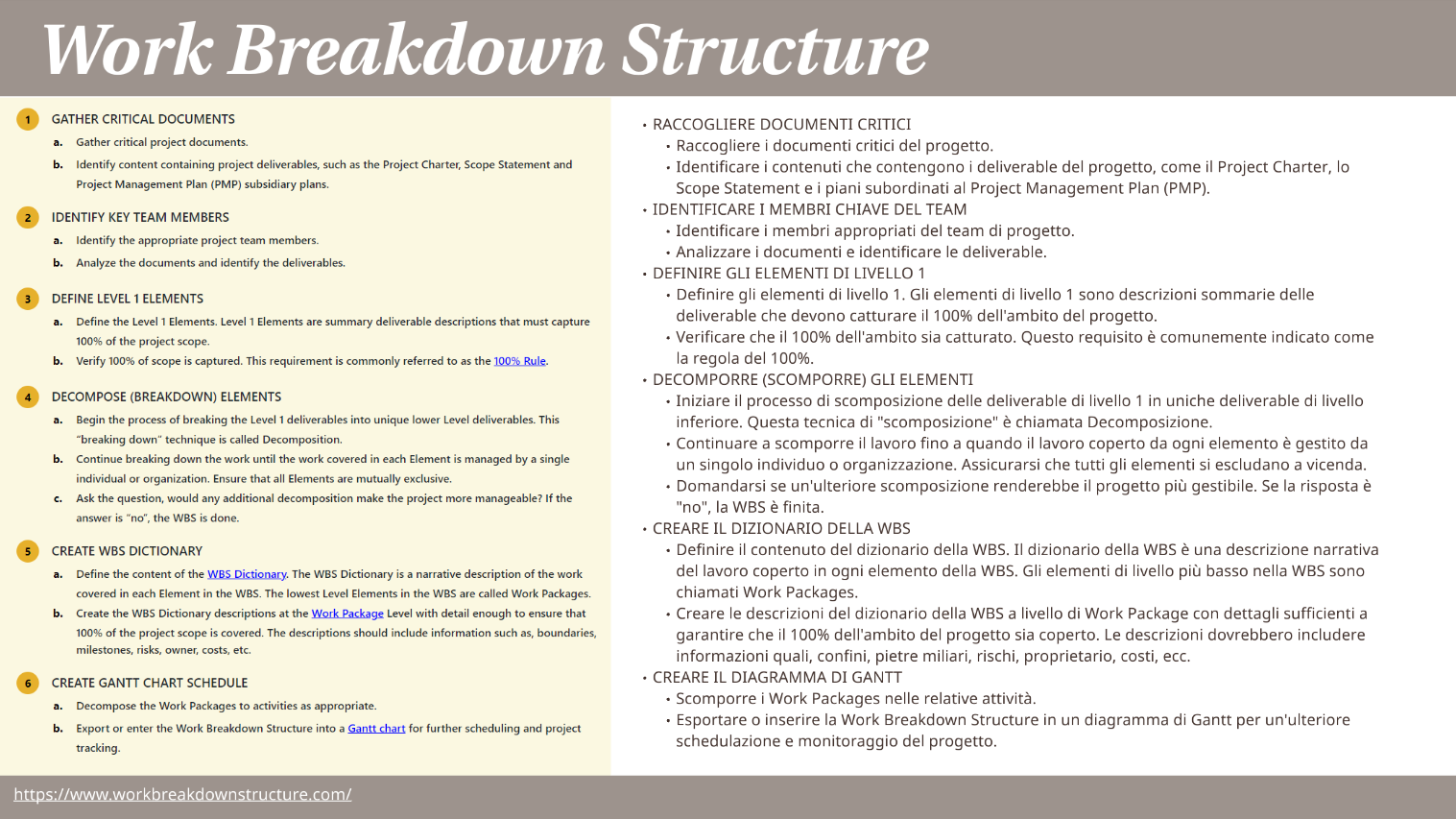
The Work Breakdown Structure (WBS) provides a hierarchical structure of project activity.
The WBS forms the basis of the Project Plan, decomposing the main project into stages, then workpackages then into sub-activities per work-package. The levels of detail are dependent upon the complexity of the project.

Nell’operare questa distinzione, non ci viene purtroppo in soccorso la UNI 11648:2016, in cui ci si dice che la WBS può essere organizzata per:

  • fasi del progetto;
  • principali deliverable;
  • discipline di attività;
  • localizzazione del lavoro.

Nella pillola di questa settimana, vediamo le differenze tra WBS e PBS e qualche trucco per distinguerle. Sul modello, è molto più efficace implementare una buona struttura gerarchica dei prodotti, cui successivamente (e con strumento dedicato) associare le lavorazioni.

Buoni riferimenti è la pagina relativa all’argomento sul sito dell’Association for Project Management, da cui sono prese le definizioni superiori. Trovate anche un sito completamente dedicato all’argomento.
..

Kathleen Jamie on Attention and Corridors

Kathleen Jamie is a Scottish poet and essayist, born in 1962, known for her prose and poetry about landscape, place, and everyday life. Findings is her essay collection of personal reflections, first published in 2005, and it moves through nature and cities, archaeology, hospitals, family

Read More »
comics and illustration

Leo Ortolani, Tapum

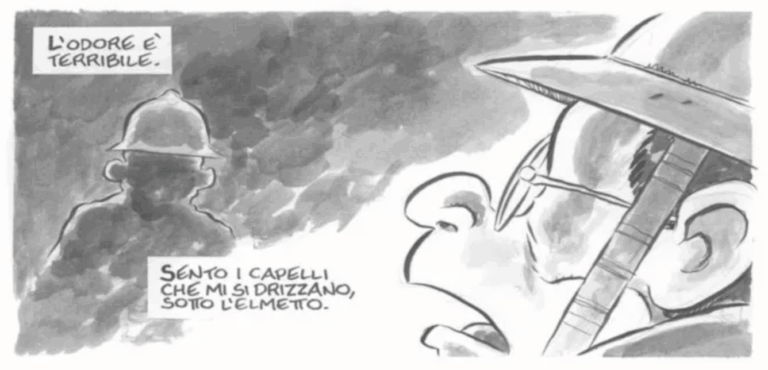
A un certo punto ci sarà una battuta, in questo fumetto, e riderete. Sappiate che è l’unica. Com’è giusto che sia. Se devo paragonare quest’opera a qualcosa, il confronto più azzeccato è probabilmente lo spettacolo che Marco Paolini trasse dal Sergente nella neve di Rigoni

Read More »
Summertime

Omeros in the Caribbeans

Derek Walcott was a Saint Lucian poet, playwright, and painter, and one of the major voices of Caribbean literature. He won the Nobel Prize in Literature in 1992, and his work often explores Caribbean history, identity, colonial inheritance, and the meeting of European and African

Read More »
Share on LinkedIn
Throw on Reddit
Roll on Tumblr
Mail it
No Comments

Post A Comment

This site uses Akismet to reduce spam. Learn how your comment data is processed.

RELATED POSTS

Kathleen Jamie on Attention and Corridors

Kathleen Jamie is a Scottish poet and essayist, born in 1962, known for her prose and poetry about landscape, place, and everyday life. Findings is her essay collection of personal reflections, first published in 2005, and it moves through nature and cities, archaeology, hospitals, family

Read More

Leo Ortolani, Tapum

A un certo punto ci sarà una battuta, in questo fumetto, e riderete. Sappiate che è l’unica. Com’è giusto che sia. Se devo paragonare quest’opera a qualcosa, il confronto più azzeccato è probabilmente lo spettacolo che Marco Paolini trasse dal Sergente nella neve di Rigoni

Read More

Omeros in the Caribbeans

Derek Walcott was a Saint Lucian poet, playwright, and painter, and one of the major voices of Caribbean literature. He won the Nobel Prize in Literature in 1992, and his work often explores Caribbean history, identity, colonial inheritance, and the meeting of European and African

Read More