"All this he saw, for one moment breathless and intense, vivid on the morning sky; and still, as he looked, he lived; and still, as he lived, he wondered."

#BIMpill – DevOps e cultura aziendale

Uno dei principi del sistema di gestione chiamato DevOps, di cui ho già parlato più volte, è la creazione di una cultura aziendale sicura in cui sia possibile apprendere e sperimentare. Si tratta di parte di quella che Gene Kim chiama “terza via”, ovvero quella che governa l’apprendimento continuo.

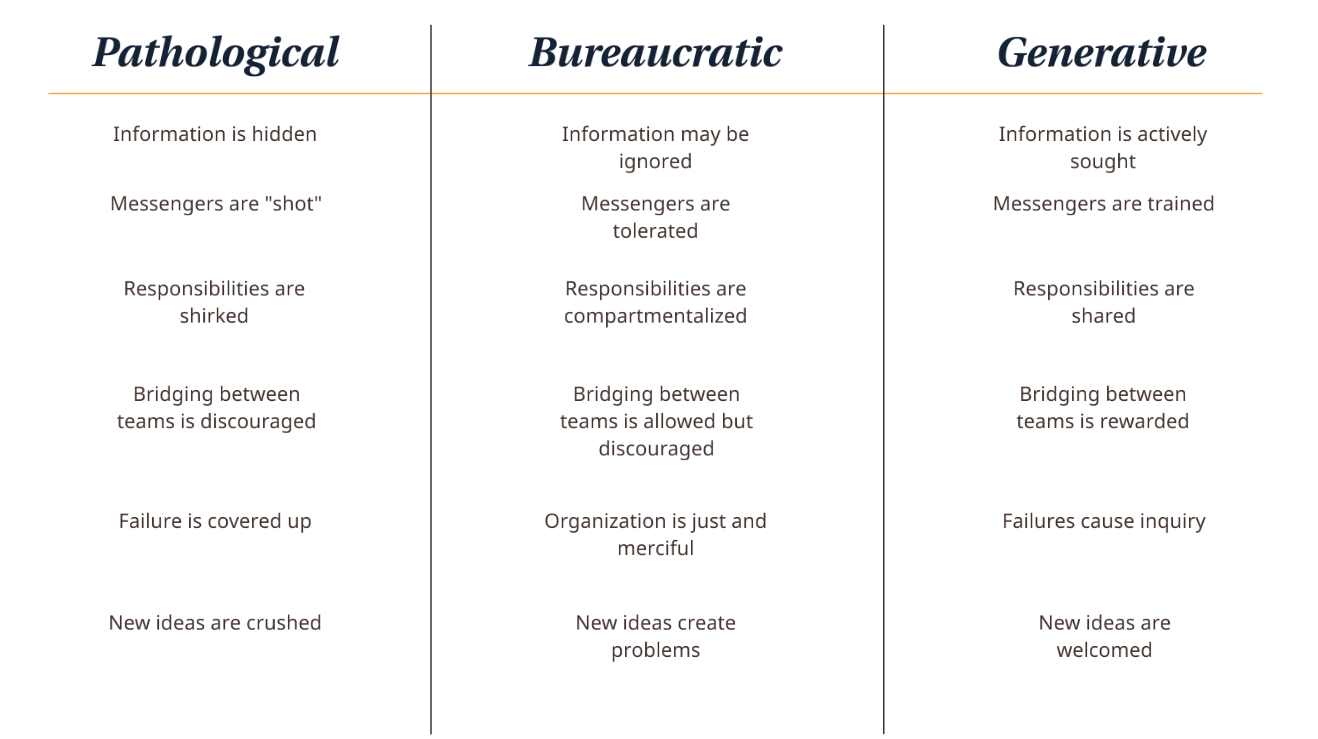
Nella pillola di oggi quindi vediamo come vengono caratterizzate le aziende secondo questo principio, che le suddivide in:

  1. Organizzazioni patologiche, caratterizzate da paura e minacce: in questo tipo di organizzazioni, le persone accumulano informazioni e le trattengono per motivi politici o per mettersi in buona luce, l’informazione è fonte di potere e il fallimento viene spesso nascosto;
  2. Organizzazioni burocratiche, caratterizzate da regole e processi che sono spesso pensati per aiutare i singoli dipartimenti nella salvaguardia del loro territorio: in questo tipo di organizzazioni, il fallimento viene processato attraverso un sistema di giudizio che risulta in una punizione o nel grazioso perdono della dirigenza, ma non viene sfruttato come occasione di apprendimento;
  3. Organizzazioni cosiddette generative, caratterizzate da una ricerca attiva delle informazioni e dalla condivisione spontanea, mirata a far sì che l’organizzazione possa raggiungere più facilmente i propri obiettivi: in questo tipo di organizzazione, le responsabilità vengono condivise lungo tutto il flusso di valore e il fallimento genera momenti di riflessione e analisi.

Nel suo manuale, Gene Kim propone uno specchietto di “sintomi” per riconoscere l’organizzazione in cui ci si trova. Personalmente ho lavorato in organizzazioni di tutte e tre le tipologie. Voi in quale tipologia vi ritrovate?
Summertime

Omeros in the Caribbeans

Derek Walcott was a Saint Lucian poet, playwright, and painter, and one of the major voices of Caribbean literature. He won the Nobel Prize in Literature in 1992, and his work often explores Caribbean history, identity, colonial inheritance, and the meeting of European and African

Read More »
books and literature

Ioanna Papadopoulou’s The Castaway and the Witch

I had a genuine “oh shit” moment when I read the author’s preface saying this was darker than “Winter Harvest” because – and I absolutely ADORED “Winter Harvest” – that was pitch-black dark. I thought “we’re all going to die”. This maybe has something to

Read More »
Summertime

The Path You Have to Sing

Alexis Wright‘s Carpentaria, an epic work set in a fictional town called Desperance, opens before there are any people in it at all: an ancestral serpent, “a creature larger than storm clouds,” descends from the stars and drags itself across the wet clay of the

Read More »
Share on LinkedIn
Throw on Reddit
Roll on Tumblr
Mail it
No Comments

Post A Comment

This site uses Akismet to reduce spam. Learn how your comment data is processed.

RELATED POSTS

Omeros in the Caribbeans

Derek Walcott was a Saint Lucian poet, playwright, and painter, and one of the major voices of Caribbean literature. He won the Nobel Prize in Literature in 1992, and his work often explores Caribbean history, identity, colonial inheritance, and the meeting of European and African

Read More

Ioanna Papadopoulou’s The Castaway and the Witch

I had a genuine “oh shit” moment when I read the author’s preface saying this was darker than “Winter Harvest” because – and I absolutely ADORED “Winter Harvest” – that was pitch-black dark. I thought “we’re all going to die”. This maybe has something to

Read More

The Path You Have to Sing

Alexis Wright‘s Carpentaria, an epic work set in a fictional town called Desperance, opens before there are any people in it at all: an ancestral serpent, “a creature larger than storm clouds,” descends from the stars and drags itself across the wet clay of the

Read More