
Uno dei problemi principali, contro i quali ci si dovrebbe battere quando si redige un capitolato informativo per un cliente, è la tendenza a includere usi del modello “per sentito dire”, che però non generano un effettivo valore aggiunto all’interno del business del cliente.
Per smontare questa dinamica, uno degli approcci che consiglio è un approccio che viene dal mondo dell’istruzione e che viene generalmente applicato al design di curriculum formativi: il backwards design.L’approccio prevede di partire dal fondo, da ciò che si desidera ottenere, per poi procedere a ritroso disegnando le caratteristiche – in questo caso – di un programma formativo.
La sua applicazione è stata poi espansa al design di caratteristiche di prodotti e viene così a comporsi di sei fasi, anch’esse a ritroso:
- Cosa vogliamo ottenere?
- Come sapremo di averlo ottenuto? Qual è la misura del successo?
- Di che cosa abbiamo bisogno per raggiungere questo obiettivo?
- Come possiamo produrre ciò di cui abbiamo bisogno? Che caratteristiche ha il flusso di produzione degli output?
- Quando è ragionevole che ciò accada?
- Di chi abbiamo bisogno per fare tutto ciò?
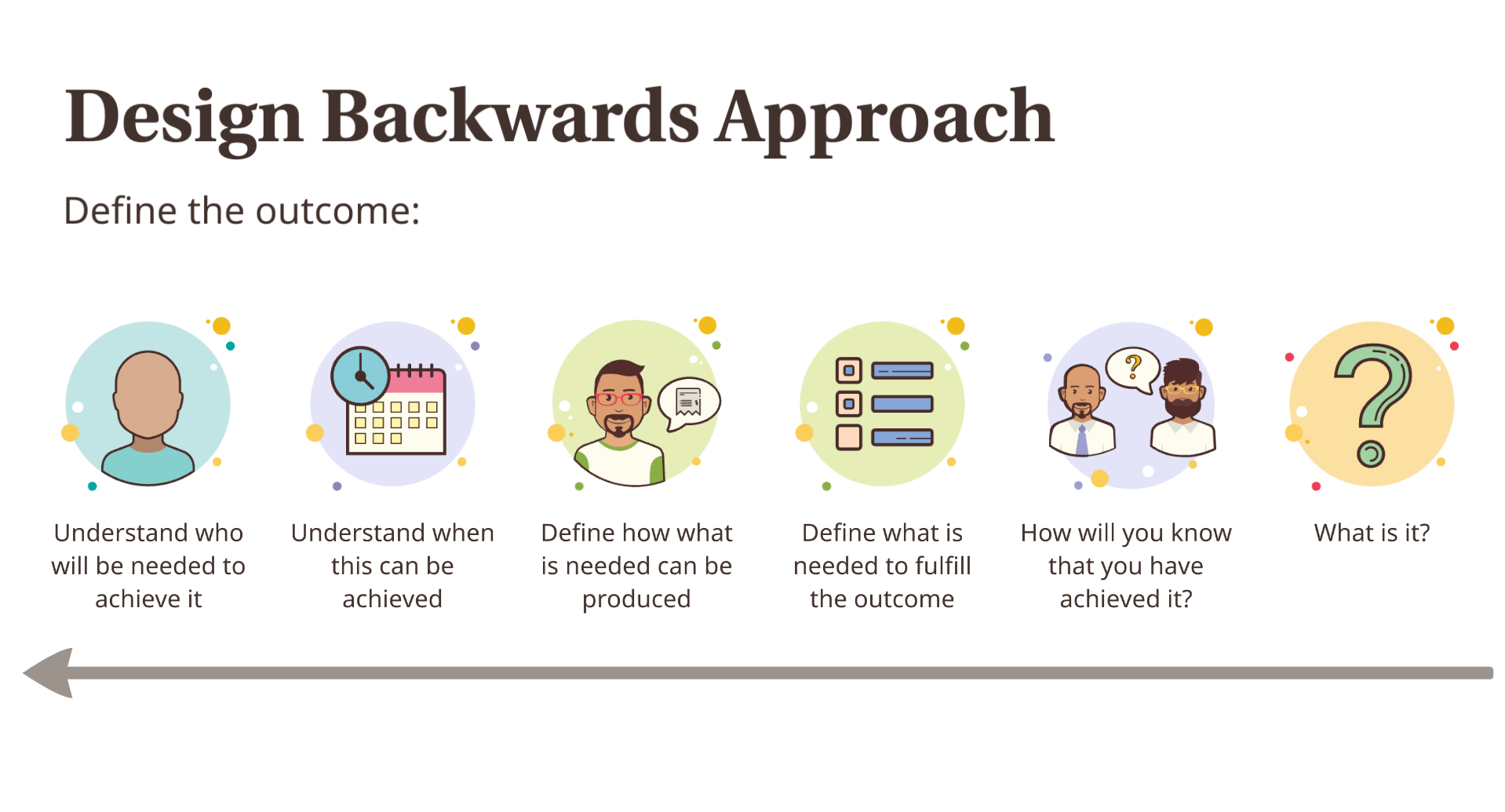
Il concetto può essere strettamente legato a quello di output > outcome > benefit del PRINCE2, proposto settimana scorsa.
La struttura che consiglio di dare all’interno dei capitolati informativi è tabellare, perché le tabelle nei capitolati piacciono un sacco. Partendo da destra:
- Main goal
What is it that we need to achieve? (es: we need to reduce waste on site by 30%) - Measurement of success
How will we know that we will have achieved it? (es: how do we measure quantities on site and how do we compare measurements against estimates?) - Output / outcome requirements
What do we need in order to fulfil the outcome? (es: how will the estimate need to be organized?) - Model structure / requirements
How can we produce what is needed? (es: how do we need to structure the model in order to have an estimate organized as needed?) - Time schedule
When this can be achieved? (es: what is the time schedule in order to produce the model?) - Team
Who do we need? (es: who are the BIM Coordinator and the Project Manager?) - Id
Progressive number matching the information needs section







No Comments