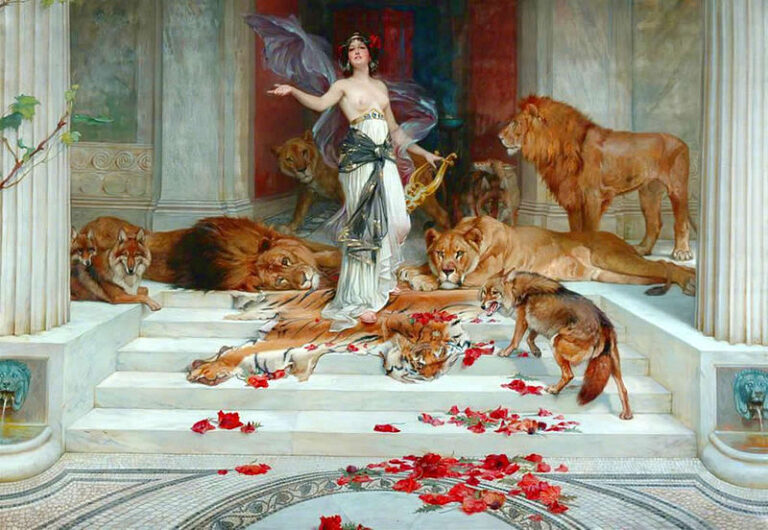
"All this he saw, for one moment breathless and intense, vivid on the morning sky; and still, as he looked, he lived; and still, as he lived, he wondered."

Are We Old Yet?

During this month of relative calm, I was reflecting that many of the tools we use to manage teams and projects were born between the 80s and the 90s: most of the Agile family including Scrum (conceptualized in the 1980s with the term being introduced in 1986); the Seven Thinking Hats which evolved from Edward de Bono’s original concept of Six published in 1985; Human-Centered Design with IDEO’s toolkits from the 80s, Extreme Programming (XP) from 1996 and the core concepts of LEGO Serious Play (LSP) from the same year. Some frameworks are even older, like Design Thinking from the 60s, Iterative and Incremental Development (IID), which Winston Royce advocated in his 1970 paper, and Kanban from as early as the late 1940s.

What’s my point?
My point is that we’re being “innovative” by using tools that are older than the very people in our teams.

Plus, I’m almost the same age as Darth Vader in the 1977 Star Wars, and if that doesn’t speak “establishment”, I don’t know what does.

What can we do about it?

In preparation for my upcoming Autodesk University lecture on October 15th, which is based on the Three Horizons Theory (1999) and the Real-Time Change Lego Serious Play evolution (2020s), I thought I’d make an extra effort, and throughout September, I’ll be showcasing a series of tools and frameworks that aren’t old enough to drink. Some of them will be old friends, like DevOps (2007), the Design Sprint concepts (2010s), and the Lightning Decision Jam (2017). Others will be entirely new, like the concept and frameworks related to Antifragility (2012), recent developments in the field of Organizational Improvisation (in truth evolved from 2002), and Slow vs Fast Thinking (2011). The focus will always be on Innovation Management, with particular stress on Fostering Diversity, People-Centric Management and Flexibility.

Are you ready? Let’s make September all about innovation.
Some of the articles will also be published in Italian, as the project is developed in cross-over with my activities for the Forma Mentis Training Centre, the Event Horizon School of Digital Arts and the Rams Milano, my local American Football Team.

architecture, engineering and construction

What’s in a Project Manager?

Last week, I was organising my thoughts around a lesson for a client, and the lesson was aimed at Project Managers, so it had a little bit on what does it mean to manage a BIM project and a little bit of practical insight on

Read More »
books and literature

Osamu Dazai’s The Flowers of Buffoonery

Melancholic and unconventional, this is half a melancholic short story and half autobiographical notes on how to write a melancholic short story that speaks about the human soul. Osamu Dazai, pen name of Shūji Tsushima, is a beloved Japanese author whose most touching work is

Read More »
books and literature

Dorothy Parker’s Big Blonde

Prohibitionism and depression: these are the two words that come to mind, reading this collection of short stories by Dorothy Parker, in her luxurious prose and through the sharp lenses of her social criticism. Some of these are one-sided flows, voicing a dialogue from the

Read More »
Share on LinkedIn
Throw on Reddit
Roll on Tumblr
Mail it
No Comments

Post A Comment

This site uses Akismet to reduce spam. Learn how your comment data is processed.

RELATED POSTS

What’s in a Project Manager?

Last week, I was organising my thoughts around a lesson for a client, and the lesson was aimed at Project Managers, so it had a little bit on what does it mean to manage a BIM project and a little bit of practical insight on

Read More

Osamu Dazai’s The Flowers of Buffoonery

Melancholic and unconventional, this is half a melancholic short story and half autobiographical notes on how to write a melancholic short story that speaks about the human soul. Osamu Dazai, pen name of Shūji Tsushima, is a beloved Japanese author whose most touching work is

Read More

Dorothy Parker’s Big Blonde

Prohibitionism and depression: these are the two words that come to mind, reading this collection of short stories by Dorothy Parker, in her luxurious prose and through the sharp lenses of her social criticism. Some of these are one-sided flows, voicing a dialogue from the

Read More